

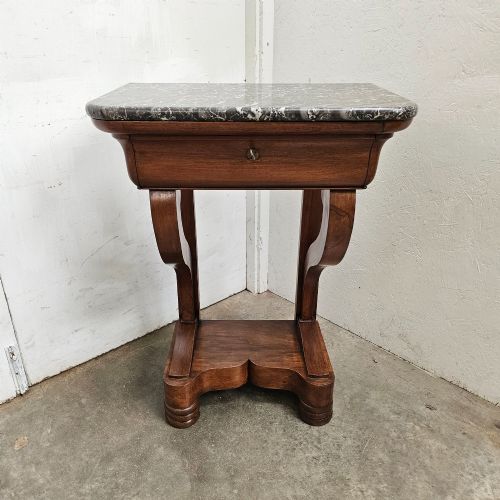
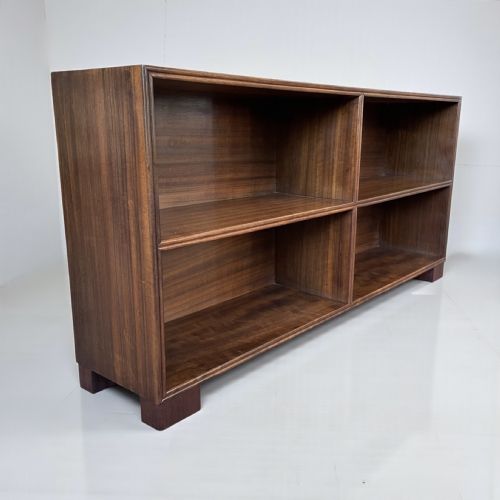


Antique Walnut Console Cabinet
An antique walnut console cabinet brings rich timber and architectural form into a room, offering both surface display and concealed storage.

Antique Walnut Console Cabinet
When you search for an antique walnut console cabinet, you are looking at a diverse group of wall-abutting furniture pieces that range from narrow side tables to deep sideboards and credenzas. These items serve multiple functions across different domestic spaces, often featuring flat surfaces paired with enclosed storage below.
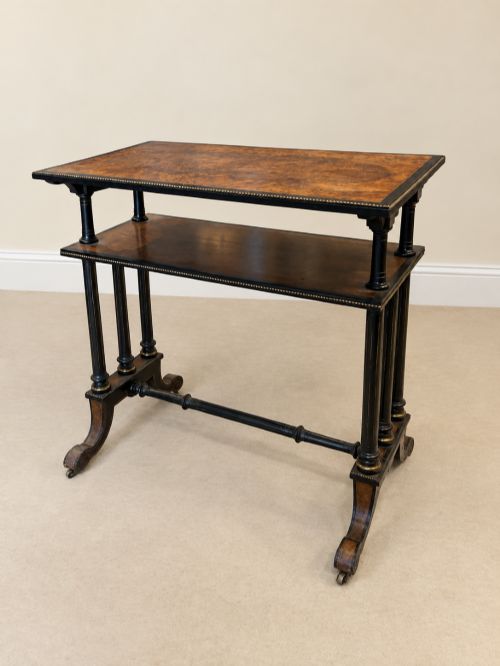
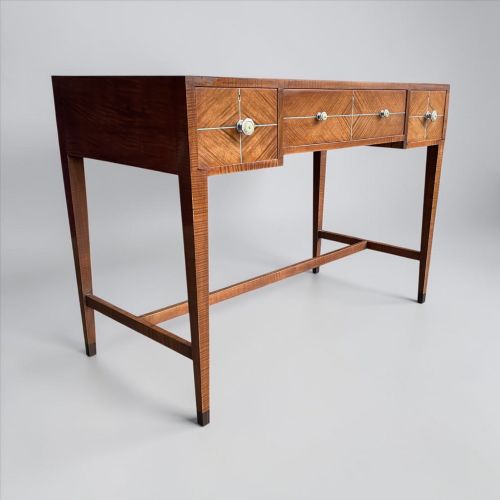
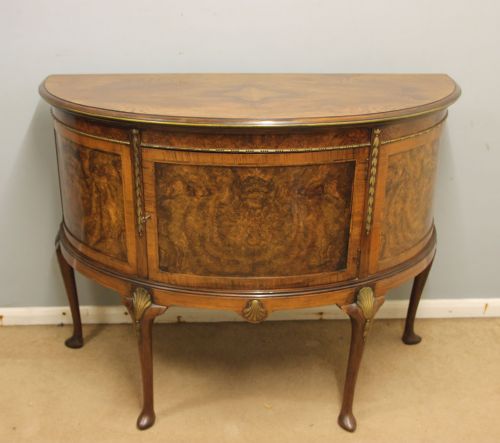
The pieces you are most likely to meet on this page span several decades and stylistic revivals, with particular representation from the nineteenth and early twentieth centuries. Forms such as the demi-lune side cabinet, the lowboy, and the marble-topped console table appear regularly among the listed items.
Origins vary across English, French, and Italian workshops, bringing distinct regional interpretations to the basic console and cabinet format. You will encounter everything from restrained George II designs to striking Art Deco silhouettes produced by notable makers.
Distinguishing quality in walnut console pieces
Quality reveals itself first in the selection and bookmatching of the timber veneers, where symmetrical grain patterns across doors and drawer fronts indicate a superior maker. Plain, unfigured boards or poorly aligned veneer work generally point to utilitarian production.
The refinement of the carving, the precision of the marquetry inlay, and the integration of secondary materials such as marble tops or gilt bronze mounts further separate standard production from exhibition-grade pieces. The presence of documented maker signatures also distinguishes exceptional workshops from anonymous output.
Antique Walnut Console Cabinet Retail Price Guide 2026
Typical asking prices for walnut console cabinet among the pieces listed under this phrase on Sellingantiques today, from the lower quarter to the upper quarter. They describe what is for sale here now, not the wider market.
The listings feature walnut, burr walnut veneer, marble, and brass across periods ranging from the eighteenth century to Art Deco.
Maurice Adams·Epstein·Pietro Ferrario·Gillow and Co
The Antique Walnut Console Cabinet Glossary
- Demi-lune
- A half-moon shape used for console tables and side cabinets designed to sit flat against a wall. This profile became particularly popular in eighteenth-century and nineteenth-century neoclassical furniture.
- Lowboy
- A small dressing table or side table featuring one or more rows of drawers beneath the work surface. Walnut versions from the eighteenth century onwards often rest on cabriole legs.
- Credenza
- A utilitarian or display cabinet originally developed in Italy, sitting low to the ground and frequently enclosed by doors. Later Victorian and Edwardian iterations often incorporate glass panels and intricate marquetry.
- Marquetry
- The art of applying decorative pieces of veneer to a structure to form intricate pictorial designs or geometric patterns. Makers utilised contrasting timbers such as satinwood and ebony to achieve tonal depth.
- Burr walnut
- A prized timber harvested from the abnormal growths on walnut trees, yielding highly swirling and turbulent grain patterns. Cabinetmakers sliced this wood into thin veneers to cover primary display surfaces.
Antique Walnut Console Cabinet: Frequently Asked Questions
Where should I place a console cabinet?
These pieces suit entrance halls, living rooms, and dining spaces where floor depth is at a premium. Their flat backs allow them to anchor securely against walls while providing useful surface area.
Because many examples feature finished backs or marble tops, they also function well when positioned to break up long corridors or open-plan room layouts.
How do I care for walnut veneer?
Walnut benefits from stable room temperatures away from direct sunlight and heat sources, which can cause timber to dry out and veneers to lift. Dust regularly with a dry, soft cloth.
Avoid silicone-based polishes and excessive moisture, opting instead for occasional applications of a traditional microcrystalline wax to nourish the timber.
What is the difference between a console and a sideboard?
A console traditionally refers to a table or shallow cabinet designed to sit flush against a wall, sometimes relying on the wall for structural support. They tend to be narrower and prioritised for display.
Sideboards and credenzas are generally deeper, heavier storage items built with substantial cupboard space and drawers intended for dining room utility.
How can I tell an Art Deco piece from earlier styles?
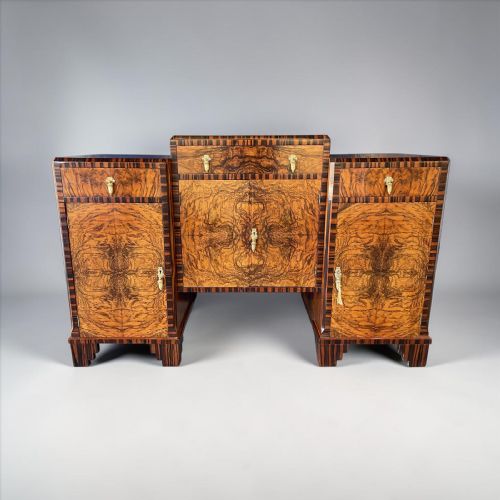
Art Deco pieces from the early twentieth century favour clean geometric lines, symmetrical burr walnut panels, and minimal ornamentation compared to nineteenth-century revival styles. They often embrace streamlined silhouettes.
In contrast, earlier Victorian and Edwardian examples lean heavily on historical revivals, incorporating elaborate marquetry, turned legs, and ornate brass or gilt bronze mounts.