
Antique Wall Weather Instrument
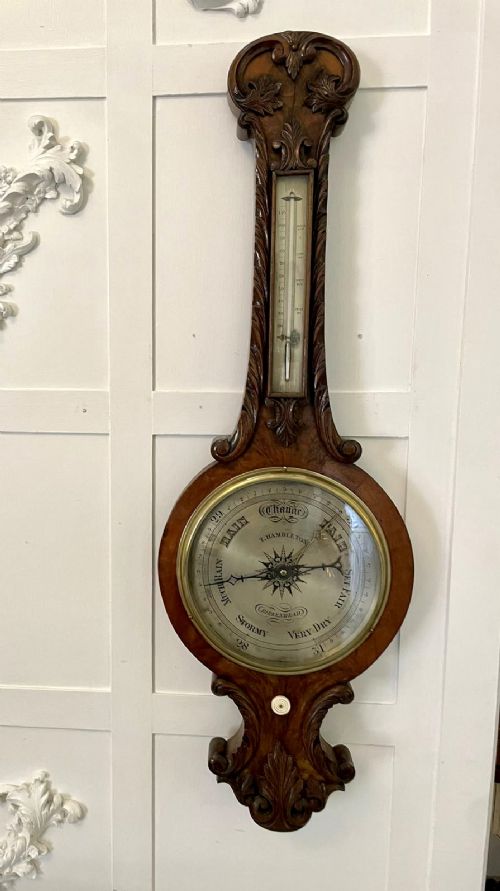
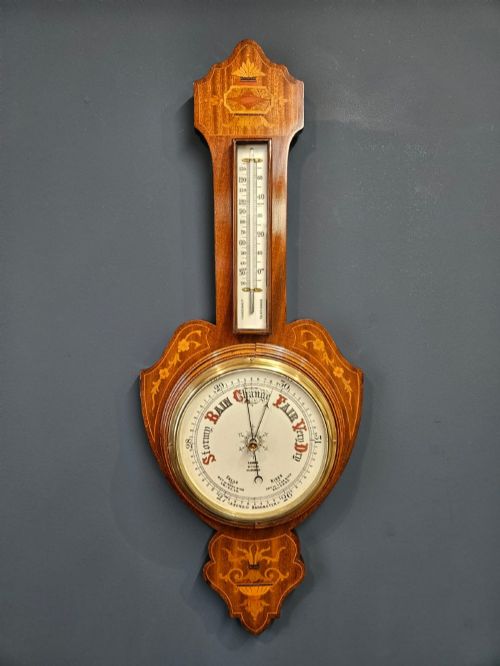
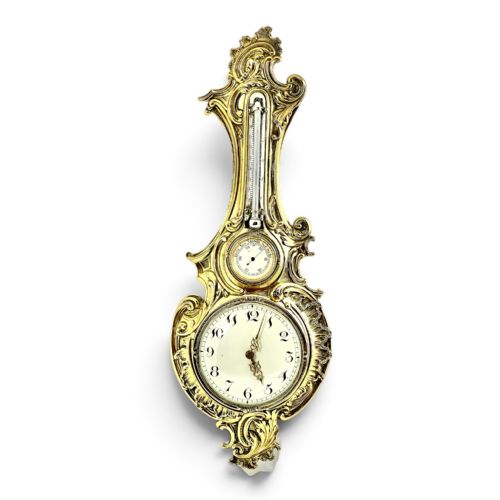
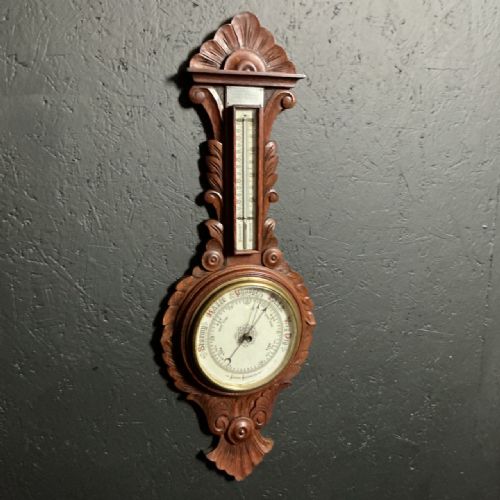
An antique wall weather instrument brings domestic science into the hall, offering both mechanical precision and period woodwork.
Antique Wall Weather Instrument
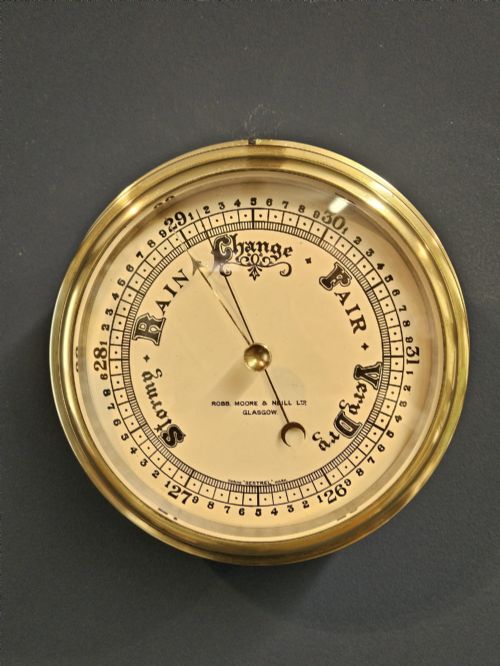
An antique wall weather instrument comprises barometers, weather stations, and hygrometers designed to hang in domestic or scientific interiors. These pieces measure atmospheric pressure, temperature, or humidity using mercury columns, aneroid dials, or hair mechanisms.
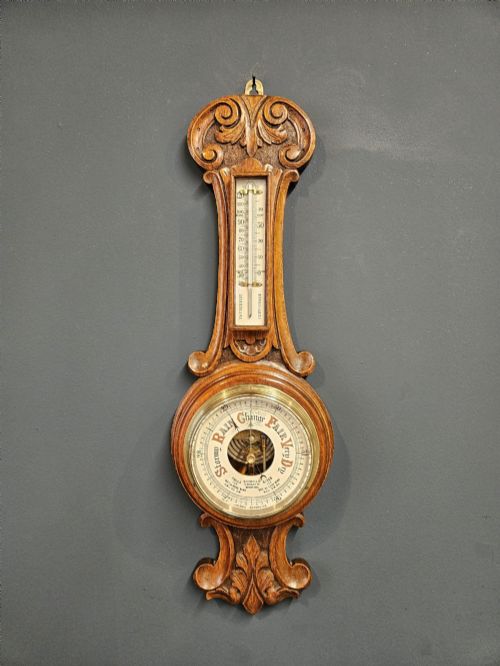
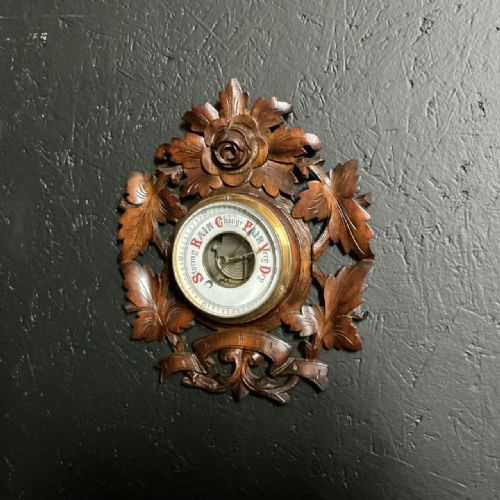
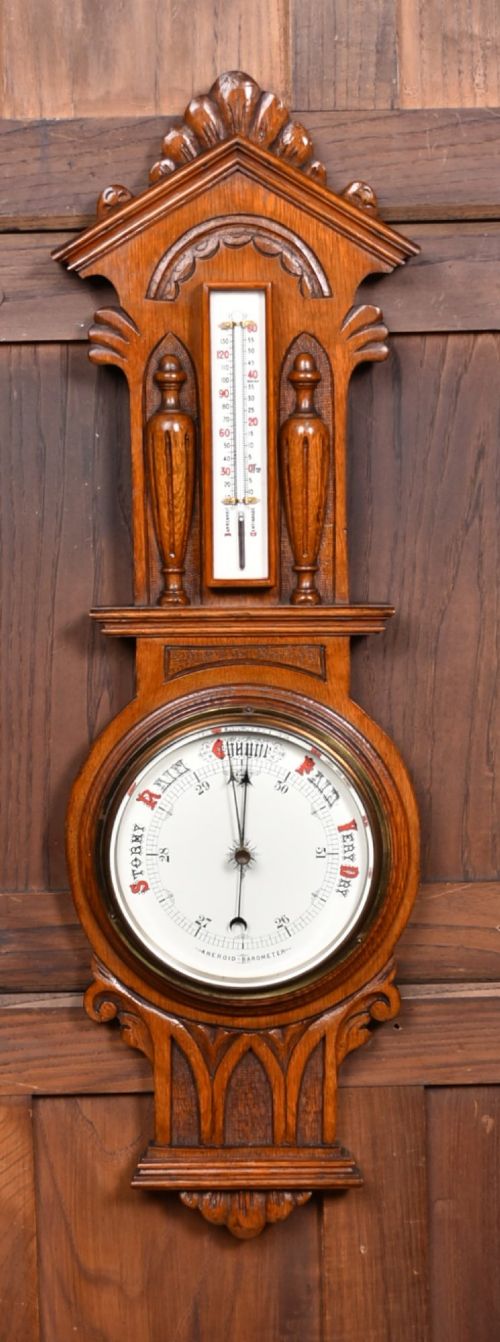
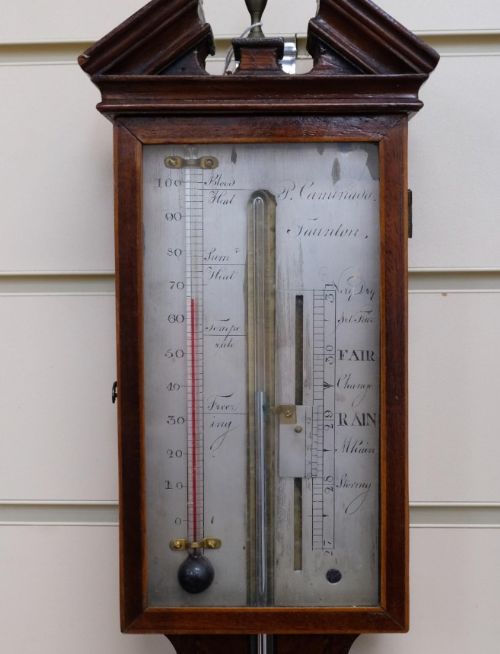
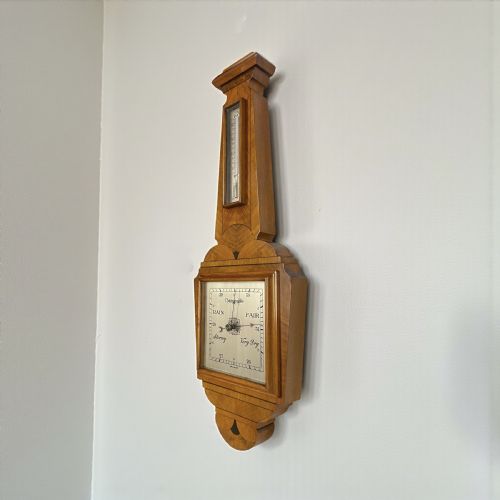
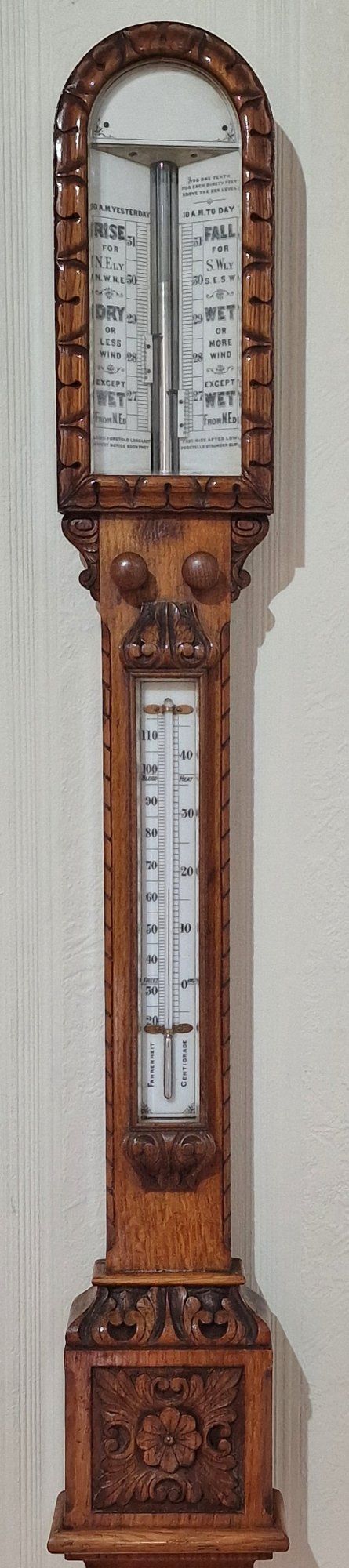
The versions met most frequently on this page date from the Georgian, Victorian, and Edwardian periods, constructed in forms ranging from slim stick barometers to carved banjo cases and complex multi-dial stations. Walnut, oak, and mahogany provide the primary chassis for these wall-hung instruments.
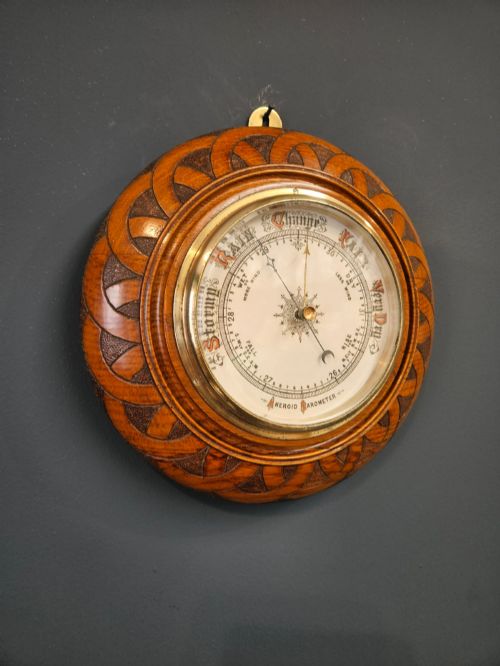
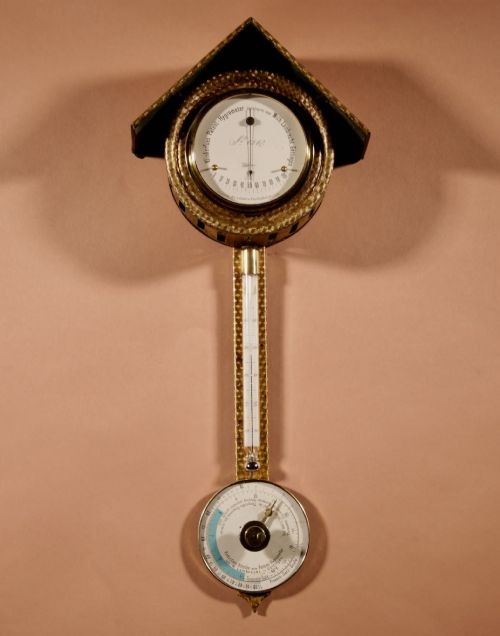
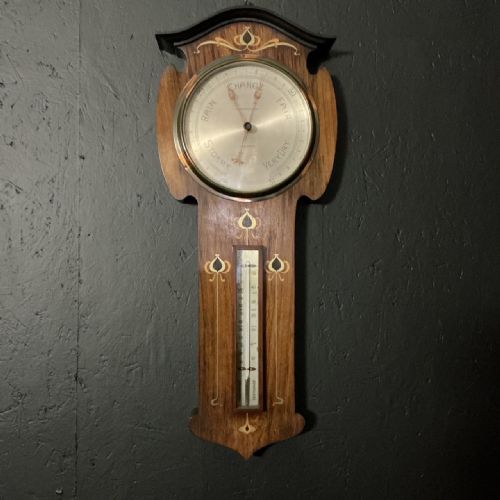
Makers housed these movements in anything from restrained Georgian mahogany frames to elaborate Black Forest carved wood cases and Edwardian chinoiserie designs. Each piece reflects the domestic priorities and scientific curiosities of its decade.
How they were made
Cabinetmakers shaped dense hardwoods including mahogany, oak, walnut, and rosewood into cases, applying turnings, veneers, and geometric or floral carvings. Edwardian and Victorian workshops frequently incorporated inlaid details or blackened finishes to suit contemporary tastes.
Instrument makers fitted glass dials, silvered brass plates, and mercury tubes or aneroid metal chambers into the wooden carcasses. Specialised firms supplied precision movements, thermometers, and hair hygrometers that were then mounted into the custom cases.
Listings feature oak, mahogany, walnut, and rosewood alongside specialised glass and brass components.
What varies in quality
Quality rests in the crispness of the timber carving, the legibility of the engraved silvered dial, and the presence of signed maker plaques. Simpler oak or pine framed pieces sit at one end, while skeletonised aneroid movements and multi-instrument weather stations occupy the other.
The sophistication of the mechanism itself dictates the tier of the piece, moving from standard domestic barometers to patented hair hygrometers and complex combination dials by known makers. Original mercury tubes and untouched brass fittings preserve the historical integrity of the instrument.
Hyde & Sons Sleaford·Wilh. Lambrecht·George Adams London·Poulenc Freres of Paris·Elliott Brothers·Short & Mason London·G & L Guanziroli London·Negretti & Zambra·Bramwell & Harbron
The Antique Wall Weather Instrument Glossary
- Barometer
- An instrument that measures atmospheric pressure to forecast weather changes. Stick and banjo formats dominate wall-mounted examples.
- Aneroid barometer
- A barometer that uses an enclosed flexible metal box to measure pressure without liquid mercury. This design allowed for compact dial layouts and banjo casings.
- Hygrometer
- A device that measures humidity in the air. Hair versions utilise organic fibres to register moisture levels.
- Stick barometer
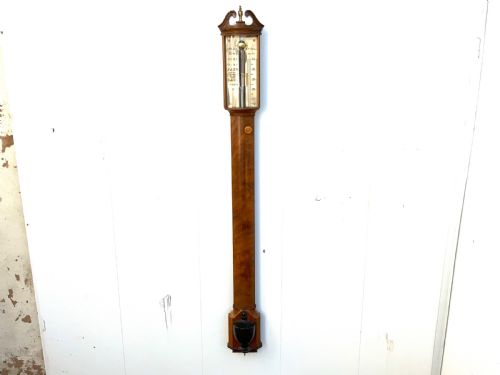
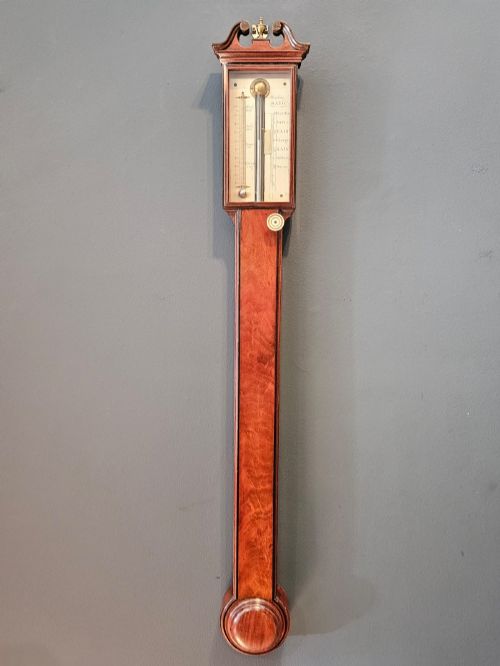
- A tall, vertical barometer enclosing a mercury-filled glass tube against a scale. Georgian examples favour this restrained architectural form.
- Weather station
- A combined instrument mounting a barometer, thermometer, and occasionally a clock or hygrometer on a single board. These units provided comprehensive domestic meteorological data.
Antique Wall Weather Instrument: Frequently Asked Questions
How do I hang a wall barometer?
Select a sturdy wall fixing that matches the weight of the dense hardwood case, avoiding areas subject to direct heat or dampness.
Ensure the instrument hangs plumb, particularly with mercury stick barometers where alignment affects the column reading.
What is the difference between a stick and a banjo barometer?
Stick barometers feature a tall, narrow wooden trunk housing a exposed or glazed mercury tube, typical of Georgian design.
Banjo barometers widen at the base into a rounded or teardrop shape to accommodate a larger dial, frequently paired with a thermometer.
Are these instruments still accurate?
Many aneroid and mercury instruments retain functional movements, though historical barometers often require professional calibration against known local readings.
Changes in altitude and decades of settling can alter internal spring tension or mercury levels.
How do I date an antique weather instrument?
Examine the timber species, case style, and dial typography, comparing them against the known production periods of Georgian, Victorian, and Edwardian design.
Signatures on the brass dial plate or maker plaques often point to specific workshops and operating decades.