

Antique Wall Side Table
These antique wall side tables bring architectural proportion and surface space to narrow hallways and principal reception rooms.
Antique Wall Side Table
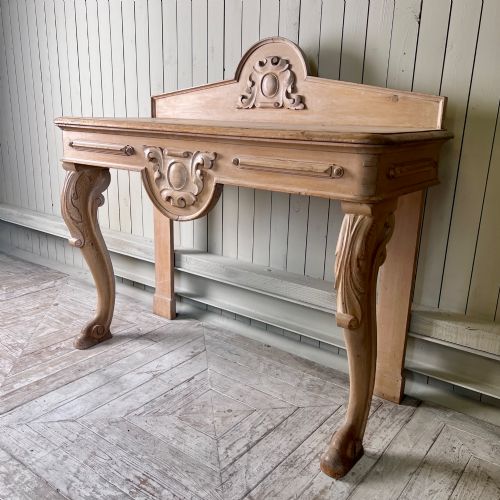
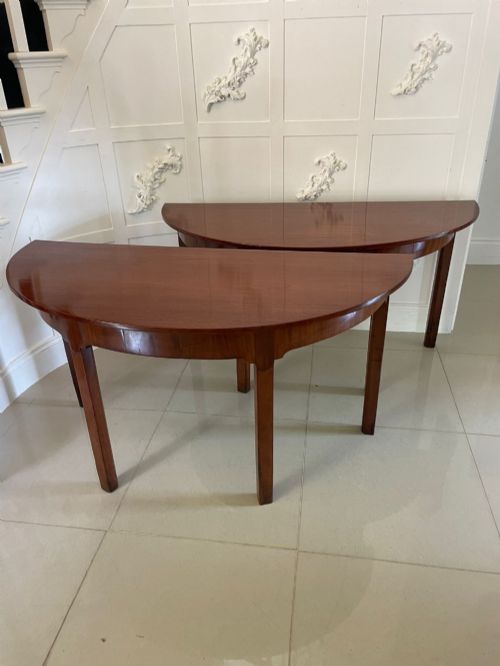
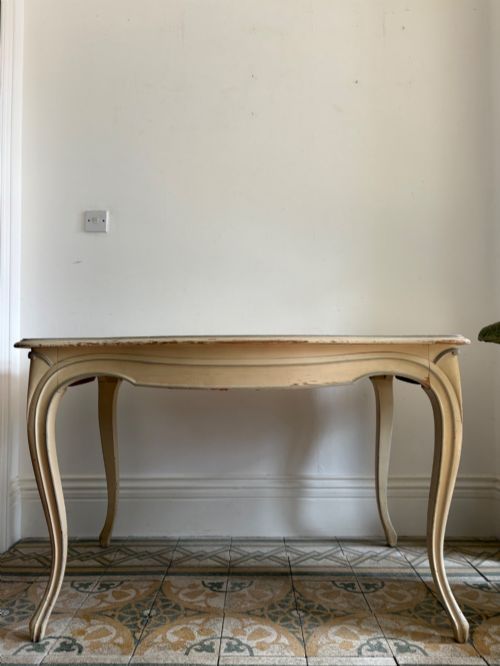
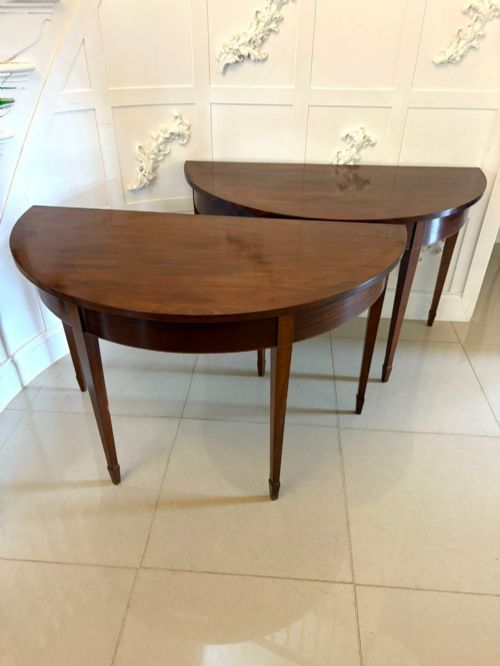
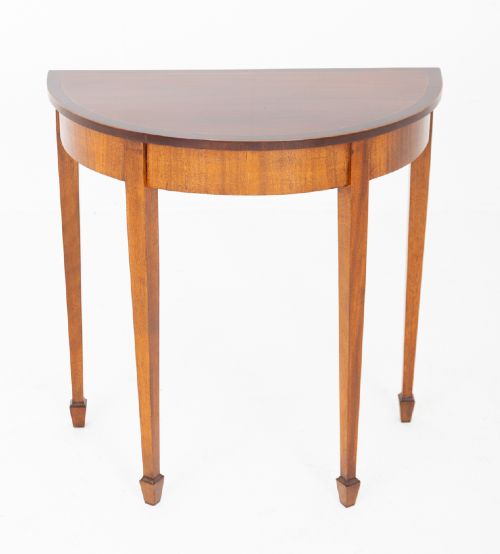
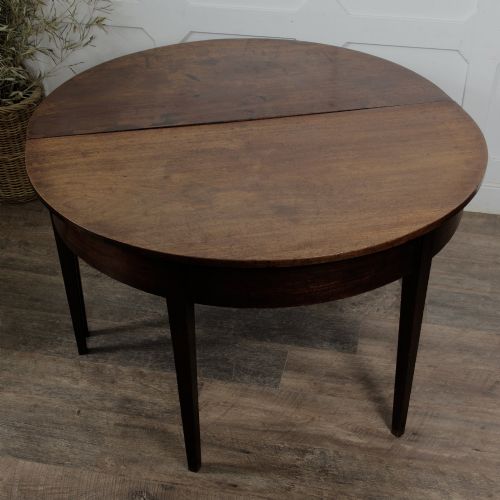
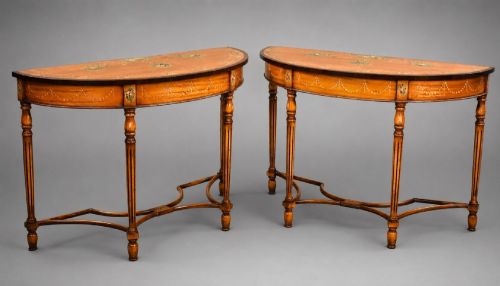
An antique wall side table is designed to stand against a wall, frequently taking a demi-lune or serpentine form to fit compact spaces without obstructing circulation. The pieces span the eighteenth, nineteenth and early twentieth centuries, drawing on Georgian, Regency, Victorian and Neoclassical design traditions.
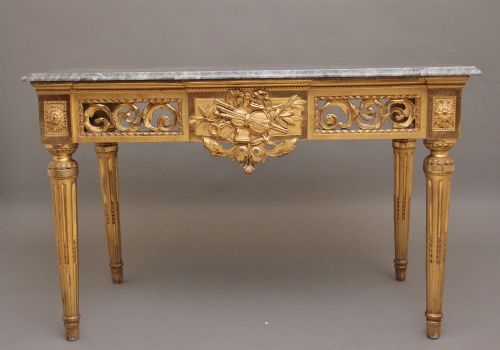
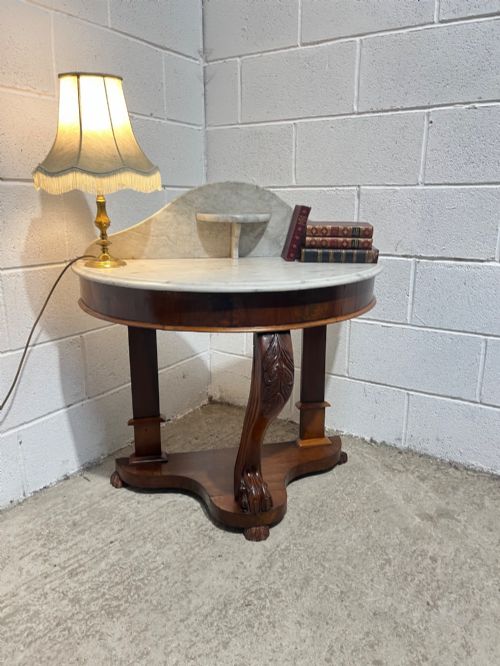
Console tables and side tables dominate the selection, appearing in woods such as mahogany, walnut and satinwood, alongside giltwood and painted finishes. Many incorporate marble tops or inset leather and suede surfaces intended for display or occasional writing.
How they were made
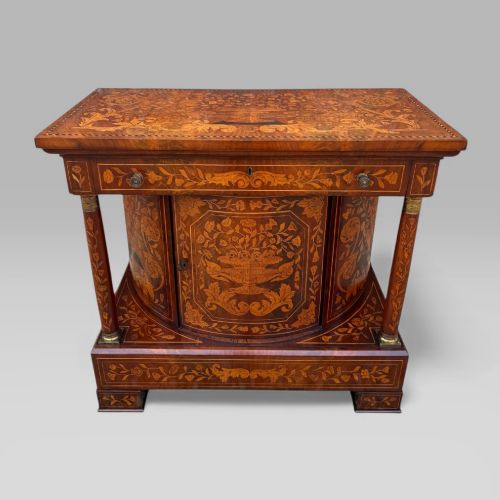
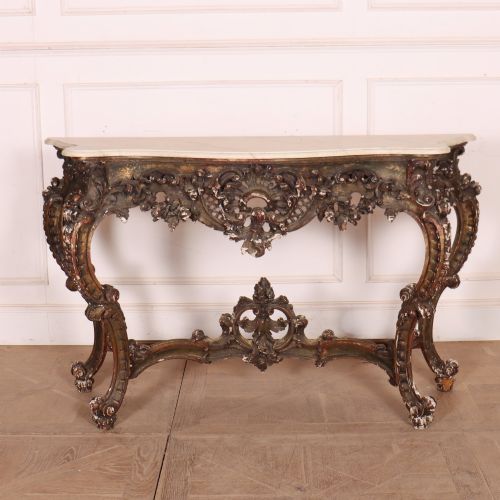
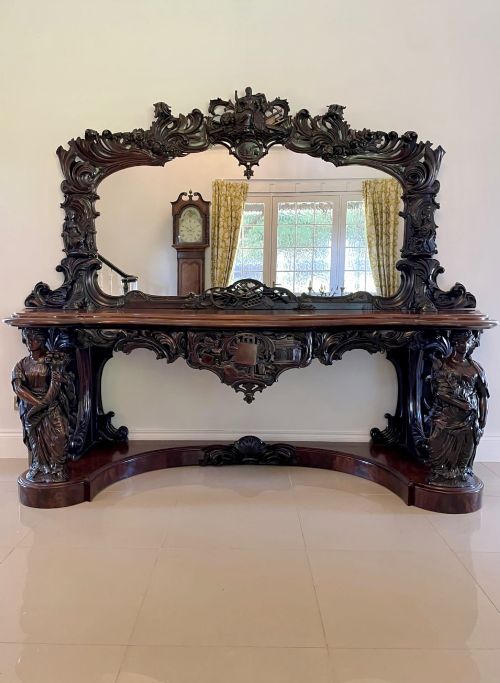
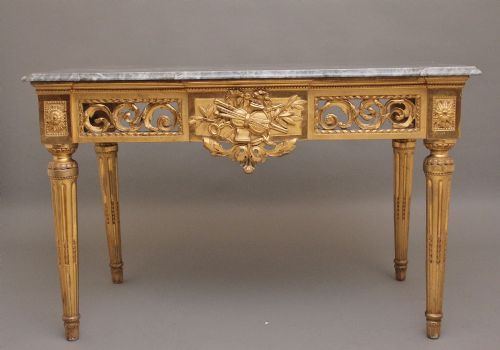
Cabinetmakers constructed these tables using solid and veneered timbers including figured mahogany, rosewood and satinwood, often applying marquetry details and brass mounts. Carved wooden frames received layers of gesso before being gilded with gold leaf or painted in cream and polychrome schemes.
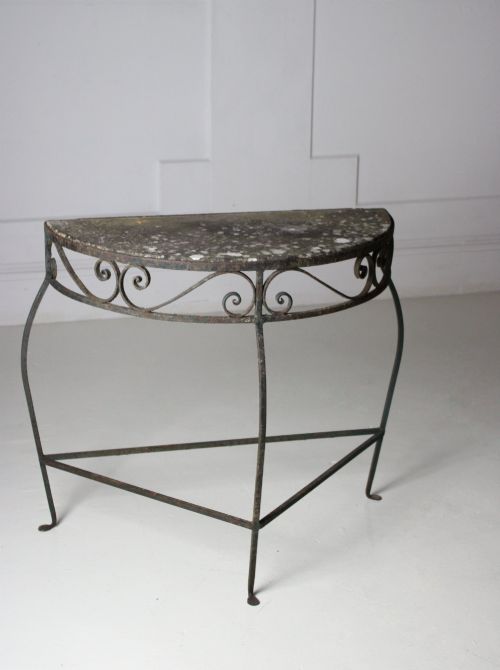
Heavy marble slabs, such as breche d'alep, were shaped to fit the serpentine or demi-lune timber profiles, while wrought iron served for more rustic or industrial constructions. Joinery techniques varied from period cabinetwork to hand-carved joints on French and Italian pieces.
Tables described as demi-lune bring half a moon of history straight into a corridor.
What varies in quality
The distinction between tiers rests upon the choice of timber figures, the crispness of carved gesso and giltwood details, and the integrity of the marble slab. Tables bearing exhibition quality designations demonstrate superior joinery, complex marquetry patterns, and original surface patination.
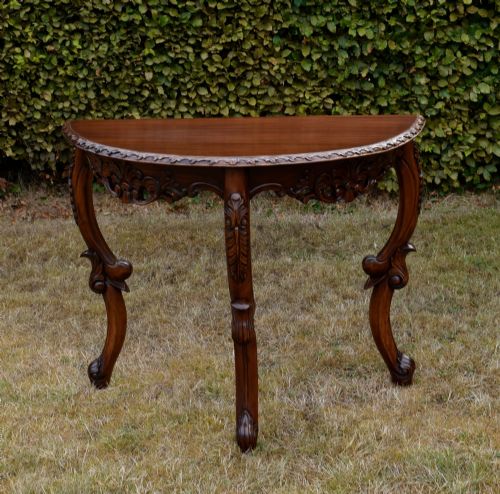
Proportion and execution define the upper range, where hand-carved console tables display refined symmetry and balanced cabriole or tapered legs. Lesser examples show simpler secondary woods and replacement surfaces rather than period-matched materials.
The Antique Wall Side Table Glossary
- Demi-lune
- A half-moon shape used for tables designed to stand flat against a wall. This profile maximises floor space in narrow entrance halls.
- Marquetry
- Inlaid patterns of wood veneers applied to furniture surfaces. Craftsmen used contrasting timbers to create geometric or floral designs.
- Serpentine
- A furniture front with a wavy outline curving outward at the centre and inward at the sides. This contour requires precise woodworking.
- Console table
- A table supported by wall brackets or console legs rather than four freestanding vertical supports. They often anchor large mirrors above.
Antique Wall Side Table: Frequently Asked Questions
What is the difference between a console and a side table?
A console table traditionally requires attachment to a wall for support, using front legs combined with wall brackets. Side tables stand independently on four legs.
In older inventories, the terms frequently overlap, as many demi-lune tables designed for walls share proportions with standard side tables.
Where should I place a marble-topped table?
Marble-topped tables suit hallways, dining rooms and drawing rooms where moisture or heat resistance is beneficial. The stone surface handles objects like ceramics and lamps easily.
Keep polished marble away from acidic liquids such as citrus juices, which can etch the stone surface over time.
How do I date a painted console table?
Dating relies on stylistic markers such as Neoclassical motifs, giltwood accents, and structural framing methods. Eighteenth-century Italian and French pieces display hand-carved gesso work.
Later Victorian and Edwardian revivals employ machine-cut timbers and standardised paint finishes that distinguish them from earlier handmade examples.