




Antique Wall Hung Barometer
An antique wall hung barometer reads the weather while anchoring a room with carved wood and silvered metal dials.
Antique Wall Hung Barometer
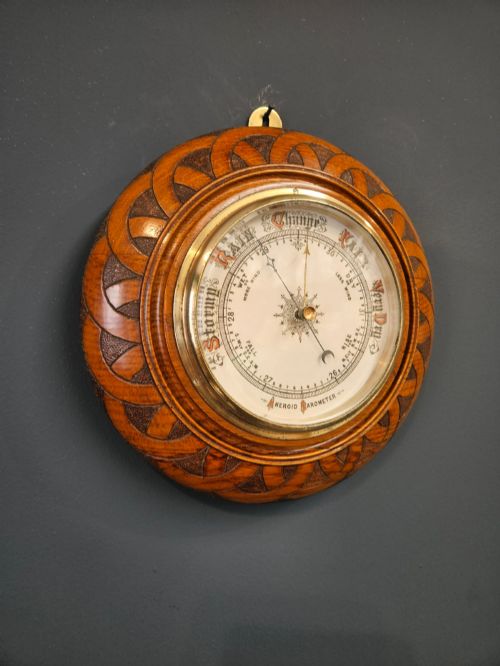
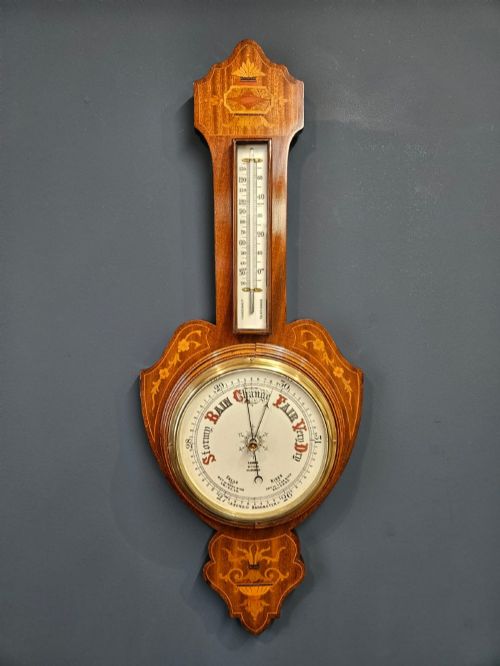
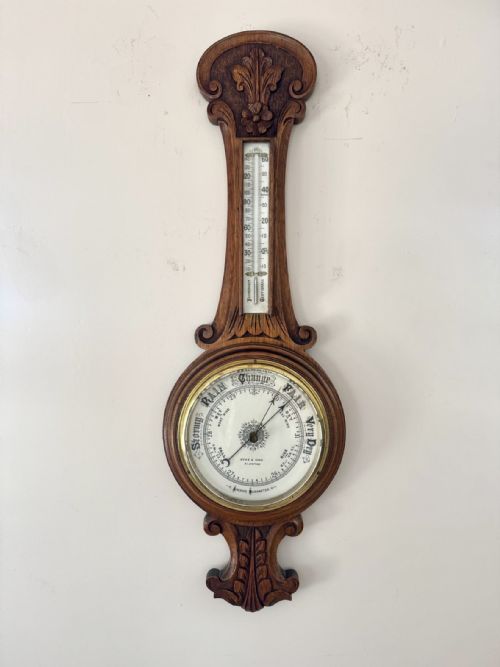
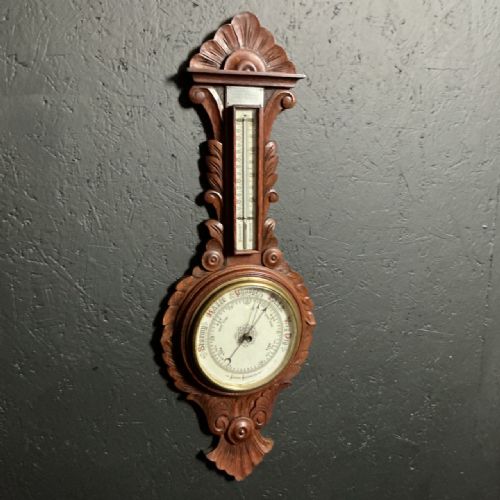
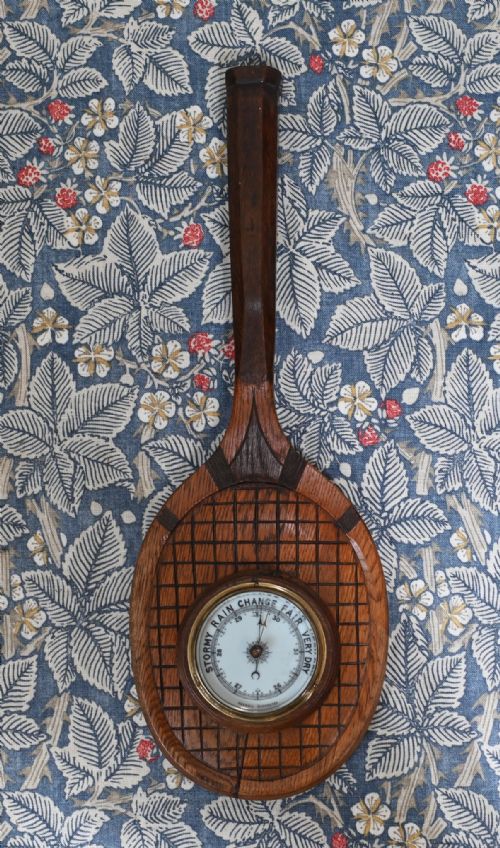
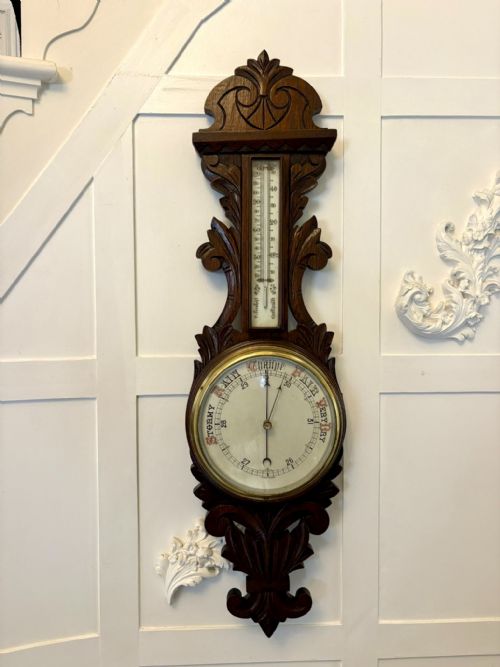
An antique wall hung barometer is an instrument designed to measure atmospheric pressure, mounted securely on domestic and commercial walls. The examples seen here span periods from the Georgian era through the Victorian and Edwardian decades, up to the early twentieth century. Buyers seeking this phrase will most frequently encounter carved oak banjo barometers from the Victorian period, alongside mahogany stick barometers and Black Forest designs.
The forms vary from simple circular beechwood frames to elaborate banjo shapes incorporating thermometers and spirit levels. Oak and mahogany dominate the timber choices, often enriched with boxwood inlay, mother-of-pearl, or bone details. These pieces served a vital domestic function before electronic forecasting, whilst offering substantial decorative presence in hallways and reception rooms.
Materials and construction
Cabinet makers utilised dense hardwoods including mahogany, oak, walnut, and rosewood, shaping cases through turning, carving, and fine joinery. Instrument makers fitted silvered metal or brass dials behind protective glass covers, integrating mercury tubes or aneroid mechanisms to register atmospheric shifts. Details such as bone indicators and boxwood stringing added visual refinement to the timber surfaces.
Carved oak and walnut models frequently display deep relief work, particularly in Black Forest and Victorian interpretations. Inlaid mahogany banjo instruments combine precise cabinet work with delicate stringing and marquetry. Each piece unites mechanical precision with traditional woodworking techniques.
Listings feature woods spanning oak, mahogany, walnut, rosewood, beech, and boxwood.
Distinctions in quality
Quality rests upon the crispness of the timber carving, the legibility and engraving of the silvered metal dial, and the reputation of the maker inscribed upon the face. Finer examples exhibit substantial mahogany or figured walnut cases with intricate inlay, balanced proportions, and fully intact mercury or aneroid movements. Simpler pine or oak versions with plain dials occupy the more utilitarian end of the scale.
The integration of supplementary instruments, such as thermometers or hygrometers, elevates the ambition of the piece. Makers who signed their dials with locations in London, Glasgow, or provincial towns generally delivered superior dial engraving and more robust mechanical assemblies.
Hyde & Sons Sleaford·JB Bergna Newcastle·Maple & Co·Aitchison for Zambrene·James Pitkin London·J Groce York·S P Cohen Glasgow·Pinchetti & Co London·Tarone Gally & Co·George Dollond of London
The Antique Wall Hung Barometer Glossary
- Aneroid barometer
- An instrument that measures air pressure using a flexible-walled metal capsule without liquid mercury. This design allowed barometers to be built into compact or wall-hanging banjo configurations.
- Stick barometer
- A tall, slender instrument housing a vertical glass tube filled with mercury. These pieces emphasise the exposed column against a mahogany or walnut backboard.
- Banjo barometer
- A domestic wall barometer shaped like the stringed musical instrument, featuring a circular dial at the top and an extended body containing a thermometer or level.
- Silvered metal
- A brass or copper dial plate treated to achieve a bright, reflective silver finish. Graduations and maker signatures are typically engraved and darkened for readability.
- Wheel barometer
- A dial barometer where changes in pressure move a float in a U-shaped tube, turning a mechanical pulley and pointer. These often include auxiliary dials for humidity or temperature.
Antique Wall Hung Barometer: Frequently Asked Questions
How do I hang a wall barometer safely?
These instruments require a secure fixing point directly into a wall stud or wall plug using a sturdy screw that matches the hanging bracket or ring on the rear of the case. Because many examples feature heavy timber frames and glass dials, proper weight support is essential.
Keep the barometer away from direct heat sources, exterior doors with heavy drafts, and strong vibrations to protect the delicate internal mechanisms from unnecessary wear.
What is the difference between stick and aneroid barometers?
Stick barometers rely on a visible vertical tube of mercury to register atmospheric changes directly. They offer a traditional aesthetic favoured in Georgian and Victorian interiors.
Aneroid barometers use an internal sealed metal vacuum box that expands and contracts with pressure, driving a mechanical pointer across a circular dial. This mechanism enabled the creation of decorative banjo and carved wall frames.
Do antique barometers still work?
Many surviving examples retain functional movements that continue to respond accurately to local weather changes. Aneroid instruments often function well after basic placement, while mercury stick instruments require careful handling to ensure the column remains unbroken.
Even when used primarily for decorative display, understanding the mechanical principle adds depth to owning these historic pieces.
How do I identify the period of a barometer?
Period identification relies on timber choices, decorative motifs, and dial signatures. Georgian instruments frequently feature understated mahogany stick cases, whereas Victorian and Edwardian examples lean towards carved oak banjo frames and inlaid rosewood.
Maker signatures and style cues such as Art Nouveau or Black Forest carving further help date the construction to specific decades.