
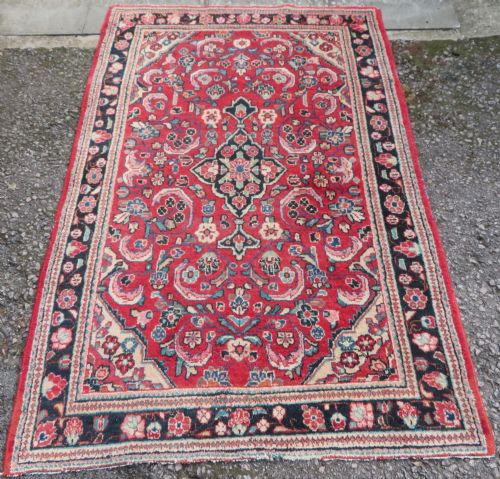
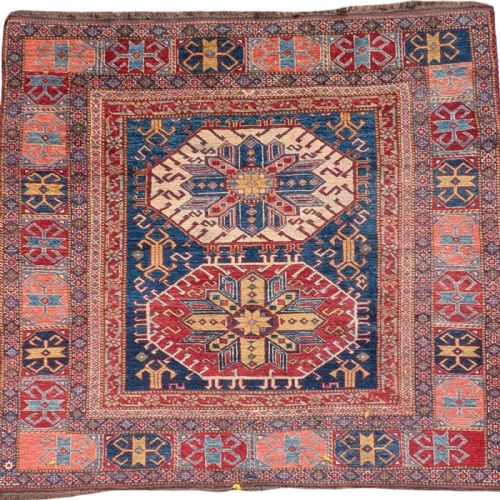
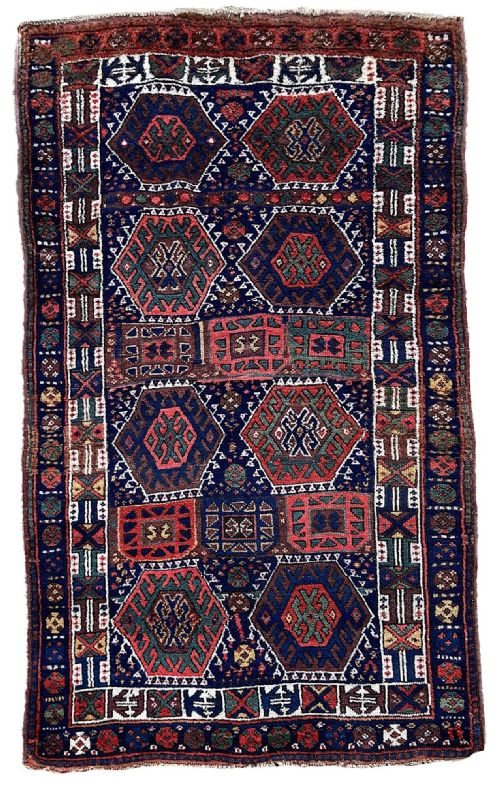


Antique Village Weaving
Antique village weaving comprises hand-knotted rugs and flatweaves produced in tribal and rural settlements across Persia, Anatolia, and the Caucasus for domestic floor covering and daily utility.
Antique Village Weaving
The selection here encompasses room-sized carpets, smaller scatter rugs, narrow hallway runners, and functional flatweaves such as bread sofreh. Pieces hail predominantly from Persian, Anatolian, and Caucasian regions, dating from the mid-nineteenth century through the early twentieth century.
Buyers encounter regional styles named after specific weaving districts like Heriz, Hamadan, Bakhtiari, Kazak, and Bergama. Each origin brings distinct structural characteristics and traditional colour palettes rooted in local community customs.
How they were made
Makers utilised hand-spun wool for the pile and foundation yarns, imparting a resilient texture and subtle variation in tone. Cotton foundation threads appear frequently in specific regional formats, providing structural stability to the heavier carpets.
Natural dyes derived from plants, roots, and minerals created the deep indigos, madders, and soft earth tones seen across the inventory. These organic colorants mellow gracefully over decades, developing a rich patina that synthetic dyes cannot replicate.
Bread sofreh cloths preserve the domestic routines of nomadic dining, woven to hold flour and dough on earthen floors.
What varies in quality
Quality rests upon the integrity of the materials and the consistency of the wool preparation. Tightly spun yarns and saturated natural colour palettes distinguish finer examples from standard commercial output.
Structural execution also determines the tier of a piece, visible in the precision of the tribal motifs and the density of the knotting across the rug. Well-balanced proportions and harmonious secondary colours elevate a village textile beyond basic utility.
Arab Ghani Tribe·Kurdish Tribes of Bijar
The Antique Village Weaving Glossary
- Pile
- The upright yarn surface of a rug, formed by knotted loops of wool or cotton. This layer provides the tactile warmth and soft surface of the floor covering.
- Medallion
- A central ornamental design motif placed in the field of a rug. Village weavers often used geometric or floral medallions as the focal point of the composition.
- Prayer rug
- A small textile featuring a mihrab or arch design indicating the direction of prayer. These pieces served devotional purposes in domestic settings.
- Sofreh
- A flatwoven textile used historically for wrapping bread or serving meals in nomadic households. These functional cloths often display minimalist tribal iconography.
- Warp
- The vertical foundation threads stretched tightly on the loom before knotting begins. The visible ends of these threads frequently form the fringe at either end of the rug.
Antique Village Weaving: Frequently Asked Questions
How do I clean an antique village rug?
Gentle surface brushing and professional dusting remove embedded grit without damaging the delicate wool fibres. Avoid harsh chemical cleaners that strip natural oils from antique wool.
Water saturation should remain minimal during maintenance to protect the historic foundation yarns. Specialist textile conservators handle deeper washing requirements safely.
Are these rugs suitable for heavy hallways?
Many sturdy village runners and heavier carpets withstand moderate foot traffic when paired with a quality underlay. Wool possesses natural resilience against daily wear.
Placing supportive padding underneath prevents slipping and cushions the foundation yarns against hard flooring. Delicate prayer rugs suit low-traffic display areas better.
How can I identify a tribal village design?
Village and tribal designs rely on geometric abstraction, hooked polygons, and rectilinear medallions rather than elaborate court florals. Local weavers drew from memory and tribal iconography.
Asymmetrical details and spontaneous colour shifts often indicate independent rural production. These artistic irregularities distinguish village pieces from mass-produced urban carpets.
Why do antique village rugs show colour changes?
Hand-spun wool absorbs natural dyes differently across dye lots, creating subtle tonal shifts known as abrash. This characteristic occurs naturally as dyers prepared small batches of colour.
Exposure to light over generations also softens the initial hues into a mellow palette. These organic variations prove the historic use of natural plant and mineral colorants.