




Antique Venetian Side Table
An antique venetian side table brings dramatic Italian flair into a room, offering ornate carving and painted surfaces that catch the light.
Antique Venetian Side Table
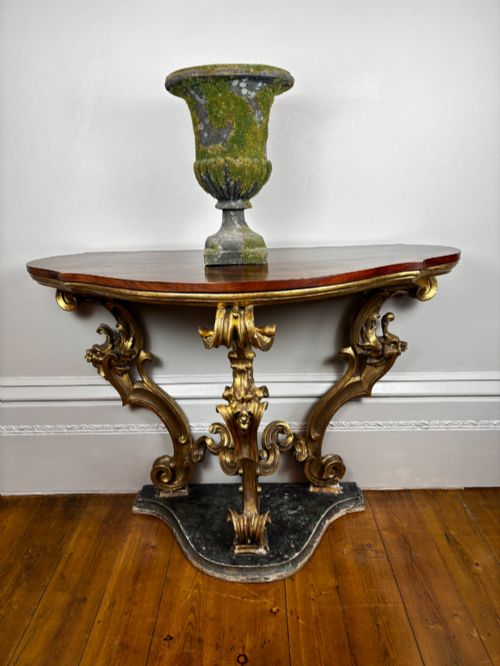
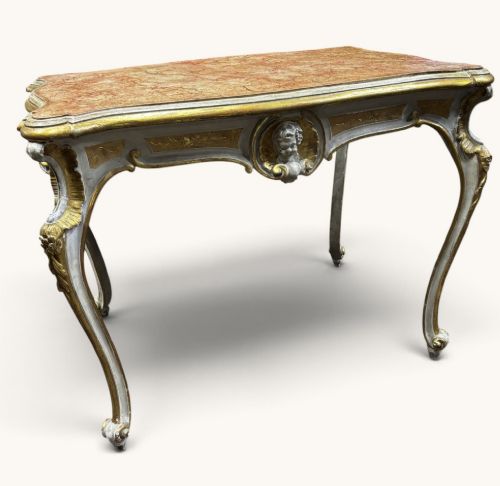
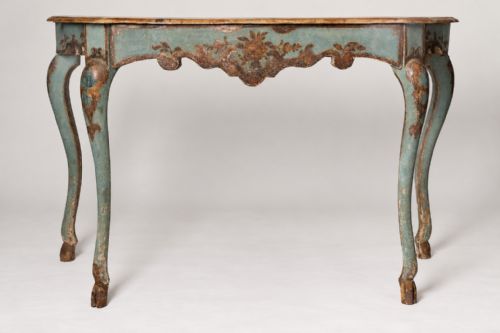
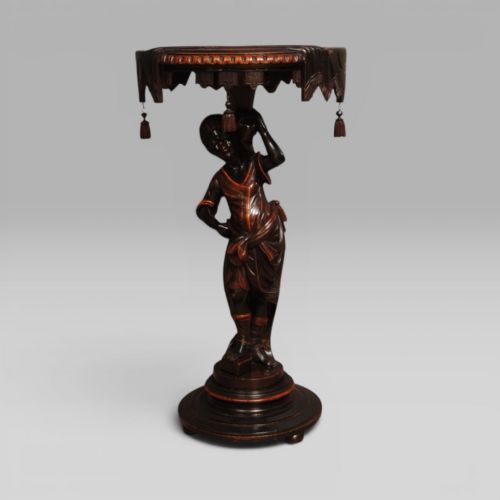
An antique venetian side table represents a tradition of theatrical Italian interior design, spanning console tables, centre tables, and occasional pieces. The examples here range from grand eighteenth-century giltwood consoles to early twentieth-century painted and polychromed stands.
Buyers will encounter several distinct forms within this search phrase, including serpentine console tables and carved figural supports. Eighteenth-century and nineteenth-century pieces predominate, showing styles from Venetian Rococo to Baroque Revival.
These tables served primarily as decorative display surfaces in grand European interiors rather than heavy utilitarian furniture. Their origins lie in the workshops of Venice and broader Italy, where artisans combined carving with rich surface finishes.
Materials and construction
The primary construction relies on carved wood, shaped into elaborate curves and structural supports before receiving decorative treatments. Artisans applied gesso over the timber base to create a smooth, responsive ground for subsequent ornamentation.
Surfaces were frequently finished with gold leaf, giltwood, or detailed polychrome paintwork to achieve a rich, luminous effect. Marble tops also appear, providing a durable and cool contrasting surface to the ornate wooden bases below.
Antique Venetian Side Table Retail Price Guide 2026
Typical asking prices for venetian side table among the pieces listed under this phrase on Sellingantiques today, from the lower quarter to the upper quarter. They describe what is for sale here now, not the wider market.
The listings span from the eighteenth century through the 1930s, using materials such as gesso, marble, and gold leaf.
Assessing the craftsmanship
Quality in an antique venetian side table rests on the crispness and depth of the wood carving, particularly on figural elements and scrollwork. Finer pieces demonstrate meticulous hand-chiselling that gives life and dimension to the wooden forms.
The application and preservation of the original gesso, paint, and gold leaf also dictate the standing of a piece. Superior examples retain harmonious layers of historic surface decoration that have aged with depth rather than flat restoration.
The Antique Venetian Side Table Glossary
- Giltwood
- Wood that has been coated with thin sheets of gold leaf over a prepared gesso ground. This technique provides a brilliant reflective finish characteristic of grand European furniture.
- Console table
- A table designed to be fixed against a wall, frequently supported by front legs or sculptural brackets while relying on the vertical surface for stability.
- Gesso
- A mixture of binder and chalk or gypsum applied to wood to create a smooth surface for gilding or painting. It allows carvers to achieve sharp details before applying gold leaf.
- Serpentine
- A furniture top or front edged with a wavy line, curving outward in the centre and inward at the sides. This contour adds movement and visual complexity to side tables.
Antique Venetian Side Table: Frequently Asked Questions
Where did people place these tables?
These tables were typically positioned against walls in grand reception rooms, hallways, and drawing rooms.
They served as focal points beneath mirrors or paintings, holding decorative objects rather than heavy household items.
How do I care for gilt surfaces?
Giltwood and painted finishes require gentle dusting with a soft, dry brush rather than chemical cleaning products.
Keep them away from direct sunlight and moisture to protect the delicate gesso and gold leaf from lifting.
Are marble tops original to the tables?
Many Italian console tables were designed specifically to support heavy marble slabs as functional display surfaces.
Matching the stone type and edge profile helps determine whether a marble top has remained with its base.