

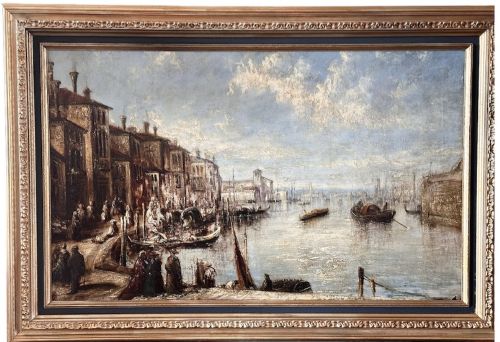
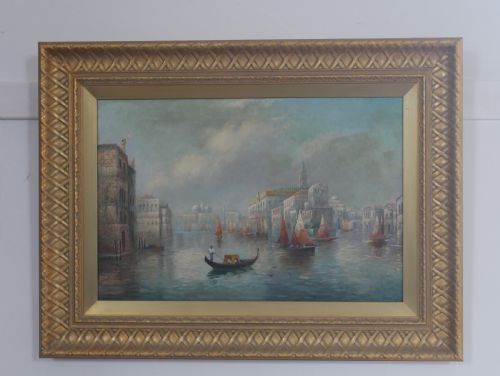
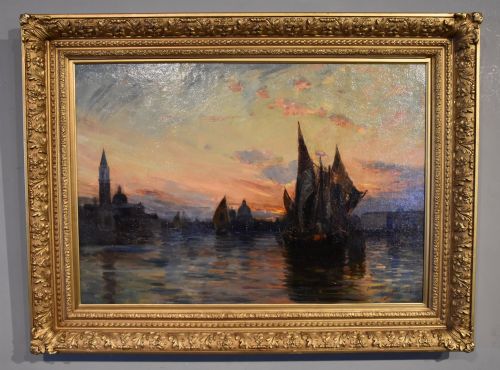


Antique Venetian Seascape Artwork
These antique venetian seascape artwork pieces capture the shifting light and canals of Venice across the nineteenth and twentieth centuries.
Antique Venetian Seascape Artwork
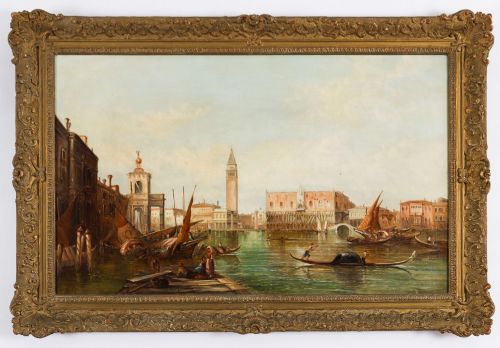
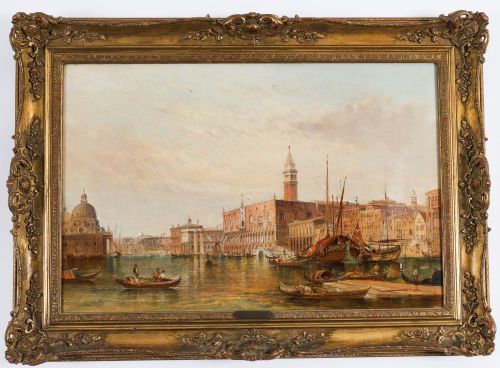
When you search for antique venetian seascape artwork, you encounter painted views of the Grand Canal, the Doge's Palace, and the lagoon. The selections on this page span the nineteenth century, the Edwardian era, and later decades into the twentieth century. These works capture the architecture and waterways of Venice through varied historical lenses.
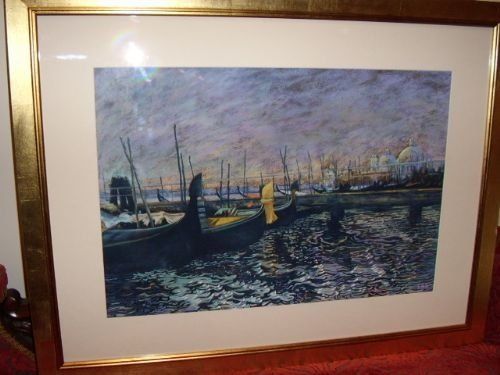
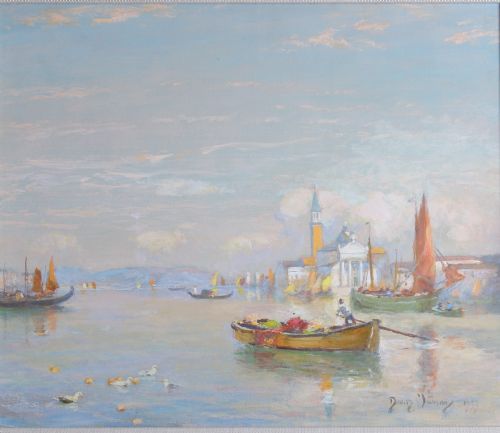
The primary forms found here are paintings and watercolours. Oil on canvas works sit alongside delicate watercolours and pastel works on paper. Many retain their period giltwood or gilt wood frames.
Originating from British and European artistic traditions, these pieces represent the enduring appeal of the Venetian lagoon. Artists travelled to Italy to record the unique atmosphere, producing framed paintings that remain sought after by collectors today.
How they were made
Artists utilised oil paint on canvas to build rich textures and deep tones for grand canal scenes. This medium allowed painters to capture the interplay of sunlight and shadow on historic palazzos.
Watercolour and gouache on paper were frequently employed for lighter, more luminous studies of the lagoon. These works relied on the transparency of the medium to render the watery reflections and open skies of Venice.
Frames play a structural and aesthetic role, often constructed from wood and finished with giltwood. These surrounds completed the presentation of nineteenth and twentieth-century paintings.
Antique Venetian Seascape Artwork Retail Price Guide 2026
Typical asking prices for venetian seascape artwork among the pieces listed under this phrase on Sellingantiques today, from the lower quarter to the upper quarter. They describe what is for sale here now, not the wider market.
Alfred Pollentine painted Venice repeatedly without ever needing a passport, relying instead on nineteenth-century visual records.
What varies in quality
The strength of composition and the handling of atmospheric light separate accomplished works from standard topographical records. Superior paintings demonstrate a confident grasp of perspective along the canals and convincing rendering of water.
The fidelity of the colour palette and the preservation of the original medium influence the standing of a piece. Works executed with assured brushwork by recognised hands hold greater artistic weight.
The integrity of the physical support, whether canvas or paper, combined with the condition of the period wood frame, contributes to the overall standard of the artwork.
Alfred Pollentine·Sir David Murray RA·Francis Moltino·Thomas Hodgson Liddell·Jane Vivian·William Raymond Dommersen·Frank Wasley·William Knox·George Stanfield Walters·Wilfred Knox·Henry Wimbush·John D. Walker·Arthur Severn
The Antique Venetian Seascape Artwork Glossary
- Oil on Canvas
- Pigment bound in drying oil applied to a stretched fabric support. This medium permits subtle blending and rich surface texture.
- Watercolour
- A paint consisting of colour suspended in a water-soluble binder, traditionally applied to paper. It offers luminous washes well suited to marine scenes.
- Giltwood
- Wood carved and coated with gold leaf or a gold-coloured metallic finish. This material formed the traditional decorative framing for fine art.
- Impressionism
- An art style focused on accurate depiction of light in its changing qualities. Works in this vein prioritise atmospheric effect over precise linear detail.
- Gouache
- An opaque water-based paint often combined with watercolour on paper. It provides solid areas of colour and dense highlights.
Antique Venetian Seascape Artwork: Frequently Asked Questions
How do I identify a 19th-century Venetian painting?
Examine the materials and the specific handling of subjects like the Doge's Palace or the Grand Canal. Nineteenth-century works often utilise oil on canvas or traditional watercolour techniques associated with European artistic movements.
Look closely at the framing and the backing boards, which frequently show age consistent with the Victorian or Edwardian periods. Signatures and stylistic traits linked to known nineteenth-century painters also help confirm the era.
What subjects appear in Venetian art?
Common subjects include the Grand Canal, the lagoon, the Ducal Palace, and passing gondolas. Artists focused on the distinct architecture rising directly from the water.
These compositions range from bustling townscape views near St Mark's Square to quieter expanses of water under evening light or moonlight.
How should I care for watercolour paintings?
Keep watercolours away from direct sunlight to prevent the pigments and paper from fading over time. Display them in rooms with stable humidity levels to protect the paper support.
Ensure framing is professionally sealed to keep out dust and atmospheric pollutants while allowing the paper to breathe naturally.
What is the difference between oil and watercolour?
Oil paint uses a drying oil binder on canvas, allowing for thick impasto and deep colour saturation. Watercolour suspends pigment in a water-soluble medium applied to paper, producing lighter, translucent effects.
Oils are generally more robust and traditionally housed in heavy giltwood frames, whereas watercolours require protection behind glass.