

Antique Veneer Drawers
These antique veneer drawers range from seventeenth-century oyster-cut walnut to nineteenth-century mahogany, offering figured timber surfaces that elevate any room.
Antique Veneer Drawers
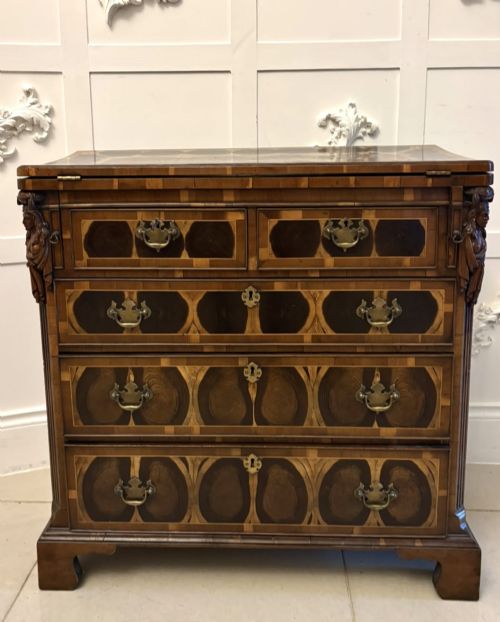
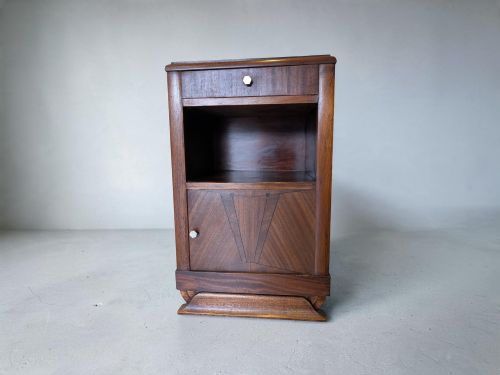
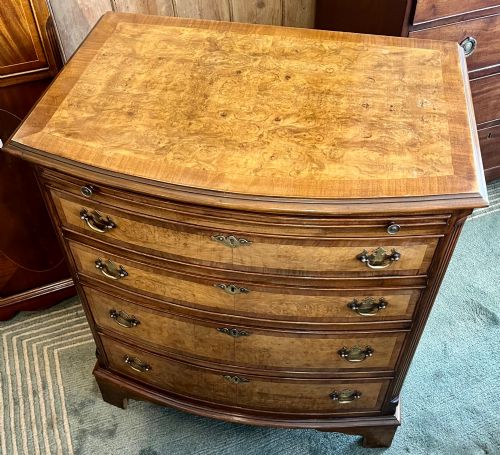
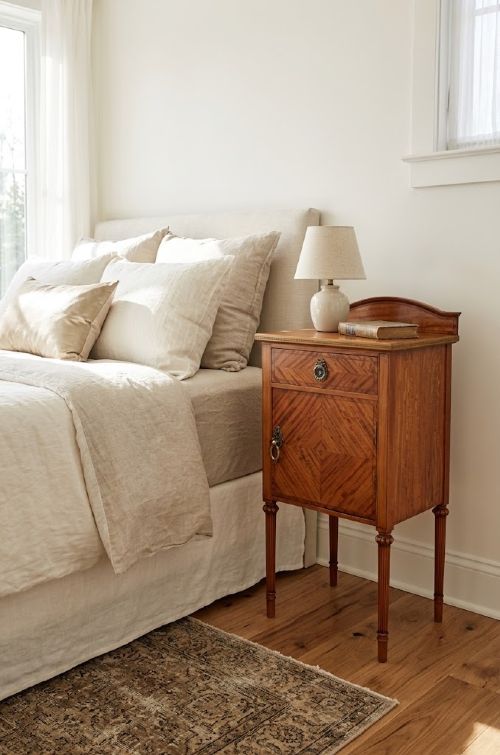
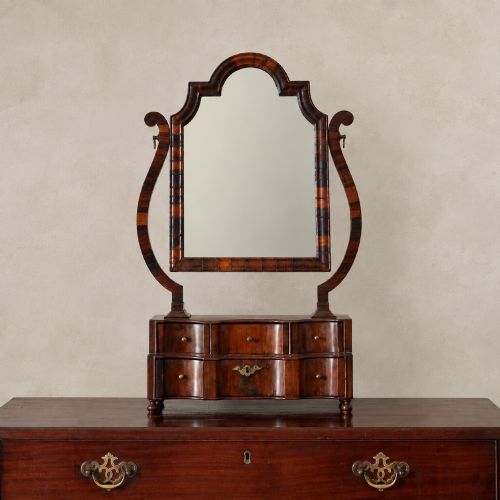
Antique veneer drawers encompass chests of drawers, commodes, and bedside tables displaying decorative timber surfaces applied to a secondary wood base. Buyers encounter pieces spanning the seventeenth century through to the Art Deco period and the 1930s, reflecting diverse historical tastes.
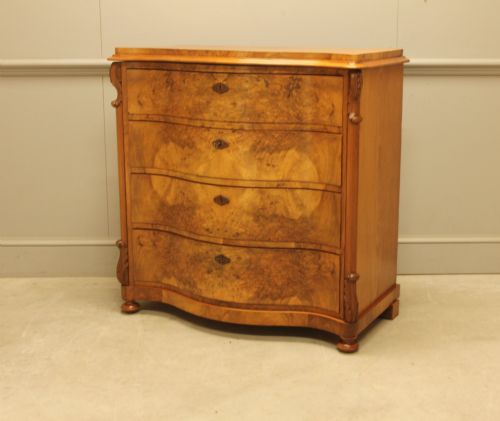
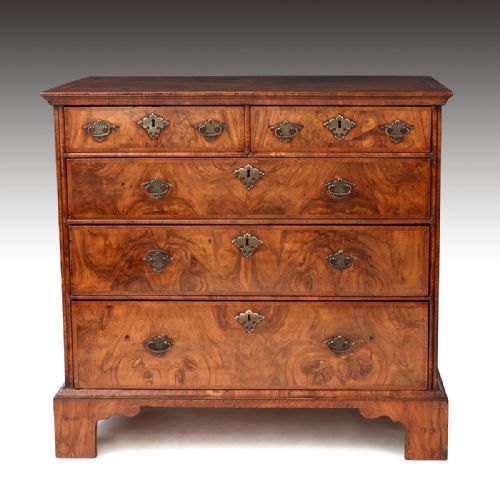
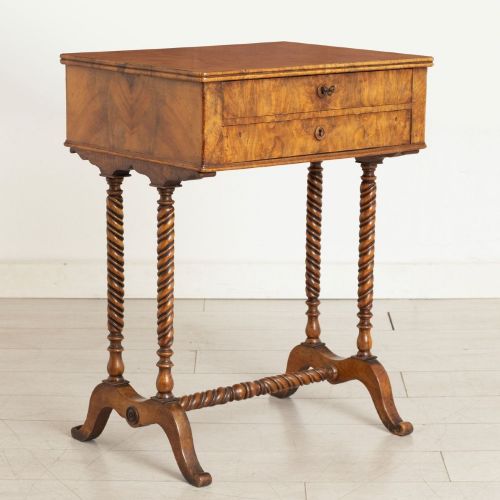
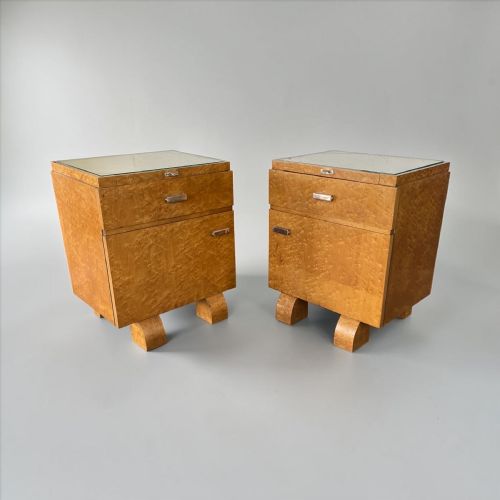
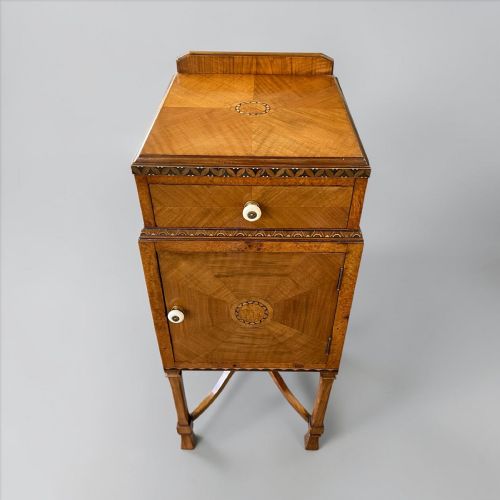
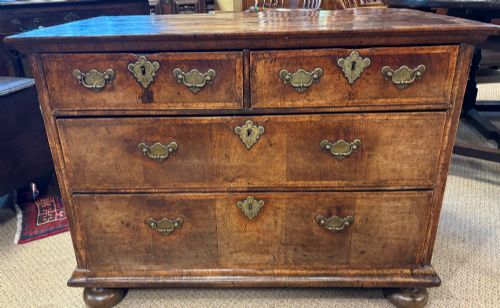
The most common forms on this page include chests of drawers and bedside tables finished in walnut veneer, burr walnut, flame mahogany, and oyster cuts. Pieces originate from English, French, Swedish, and wider continental workshops across the Georgian, Victorian, and William and Mary periods.
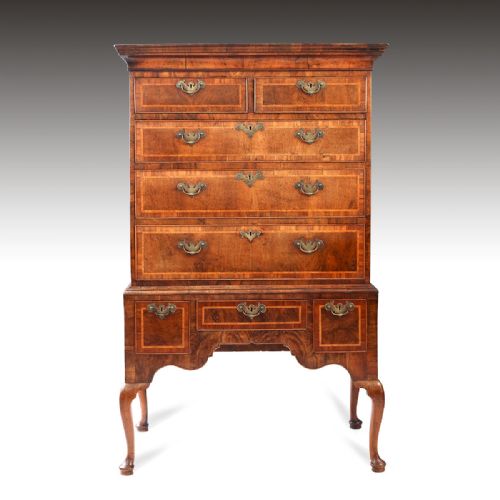
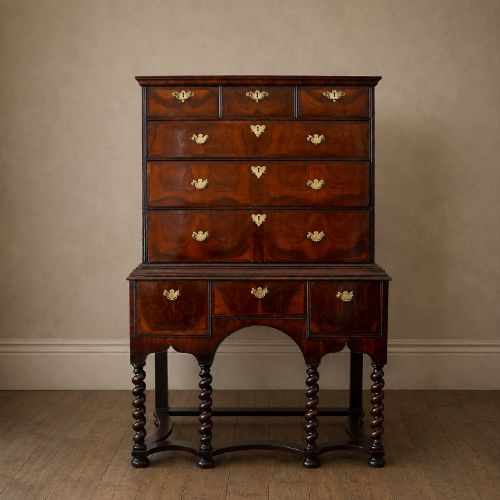
Earlier examples frequently utilise walnut and laburnum on stands, while later nineteenth-century pieces showcase burr ash, birch, and satinwood on larger chest and commode forms. Buyers select these items for their complex grain patterns and historical cabinet-making techniques.
How they were made
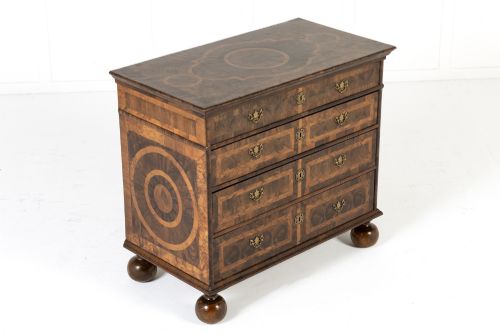
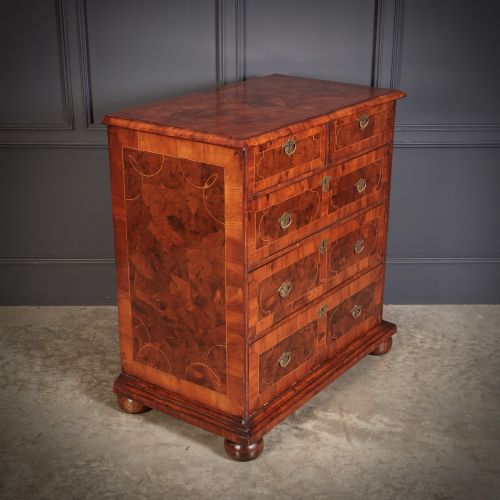
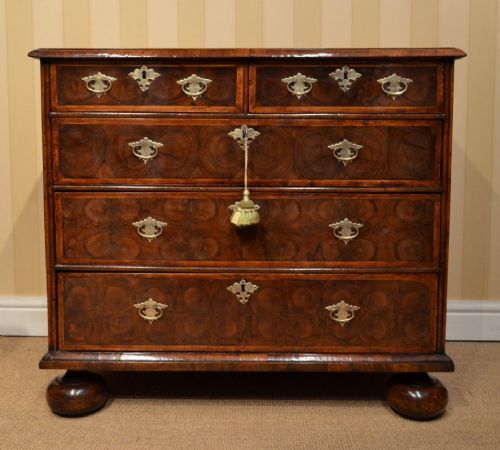
Cabinet-makers applied thin slices of decorative hardwoods such as walnut, mahogany, yew, and satinwood over stable secondary woods like oak or pine. Oyster cutting sliced small branches across the grain to produce circular or oval patterns resembling oyster shells.
Makers utilised natural adhesives to secure veneers, often arranging figured grains in symmetrical patterns or geometric parquetry to emphasise the natural movement within the timber. Brass hardware, including handles and escutcheons, complemented the rich tones of the polished wood surfaces.
Antique Veneer Drawers Retail Price Guide 2026
Typical asking prices for veneer drawers among the pieces listed under this phrase on Sellingantiques today, from the lower quarter to the upper quarter. They describe what is for sale here now, not the wider market.
Materials span walnut, oak, mahogany, burr ash, birch, and satinwood across multiple historical periods.
What varies in quality
The sophistication of the timber selection and grain matching dictates the distinction between standard and superior pieces. Highly figured burr walnut, flame mahogany, and olive wood demand greater skill in handling than plain veneers.
The precision of the foundational cabinet-making, including the tightness of drawer dovetails and the integrity of the underlying carcase, separates competent execution from master craftsmanship. Preservation of the original surface patination and minimal timber loss across the veneered panels elevate the standing of an individual piece.
The Antique Veneer Drawers Glossary
- Veneer
- A thin layer of figured wood applied to a solid secondary timber base. This technique allows cabinet-makers to display expensive or decorative grains efficiently.
- Oyster veneer
- Transverse slices of small branches arranged to resemble oyster shells. This method appears frequently on seventeenth-century and William and Mary furniture.
- Burr walnut
- Timber harvested from walnut tree growths containing distorted grain patterns. It produces highly ornamental swirling designs across drawer fronts and tabletops.
- Commode
- A low cabinet or chest of drawers developed in continental Europe. Many examples feature marble tops and sophisticated decorative veneers.
- Parquetry
- Geometric patterns assembled from small pieces of contrasting wood veneer. This technique decorates the surfaces of bedside tables and cabinets.
Antique Veneer Drawers: Frequently Asked Questions
How do I clean antique veneer drawers?
Dust surfaces regularly with a soft, dry cloth to prevent particulate accumulation. Avoid chemical sprays and excessive moisture that might penetrate historical polish.
Apply high-grade beeswax periodically to nourish the timber and maintain the sheen. Buff gently along the direction of the grain to protect the underlying veneer.
Are these drawers suitable for daily use?
Sturdy carcases and functional drawer construction allow for everyday storage of clothing or household items. Care must be taken to distribute weight evenly within the drawers.
Protect the top surfaces from excessive heat and standing liquids. Maintaining stable room humidity prevents the timber and veneer from expanding or contracting.
How can I tell a seventeenth-century piece from a nineteenth-century one?
Seventeenth-century pieces often feature oyster veneers, walnut, laburnum, or yew wood constructed on robust oak carcases. They frequently appear on elevated stands with geometric mouldings.
Nineteenth-century examples tend to utilise mahogany, burr ash, or birch on pine carcases. Their proportions and hardware styles reflect Victorian or Regency aesthetic standards.
What causes veneer to lift?
Fluctuations in atmospheric humidity and temperature cause the secondary wood and the decorative veneer to expand and contract at different rates. This movement weakens the historical animal glue holding them together.
Direct sunlight and dry central heating accelerate the degradation of old adhesives. Prompt professional conservation prevents further loss of the timber surface.