


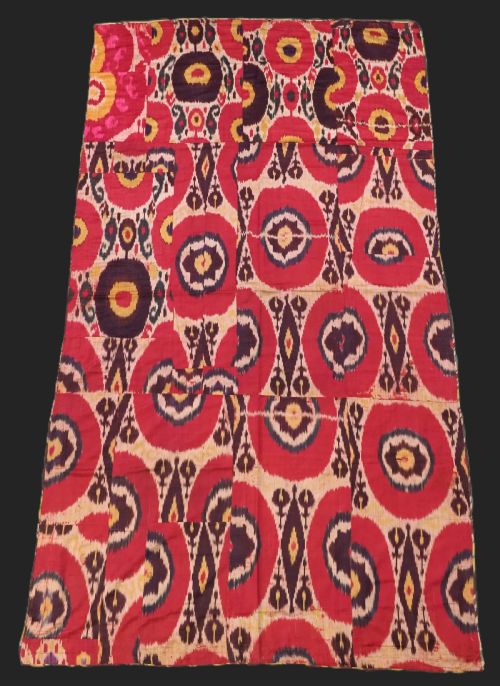


Antique Uzbek Tapestry
These antique uzbek tapestry pieces bring rich Central Asian embroidery and textile work into modern interiors.
Antique Uzbek Tapestry
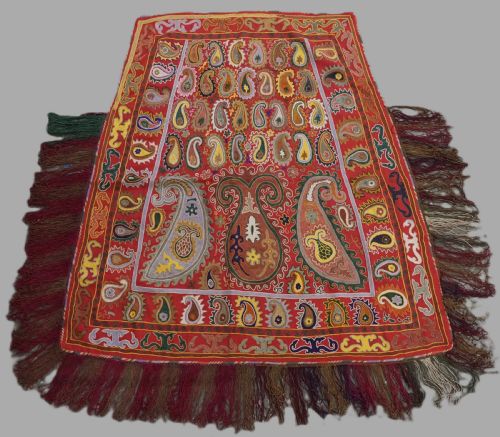
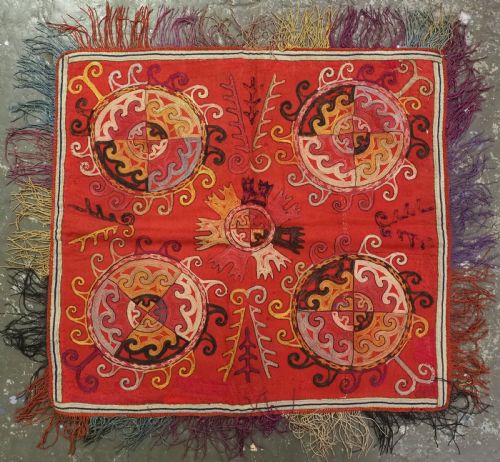
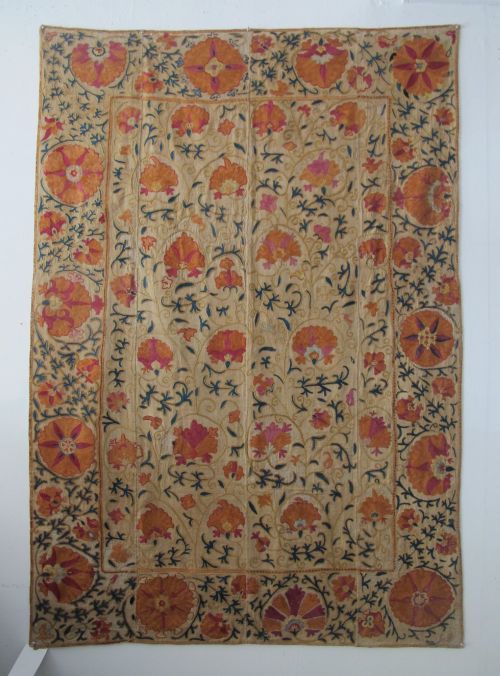
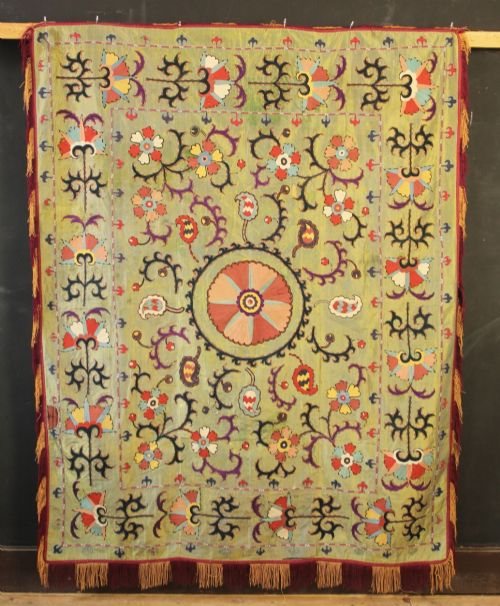
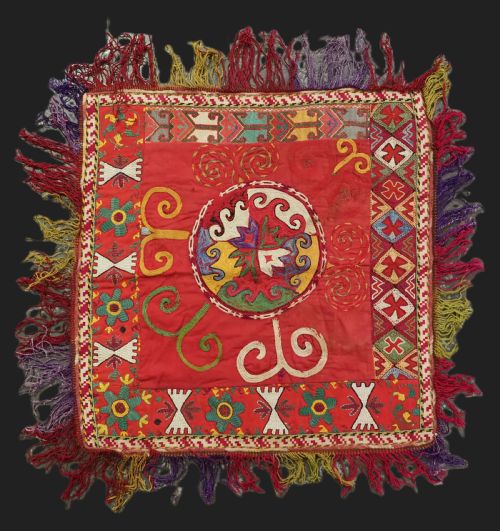
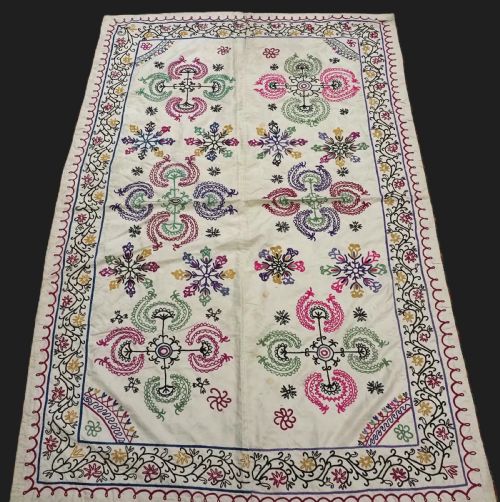
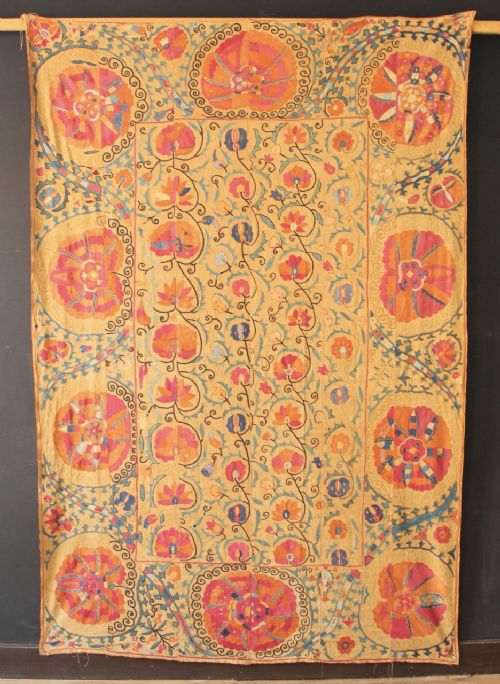
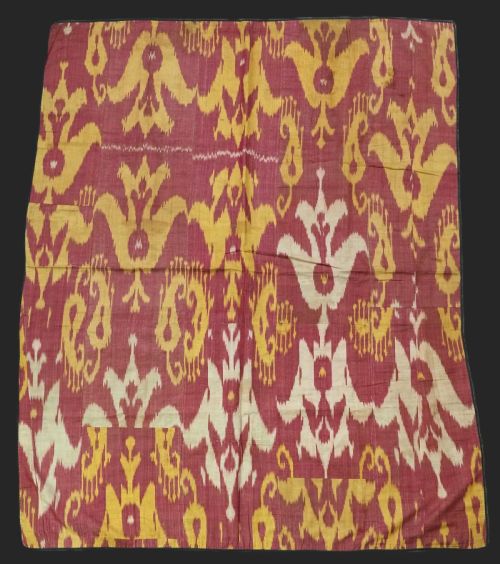
An antique uzbek tapestry encompasses a vibrant category of Central Asian textiles, primarily featuring embroidered suzanis, dowry hangings, and ikat panels created across the nineteenth and early twentieth centuries. Buyers typically encounter regional suzanis from centres such as Bokhara, Tashkent, Samarkand, and Shahrisabz, alongside tribal pieces attributed to the Lakai and Tajik groups. These domestic textiles served various traditional functions, ranging from wall hangings and bed covers to ceremonial horse covers and dowry items.
The selections on this page demonstrate the distinct forms found within Central Asian folk art, including smaller nim suzanis, prayer formats, and multi-strip kilim weaves. Regional variations reveal specific design vocabularies, such as the large central stars of Tashkent palak suzanis or the dynamic geometric panels of the Lakai tribe. Each piece reflects the traditional domestic craft of Uzbek households from eras spanning the eighteen-hundreds to the nineteen-twenties.
How They Were Made
Maker communities constructed these textiles using foundational grounds of cotton, wool, or camel hair, often woven in multiple narrow strips before being joined together. Artisans then applied intricate surface decoration utilising hand-spun silk thread and wool. Embroidery techniques predominantly feature dense needlework, such as chain stitch and couching, which build up heavy floral or geometric motifs across the fabric.
Dye methods relied on natural sources to achieve the characteristic deep red, yellow, black, and green grounds seen on these panels. Silk ikat fabrics utilised a resist-dyeing process on the threads prior to weaving, producing the blurred, dynamic patterns typical of adras panels. The combination of sturdy cotton or wool foundations with lustrous silk embroidery created textiles intended to endure decades of domestic ceremonial use.
Antique Uzbek Tapestry Retail Price Guide 2026
Typical asking prices for uzbek tapestry among the pieces listed under this phrase on Sellingantiques today, from the lower quarter to the upper quarter. They describe what is for sale here now, not the wider market.
Listings feature textiles spanning the nineteenth and early twentieth centuries, incorporating foundations of cotton, wool, and camel hair embroidered with silk thread.
What Varies in Quality
The density and coverage of the embroidery heavily dictate the standard of an antique uzbek tapestry, distinguishing full-work panels from lighter designs. Tashkent palak suzanis and similar high-end examples feature intensive, wall-to-wall needlework that completely obscures the underlying cotton or linen ground. Lesser density appears in smaller nim suzanis or fragments where the background fabric remains largely exposed between sparse floral motifs.
Design execution and the nuance of the colour palette further separate standard examples from finer pieces. Workshops in Samarkand and Bokhara achieved superior chromatic depth through expert natural dyeing, whereas simpler regional pieces display more faded or straightforward tones. The precision of the geometric or floral layout, alongside the structural integrity of the joined woven strips, marks the difference between standard domestic items and masterworks.
The Antique Uzbek Tapestry Glossary
- Ikat
- A dyeing and weaving technique where threads are resist-dyed prior to being woven into fabric. This creates a characteristic hazy, feathered edge along the pattern outlines.
- Nim Suzani
- A smaller scale version of a standard suzanis, often measuring around half the size. These compact panels served as smaller wall decorations or utility covers.
- Palak
- A large, fully embroidered suzani style dominated by a massive central medallion or star motif. These dense compositions typically originated from the Tashkent region.
- Adras
- A traditional semi-silk fabric woven with a cotton warp and a silk weft. This hybrid material combined the durability of cotton with the sheen of silk in ikat panels.
- Ilgich
- A specific form of tribal embroidery created by the Lakai people for use as a dowry hanging. They are known for bold, abstract animal and geometric motifs.
Antique Uzbek Tapestry: Frequently Asked Questions
What is a suzani used for?
These textiles functioned primarily as domestic furnishings in traditional Central Asian households, serving as wall hangings, bed covers, and ceremonial items for weddings.
Families also created specific pieces like horse covers and storage bag fronts, integrating fine embroidery into daily nomadic and settled life.
How do I hang an antique textile safely?
Mounting requires weight to be distributed evenly across the textile rather than pinned at single points. Conservation-grade velcro stitching or a custom fabric sleeve allows the piece to hang flat without straining the old cotton or silk threads.
Keeping the display away from direct sunlight protects the natural dyes from fading over time.
What is the difference between a suzani and an ikat?
Suzanis are surface-embroidered textiles where artisans stitch decorative patterns directly onto a woven foundation fabric using silk or wool threads.
Ikats are woven fabrics where the pattern is dyed onto the threads before the weaving process even begins, creating integrated designs within the cloth.
Which regions produced these embroidered textiles?
Urban centres such as Bokhara, Samarkand, Tashkent, and Shahrisabz developed distinct embroidery traditions with complex floral and medallion layouts.
Nomadic and semi-nomadic groups, notably the Lakai and Tajik tribes, produced smaller dowry pieces and horse covers featuring distinct geometric tribal motifs.