



Antique Upholstered Square Stool
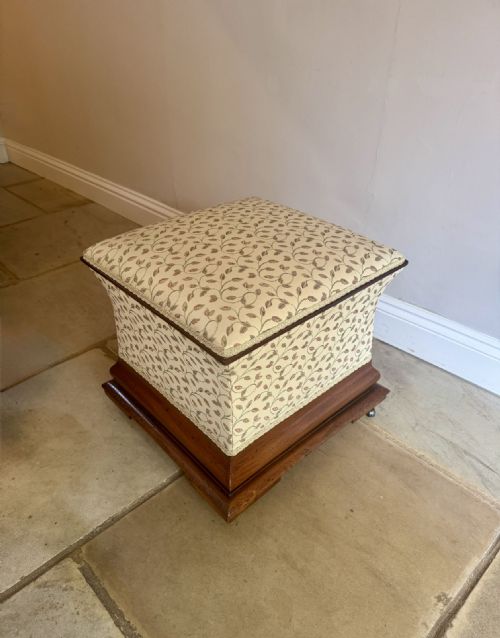
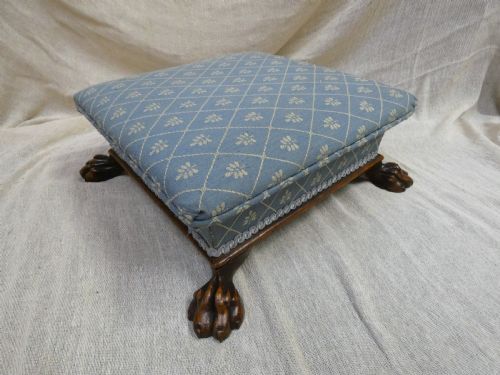
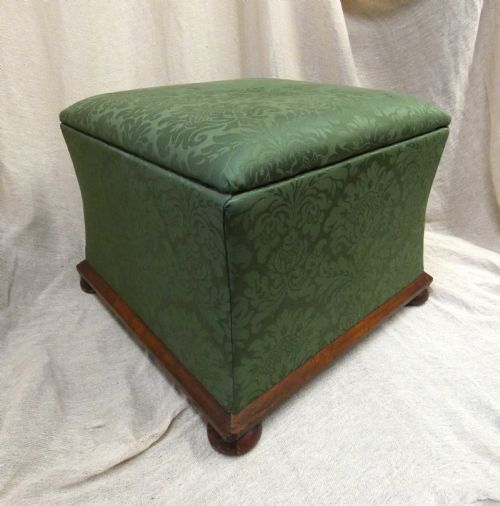
An antique upholstered square stool brings solid timber frames and traditional textile covers together for daily utility and understated proportion.
Antique Upholstered Square Stool
The search phrase antique upholstered square stool leads you to compact seating forms designed for resting feet or dressing tables across multiple historical eras.
You are most likely to encounter Victorian and 19th-century examples alongside earlier Georgian and Regency pieces framed in timber.
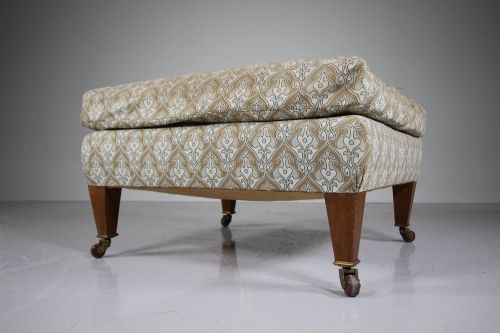
These stools function as footstools, dressing table seats, and ottomans, taking up minimal floor space while offering substantial textile or leather surfaces.
How they were made
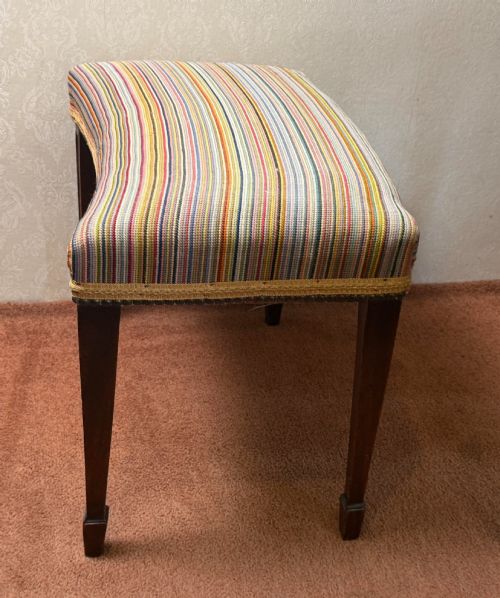
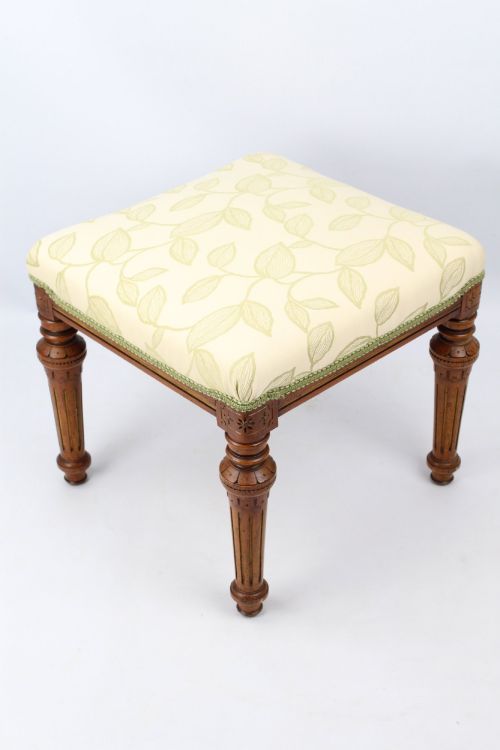
Frames rely on hardwoods such as mahogany, walnut, and oak, shaped with turned, tapered, or spiral carved legs.
Upholstery incorporates traditional textile, needlepoint, fabric, and leather stretched over sturdy wooden foundations often secured with brass details.
Listings feature mahogany, walnut, oak, and rosewood frames paired with fabric, leather, and needlepoint upholstery.
What varies in quality
Timber selection and frame construction dictate durability, distinguishing heavy native hardwoods from simpler secondary woods.
The integrity of the joinery and the sophistication of leg turning, from plain tapered lines to detailed carving, separate standard workshop output from finer cabinet work.
Howard and Sons
The Antique Upholstered Square Stool Glossary
- Ottoman
- A low, upholstered seat or footstool without a back or arms, often built on a square or rectangular footprint. These pieces serve multiple domestic functions.
- Needlepoint
- A type of canvas work embroidery used for covering furniture tops. It provides a textured, patterned decorative surface.
- Tapering legs
- Furniture supports that gradually narrow toward the base. This design element lightens the visual weight of the frame.
- Ebonised
- Wood finished with a dark stain or pigment to imitate ebony. This treatment creates a strong visual contrast against lighter materials.
Antique Upholstered Square Stool: Frequently Asked Questions
What is an antique square stool used for?
These pieces function primarily as footstools, dressing table seats, or small ottomans for domestic interiors. Their compact shape allows them to sit easily beneath tables or beside armchairs.
Historically, they provided practical utility in bedrooms and living spaces while displaying the prevailing decorative style of their period.
How do I identify a Georgian stool?
Georgian pieces typically feature heavy timber frames made from mahogany or oak, often displaying simple square tapering legs or sturdy construction methods.
They rely on proportion rather than excessive ornamentation, reflecting the architectural tastes of the eighteenth century.
Are Victorian stools different from earlier ones?
Victorian examples introduce a wider variety of framed woods like walnut and gilt oak alongside diverse upholstery choices including needlepoint and leather.
They also encompass specialised forms such as dressing table stools and piano stools alongside traditional footstools.
How should I care for the upholstery?
Maintenance depends on whether the top is finished in leather, fabric, or needlepoint. Regular dusting and gentle cleaning help preserve the textile surface.
Avoid placing these items in direct sunlight to prevent the timber frame and covering materials from fading over time.