

Antique Timber Seating Pair
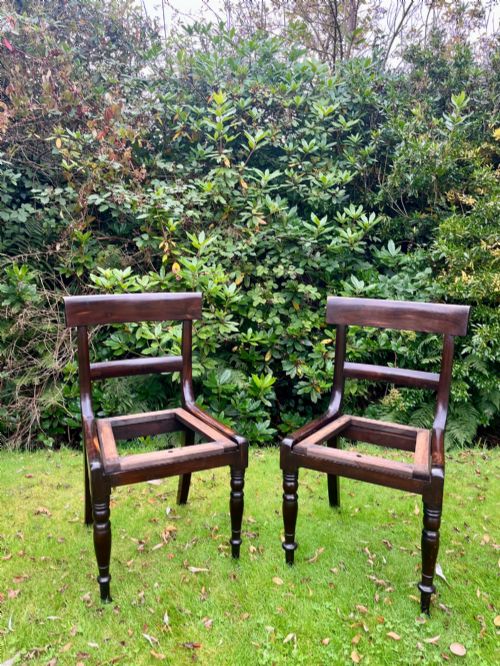
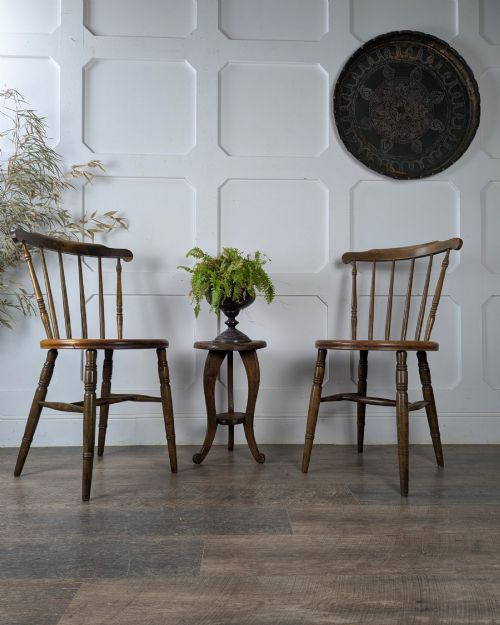
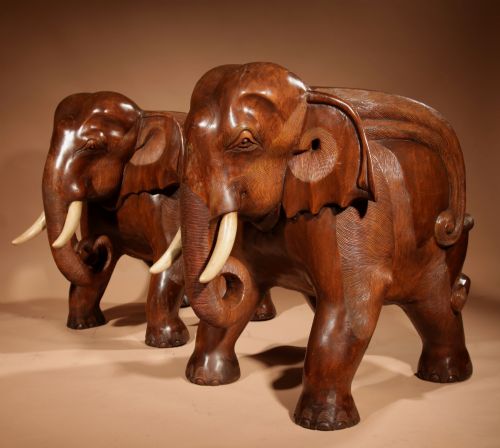
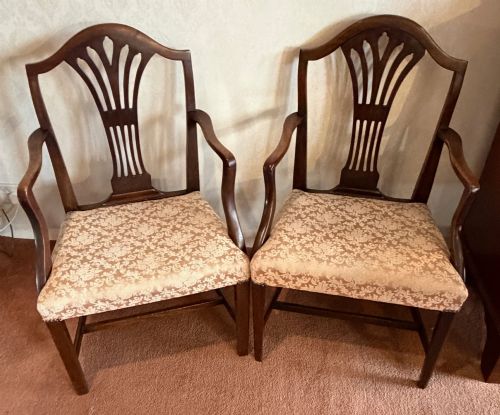
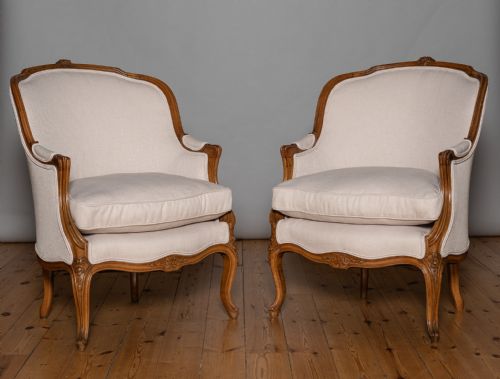
An antique timber seating pair brings dual symmetry and period character to a room, ranging from mahogany hall chairs to elm benches.
Antique Timber Seating Pair
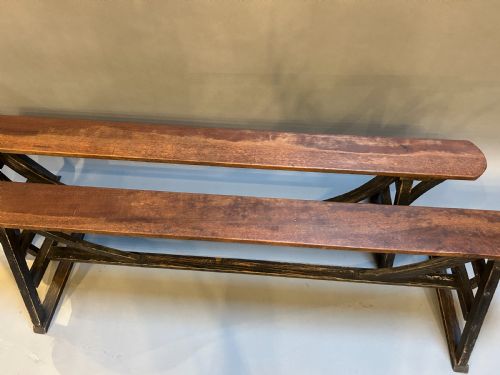
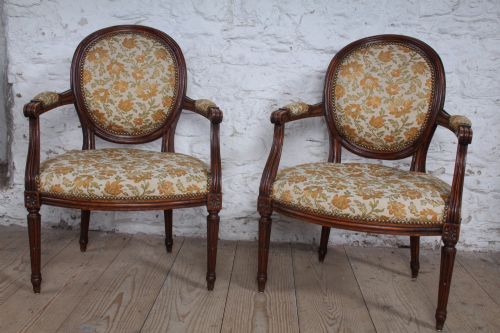
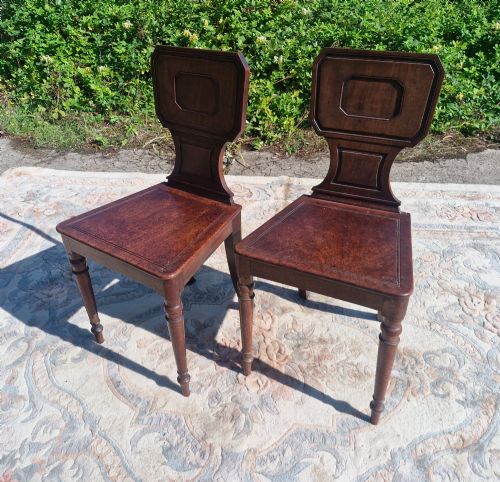
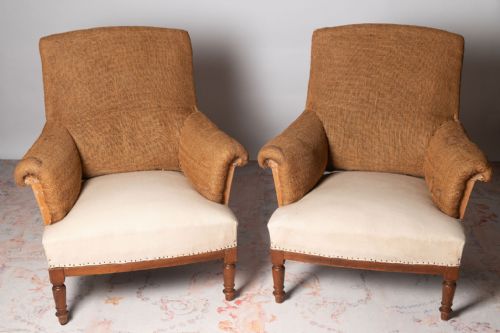
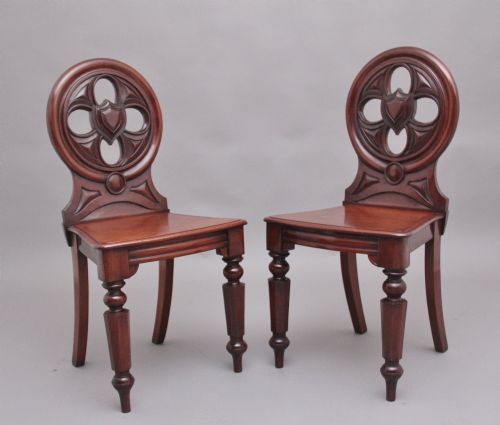
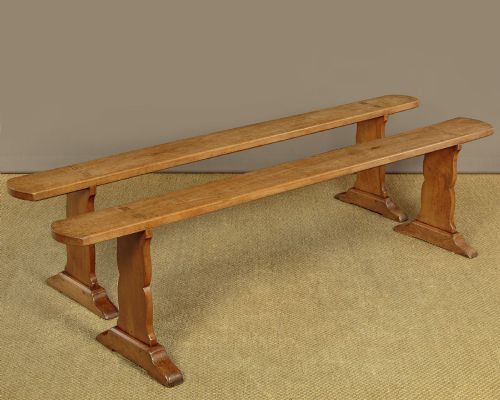
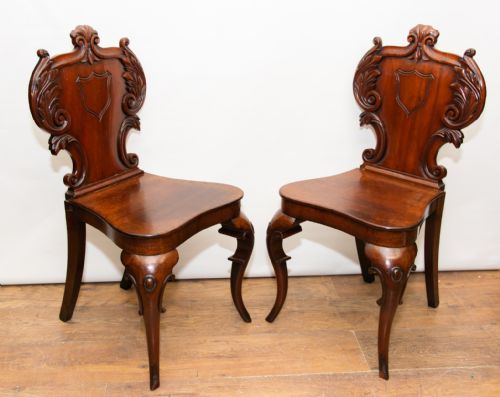
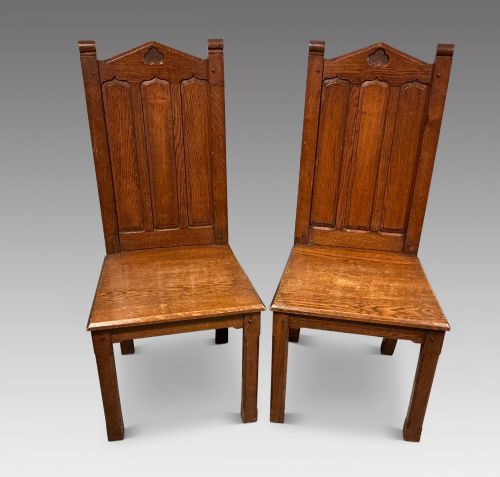
The most common examples on this page are hall chairs fashioned from mahogany or oak, often bearing carved shields or shell backs intended for grand entryways. Alongside these formal pieces, kitchen chairs, armchairs, and rustic benches offer alternative forms of twin seating.
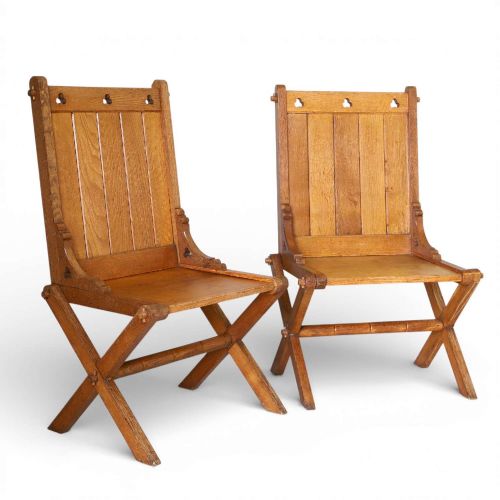
Originating across England, France, Italy, America, and China, these pairs include stylistic expressions from Regency, Victorian, Gothic Revival, and William IV eras. Each pairing demonstrates the historical demand for balanced furniture arrangements in domestic interiors.
How they were made
Cabinetmakers and joiners shaped these pieces using dense hardwoods like mahogany and oak alongside domestic timbers such as elm, beech, and cherrywood. Structural integrity relied on traditional joinery methods suited to the specific demands of chair and bench construction.
Carving served as the primary decorative technique, yielding heraldic shields, trefoil details, shell backs, and bobbin turnings. Some examples integrate cast iron elements alongside timber components to provide enhanced durability for garden benches.
Listings feature woods including mahogany, oak, elm, beech, cherrywood, and rosewood across the nineteenth and early twentieth centuries.
What varies in quality
The depth and crispness of carved details distinguish finer examples, particularly on shield backs, shell motifs, and heraldic crests where hand-chiselling defines the silhouette. Plain timber surfaces rely on the natural figure of the wood and the precision of the joinery for their visual appeal.
Material selection dictates longevity, with dense hardwoods like mahogany and quarter-sawn oak holding sharp lines and structural stability better over centuries than softer woods. Consistency between the two pieces of a pair, from timber grain to turning proportions, marks the success of their original matching.
Gillows·White, Allom and Co·Hille
The Antique Timber Seating Pair Glossary
- Hall chair
- A stiff-backed wooden seat traditionally placed in an entrance hallway, often featuring a solid carved timber seat and a heraldic shield back.
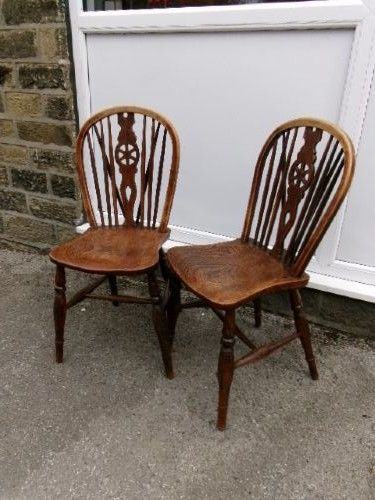
- Windsor wheelback
- A chair style featuring a pierced splat shaped like a cartwheel centred in the backrest above a solid wooden seat.
- Gothic Revival
- A nineteenth-century design movement drawing inspiration from medieval architecture, characterised by pointed arches, trefoil motifs, and heavy dark oak.
- Bobbin corner
- A style of furniture construction utilising turned wooden pieces resembling spools or bobbins linked together to form the frame and legs.
- Savonarola
- A folding armchair constructed from multiple intersecting wooden curves, named after the fifteenth-century Florentine friar.
Antique Timber Seating Pair: Frequently Asked Questions
Where were hall chairs placed?
Hall chairs stood in entrance halls and corridors of large houses, intended for brief seating rather than long-term comfort.
Their solid timber construction and formal backs matched the grand architectural scale of period entryways.
How do I care for antique timber seats?
Maintain antique wooden surfaces by keeping them away from direct heat sources and sudden humidity changes that cause timber to split.
Apply occasional traditional wax polish to nourish the grain without building up heavy chemical layers.
What is the difference between a hall chair and a side chair?
Hall chairs usually feature solid timber seats without upholstery and prominent wooden back panels bearing crests or coats of arms.
Side chairs generally offer lighter frames and were designed for dining rooms, bedrooms, or parlours rather than grand hallways.