

Antique Umbrella Stand Iron
An antique umbrella stand iron brings heavy structural utility and decorative flourish to a hallway.
Antique Umbrella Stand Iron
When searching for an antique umbrella stand iron, buyers encounter heavy hallway receptacles designed to store wet walking gear and canes. These pieces date principally from the Victorian and Edwardian eras, stretching from the mid-nineteenth century into the early twentieth century.
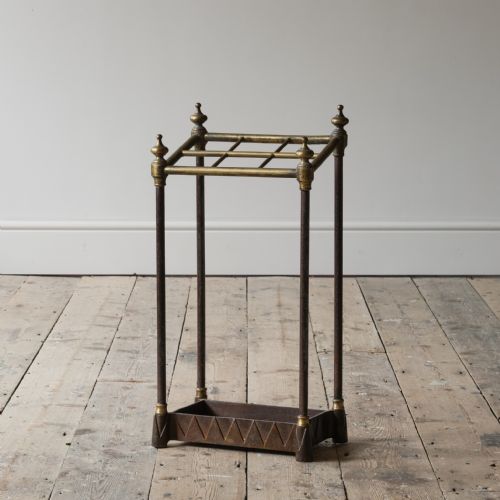
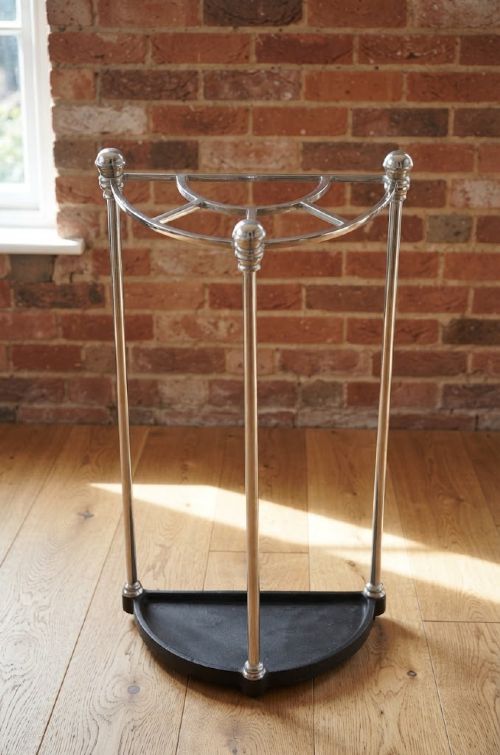
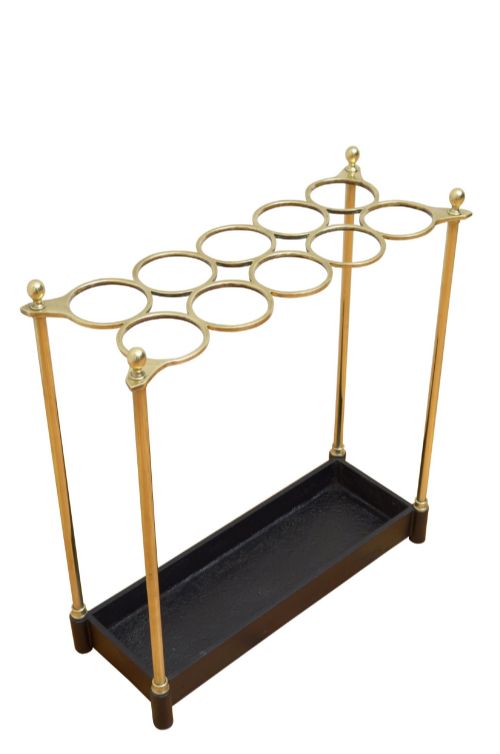
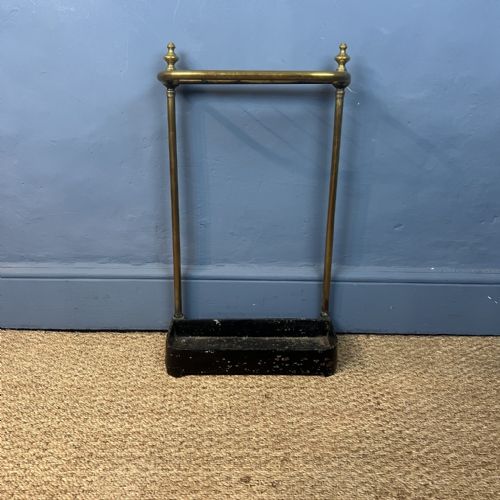
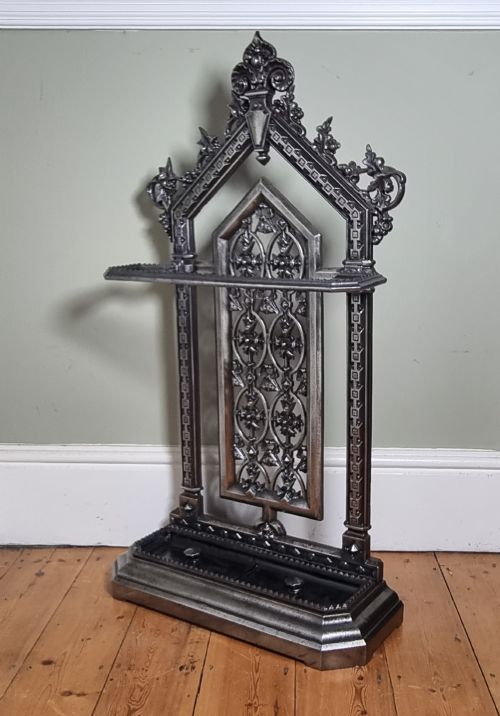
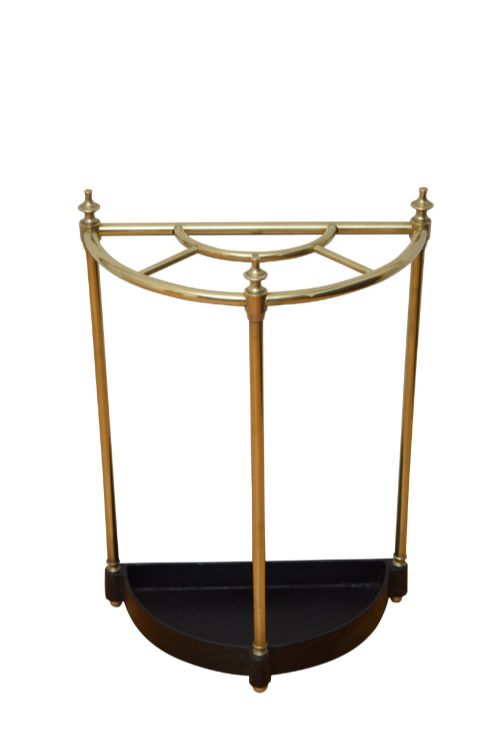
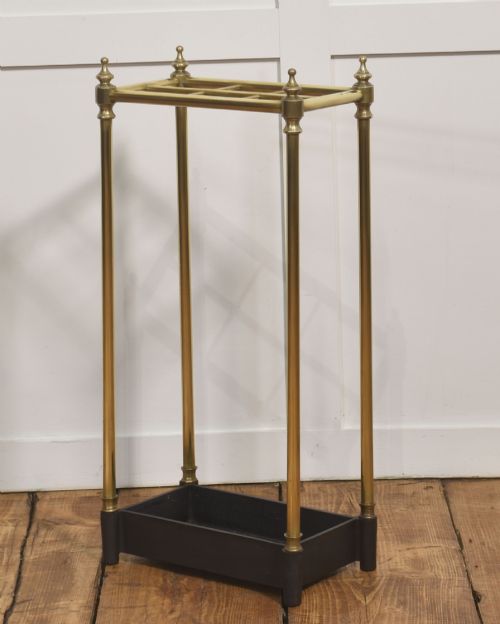
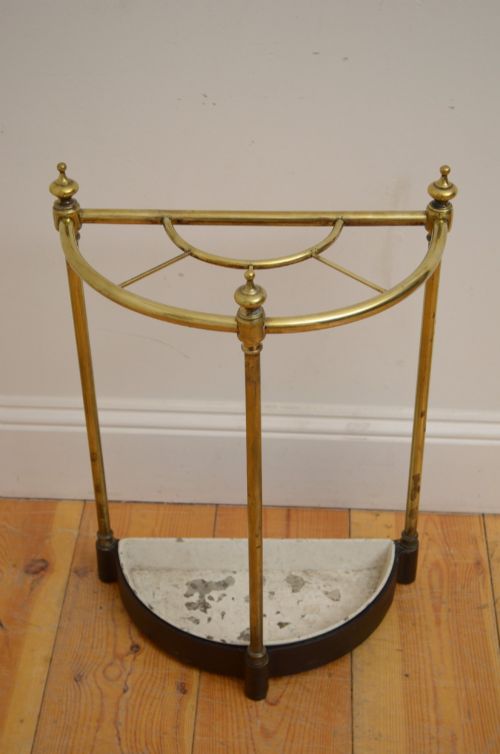
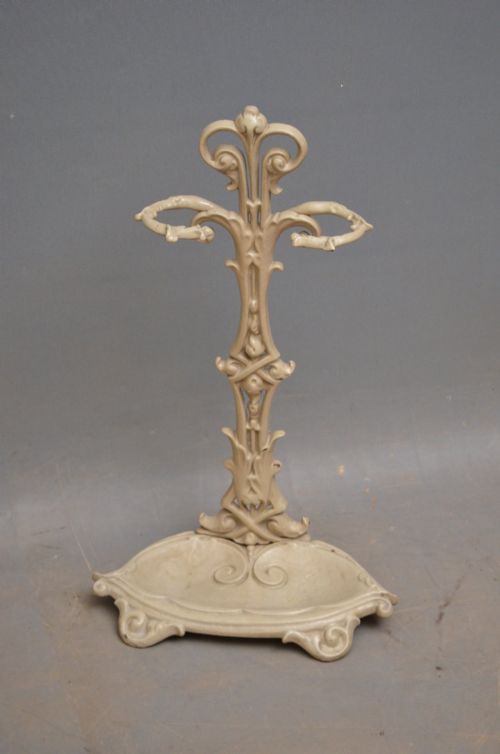
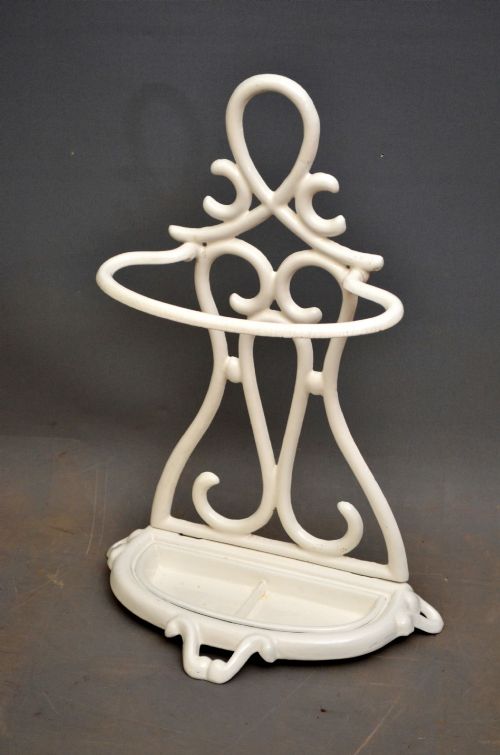
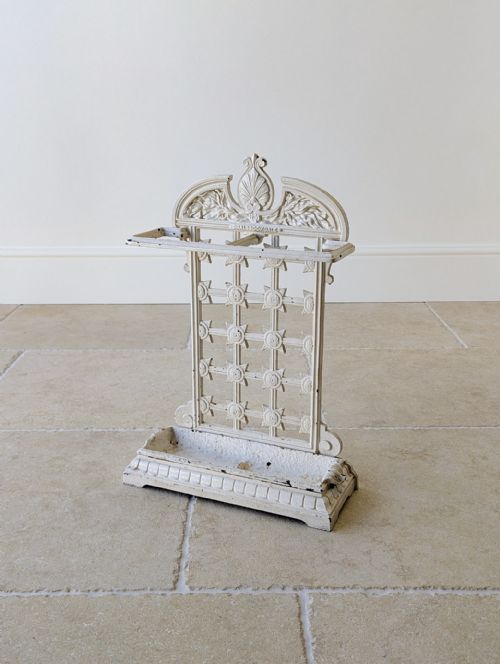
The most common version met on this page is the cast iron stick stand, often configured as a free-standing rack or a semi-circular frame meant to sit flush against a wall. Many integrate drip trays at the base to catch water from wet umbrellas.
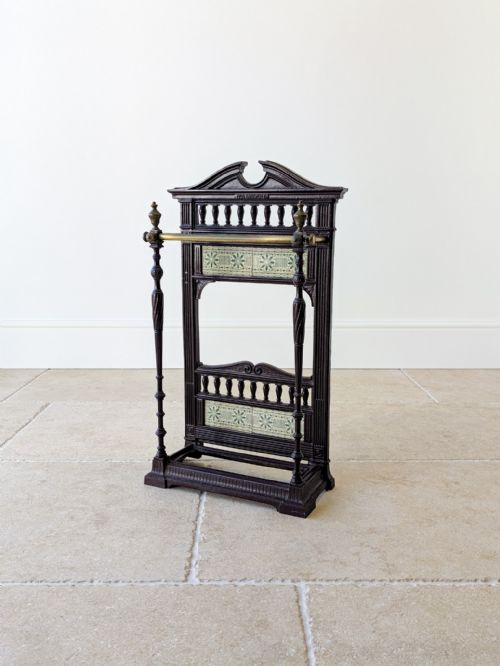
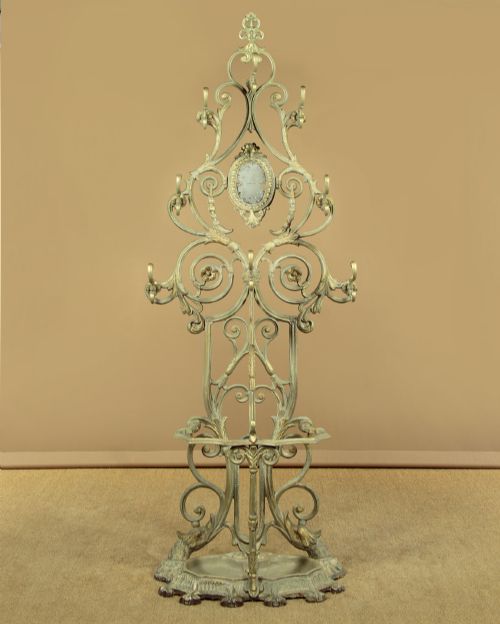
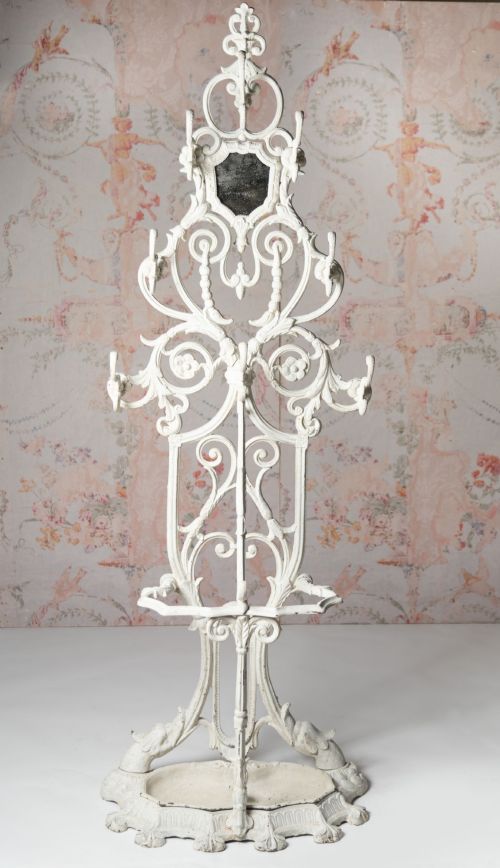
Beyond standalone racks, the selection includes multifaceted hall stands that combine umbrella storage with coat hooks, hat racks, and occasional mirrors. These larger hall pieces frequently pair iron frameworks with wooden panels or brass detailing.
Materials and Construction Methods
Foundry work dominates the construction, utilising cast iron poured into intricate moulds to create openwork lattice, scrollwork, and naturalistic motifs. Iron components are frequently painted, enamelled, or plated with nickel to prevent rust and provide a finished surface.
Designers employed versatile styles ranging from Rococo Revival and Gothic to the flowing organic lines of Art Nouveau and the structured geometry of Art Deco. Natural forms such as faux bamboo or faux bois surfaces are cast directly into the metal.
Footballer figures occasionally emerge from nineteenth-century foundries, guarding umbrellas with athletic resolve.
Determinants of Quality and Craftsmanship
The crispness of the casting defines the upper tier of these pieces, where moulded details remain sharp, deep, and clearly articulated rather than softened by worn patterns. Makers who invested in superior pattern-making produced cleaner surface textures and more refined relief work.
Structural integrity relies on the retention of original matching drip trays and secure internal division bars that have not suffered from replacement or amateur welding over decades of heavy utility.
Attribution to known ironworks or documented designers elevates certain examples, moving ordinary utilitarian hall furniture into the realm of signed design history.
Coalbrookdale·Thomas Jeckyll·Falkirk Ironworks·Christopher Dresser
The Antique Umbrella Stand Iron Glossary
- Demi-lune
- A half-moon shape designed to allow the stand to sit flat against a hallway wall without protruding too far into the corridor space.
- Faux bamboo
- A decorative moulding technique that mimics the segmented joints and natural texture of bamboo stalks within cast iron.
- Drip tray
- The removable metal or ceramic dish positioned at the base of the stand to collect rainwater from wet umbrellas.
- Finial
- A decorative ornamental crowning feature, often cast in brass or iron, topping the vertical posts of a rack.
- Hall stand
- A large furniture piece combining an umbrella stand with coat hooks, hat pegs, and sometimes a central mirror.
Antique Umbrella Stand Iron: Frequently Asked Questions
How do I identify a Victorian iron stand?
Victorian examples typically display heavy cast iron construction with ornamentation ranging from Gothic revival scrolls to Aesthetic movement patterns. They often carry registration marks or manufacturer stamps from the mid to late nineteenth century.
The presence of deep casting, integrated drip pans, and robust weight characterises this nineteenth-century output.
Are drip trays usually original?
Many surviving stands retain their original matching metal or ceramic catch trays at the base. Because these trays were removable and subject to constant moisture, replacements are common.
Matching patination between the frame and the tray indicates a higher degree of originality.
What is faux bamboo iron work?
Faux bamboo refers to cast iron moulded to replicate the segmented nodes and textures of natural bamboo canes. This style gained popularity during the late nineteenth century under Japanese aesthetic influences.
Foundries used this technique to create whimsical hall stands and umbrella racks.