




Antique Two Stone Ring
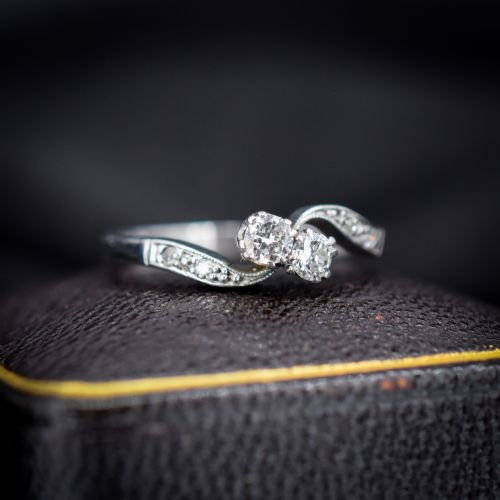
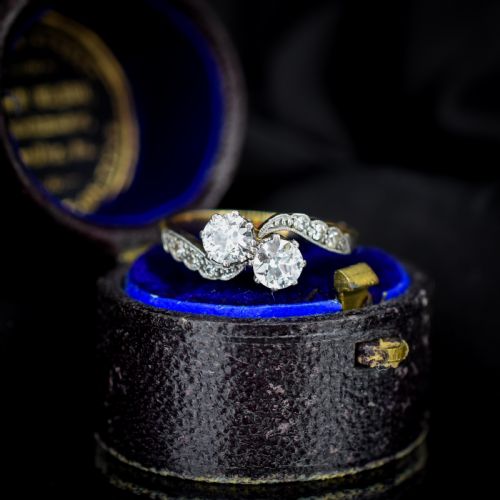
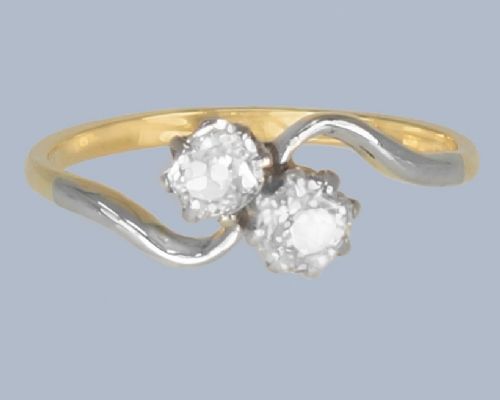
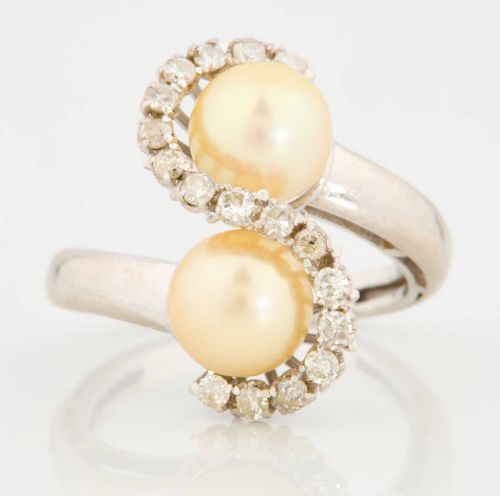
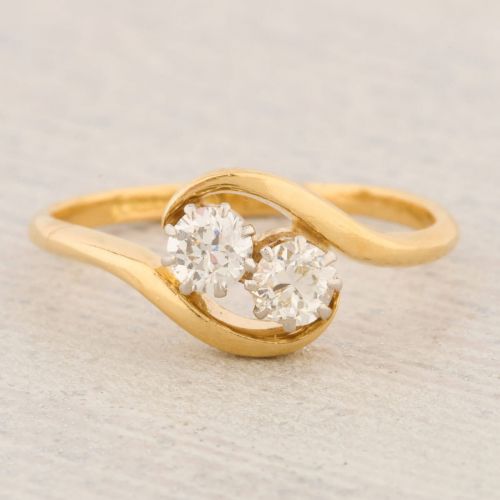
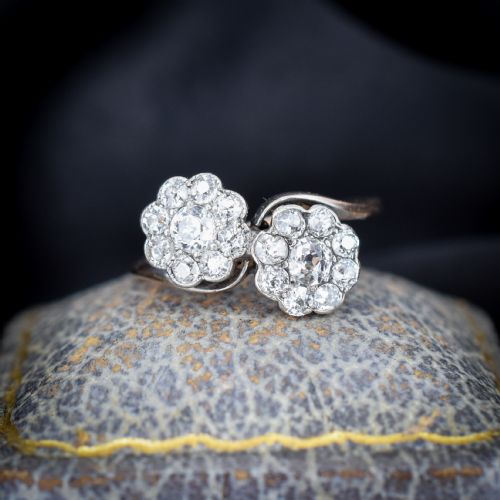
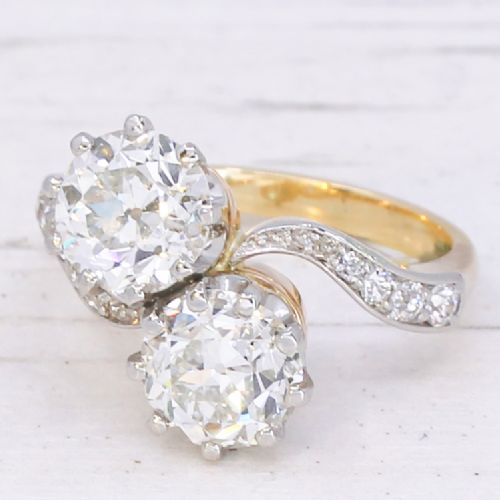
An antique two stone ring pairs twin gems in bypass, twist or toi et moi settings to symbolise two lives joined as one.
Antique Two Stone Ring
An antique two stone ring centres upon a pair of feature stones, most commonly arranged in a twist, bypass or toi et moi configuration. These designs date from the Edwardian era through to the 1920 and 1930 Art Deco period.
The pieces appearing in this category span platinum and various carats of gold, including 18ct yellow gold and standard 18ct gold. Gemstone combinations range from matched diamonds to pairs featuring sapphire, ruby, pearl and old cut diamonds.
Forms vary from delicate crossover bands to cluster arrangements and linear twists that sit low to the finger. The enduring appeal lies in the symbolic pairing of two distinct gems within early twentieth-century settings.
Materials and construction
Jewellers constructed these rings using platinum or 18ct gold, often combining yellow gold bands with white metal settings to highlight the stones. Old cut diamonds dominate the gemstone selections, accompanied by natural pearls, sapphires and rubies.
Settings rely on hand fabrication methods typical of the Edwardian and Art Deco periods, shaping precious metals into flowing twists and secure bypass shoulders. Stones are held by precise claw or bezel settings designed to maximise light entry into old cut facets.
Antique Two Stone Ring Retail Price Guide 2026
Typical asking prices for two stone ring among the pieces listed under this phrase on Sellingantiques today, from the lower quarter to the upper quarter. They describe what is for sale here now, not the wider market.
Listings feature platinum, 18ct yellow gold, diamonds, sapphires, rubies and pearls across Edwardian, 1920 and 1930 periods.
Assessing quality and craftsmanship
Quality rests in the harmony of the two stones and the fluidity of the metalwork, whether forming a clean platinum twist or an 18ct yellow gold crossover. Superior examples display balanced proportions where neither gem overpowers the other.
The integrity of the setting work separates finer pieces, showing crisp lines in Art Deco designs or delicate wirework in Edwardian styles. The selection of matched or complementary stones - such as pairing a sapphire with a ruby alongside old cut diamonds - dictates the distinction of the piece.
The Antique Two Stone Ring Glossary
- Toi et Moi
- French for you and me, describing a ring style featuring two main stones placed side by side or in a twist. This romantic configuration gained immense popularity during the Edwardian period.
- Bypass ring
- A design where the shank wraps around the finger and the two ends pass each other without meeting. This creates a flexible, spring-like visual movement in the metal.
- Old cut diamond
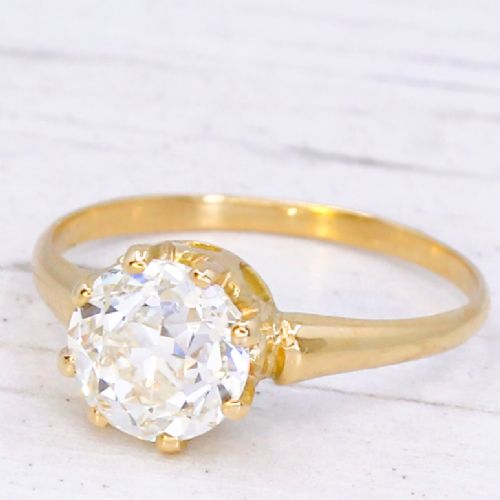
- A hand-faceted diamond cut before modern machinery standardise proportions, featuring a small table and high crown. These stones produce a warm, candlelit sparkle distinct from modern brilliant cuts.
- Crossover ring
- A setting where the shoulders of the band cross over one another as they approach the centre stones. It wraps the finger with dynamic overlapping lines.
Antique Two Stone Ring: Frequently Asked Questions
How do I date an antique two stone ring?
Dating relies on stylistic clues and material choices characteristic of specific decades. Edwardian pieces often showcase delicate platinum work, while 1920 and 1930 Art Deco examples lean towards geometric twists and bold platinum settings.
Gold purity marks and gemstone cut styles, particularly old cuts, further narrow down the era of manufacture.
Are old cut diamonds different from modern stones?
Old cut diamonds possess hand-cut facets fashioned individually by master cutters rather than automated machinery. They feature smaller tables, higher crowns and open culets that create a softer, deeper scintillation.
This distinct facet arrangement gives antique rings a characteristic visual charm unique to pre-modern eras.
Can I wear a two stone ring every day?
These rings were built for daily wear using durable metals like platinum and 18ct gold. However, their antique nature requires mindful care, especially with softer gems like pearls or older prong settings.
Regular checks by a jeweller ensure the twin stones remain secure within their historic mounts.