
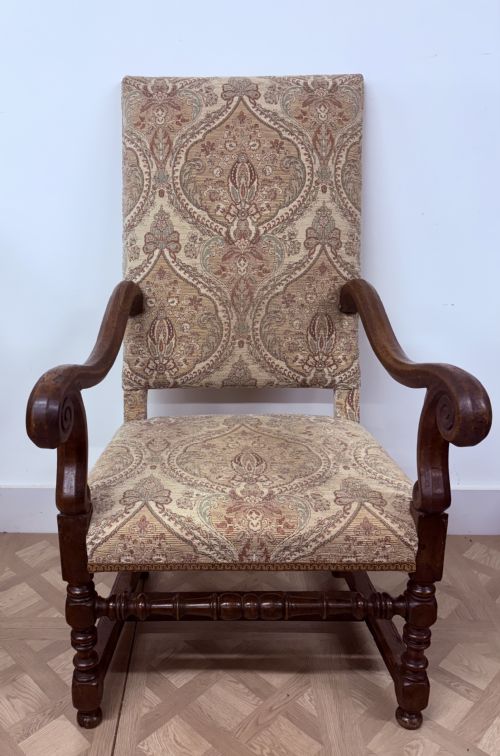


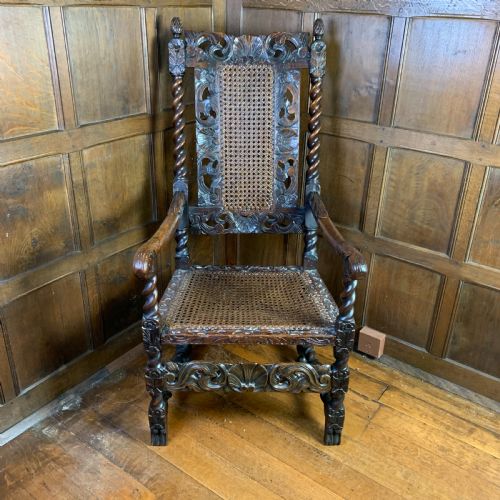
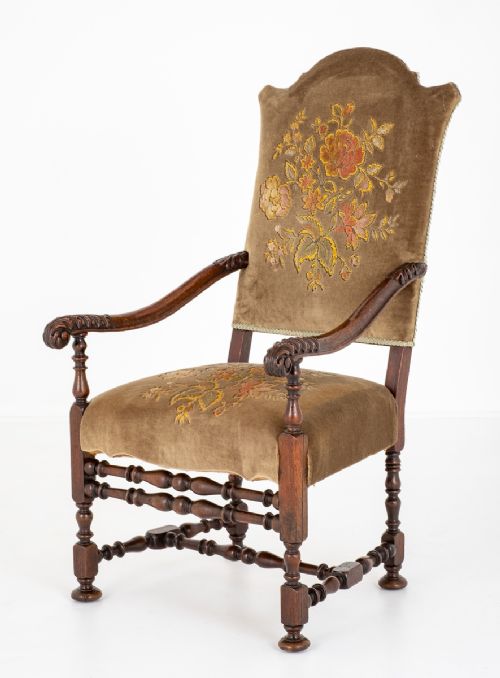

Antique Turned Throne Chairs
Antique turned throne chairs command the room with their architectural frame, offering monumental presence and centuries of skilled joinery.
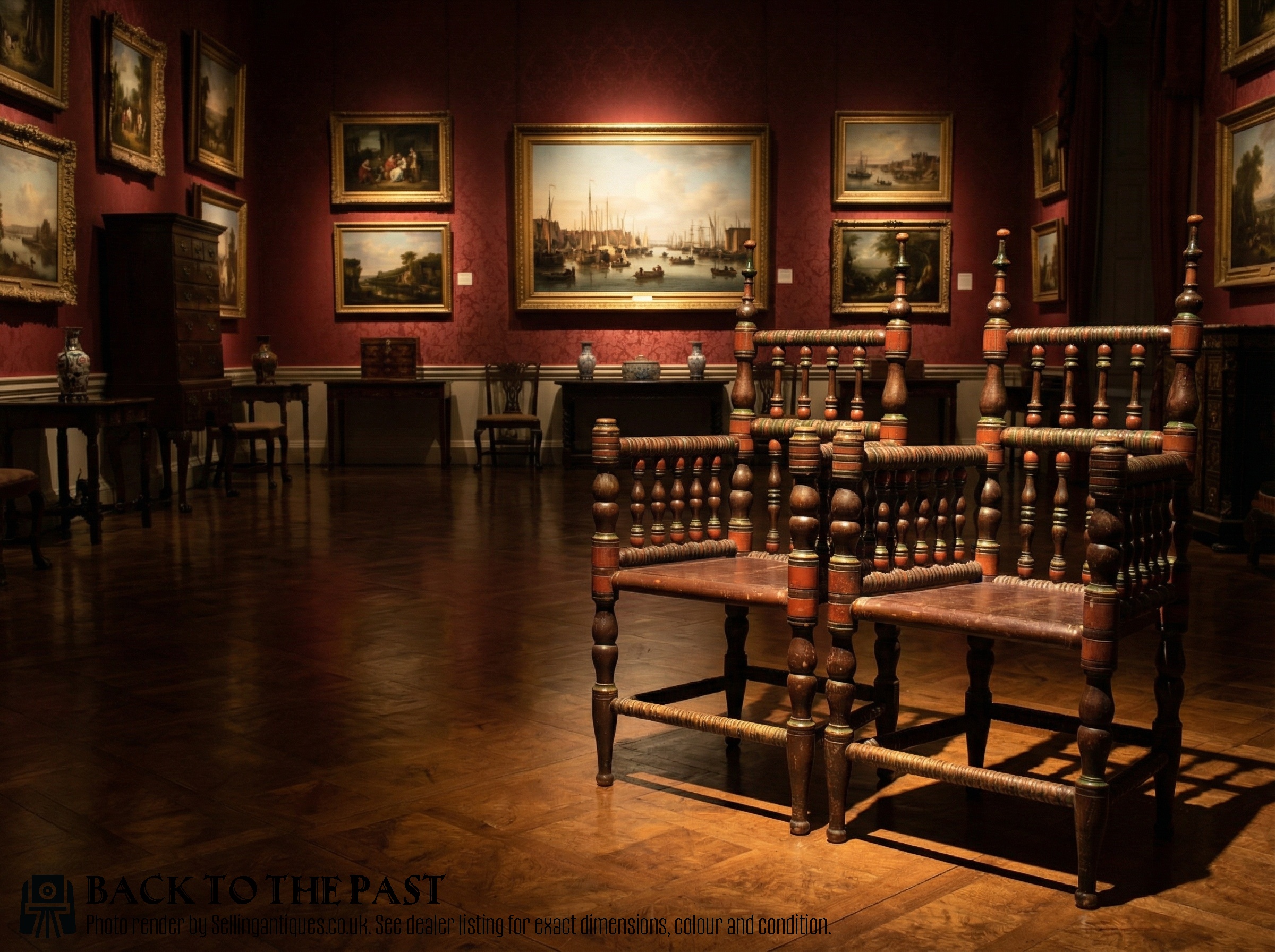
Antique Turned Throne Chairs
These antique turned throne chairs encompass sturdy armchairs and accent seats built with pronounced upright proportions and commanding vertical backs. When you search for antique turned throne chairs, you encounter seating derived from seventeenth-century vernacular forms alongside later revivals stretching through the Victorian era.
The selection frequently displays robust frames shaped by latches, spindles, and bobbin turnings rather than plain timber boards. You meet pieces spanning distinct regional traditions, from English wainscot styles to Scandinavian country folk art and French walnut armchairs.
Many examples utilise heavy timber construction, high backs, and generous elbow seats designed to anchor a study, hallway, or principal reception room. The lineage extends from authentic seventeenth-century origins down to revival interpretations made around nineteen-hundred.
Factors determining quality
The fineness of the turning work separates standard vernacular items from exceptional cabinet-maker output. Crisp, deeply chiselled spindle details and well-proportioned arm supports demonstrate superior workshop competence.
Timber selection dictates the structural integrity and aesthetic weight of the finished seat. Dense, figured oak or richly patinated walnut yields a more convincing presence than softer secondary woods.
Some nineteenth-century makers drew direct inspiration from Swedish country folk traditions when turning these heavy throne frames.
The Antique Turned Throne Chairs Glossary
- Bobbin turning
- A form of lathe work producing a series of rounded, bead-like swellings along the length of a wooden spindle. This decorative technique appears frequently on seventeenth-century and revival frames.
- Wainscot chair
- An early wooden armchair constructed with panelled backboards and solid timber seats. These pieces evolved from sturdy domestic furniture used in prosperous households.
- Carolean
- A stylistic period spanning the reign of King Charles the Second, noted for lavish carving and rich upholstery. Pieces from this era often feature walnut frames and elaborate scrollwork.
- Jacobean Revival
- A nineteenth-century movement that recreated the heavy, rectilinear forms of the early seventeenth century. Makers utilised dark oak and turned spindles to emulate historic prototypes.
Antique Turned Throne Chairs: Frequently Asked Questions
How are antique turned throne chairs structured?
These chairs rely on heavy timber frameworks joined by pegged mortise and tenon connections. The distinctive upright posture comes from high panelled backs or open spindle work.
Lathes shaped the cylindrical components, creating rhythmic patterns of bobbins and turnings that support the arms and legs.
Where should I place these chairs at home?
Their monumental scale suits grand entrance halls, studies, or living spaces with high ceilings. They function well as statement accent pieces rather than casual lounge seating.
Purchasers often position them against a plain wall to let the intricate turned woodwork and tall back profile stand out.
What woods were used for these chairs?
English and continental makers predominantly selected oak for its strength and durability. Walnut and beech appear frequently in finer revival and continental European examples.
More unusual specimens utilise dense timbers like laburnum, offering distinct grain patterns and colour variations across the turned components.
How do I distinguish revival periods from older pieces?
Examination of the timber dry-age, tool marks, and construction pegging helps reveal the actual production era. Seventeenth-century originals display hand-split or pit-sawn grain characteristics.
Nineteenth-century revival items often exhibit mechanical saw marks and standardised turning profiles produced by industrial workshop machinery.