
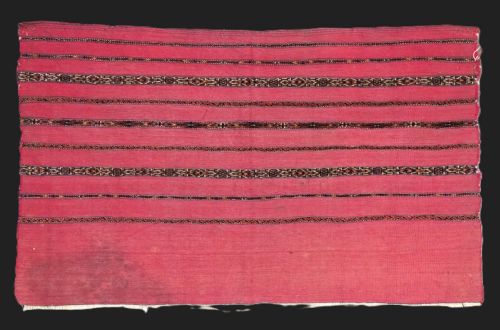


Antique Turkmen Woven Panel
An antique turkmen woven panel brings the bold geometric motifs and rich madder tones of Central Asian tribal weaving directly into your interior.
Antique Turkmen Woven Panel
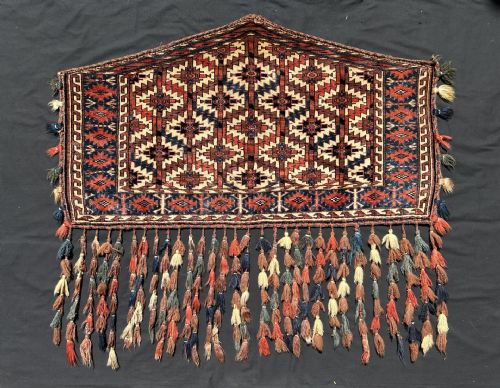
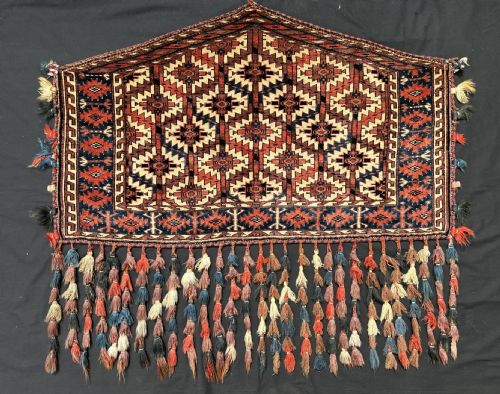
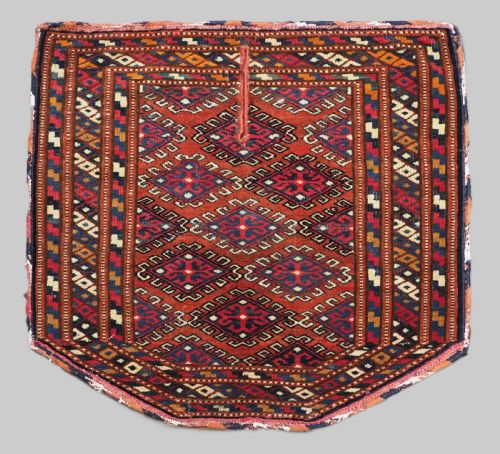
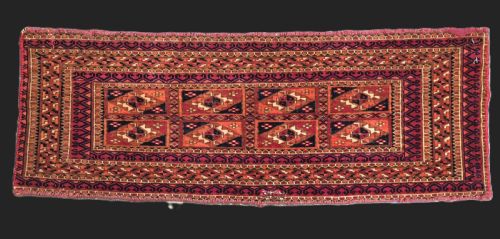
When searching for an antique turkmen woven panel, you encounter functional tribal items repurposed for display, including torba faces, chuvals, asmalyks, and mafrash fragments produced across the nineteenth and early twentieth centuries. These textiles originate from specific tribal groups such as the Yomut, Tekke, Ersari, Saryk, and Chodor, each utilising distinct formatting and structural layouts.
The material forms on this page span from storage bag faces and camel trappings to complete wedding hangings and wall panels. Pieces frequently showcase tribal identifiers like kepse, aina gul, or salor guls woven across wool foundations.
Dating across these listings primarily centres on the middle and late nineteenth century, reaching into the early decades of the twentieth century. Examples range from finely knotted pile weaving to flatwoven band structures.
How they were made
Weavers constructed these textiles primarily using wool foundations, incorporating cotton and silk details for structural contrast and highlighted motifs. Natural dyes provided the deep crimson, madder, and white colour palettes seen across the tribal groups.
Techniques varied between knotting pile surfaces for bags and wall hangings and executing flatweave constructions for banded mafrash faces. Artisans tied dense knots on wool warp and weft threads to achieve the durability required for nomadic storage and transport.
Camels wore finer clothes than most humans when Turkmen wedding processions set off across the steppes.
What varies in quality
Quality rests upon the fineness of the knotting and the precision of the tribal drawing across the main field and elem panels. Tighter knot counts and sharp, well-defined guls separate superior weaving from simpler work.
The depth and clarity of natural dyes also dictate worth, alongside the survival of complete original backs, borders, and complete formatting rather than fragmentary cuts.
The Antique Turkmen Woven Panel Glossary
- Gul
- A primary octagonal medallion or tribal crest repeated across Central Asian carpets and bag faces. Different tribes employed specific gul variations to signal their lineage.
- Chuval
- A large tent storage bag produced by nomadic tribes for household goods. These pieces were often woven with wide fields of guls and detailed lower elem panels.
- Torba
- A smaller wall storage bag hung inside the nomadic yurt. They share similar design motifs with larger chuvals but in a compressed rectangular format.
- Asmalyk
- A large pentagonal trapping hung on the flanks of a camel during wedding processions. These decorative panels feature elaborate geometric layouts.
- Mafrash
- A rectangular storage bale face used for bedding and household items during tribal migration. They frequently employ banded flatweave or piled techniques.
Antique Turkmen Woven Panel: Frequently Asked Questions
How were these woven panels originally used?
Nomadic tribes utilised these pieces inside tents for storage, as pack bags on camels during migrations, or as decorative trappings during weddings.
Over time, many bags have been separated from their original backs and mounted as flat textiles for interior display.
How do I hang a textile on the wall?
Mounting is best achieved by working with a specialist conservator who can attach a cotton sleeve to the reverse for a concealed support rod.
Avoid direct weight-bearing stitches through the original wool and cotton foundation to protect the structural integrity.
How can I tell different tribal designs apart?
Different groups relied on specific design vocabularies, such as the Yomut use of kepse guls or the Tekke preference for repeated octagonal motifs.
Palettes also offer clues, with certain tribes favouring deep madder reds while others integrated white cotton and crimson silk contrasts.