

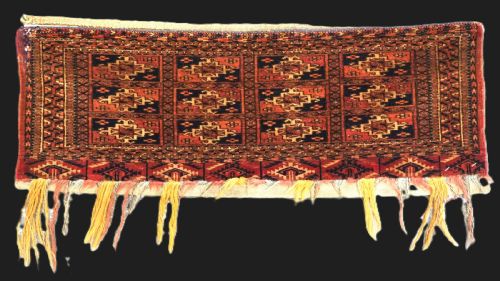
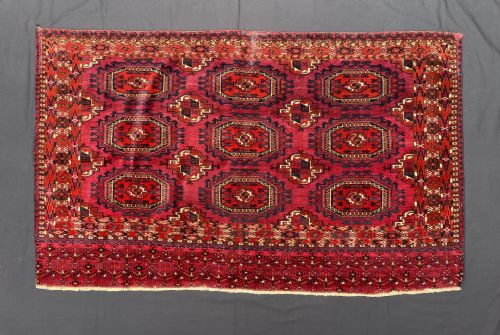


Antique Turkmen Rug Bag
An antique turkmen rug bag is a woven Central Asian storage piece prized for its tribal motifs and rich palette.
Antique Turkmen Rug Bag
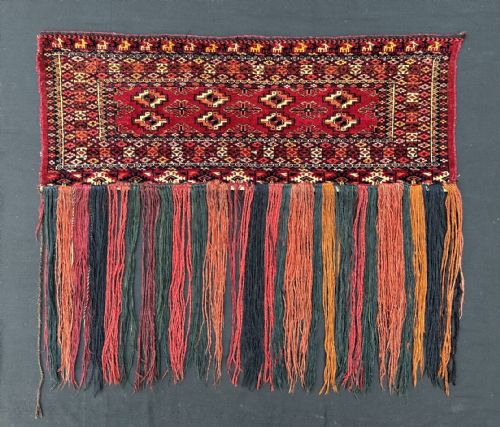
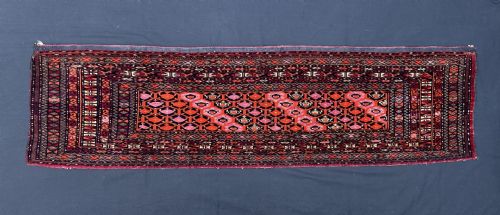
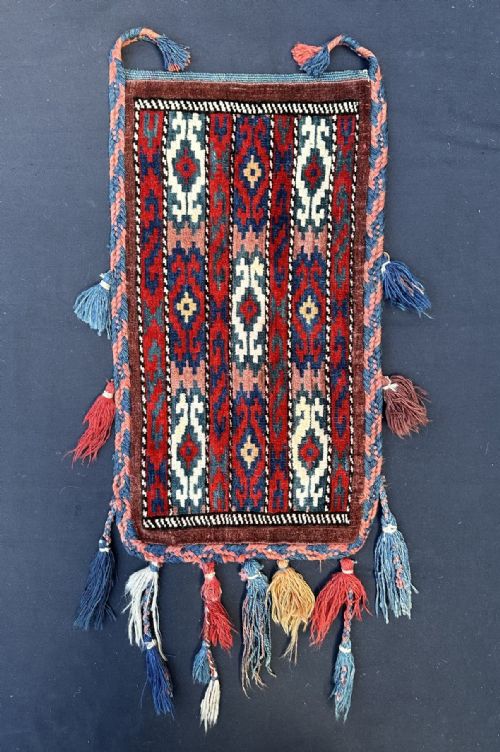
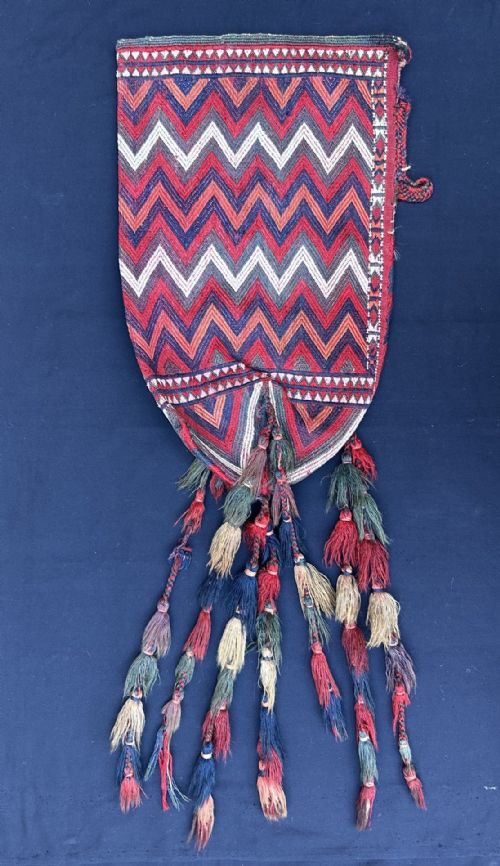
An antique turkmen rug bag represents the utilitarian weaving traditions of nomadic tribes across the Central Asian steppes and oases. These functional containers include smaller items like spindle bags and tent door hangings alongside primary storage sacks.
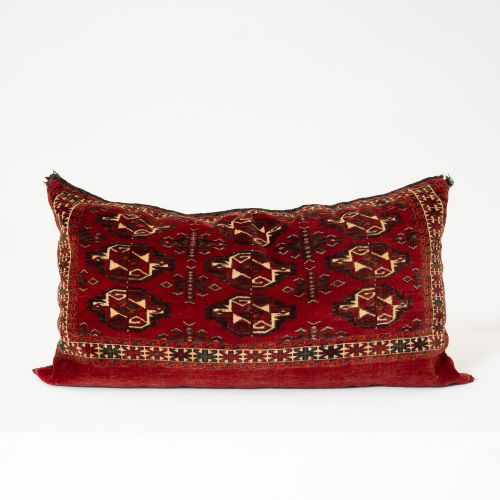
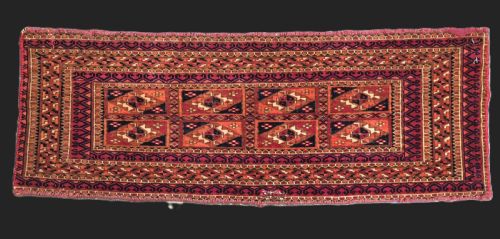
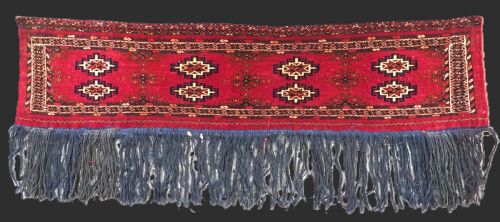
Each piece reflects the visual vocabulary of its specific confederation through repeating medallion motifs known as guls. Buyers encounter both complete sacks retaining their plain weave backs and isolated bag faces preserved for their intricate field patterns.
Materials and construction
Weavers constructed these pieces primarily from hand-spun wool, utilising cotton for certain foundations and adding occasional silk highlights for contrast. Natural dyes provided the deep reds, ivories, and secondary tones characteristic of nineteenth-century nomadic textiles.
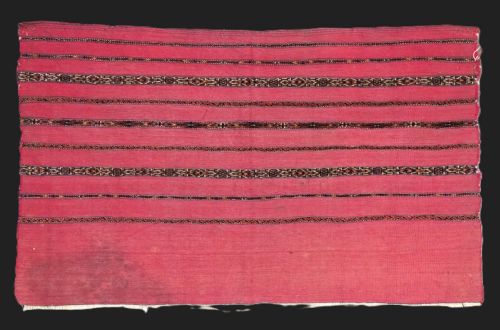
The physical build ranges from fine pile weaves on flexible wool foundations to structured flatweaves and embroidered surfaces. Many examples survive as single bag faces, while others retain their original plain weave backs or side attachments.
Listings span the nineteenth and early twentieth centuries, featuring wool, cotton, silk, and natural dyes across tribal forms.
Judging quality and execution
Quality rests in the density of the knotting and the crispness of the drawing within the primary and secondary guls. Finer weaves allow for sharper definition in complex geometric arrangements.
The stability of the natural dye palette and the retention of original structural elements, such as plain weave backs or complete borders, elevate the execution. Unusual formats and scarce design variants also distinguish exceptional examples from standard production.
The Antique Turkmen Rug Bag Glossary
- Torba
- A small horizontal storage bag used inside nomadic tents for personal possessions. These pieces typically display a single row of major guls.
- Chuval
- A large tent storage bag designed for bedding and household goods. They often feature multiple rows of primary guls across the field.
- Gul
- A repeating medallion or octagonal motif associated with specific Turkmen tribes. Variations in these primary designs identify the weaving group.
- Kap
- A general term for a bag or container used within Central Asian nomadic architecture. They served various storage functions on the steppe.
- Mafrash
- A rectangular storage sack or bedding bag produced in flatweave or pile techniques. They frequently form part of a matching pair.
Antique Turkmen Rug Bag: Frequently Asked Questions
What is an antique turkmen rug bag used for?
Nomadic families utilised these woven sacks inside felt tents for storing household goods, bedding, clothing, and small utensils.
Today, collectors mount these textiles on walls or display them as decorative floor pieces and cushions within domestic interiors.
How do I identify different tribal designs?
Tribal attribution relies on the specific structural form of the guls, the secondary ornament, and the proportions of the border.
Groups such as the Tekke, Yomut, Saryk, and Ersari maintained distinct design repertoires passed down through generations.
Are these bags found complete with backs?
Many surviving examples are isolated bag faces because the heavy use zones wore out faster than the decorative fronts.
However, numerous pieces retain their original plain weave backs and structural side attachments from the nineteenth century.
What materials appear in these antique textiles?
Weavers relied primarily on hand-spun wool for the pile and foundation, supplemented by cotton for specific structural elements.
Natural dye baths produced the characteristic palette, and occasional silk highlights emphasise details within the field.