






Antique Turkish Accent Rug
An antique turkish accent rug brings distinct regional weaving traditions and rich history straight to your floor.
Antique Turkish Accent Rug
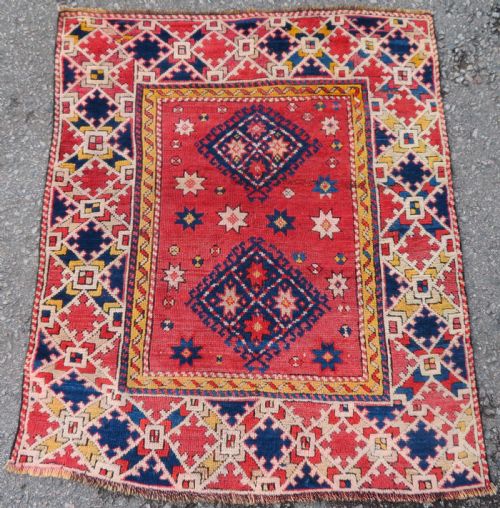
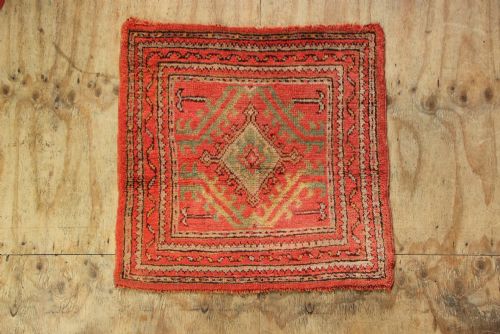
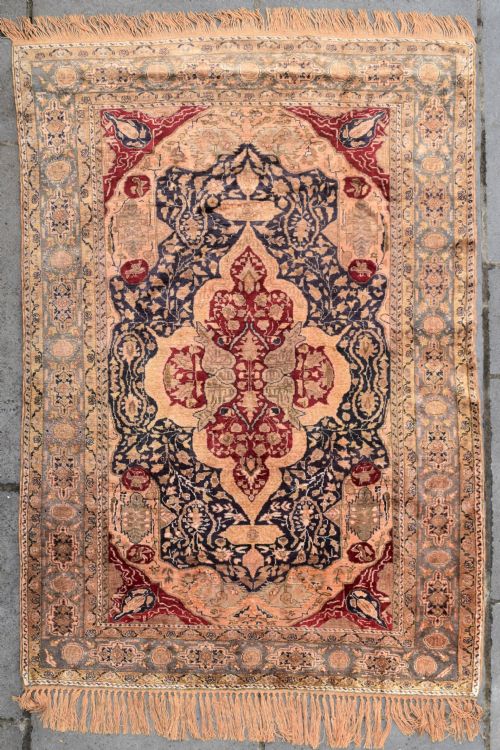
An antique turkish accent rug encompasses a variety of smaller formats including scatter rugs, prayer rugs, and cushions originating from weaving centres across Anatolia. When searching for an antique turkish accent rug, buyers encounter diverse regional nomenclature reflecting specific towns and districts such as Bergama, Oushak, Kula, Konya, Yagcebedir, Kirsehir, Milas, Monastir, Sivas, and Kayseri. These pieces display traditional styles ranging from Anatolian tribal designs to classical Ottoman patterns.
The format is typically compact, fitting smaller floor spaces or serving as accent pieces in traditional and modern interiors alike. Examples span periods from the mid nineteenth century through the early twentieth century, capturing distinct generational shifts in village and town workshop production. Regional characteristics define the visual structure of each piece, showing how local weavers adapted traditional motifs.
Materials and construction
The construction relies fundamentally on natural fibres, utilising wool and cotton predominantly, alongside occasional usage of silk and floss silk for fine detail work. Weavers knotted these materials by hand on traditional vertical looms, building up dense piles or flatwoven structures depending on the regional type.
Dyes derived from natural sources provide the palette seen across these textiles, developing characteristic patinas over decades of ageing. Foundation warps andwefts commonly employ spun cotton or wool, ensuring structural integrity for the pile knots above.
Antique Turkish Accent Rug Retail Price Guide 2026
Typical asking prices for turkish accent rug among the pieces listed under this phrase on Sellingantiques today, from the lower quarter to the upper quarter. They describe what is for sale here now, not the wider market.
Listings feature pieces dated across the nineteenth and early twentieth centuries, constructed from wool, cotton, and silk.
Distinctions in quality
Quality in these textiles rests upon the fineness of the knotting and the crispness of the drawn design across the field and borders. Finer execution in regional pieces like Sivas or Kayseri rugs demonstrates greater technical skill by the weaver.
The integrity of the wool pile and the retention of natural dye saturation further separate superior examples from more heavily worn pieces. Well preserved structural foundations and intact original borders elevate a textile's standing within its specific regional type.
The Antique Turkish Accent Rug Glossary
- Prayer rug
- A textile featuring a distinct mihrab arch design indicating the direction of prayer. These pieces were historically used for personal devotion.
- Anatolian
- Pertaining to the geographic region forming the Asian part of Turkey. This term covers numerous diverse tribal and village weaving traditions.
- Pile
- The upright yarn loops forming the soft surface of a knotted rug. Pile height varies depending on whether a piece originated from a nomadic camp or an urban workshop.
- Warp
- The vertical threads stretched tightly on the loom before knotting begins. Warp threads form the structural skeleton of the textile.
- Kilim
- A flatwoven textile produced without a raised pile. These are constructed by tightly interweaving warp and weft strands to create flat geometric patterns.
Antique Turkish Accent Rug: Frequently Asked Questions
How do I clean an old rug?
Gentle surface cleaning and regular light vacuuming without a beater bar help maintain wool fibres.
Professional specialist washing is recommended for deeper maintenance to protect natural dyes.
Where were these rugs made?
Production took place across various Anatolian towns, villages, and nomadic camps in Turkey.
Specific weaving centres included Oushak, Bergama, Milas, and Kirsehir.
Are these textiles fragile?
Most pieces remain robust enough for placement in low traffic areas when given proper support.
Using a quality rug underlay prevents slipping and cushions the historic foundation.
What materials are used?
Traditional construction primarily utilises wool for the pile and cotton for the internal foundation.
Selected fine pieces also incorporate silk or floss silk.