

Antique Tufted Couch
An antique tufted couch brings deep buttoning and rich leather or velvet into a room, offering a seat built for traditional comfort.
Antique Tufted Couch
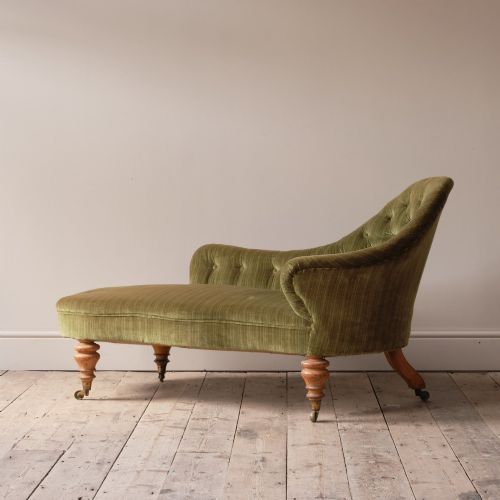
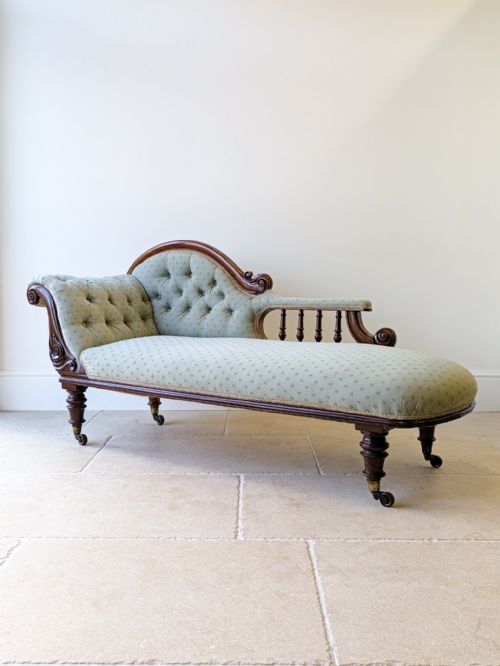
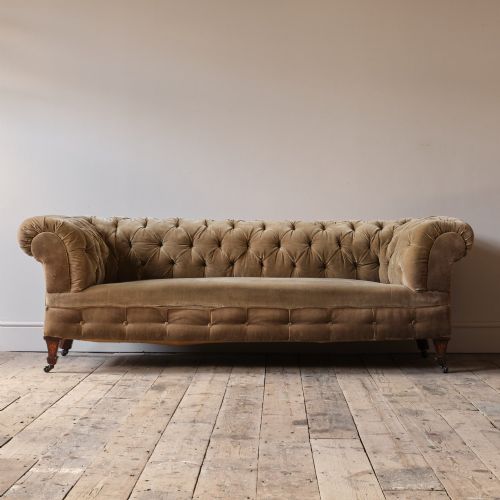
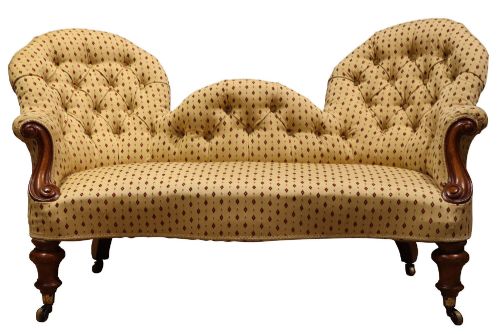
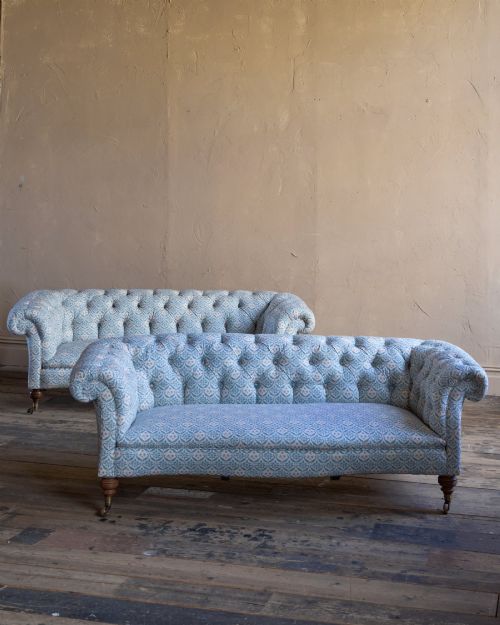
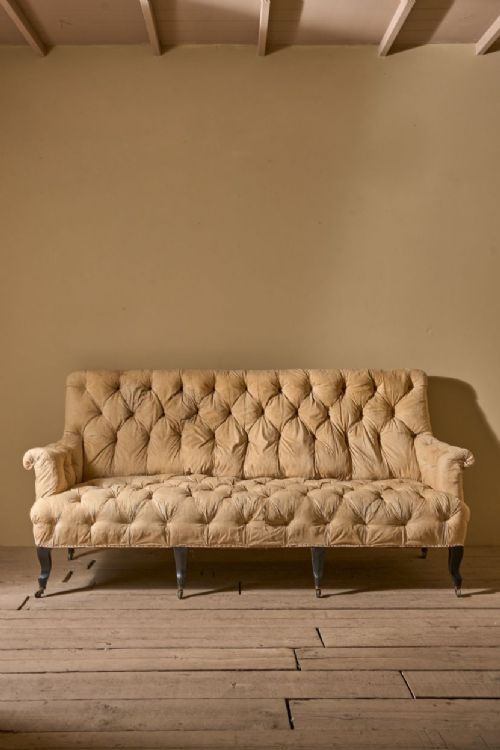
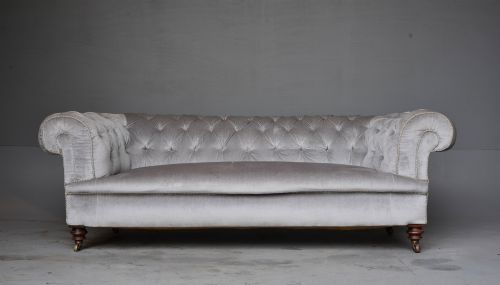
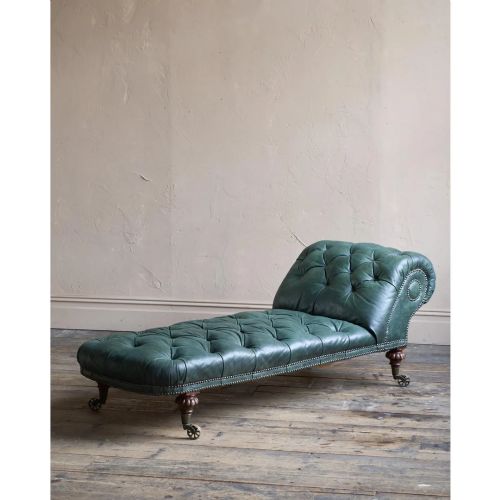
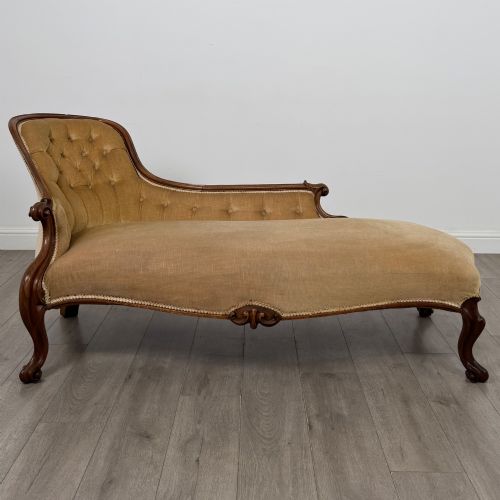
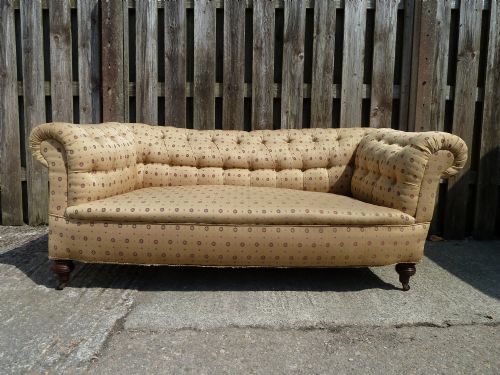
Buyers seeking an antique tufted couch examine heavy nineteenth-century forms, particularly Victorian Chesterfields and buttoned daybeds. These seating pieces span the nineteenth and early twentieth centuries, including Victorian, Edwardian, and Napoleon III periods.
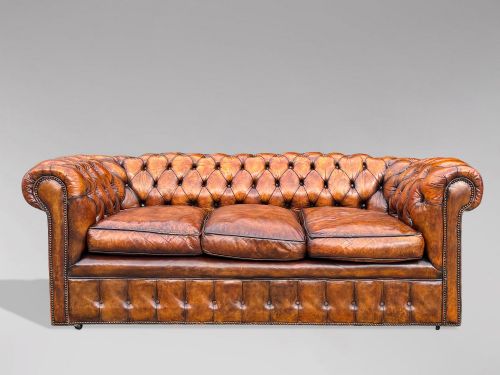
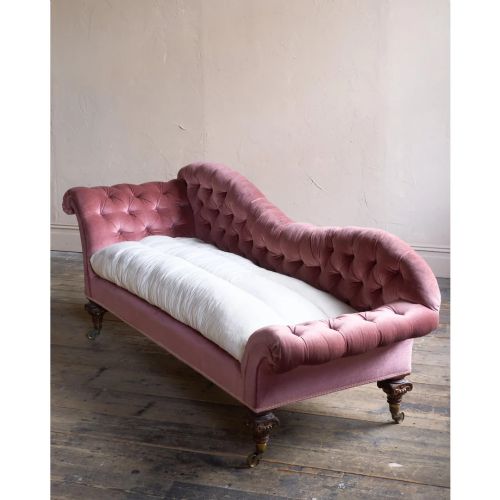
The version most commonly met on this page is the brown leather Chesterfield, alongside button-backed mahogany and rosewood chaise longues. Frames range from substantial three-seater settees to serpentine and crescent shapes.
Construction origins lean towards traditional English and French country aesthetics, with makers utilising solid timber frames and deep upholstery. Object types listed include sofas, settees, and chaise longues.
Materials and construction methods
Frames rely on sturdy timbers such as mahogany, walnut, and rosewood, often carved with Victorian detailing or supported on brass castors. Structural support employs traditional coil springing and horsehair stuffing to shape the deep seats.
Upholstery materials comprise durable brown leather, velvet, and fabric, secured with buttoning techniques that create the signature tufted surface. Woodwork receives polishing or gilding to finish the exposed framework.
Antique Tufted Couch Retail Price Guide 2026
Typical asking prices for tufted couch among the pieces listed under this phrase on Sellingantiques today, from the lower quarter to the upper quarter. They describe what is for sale here now, not the wider market.
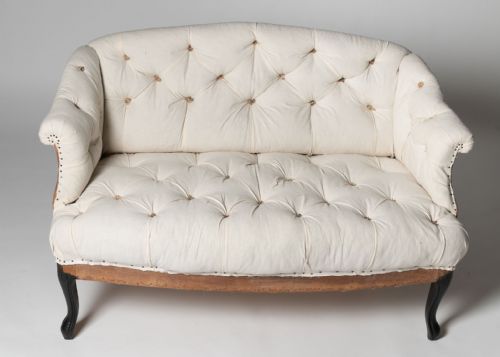
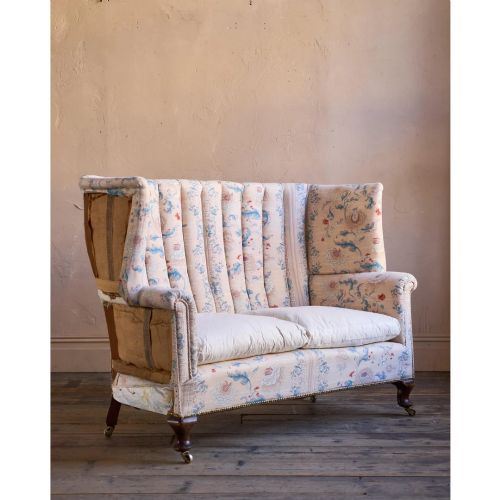
Several couches require reupholstering, offering a blank canvas for raw leather or custom hand-dyed colour choices.
Assessing quality in tufted seating
Distinctions in quality arise from the integrity of the internal stuffing and the tension of the coil springs beneath the leather or fabric. Original frames with firm, supportive horsehair gilling represent superior craftsmanship.
The depth of the buttoning and the precision of the tufting pattern indicate the skill applied to the upholstery. Selection of high-grade timber for the frame and rich, supple leather completes the higher tier of these pieces.
Howard and Sons·H. Goodall and Sons·Holland and Sons
The Antique Tufted Couch Glossary
- Chesterfield
- A large upholstered sofa with arms and back of the same height, traditionally featuring deep button tufting. This form remains a staple of nineteenth-century seating.
- Chaise Longue
- An upholstered couch in the form of a chair with a long seat large enough to support the user's legs. Victorian examples frequently display carved mahogany or rosewood frames.
- Buttoned Back
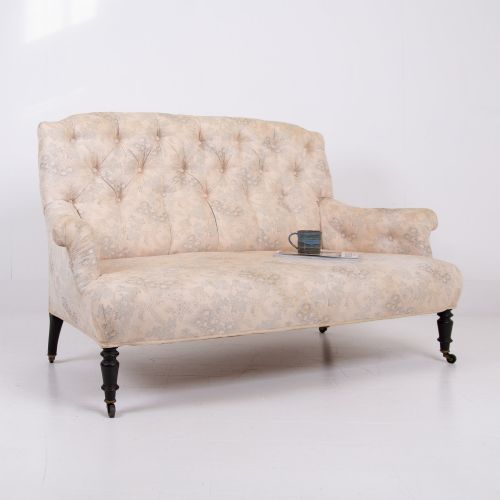
- An upholstery technique where buttons are pulled deep into the padding to secure pleats and create a tufted diamond pattern. This method provides structural stability to the filling.
- Coil Spring
- A traditional steel spring used inside upholstery to give resilience and comfort to the seat. Earlier examples utilise hand-tied springs paired with organic stuffing materials.
- Gilling
- The process of packing stuffing materials like horsehair firmly into upholstery compartments. Good gilling maintains the shape and firmness of the couch over decades of use.
Antique Tufted Couch: Frequently Asked Questions
How do I identify a Victorian Chesterfield?
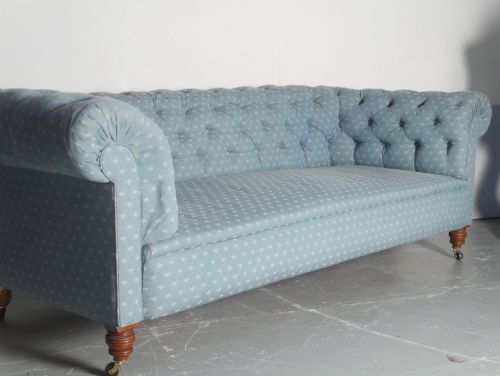
A Victorian Chesterfield typically presents a low-built frame with rolled arms matching the height of the backrest. The entire surface utilises deep button tufting in leather or heavy fabric.
Evidence for these pieces spans the nineteenth century, often supported on short wooden legs with brass castors. Their substantial three-seater proportions distinguish them from smaller settee variants.
What is the difference between a settee and a chaise longue?
A settee functions as a standard two or three-seater sofa designed for upright seating. A chaise longue incorporates an elongated seat intended for reclining, featuring a single raised armrest or backrest.
Listings show chaise longues frequently constructed with carved mahogany, rosewood, or walnut frames. Settees tend toward fully upholstered Chesterfield or buttoned designs.
Where should I place a tufted couch?
These substantial seating pieces suit principal reception rooms or libraries where their scale anchors the room's layout. Leather and velvet finishes pair well with traditional wooden furniture and period architectural details.
Allow sufficient floor space around crescent or serpentine shapes to highlight their unique framing. Daybeds and chaise longues fit naturally into bay windows or large bedrooms.
How do I care for antique leather upholstery?
Maintain antique leather by applying suitable conservation balms to keep the hide supple and prevent cracking. Keep the couch away from direct sunlight and heat sources to preserve the original dye and finish.
Regular dusting with a soft, dry cloth prevents particulate buildup in the deep tufts. Avoid harsh chemical cleaners that strip the historic patina.