
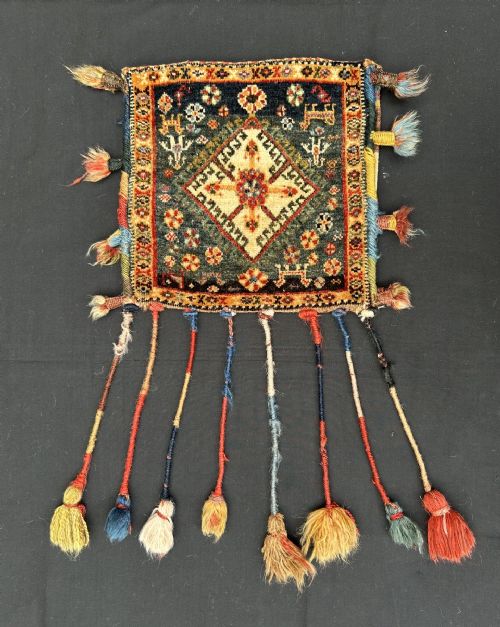
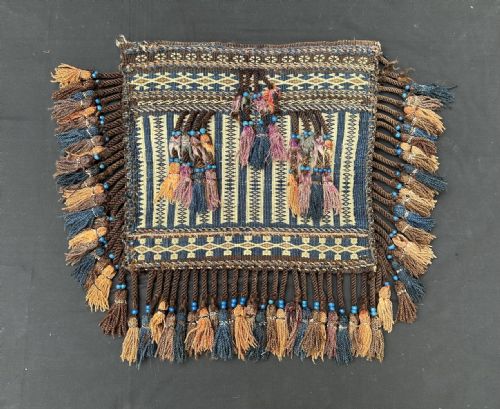
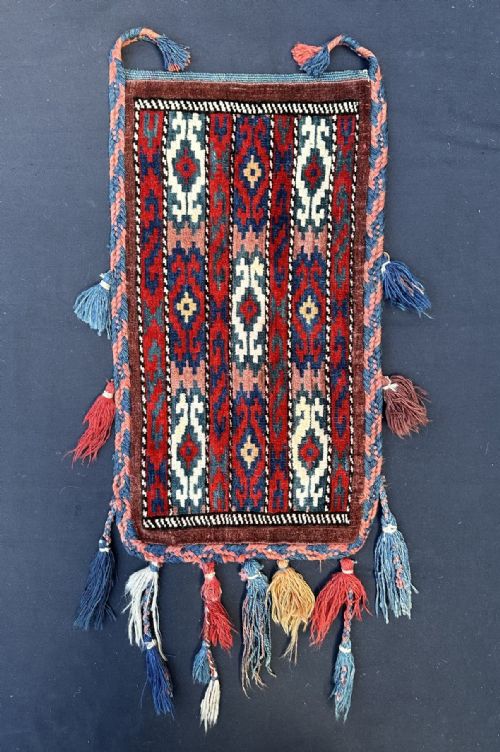
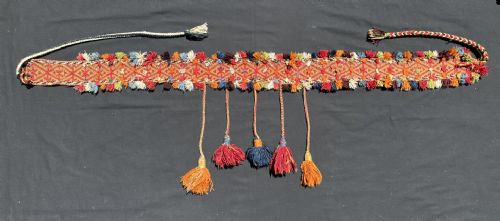




Antique Tribal Tassel Hanging
These antique tribal tassel hanging pieces are nomadic utilitarian textiles and animal trappings finished with fibre embellishments, sought after for their dense regional ornamentation and historical materiality.
Antique Tribal Tassel Hanging
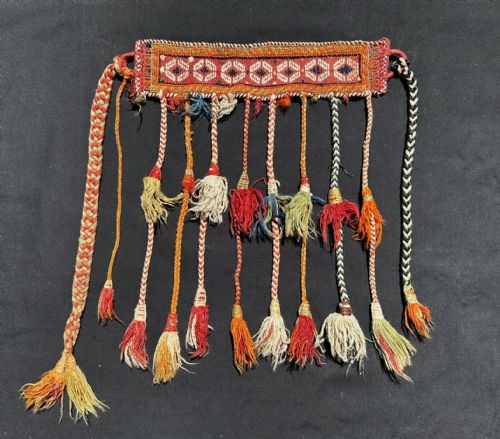
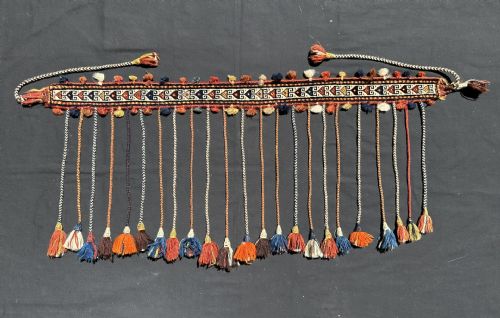
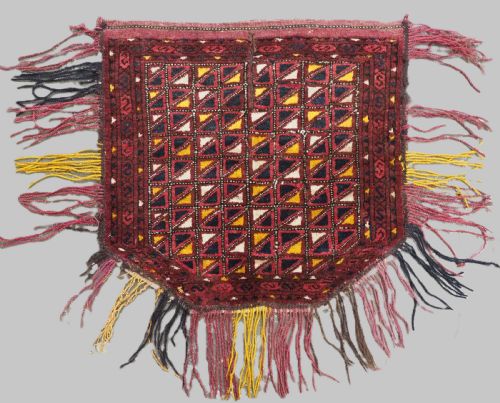
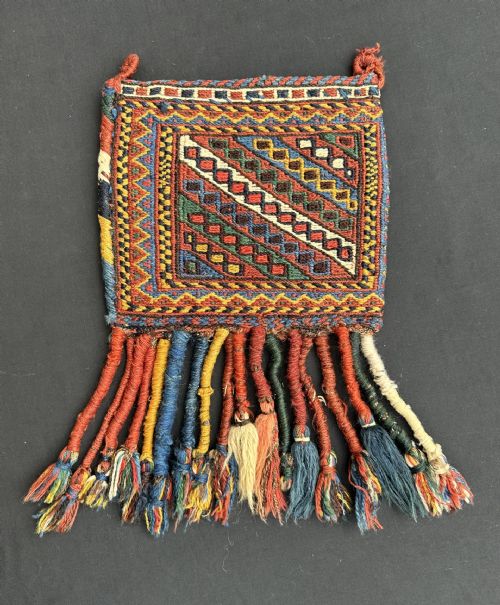
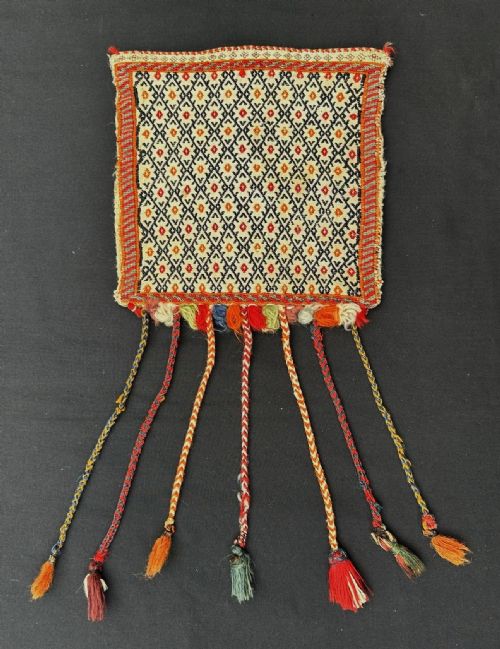
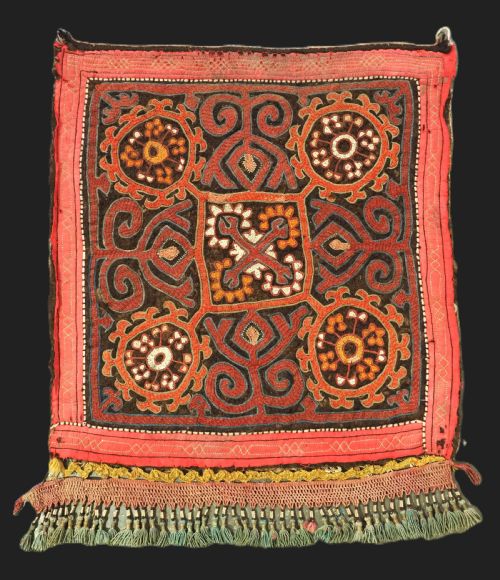
An antique tribal tassel hanging typically originates as a functional nomadic object rather than a decorative wall piece, encompassing vanity bags, animal trappings, tent accessories, and saddle covers. The items present on this page date predominantly from the late nineteenth and early twentieth centuries, spanning the steppes of Central Asia and the provinces of Persia.
The regional forms reflect the specific domestic and pastoral lives of groups such as the Yomut, Ersari, Qashqai, Baluch, and Lakai Uzbeks. Collectors encounter storage pouches, horse decorations, spindle bags, and tent-pole covers, many retaining their original hanging toggles and fibre tassels.
How They Were Made
The construction of these items relies on hand-spun wool and cotton foundations, frequently enriched with silk embroidery and applied felt panels. Artisans utilised natural dyes to achieve deep red, brown, and indigo grounds, often supplementing the textile body with glass beads and leather reinforcements.
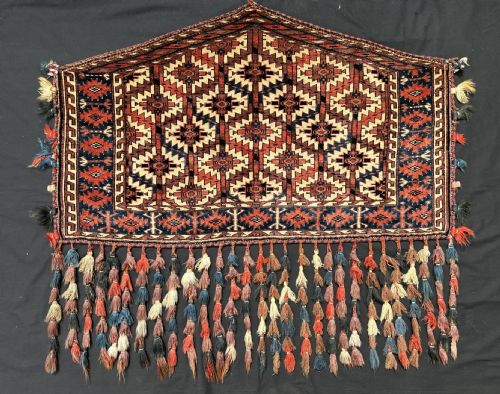
Surface decoration combines pile weaving, flat weave techniques, and dense needlework. Pendant tassels and fringes are constructed directly from wool or horsehair, secured firmly to the structural edges of bags, trappings, and door decorations.
Materials represented across these listings include wool, cotton, natural dyes, silk, glass beads, leather, wood, and felt.
What Varies in Quality
The distinction between standard examples and exceptional pieces rests in the integrity of the materials and the complexity of the tribal iconography. Surviving items that retain their original tassels, backings, and complete hanging structures command greater interest from purists.
Execution of the natural dyes and precision in the embroidery or pile work also dictate the standing of a piece. Finer examples display meticulous geometric or figurative planning inherent to specific sub-tribes and regional weaving traditions.
The Antique Tribal Tassel Hanging Glossary
- Asmalyk
- A large pentagonal trapping produced by Turkmen nomads, traditionally hung on the flanks of a bridal camel during wedding processions. These pieces frequently feature rich pile work and supplementary tassels.
- Uut Kap Ilgich
- A Central Asian hanging bag utilised for storing household goods inside a yurt, often characterised by vibrant silk embroidery on a wool ground. These storage pouches display distinct tribal motifs unique to Uzbek groups.
- Ok Bash
- A specialised nomadic hood or bag designed to cover the ends of tent poles during transport or storage within a yurt. They are commonly fashioned from felt and finished with wool or horsehair tassels.
- Namakdan
- A traditional salt bag woven by nomadic groups for storing rock salt, distinguished by a narrow neck and expanding body. These utilitarian containers often incorporate diverse flat-weave techniques.
- Trapping
- An ornamented textile created for use on horses, camels, or pack animals during ceremonies and migrations. Such items include saddle covers, neck dress garments, and animal decorations.
Antique Tribal Tassel Hanging: Frequently Asked Questions
What were tribal tassels used for?
Nomadic groups applied tassels and fringes to functional animal trappings, bags, and tent furnishings as decorative finishers. They also held protective or amuletic significance within pastoral communities.
Over time, these embellishments helped identify specific tribal groups and added weight to hanging textiles so they would drape correctly inside a yurt or against a pack animal.
How do I hang a textile wall hanging?
Mounting antique textiles requires distributing the weight evenly across the upper edge rather than piercing the fabric with nails or direct pins. A preferred method uses a fabric sleeve stitched to the reverse, through which a flat wooden batten or padded rod is slid.
This approach supports the structural integrity of the wool and silk ground, ensuring the piece hangs flat without placing undue stress on the original stitching or attached tassels.
How can I tell Yomut and Ersari pieces apart?
Yomut weavings from the Trans-Caspian steppes often incorporate distinctive gul motifs, hooked guls, and deep madder red tones with substantial pile and wool quality. Ersari pieces typically showcase alternative structural layouts, flatter weave variants, and specific regional colour palettes associated with Amu Darya populations.
Examining the specific form of the tassels, the border arrangements, and the secondary colours helps clarify the particular tribal origin.
Are these items authentic antiques?
The listings on this page comprise nineteenth and early twentieth-century pieces produced by nomadic and tribal groups across Central Asia and Persia. Their authenticity is evaluated through material analysis, including the presence of hand-spun wool, natural dyes, and traditional tribal structures.
Wear patterns, dye oxidation, and indigenous construction methods further distinguish these older utilitarian objects from modern reproductions.