


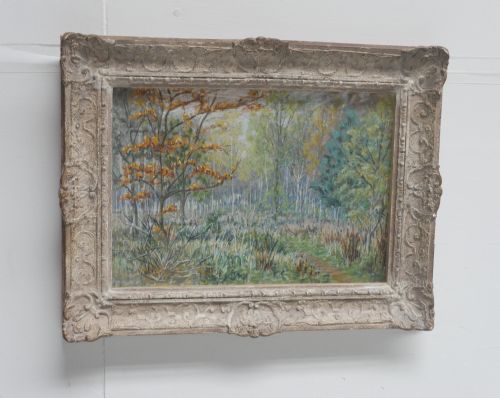


Antique Tree Landscape Artwork
These antique tree landscape artwork pieces capture centuries of natural scenery in oil, watercolour, and pastel.
Antique Tree Landscape Artwork
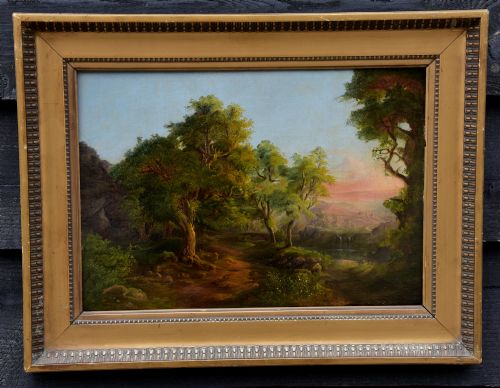
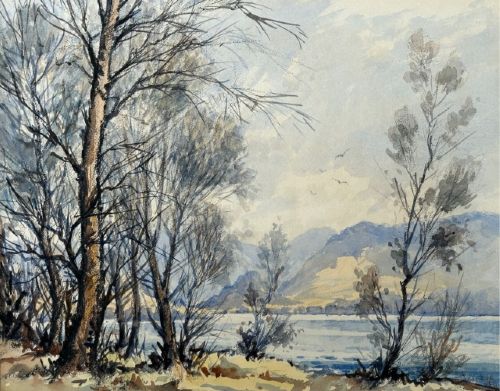
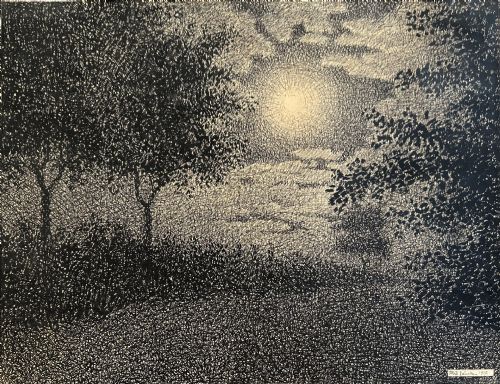
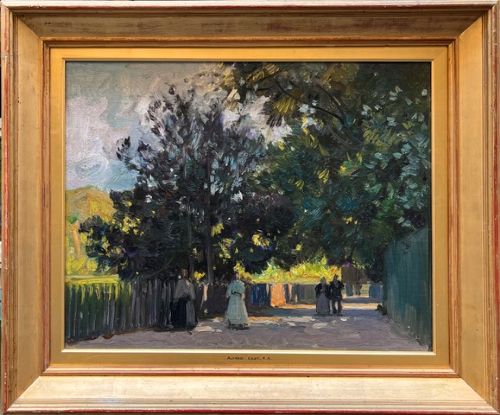
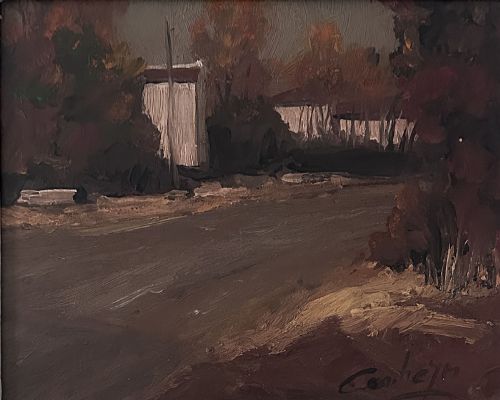
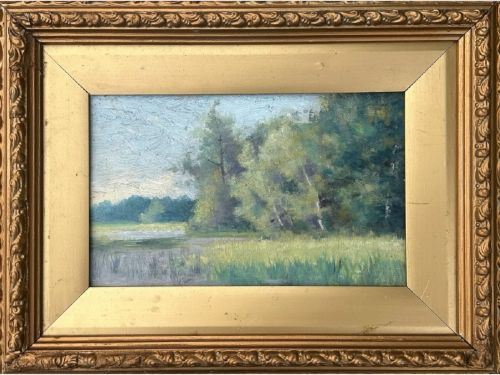
When you search for antique tree landscape artwork, you encounter varied depictions of woodland scenes, riversides, and rural paths spanning from the nineteenth century through the mid-twentieth century. The selection ranges from Victorian watercolours to early twentieth-century British Impressionist oils on canvas and board.
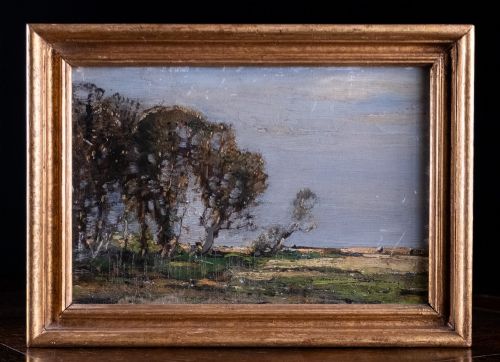
The most common examples on this page are British and European paintings depicting country lanes, farmyards among trees, and wooded valleys. These works reflect stylistic shifts from detailed academic realism toward looser Impressionist and Post-Impressionist brushwork.
How They Were Made
Artists painted these scenes utilising oil and watercolour mediums applied to stretched canvas, wooden panels, paper, and heavy board. Brushwork varies from tight, precise linework in late nineteenth-century watercolours to thick impasto in twentieth-century oil paintings.
Many works retain their original gilt wooden frames, while others utilise paper or board supports housed under glass. Gouache and ink line drawings also appear alongside pastel works on paper.
Listings feature works from the 1800s to the 1960s, executed in oil, watercolour, and pastel on canvas, board, and paper.
What Varies in Quality
Quality rests upon the confidence of the brushwork and the artist's ability to render light and atmosphere through woodland canopy and foliage. Stronger compositions demonstrate skilled handling of perspective along country paths and river banks.
Materials and framing also influence the overall standard of a piece, with well-preserved pigments and original period frames indicating higher atelier standards.
William H Myers·Alfred Young Nutt·Kershaw Schofield·Sir Alfred East·Maud Raphael Jones·Samuel Timmins·William JB Jenkins·John Linnell·Henri Joseph Harpinies·Herbert Royle·Rowland Henry Hill·Edmund George Warren·Berthe des Clayes·Abraham Hulk Jnr·William Bradley·Charles James Adams·Ernest Higgins Rigg
The Antique Tree Landscape Artwork Glossary
- Oil Paint
- Pigment mixed with a drying oil binder, commonly linseed, allowing for rich colour depth and textured impasto application.
- Watercolour
- Pigment suspended in a water-soluble vehicle, applied to paper or board to create translucent washes of colour.
- Impressionism
- A nineteenth-century painting style focusing on accurate depiction of light in its changing qualities, often using visible brush strokes.
- Gouache
- An opaque watercolour medium containing pigment and a binding agent, producing flat, matte areas of colour.
- Post-Impressionism
- An extension of Impressionism that emphasises geometric forms and expressive use of unnatural colour.
Antique Tree Landscape Artwork: Frequently Asked Questions
What periods do these landscape artworks cover?
The works span from the late eighteenth century through the Victorian era and into the mid-twentieth century. Most examples cluster around the late nineteenth and early twentieth centuries.
Industrial and artistic shifts during these decades influenced how painters approached natural scenery and woodland motifs.
How do I care for antique watercolours?
Watercolours on paper require protection from direct sunlight to prevent fading of sensitive pigments. Framing behind glass with acid-free mounts preserves the paper support over time.
Keep these works in rooms with stable humidity to avoid warping or foxing on the paper surface.
What is the difference between oil and watercolour landscapes?
Oils utilise heavy pigment bound in oil on canvas or board, offering thick texture and deep colour saturation. Watercolours employ translucent washes on paper, creating lighter and more fluid atmospheric effects.
Both mediums captured the changing light of rural British and European countryside scenes.
How can I identify a Victorian landscape painting?
Victorian pieces frequently display detailed academic observation of trees, rivers, and rural labour. They often utilise traditional canvas or board supports paired with ornate gilt frames.
Signatures, dates, and stylistic conventions help anchor these works within the nineteenth century.