




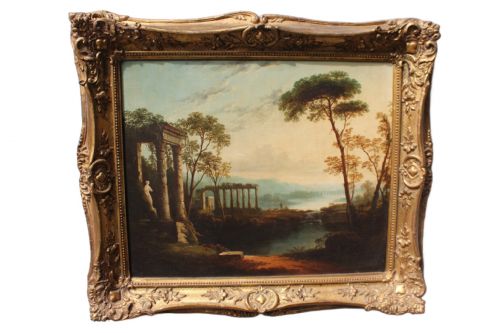


Antique Tree Canvas Painting
When buying an antique tree canvas painting, you secure a framed window into past landscapes rendered in oil.
Antique Tree Canvas Painting
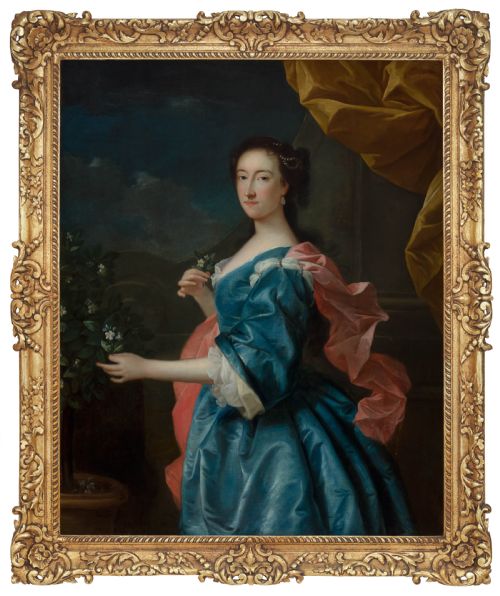
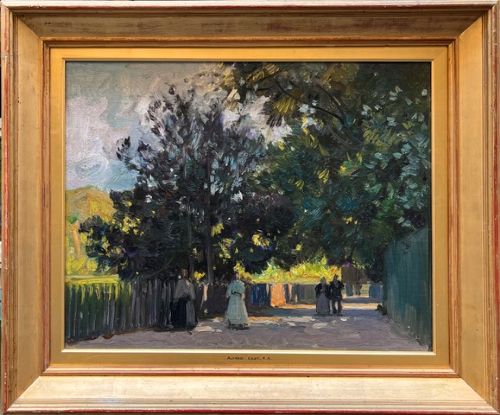
An antique tree canvas painting comprises framed fine art executed in oil paint upon woven fabric supports, depicting arboraceous scenery such as woodland paths, orchards, and riverside willows. These works span centuries from the eighteenth period onward, capturing natural subjects through diverse movements including British Impressionism, Post-Impressionism, and Victorian naturalism.
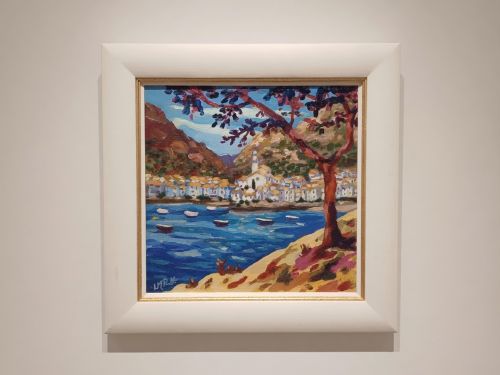
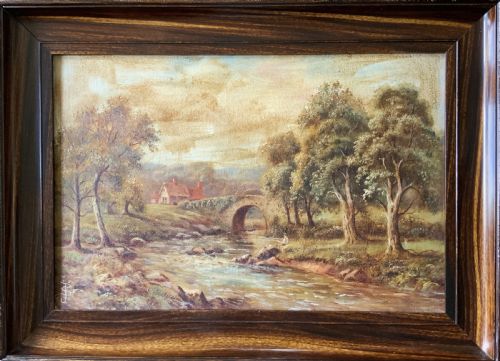
Buyers encounter numerous regional variations, ranging from English rural landscapes featuring oak and elm trees to Mediterranean scenes dominated by olive trees and cypresses. Many pieces present wooded riverbanks or country lanes, often framed in wood or giltwood according to their period of origin.
The selections on this page incorporate mid-century modern compositions alongside nineteenth-century pastoral views, demonstrating how artists across decades rendered foliage and trunk textures through oil paint. Each painting reflects the specific palette and atmospheric concerns of its era, from Georgian classical landscapes to mid-century rustic scenes.
How they were made
Painters applied oil paint directly onto stretched canvas, utilising the textile weave to hold pigment layers built up from dark underpainting to luminous highlights. This combination of oil medium and canvas support allowed artists to capture subtle shifts in light filtering through branches.
Many works retain their original wooden or gilded wood frames, constructed to protect the canvas perimeter and complement the composition. The physical application ranges from smooth academic blending to expressive impasto strokes denoting rough bark and autumn foliage.
Listings feature canvases spanning from the eighteenth century through the mid-twentieth century, utilising oil paint on wood and giltwood.
What varies in quality
Quality rests in the artist's ability to render light, depth, and structural form within the canopy and trunk without relying on rigid formulae. Superior examples demonstrate confident brushwork and harmonious tonal balance across the entire canvas.
The handling of natural light and atmosphere distinguishes masterly compositions from routine topographical records. Furthermore, the integrity of the original canvas and the harmony of the surrounding wood or giltwood frame contribute significantly to a work's aesthetic standing.
Jeremiah Davison·John Linnell·Herbert Royle·Ernest Higgins Rigg·Frederick W Jackson·Alois Arnegger·Antoine Bouvard·Cuthbert Edmund Swan
The Antique Tree Canvas Painting Glossary
- Canvas
- A heavy woven fabric stretched across a wooden stretcher frame to serve as the foundation for oil paintings.
- Giltwood
- Wood that has been coated with a thin layer of gold leaf or gilt paint, commonly found on traditional picture frames.
- Impressionism
- A nineteenth-century painting style focused on capturing the visual impression of the moment, particularly shifting light and natural scenery.
- Impasto
- Paint applied thickly to a canvas, leaving visible brush or palette knife marks that stand out from the surface.
- Provenance
- The documented history of ownership surrounding a work of art, establishing its authenticity and origin.
Antique Tree Canvas Painting: Frequently Asked Questions
Where should I hang these paintings?
Display your artwork away from direct sunlight and strong heat sources to prevent the oil paint and canvas from drying out or cracking.
Maintain stable indoor humidity levels to protect both the wooden stretcher frames and the textile support from warping.
How do I identify the period?
Examine the style of brushwork, the palette utilised, and the construction methods of the accompanying wooden frame.
Signatures, artist registry records, and canvas stamps on the reverse often provide definitive dates of creation.
What is the difference between oil and other paints?
Oil paint utilises drying oils to bind pigments, allowing for slow blending, rich depth, and luminous translucent glazes.
This medium differs from watercolour or acrylic by retaining plasticity during application and developing a durable, stable finish over centuries.