



Antique Travel Clock Case
An antique travel clock case protects a portable timepiece, housing delicate brass, silver or enamel mechanisms built for movement.
Antique Travel Clock Case
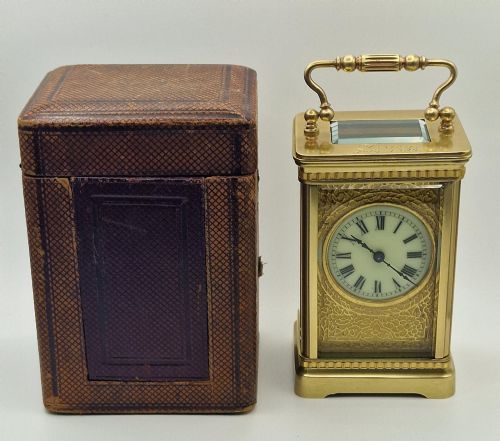
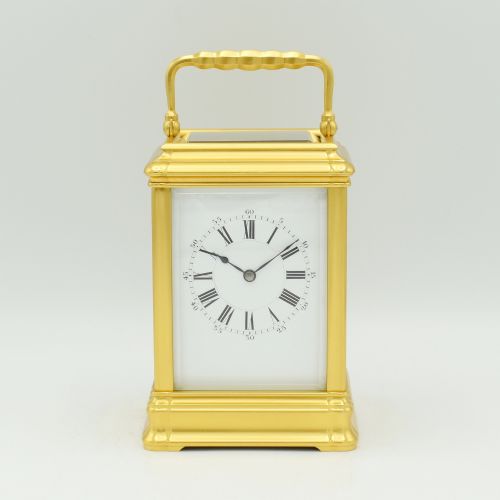
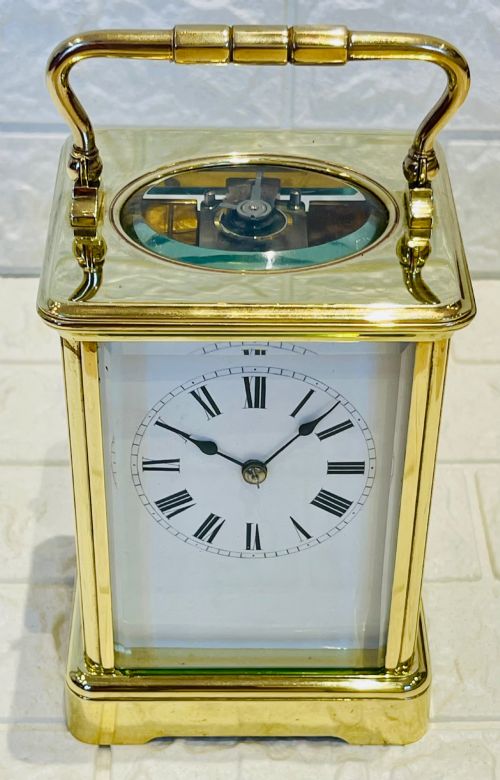
When you search for an antique travel clock case, you look at housings designed to safeguard portable timepieces during transit. The pieces on this page stem from the Victorian, Edwardian and late nineteenth-century periods, with French and English origins appearing frequently.
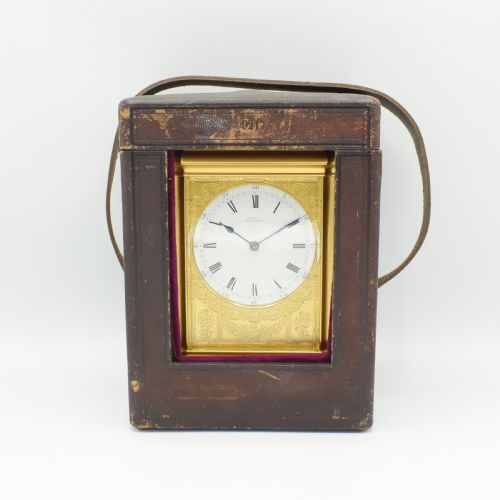
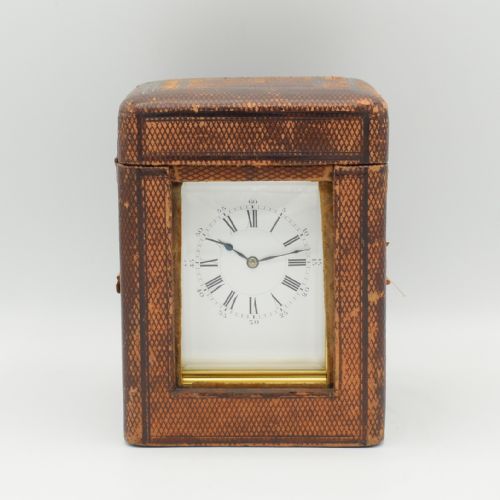
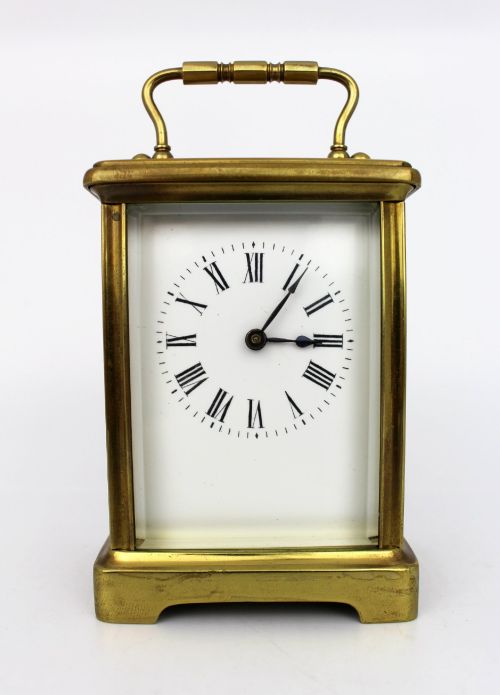
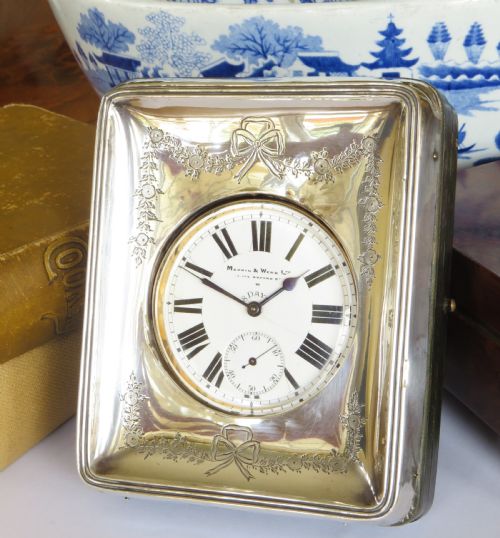
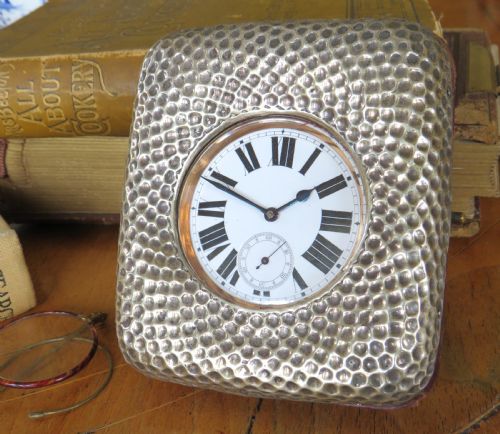
The objects take the form of dedicated leather outer boxes alongside the heavy brass and silver housings integral to carriage and pocket clocks. Gorge cases, corniche frames and fitted leather containers dominate the selection, reflecting nineteenth-century demands for reliable portable time.
Makers and retailers such as Henri Jacot, Drocourt, Mappin & Webb and Harrods produced these housings to match precision movements. You encounter miniature iterations alongside large striking examples, each built to withstand the rigours of nineteenth-century journeys.
How they were made
Makers constructed these housings primarily from brass, gilt brass and silver, frequently incorporating glass panels to display the escapement. Leather outer travel cases utilised sturdy hide lined with velvet or silk to cushion the metal frames within.
Techniques combined heavy casting with meticulous hand engraving, chasing and gilding. Cases feature gorge profiles, bamboo-moulded corners or intricate floral enamel work soldered and screwed together by skilled metalworkers.
Listings feature travel clock housings in brass, silver and leather, spanning the Victorian and Edwardian periods with notable French and English examples.
What varies in quality
Quality rests in the weight of the metal, the crispness of the hand engraving on gorge and corniche cases, and the survival of original leather travel outer boxes. Finer examples display thick bevelled glass panes, substantial gilt bronze casting and fully engraved mask plates.
The presence of matching maker signatures on both movement and case elevates a piece, as seen in works by Drocourt or Henri Jacot. Superior housings retain their original gilding and functional locking keys, whereas lesser items show worn plating and replacement hardware.
Henri Jacot·Drocourt·Mappin & Webb·Antoine Redier·Margaine·Harrods of London·Pickford of London·Richard co
The Antique Travel Clock Case Glossary
- Gorge case
- A distinct rectangular carriage clock case style characterised by a stepped top and flat glass panels held in heavy brass frames. This form originated in France during the nineteenth century and provides a sturdy housing for complex striking movements.
- Carriage clock
- A small, spring-driven portable timepiece with a handle, originally designed for officers and travellers. They frequently incorporate alarm or repeating complications.
- Corniche case
- A traditional carriage clock frame featuring rounded pillars at the four corners and a flat top plate. It represents one of the most common housing shapes from the Victorian period.
- Gilt brass
- Brass coated with a thin layer of gold or gold-coloured alloy to impart a rich, reflective finish. It protects the base metal from tarnishing while enhancing decorative detail.
- Sonnerie
- A striking clock mechanism that sounds the hours and quarters automatically without requiring the user to pull a cord. Petit sonnerie strikes quarters on the quarters and hours on the hour, while grande sonnerie strikes both on every quarter.
Antique Travel Clock Case: Frequently Asked Questions
What is a gorge case?
A gorge case is a heavy brass or gilt carriage clock housing with a stepped top profile and bevelled glass panels. It protects the delicate escapement while allowing an unhindered view of the moving parts inside.
Craftsmen produced these frames extensively in nineteenth-century France. Their robust construction made them ideal for mounting travel clocks intended for carriage journeys.
Did travel clocks have leather cases?
Many nineteenth-century carriage and travel clocks came with fitted leather outer cases lined in velvet or silk. These sturdy hide containers shielded the polished brass or silver housings from dust and impact during transit.
Surviving original leather cases significantly elevate the historical interest of a piece. They often feature small cut-outs so the clock handle remains accessible while enclosed.
How do I identify French travel clocks?
French travel clocks from the Victorian era typically feature platform escapements visible through the top glass and numbered movement plates. Makers such as Drocourt and Henri Jacot stamped their trademarks directly onto the brass backplates.
English retailers frequently imported these French movements, sometimes adding their own signatures to the dial or case. Examining the escapement and internal markings reveals the origin.
What does a repeating mechanism do?
A repeating mechanism sounds the last struck hour or quarter when a button or pendant on top of the case is pressed. This allowed travellers to check the time in total darkness without lighting a candle.
It adds significant mechanical complexity to the interior housing. Such complications appear in high-end pieces alongside alarm and sonnerie functions.