


Antique Enamel Desk Accessory
These antique enamel desk accessory pieces bring vibrant colour and refined metalwork to a working table.
Antique Enamel Desk Accessory
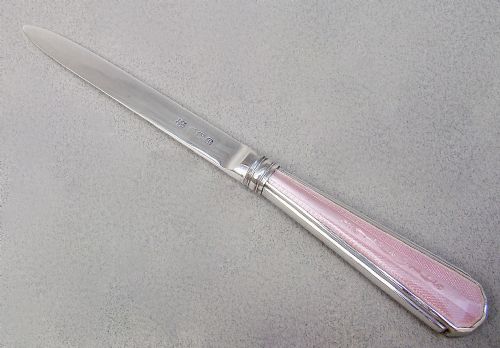
An antique enamel desk accessory encompasses functional desktop items embellished with vitreous or champleve enamel, ranging from inkwells and letter openers to magnifying glasses, letter racks, and decorative boxes. These objects serve both practical utility and decorative display on a writing table or bureau.
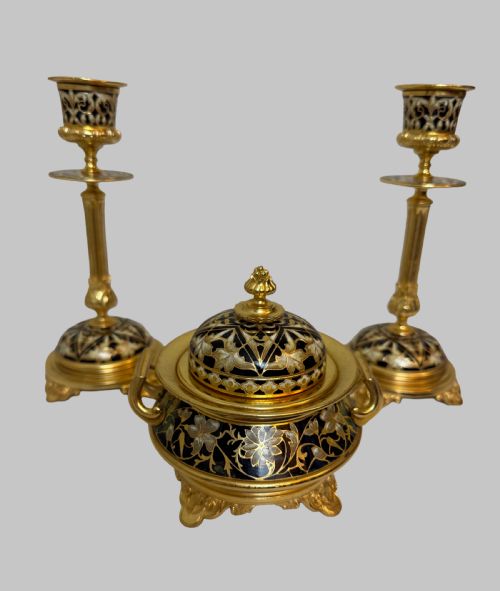
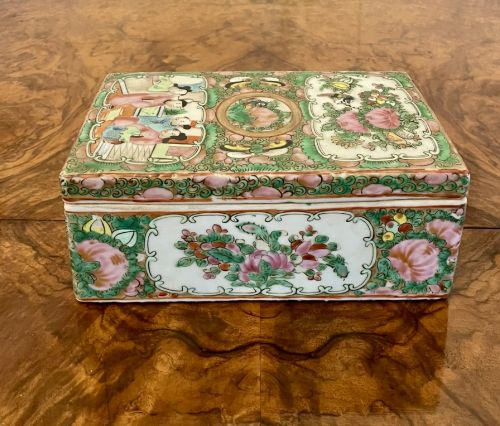
The pieces on this page span the Victorian, Edwardian, and Art Deco periods, alongside Chinese export wares and nineteenth century gilt bronze. Buyers encounter items made in Birmingham alongside pieces from London makers and Chinese workshops.
Forms vary from capstan inkwells and folding chairs to pocket watch cases and cigarette boxes. Each item combines silver or bronze with coloured enamelwork, showing styles from Arts and Crafts to Chinese Export and Qing Dynasty designs.
Materials and construction
Maker workshops combined sterling silver, silver, and gilt bronze with glass and coral to form the structural bodies of these items. Enamel was applied to metal surfaces, utilising techniques such as champleve and guilloche to create patterned and colourful ornamentation.
Silversmiths and bronze workers shaped structural elements like capstan inkwells and pen boxes before applying vitreous enamel panels or floral medallions. Birmingham makers utilised machine-turned guilloche patterns beneath translucent enamel layers to catch the light.
One exceptional desk accessory is a presentation folding chair made of sterling silver and enamel, complete with its own display plinth.
Judging quality in enamel desk pieces
Quality rests in the crispness of the silver or bronze casting and the precision of the guilloche engraving beneath the enamel layer. Finer pieces display smooth, unbroken enamel surfaces free from excessive chipping or repair.
The distinction between standard production and superior work lies in the complexity of the design, such as hand-painted floral medallions or intricate champleve recesses, paired with clear hallmarks from established makers and assay offices.
The Barker Brothers·Broadway and Co·A Barrett Piccadilly London
The Antique Enamel Desk Accessory Glossary
- Guilloche
- A decorative engraving technique where a precise, intricate pattern is mechanically etched into a metal surface before translucent enamel is applied over the top. This allows the underlying geometric design to show through the colour.
- Champleve
- An enamelling process where troughs or cells are carved or cast directly into the surface of a metal object and then filled with enamel powder before firing. The surrounding metal remains visible as part of the design.
- Vitreous enamel
- A material made by fusing powdered glass to a substrate by firing, usually at high temperatures, to create a smooth, durable, and brightly coloured coating. It resists scratching and maintains its hue over generations.
- Capstan inkwell
- A small desk inkwell shaped like a naval capstan, featuring a wide base that tapers inward toward the top. This shape provides stability on a writing desk to prevent tipping.
- Sterling silver
- An alloy of silver containing ninety-two point five percent silver and seven point five percent other metals, usually copper, to add strength. British pieces typically bear a lion passant hallmark indicating this standard.
Antique Enamel Desk Accessory: Frequently Asked Questions
What is an antique enamel desk accessory?
It is a functional item for a writing table, such as an inkwell, letter opener, magnifying glass, or pen box, decorated with coloured enamel.
These pieces combine metals like sterling silver and gilt bronze with vitreous or champleve enamelwork across periods from the Victorian era through Art Deco.
How do I identify Art Deco pieces?
Art Deco items often display geometric patterns, clean lines, and engine-turned guilloche enamel in pink or other vibrant shades.
Birmingham silver hallmarks from the nineteen-thirties and makers like Broadway and Co or the Barker Brothers frequently point to this twentieth-century style.
Were these items used daily?
Yes, they served practical functions in nineteenth and twentieth-century offices and studies for holding ink, opening mail, and viewing small text.
Inkwells held liquid ink for dip pens, while letter openers sliced through paper envelopes before the widespread use of self-sealing mail.
How should I care for enamel and silver?
Keep these items away from direct sunlight, moisture, and extreme temperature changes to protect the delicate glass enamel surface.
Clean the silver portions gently with a soft cloth designed for precious metals, avoiding harsh dips that might damage the surrounding enamel.