

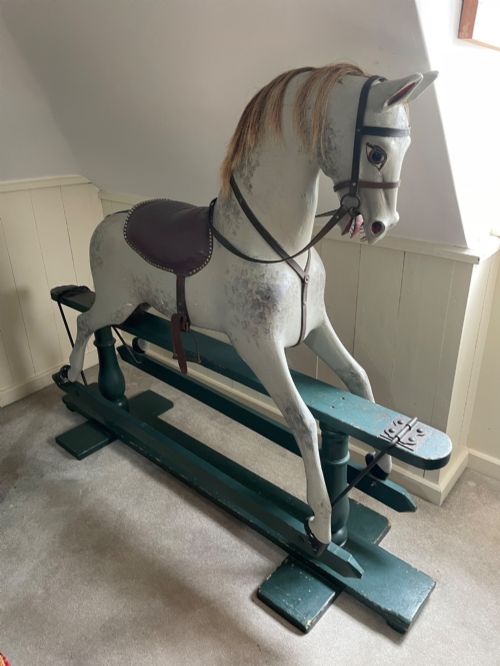
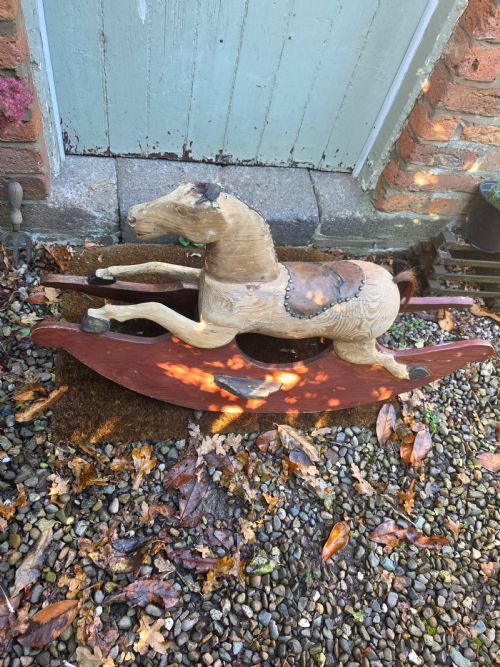
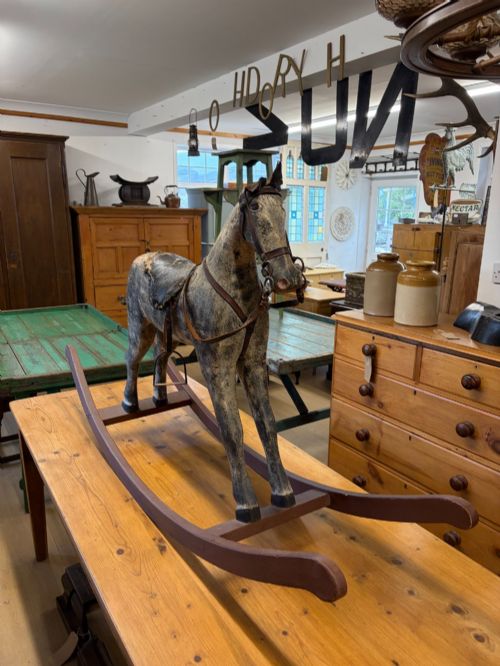
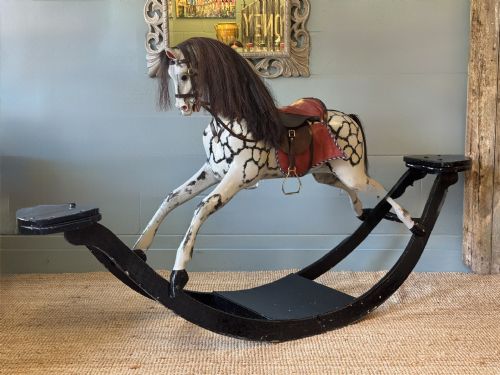
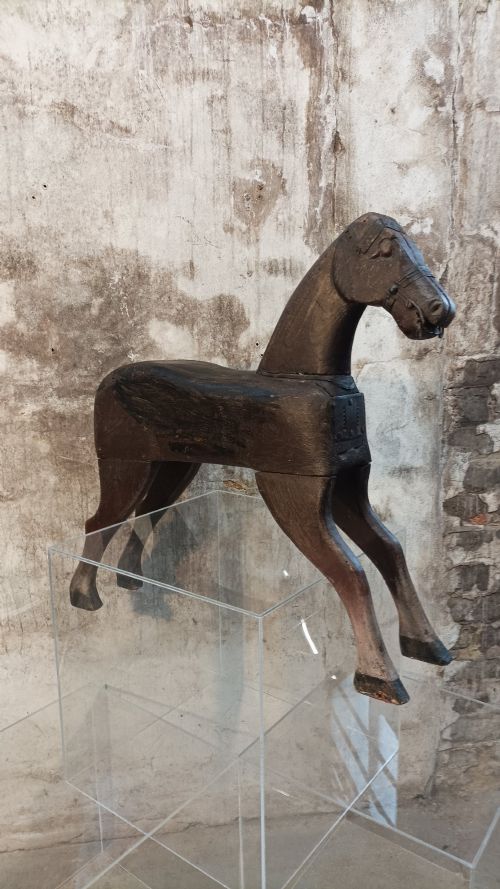


Antique Toy Rocking Horse
An antique toy rocking horse brings centuries of playroom history into a room, combining folk art form with traditional craftsmanship.
Antique Toy Rocking Horse
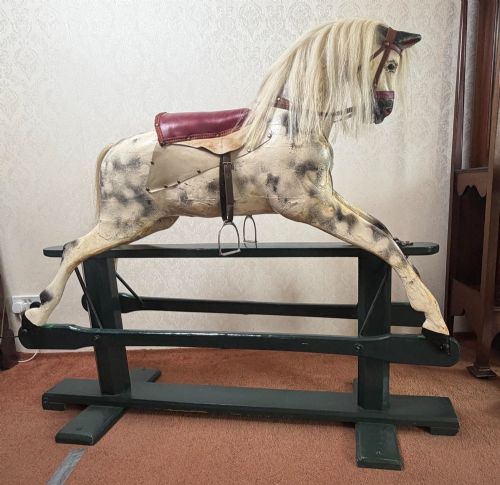
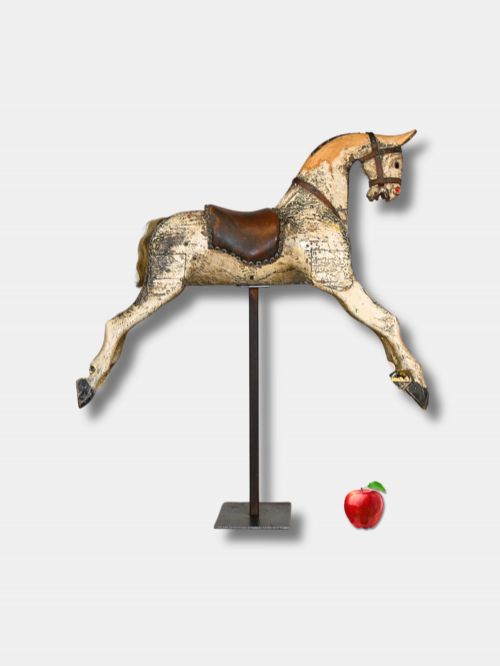
When you search for an antique toy rocking horse, you enter a world of carved timber, painted surfaces, and tactile children's playthings from past centuries. The pieces available range from primitive nineteenth-century folk art carvings on simple curved rockers to substantial workshop productions from the early twentieth century.
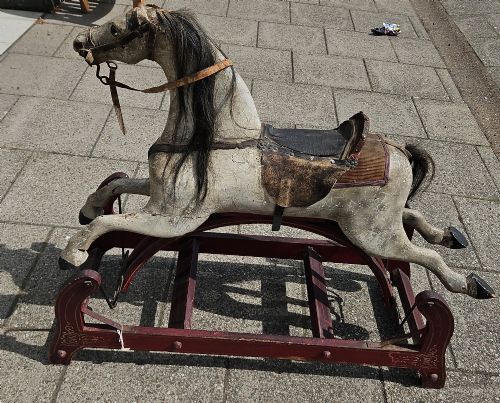
You are most likely to meet nineteenth-century and early twentieth-century examples on this page, often constructed from pine or carved wood and mounted either on traditional bow rockers or safety stands. These objects bridge the gap between functional nursery toys and decorative wooden sculptures.
Makers such as F.H. Ayres and G & J Lines dominate the larger scale workshop pieces, whilst simpler naive sculptures represent regional folk art traditions from Britain, France, Spain, and America. Each piece carries the marks of heavy childhood use alongside the enduring skill of the original woodcarver.
Materials and construction methods
Construction relied primarily on solid wood, with pine frequently used for the carved bodies and denser timber utilised for the structural stands and rockers. Makers shaped the horses using hand-carving techniques, often hollowing larger bodies to reduce weight whilst maintaining structural integrity for children's play.
Surface finishes combined traditional oil paint, gesso, and applied leather tack, sometimes accented with real horsehair for manes and tails. Metal and iron components reinforced the joints, safety swings, and stirrups, ensuring the toys could withstand robust movement.
Antique Toy Rocking Horse Retail Price Guide 2026
Typical asking prices for toy rocking horse among the pieces listed under this phrase on Sellingantiques today, from the lower quarter to the upper quarter. They describe what is for sale here now, not the wider market.
The listings span the nineteenth century through the interwar period, featuring pine bodies, leather tack, and iron mechanisms alongside painted folk art sculptures.
Judging quality and character
The distinction between ordinary workshop output and exceptional quality rests in the depth of the carving and the survival of the original painted surface. Finer pieces display anatomical sensitivity in the head and shoulders, whereas simpler folk art versions rely on charm and naive proportions.
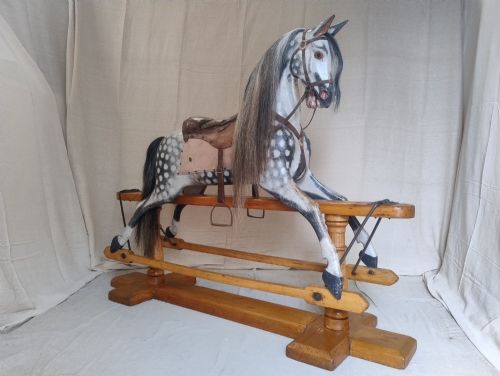
Survival of original tack, leather saddles, and authentic dapple paintwork elevates an example above those that have undergone extensive modern repainting or component replacement. The integrity of the wooden rocker assembly and the presence of makers' metal plaques further separate standard playroom survivors from museum-grade specimens.
G & J Lines·F.H.Ayres·Collinson Rocking Horse·Lines Bros Sportiboy
The Antique Toy Rocking Horse Glossary
- Bow rockers
- Curved wooden pieces attached to the base of a rocking horse that allow it to sway back and forth on the floor. This traditional design precedes the later enclosed safety stand.
- Safety stand
- A rigid wooden frame fitted with swinging iron irons that suspend the horse above the floor, allowing motion without the risk of the horse tipping over. This innovation dominated twentieth-century production.
- Gesso
- A plaster-based mixture applied over carved wood to create a smooth surface for painting and detailing. It formed the foundation for the classic dappled finish.
- Tack
- The harness, reins, saddle, and stirrups fitted to the horse. Original leather tack adds significantly to the historical integrity of a piece.
- Folk art
- Objects created by self-taught or traditional craftsmen outside academic fine art traditions. These pieces prioritise bold visual impact and naive charm over strict anatomical realism.
Antique Toy Rocking Horse: Frequently Asked Questions
How do I date an antique rocking horse?
Dating relies on examining the construction methods, nail types, rocker shapes, and painted finishes. Nineteenth-century examples often feature simple bow rockers and primitive hand-carved bodies.
Later twentieth-century versions frequently employ mechanical safety stands and bear stamped workshop labels or metallic maker plaques from firms active during that era.
What is a dapple grey finish?
The dapple grey finish is the classic painted pattern of spots and shading meant to mimic a grey horse's coat. Makers applied layers of gesso and paint before stencilling or hand-painting the characteristic markings.
Original surfaces show natural craquelure and mellowing from age and exposure to light.
Can children still ride these horses?
While many antique rocking horses were built sturdily for active play, their structural suitability depends on the condition of the timber, joints, and ironwork. Large workshop horses on safety stands often remain robust enough for gentle use.
Primitive folk art pieces and delicate nineteenth-century carvings are generally better suited for decorative display than modern childhood play.
How do I care for wooden toys?
Keep wooden toys away from direct heat sources, radiators, and strong sunlight to prevent the timber and gesso from splitting or cracking. Dust them gently with a dry, soft cloth rather than using liquid polishes.
Preserve the original painted or polished surfaces by maintaining a stable indoor room temperature and humidity.