

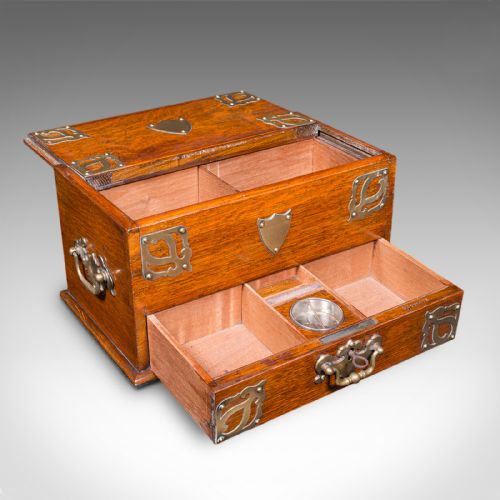


Antique Tobacco Humidor Box
An antique tobacco humidor box keeps leaf moist and fragrant, bringing character to a desk or club lounge.
Antique Tobacco Humidor Box
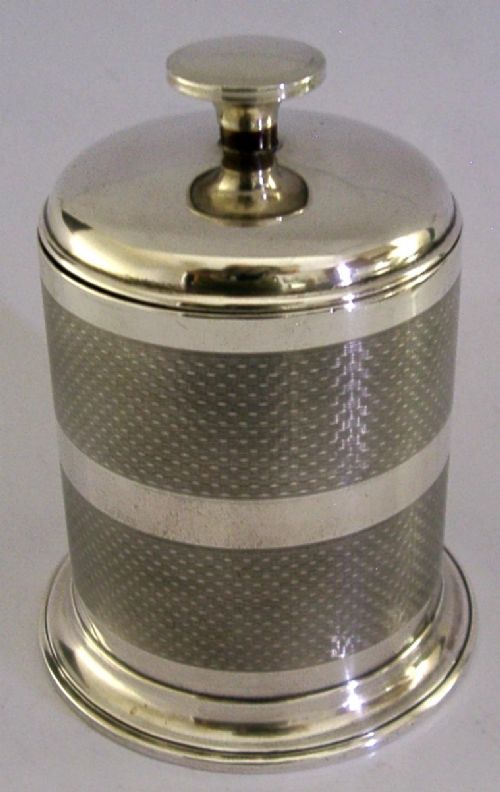
An antique tobacco humidor box preserves leaf and tobacco products inside domestic or club spaces. Collectors encounter varied forms spanning the nineteenth century, Victorian era, Edwardian period, and Art Deco years.
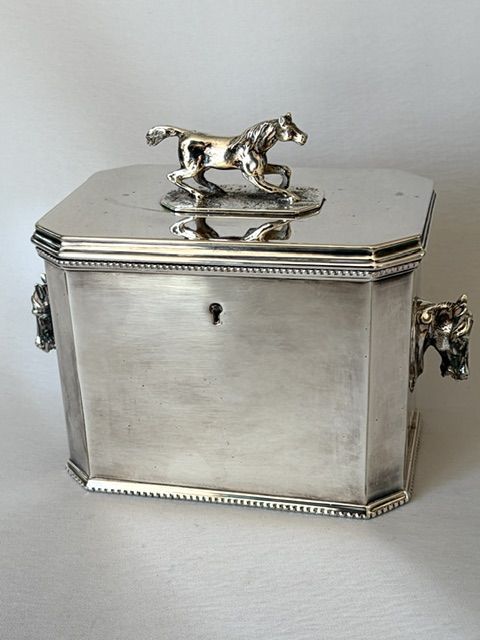
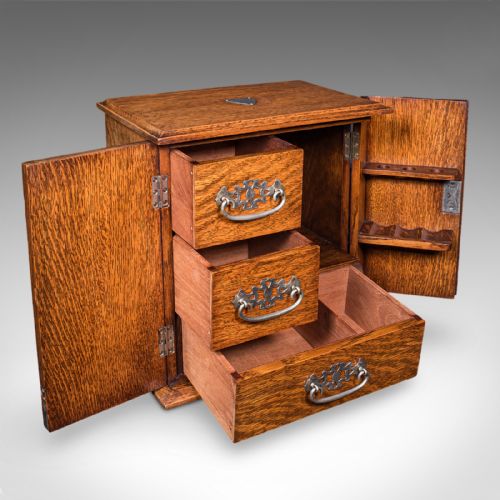
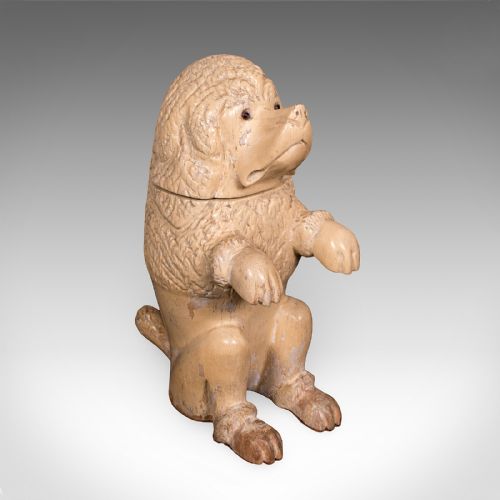
The selection ranges from small desktop receptacles to larger cabinets fitted with drawers and internal compartments. Formats include table boxes, standing humidors, and figural carvings.
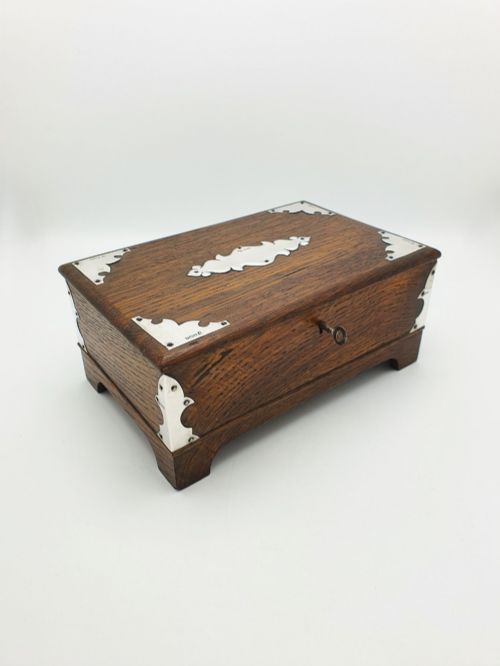
Makers utilised timber, metal, and glass to construct vessels designed for regular daily use. Oak, walnut, and sterling silver dominate the physical evidence on this page.
Materials and Construction
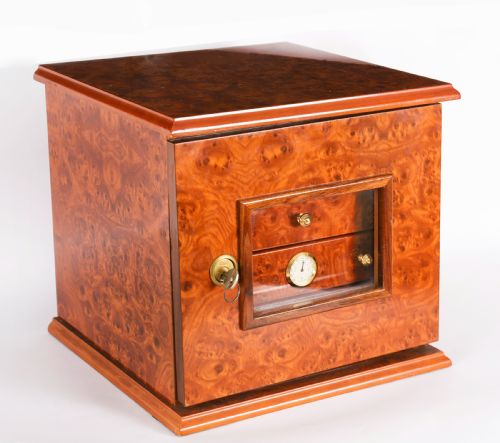
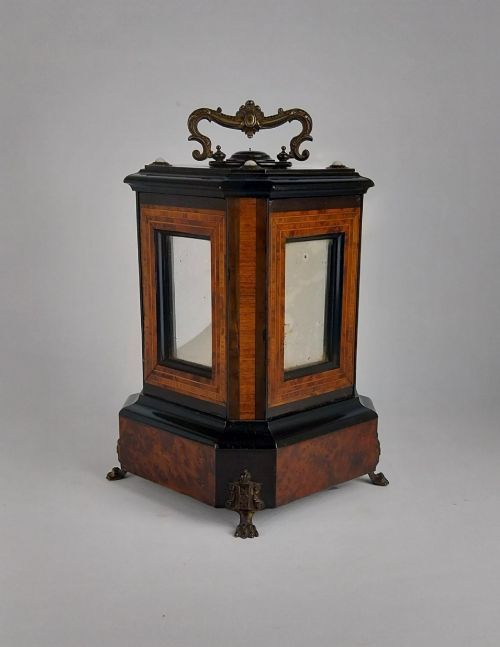
Carpenters and cabinetmakers shaped dense hardwoods such as oak, burr walnut, fruitwood, and pollard birch into secure housings. Joinery often incorporates brass hinges, locks, and internal trays.
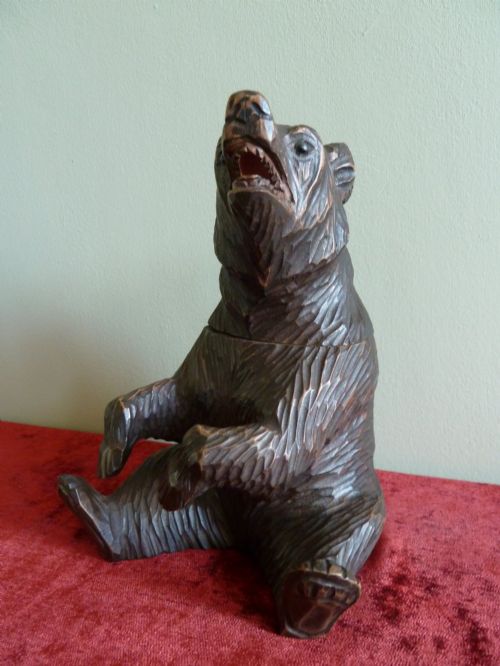
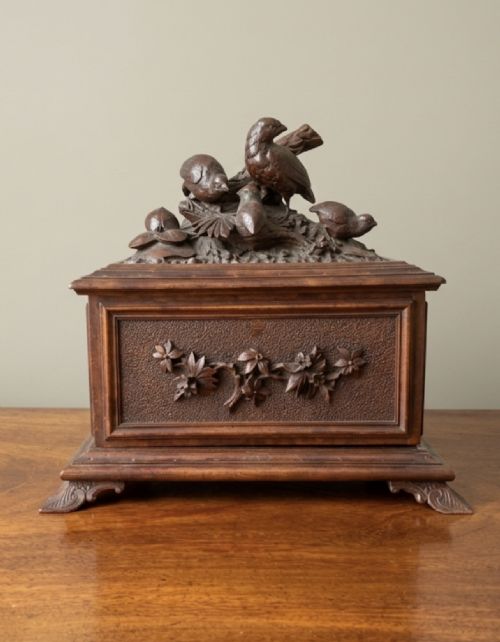
Metalworkers applied sterling silver mounts, copper plates, and silverplated fixtures to wooden bodies. Black Forest examples display detailed hand-carved linden wood utilising animal and figural motifs.
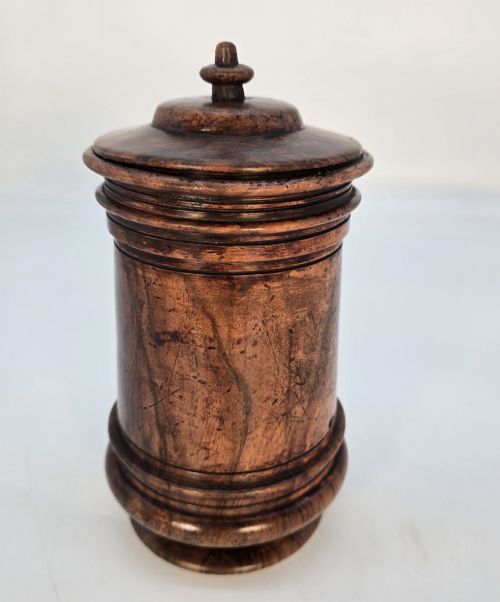
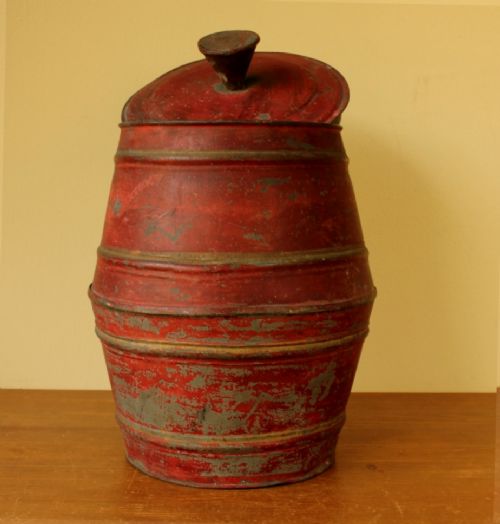
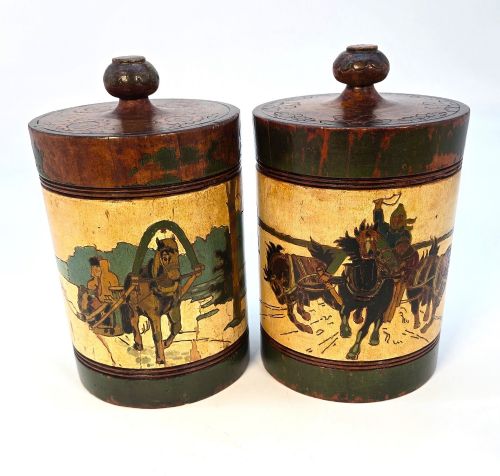
Glass liners and ceramic storage compartments appear alongside tin storage containers and treen turned wooden jars. Interiors frequently combine wood with metal humidifying elements.
Several Victorian smokers stored their leaf inside miniature railway coal wagons.
Distinctions in Standard
Execution of hand-carved details separates standard utility vessels from sculptural Black Forest and figural animal boxes. Precision in woodworking joints and the snugness of lid closures dictate overall standard.
Integration of precious metals such as sterling silver mounts by notable silversmiths elevates the grade of an oak or walnut box. Quality rests upon the integrity of the timber, preservation of linings, and mechanical smoothness of locking drawers.
Wright and Davies·Mappin and Webb·Alfred Dunhill
The Antique Tobacco Humidor Box Glossary
- Humidor
- A sealed box designed to maintain a consistent humidity level for cigars or pipe tobacco. Most incorporate timber walls and specialised interior containers.
- Treen
- Small handmade wooden objects created by turning on a lathe or through manual carving. Examples include turned tobacco jars and small containers.
- Black Forest
- A nineteenth-century wood-carving style originating in Switzerland and Germany. Pieces typically depict bears, dogs, and woodland animals in linden wood.
- Tambour
- A sliding door constructed from narrow vertical strips of wood glued to a flexible backing fabric. This technique appears on specific Edwardian and Victorian cabinet designs.
- Compendium
- A multi-functional smoking or writing box containing various fitted accessories within one housing.
Antique Tobacco Humidor Box: Frequently Asked Questions
What is an antique tobacco humidor box?
An antique tobacco humidor box is a lidded container or cabinet built to store and preserve cigars, cigarettes, or pipe tobacco. These vessels maintain leaf moisture through sealed wooden construction and fitted interiors.
Craftsmen produced them in various materials including oak, burr walnut, silver, and carved linden wood during the nineteenth and early twentieth centuries.
How do I date an antique tobacco humidor box?
Dating relies upon stylistic markers, construction methods, and hallmarked metal mounts. Victorian and Edwardian examples often display distinct aesthetic preferences ranging from heavy carved oak to sleek Art Deco silver.
Examining locks, hinges, and interior linings provides further clues regarding the manufacturing era and regional origin.
Were these boxes used for cigars or tobacco?
Historical examples served multiple smoking requirements depending on the interior fittings. Some boxes feature compartments specifically sized for cigars, while others contain glass jars or ceramic inserts for loose pipe tobacco.
Larger cabinets combine drawers for pipes, matches, and accessories alongside main storage sections.
How do I care for an antique wooden humidor?
Wooden humidors require stable room temperatures away from direct heat sources and strong sunlight to prevent timber splitting. Regular gentle dusting preserves the surface polish and metal mounts.
Internal humidification systems should be checked carefully before introducing modern leaf products to historical wooden interiors.