



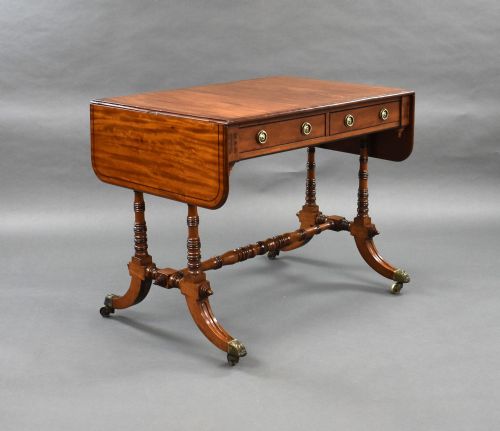
Antique Tipping Table
An antique tipping table offers a clever folding mechanism that saves space when the top tips vertical.
Antique Tipping Table
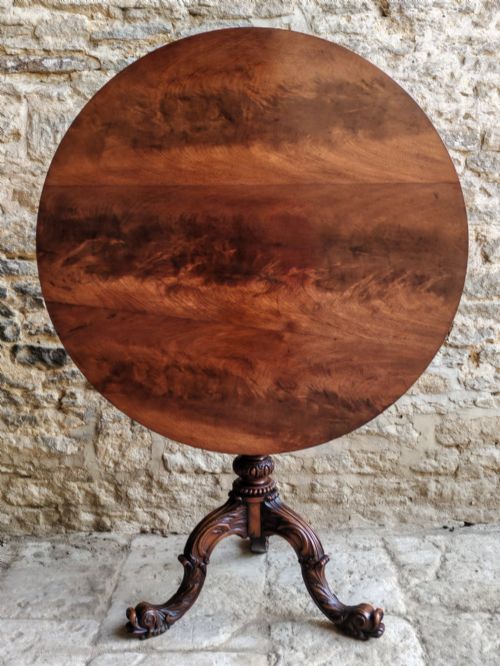
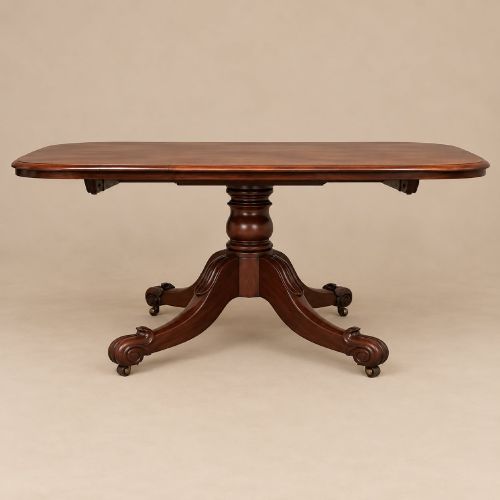
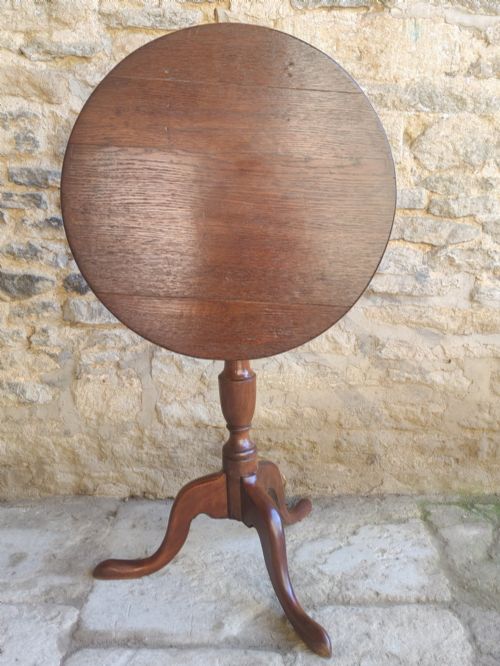
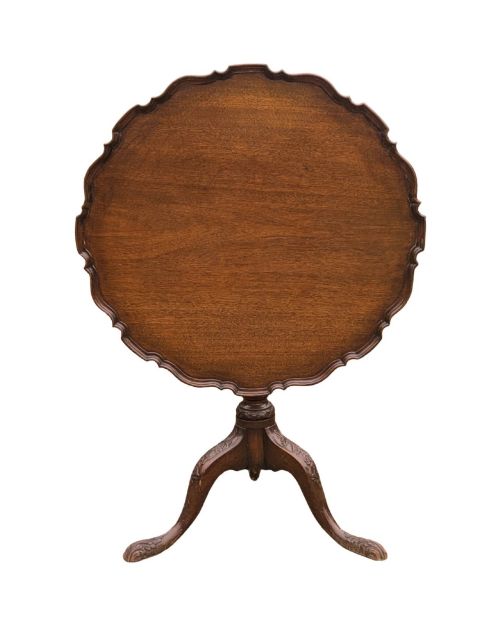
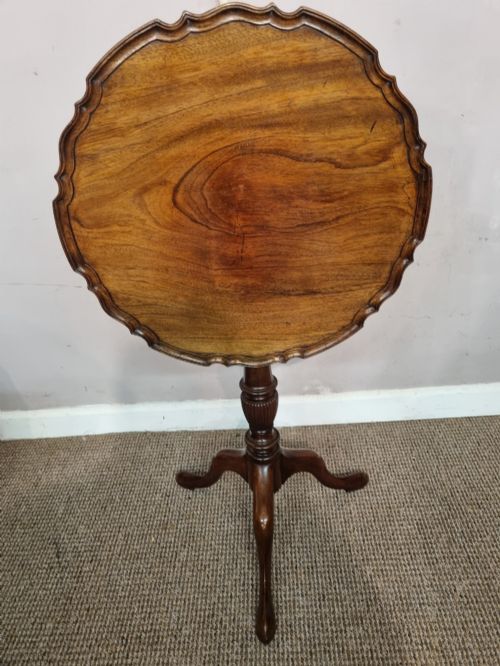
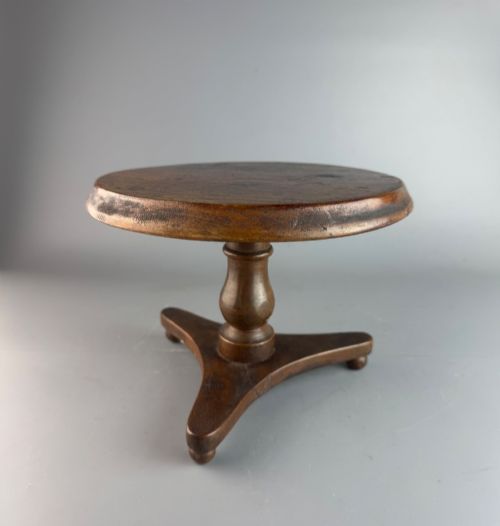
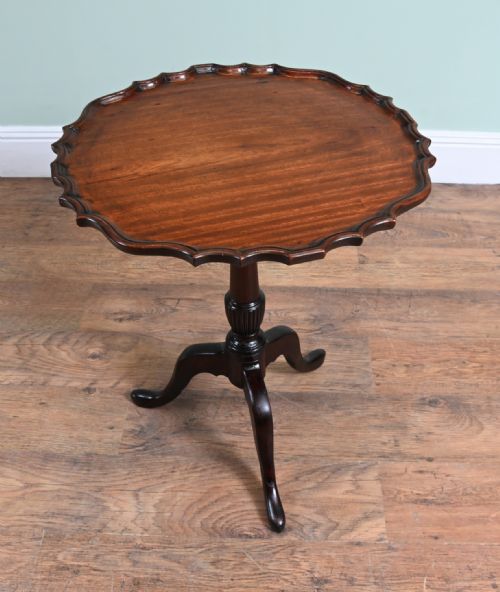
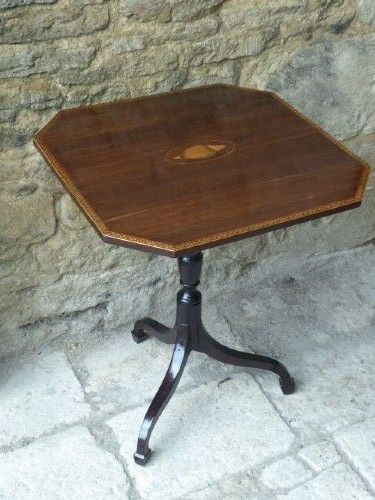
An antique tipping table combines a hinged top with a pillar and tripod base, designed to tilt upright against a wall when not in use. You will frequently encounter mahogany examples from the Georgian and Victorian periods, often featuring circular or pie crust edges.
The form encompasses various functional types including wine tables, candlestands, and occasional tables. Makers built these pieces from dense timbers like mahogany and walnut, occasionally incorporating clever birdcage mechanisms that allow the top to both pivot and tilt.
How these tables were constructed
Cabinet makers utilised solid mahogany and pine for the tops and turned pillars, shaping timber on lathes to create slender stems and robust tripod legs. Brass catches and pivoting blocks secured the tilting mechanism beneath the surface.
Surface decoration involved fine wood inlay, carved pie crust borders, and hand-carved tripod bases. Artisans finished the wood with polishing techniques that emphasised the natural grain of the hardwood.
Antique Tipping Table Retail Price Guide 2026
Typical asking prices for tipping table among the pieces listed under this phrase on Sellingantiques today, from the lower quarter to the upper quarter. They describe what is for sale here now, not the wider market.
Listings feature mahogany, pine, teak, and walnut across Georgian, Regency, and Victorian eras.
What separates the fine examples
Quality rests in the precision of the turning and the complexity of the mechanism beneath the top. A well-engineered birdcage action moves smoothly without wobble, while inferior pieces rely on simpler, looser pivots.
Carving crispness on the pie crust edges and the elegance of the tripod legs dictate the distinction between standard utilitarian furniture and high-status parlour pieces.
Callaghan & Co of London
The Antique Tipping Table Glossary
- Birdcage
- A wooden framework beneath the table top that permits both rotation and tilting. This clever mechanism uses parallel wooden rings and spindles.
- Pie crust edge
- A raised, scalloped border carved from the solid edge of the table top. It mimics pastry crimping and demands high skill from the woodcarver.
- Tripod base
- A pedestal support resting on three legs. This design ensures stability on uneven historical floor surfaces.
- Treen
- Small domestic wooden objects and utilitarian items. These pieces showcase traditional turning and carving skills.
- Tip top
- An alternative descriptor for a table with a hinged top that folds flat or vertical. It highlights the primary mechanical function.
Antique Tipping Table: Frequently Asked Questions
Why did they make tables tip?
These tables tipped upright to save valuable floor space in smaller domestic rooms when the evening meal or gathering concluded. Servants could easily push them against the wall.
The clever design also prevented the polished wooden surfaces from gathering dust or sustaining accidental damage during daily household activities.
What is a birdcage mechanism?
A birdcage is an ingenious assembly of small wooden spindles and rings fitted directly beneath the table top. It allows the surface to swivel in a complete circle as well as tilt.
This complexity added significant cost during manufacture and usually indicates a higher grade of craftsmanship in Georgian furniture.
How do I spot a Georgian example?
Georgian tables frequently utilise dense, heavy mahogany and feature hand-carved tripod legs ending in pad or snake feet. Look closely at the construction details underneath for hand-cut joints.
Pie crust edges and birdcage actions also point strongly toward eighteenth-century workshops rather than later revival periods.
Can I use one as a desk?
Most tipping tables are too light and feature unstable pivoting tops unsuited for heavy writing pressure. Occasional use for a cup of tea or a book suits them better.
If you require a dedicated writing surface, look specifically for examples designed with fixed tops and integrated drawers.