




Antique Timber Tea Caddy
An antique timber tea caddy is a refined wooden box made to store valuable loose tea leaves securely under lock and key.
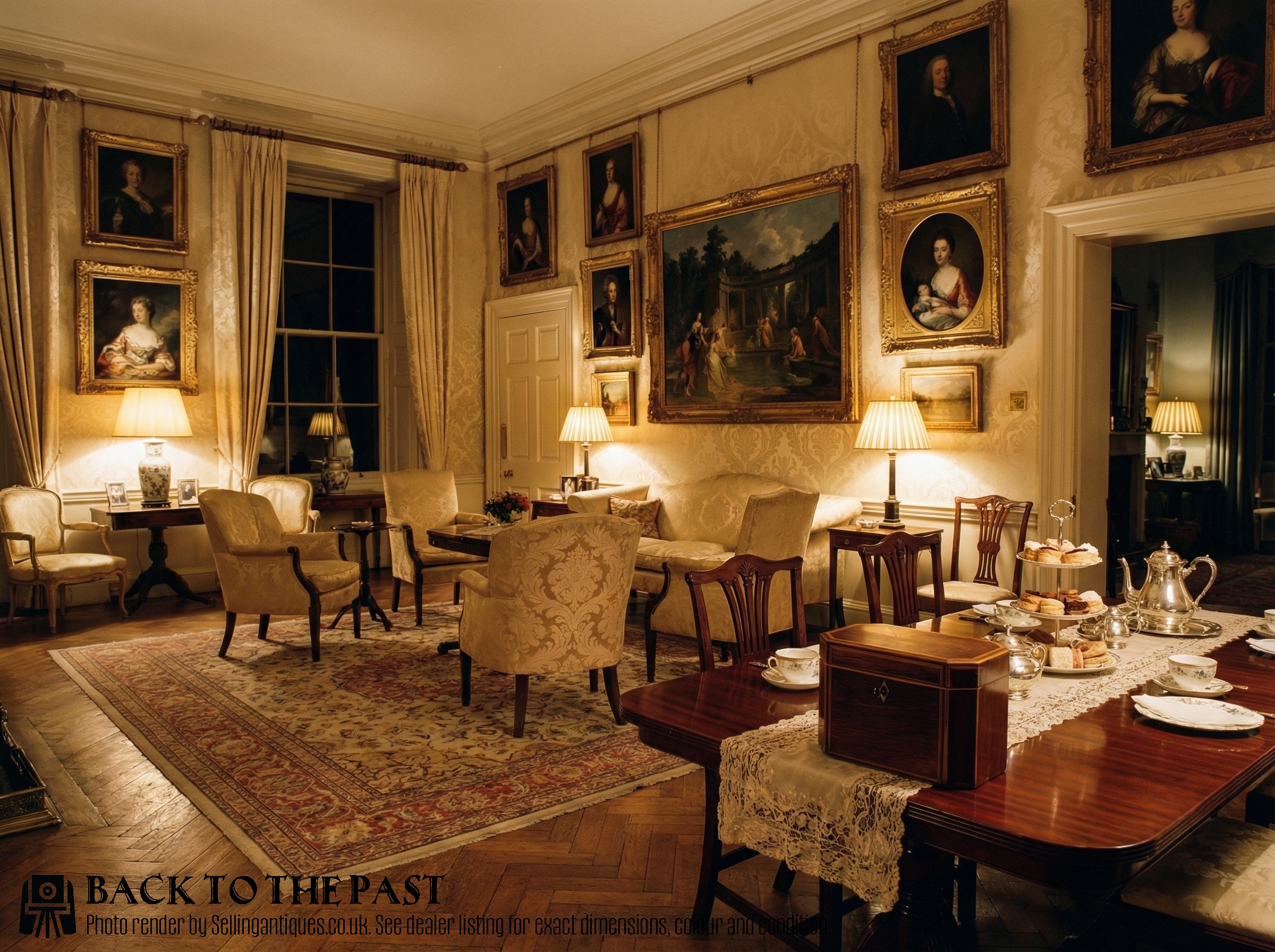
Antique Timber Tea Caddy
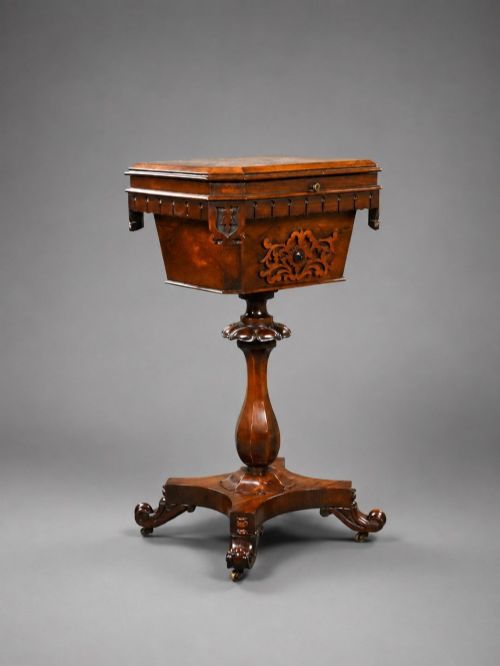
An antique timber tea caddy serves as a specialised receptacle designed during periods when tea was an expensive commodity requiring safe storage in the home. These pieces appear in forms ranging from straightforward rectangular boxes to elaborate sarcophagus shapes and tea poys.
The specimens encountered here span from the eighteenth century through the Georgian, Regency, William IV, and Victorian eras, reflecting shifting domestic tastes. Alongside standard caddies, buyers also discover related items such as keepsake boxes and jewellery boxes.
The materials utilised in construction include traditional British timbers like mahogany, oak, and walnut, alongside decorative veneers such as rosewood, partridge wood, and satinwood. Many examples feature fitted interiors designed to hold compartments for different tea varieties.
How they were made
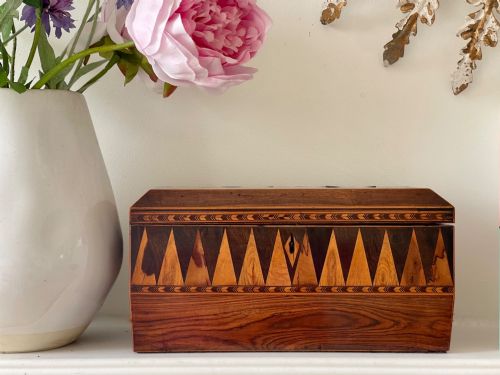
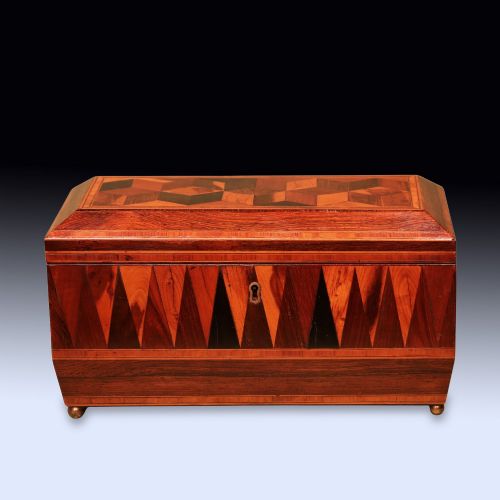
Cabinetmakers constructed the carcases of these boxes using solid hardwoods like mahogany and oak, often applying fine veneers of exotic timbers to the exterior surfaces. Decorative techniques such as parquetry, intricate inlay work, and Tunbridge Ware mosaic patterns display high levels of woodworking skill.
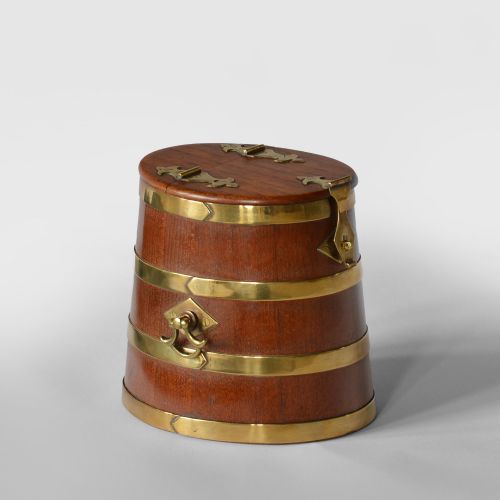
Metal components including brass locks, handles, and escutcheons were integrated to secure the contents and assist with lifting the heavy timber lids. Interior compartments frequently incorporated foil lining or wooden lids to preserve the aroma of the stored leaves.
What varies in quality
The choice of timber and the precision of the veneer work largely determine the quality of an antique timber tea caddy. Finely figured grains such as partridge wood, burr yew, and amboyna distinguish more ambitious pieces from simpler domestic boxes.
The complexity of the decorative scheme, from subtle stringing to elaborate parquetry and pictorial Tunbridge Ware mosaics, separates standard production from high-status items. Original fitted interiors and functioning locks with matching keys also influence the standing of an individual piece.
Henry Hollamby
The Antique Timber Tea Caddy Glossary
- Tea Poy
- A small stand or large caddy mounted on a central pillar or legs, designed to hold tea in the drawing room.
- Tunbridge Ware
- Woodwork decorated with mosaic patterns created from thousands of tiny tinted wood prisms arranged to form pictorial scenes or geometric designs.
- Parquetry
- A geometric mosaic of wood pieces used for ornamenting floors or furniture surfaces, often seen on Regency boxes.
- Escutcheon
- A flat plate of brass surrounding a keyhole, serving both a protective and decorative function on the box front.
- Sarcophagus
- A box shape featuring a domed or sloping lid resting on a rectangular base, popular during the Regency and William IV periods.
Antique Timber Tea Caddy: Frequently Asked Questions
What is an antique tea caddy?
An antique tea caddy is a lidded wooden box originally manufactured to store loose tea leaves securely away from moisture and light.
Because tea was a costly luxury in past centuries, these containers were fitted with locks and internal compartments to portion out different blends.
How were tea caddies used?
Household servants or the master of the house used tea caddies to dispense measured amounts of black or green tea leaves for daily brewing.
The locked lid prevented theft of the precious contents by household staff in large historical homes.
How do I date a tea caddy?
Dating relies upon identifying the primary timber, the cabinet style, and construction methods characteristic of periods like the Georgian or Victorian eras.
Specific decorative details such as Tunbridge Ware mosaics or Regency brass mounts also provide clear chronological markers.
Can I still use a tea caddy?
These boxes can function effectively for storing dry goods, though modern users often repurpose them as keepsake or jewellery boxes.
Care should be taken to protect antique wood and fragile interior foils from excess humidity and direct sunlight.