


Antique Timber Dining Sideboard
An antique timber dining sideboard is a substantial dining room storage piece that anchors a traditional interior with period presence.
Antique Timber Dining Sideboard
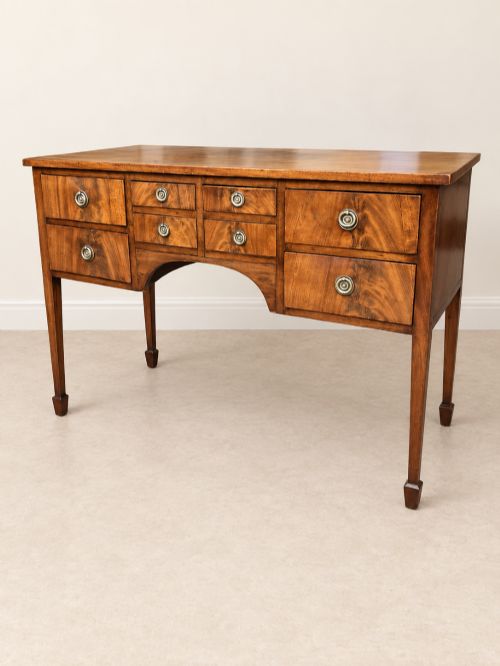
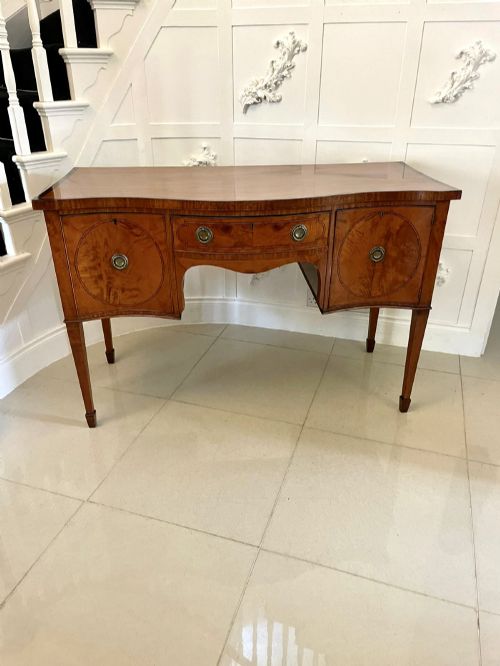
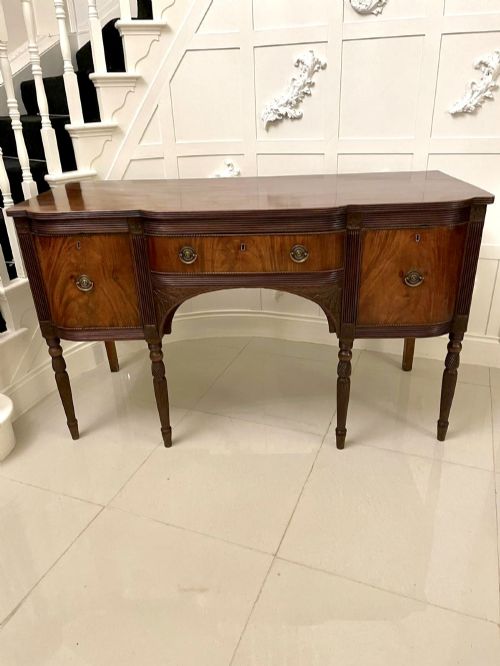
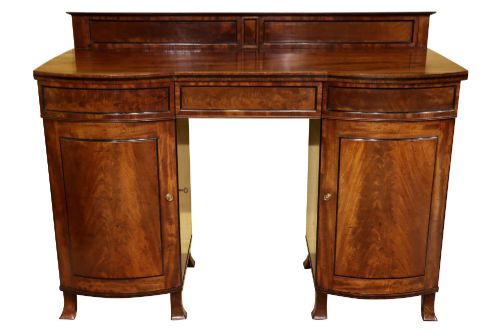
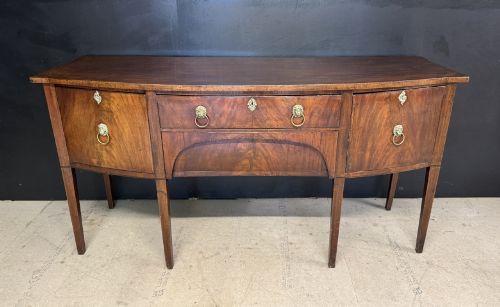
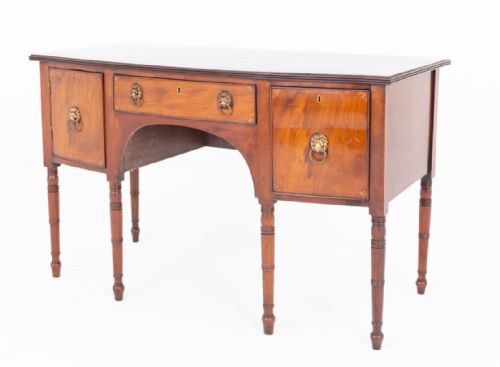
An antique timber dining sideboard is designed for the dining room to hold silver, linen, and serving dishes. They appear across Georgian, Victorian, Edwardian, and Art Deco periods, taking forms such as breakfronts, bow fronts, and pedestal designs.
The versions most commonly met here span the eighteenth and nineteenth centuries in mahogany, walnut, and satinwood. These range from simple serving tables to large pedestal sideboards and mirror-backed examples.
Makers and workshops produced these servers to serve both practical and display functions in formal dining spaces. Their proportions vary from small compact bowfronts to large breakfront configurations.
What varies in quality
Quality rests primarily in the selection of the timber and the handling of the grain. Matched flame mahogany veneers and figured satinwood indicate a higher grade of cabinet making than plain stock.
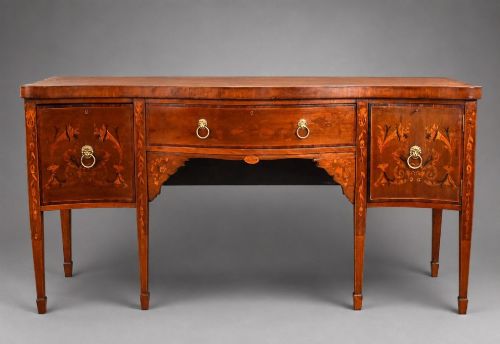
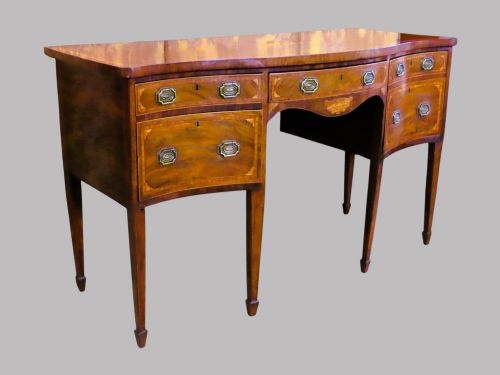
The crispness of inlay work and the integration of brass mounts distinguish superior examples. Finer pieces demonstrate precise boxwood stringing and well-fitted drawers with appropriate secondary woods.
Proportion and architectural presence separate standard production from exceptional pieces. Breakfronts and serpentine fronts require advanced carpentry skills that elevate the status of the furniture.
Some Victorian examples include mirror backs intended to bounce candlelight around the evening dining room.
Gillow·The Woodworkers Ltd Kilkenny
The Antique Timber Dining Sideboard Glossary
- Breakfront
- A cabinet form where the central section projects forward from the flanking outer sections. This arrangement creates depth and visual rhythm across the front.
- Serpentine
- A front profile shaped with a convex centre flanked by concave curves, or vice versa. This flowing line demands high skill from the cabinet maker.
- Bow front
- A convex curved front that projects outward in a smooth arc. This shape softens the corners of dining room storage furniture.
- Boxwood inlay
- Contrasting light-coloured wood inserted into recesses in a darker surface to form geometric or floral patterns. It provides crisp linear definition.
- Pedestal sideboard
- A form featuring substantial cupboards or pedestals flanking a central table section. These often date from the Regency and William IV periods.
Antique Timber Dining Sideboard: Frequently Asked Questions
How do I style a timber sideboard in a modern dining room?
Pair the warm tones of mahogany or walnut with neutral walls to let the wood grain stand out. Place lamps or ceramics on top to balance the horizontal proportions.
Keep the surrounding space uncluttered to allow the period details and inlay work to draw the eye.
What is the difference between a sideboard and a serving table?
Serving tables typically feature an open frame with legs and drawers beneath a flat top. Sideboards often incorporate enclosed cupboards, pedestal bases, or lower storage sections.
Both served dining rooms, but sideboards offer more concealed storage capacity.
How can I tell a Georgian sideboard from a Victorian one?
Georgian examples often favour clean architectural lines, linear boxwood stringing, and tapered legs. Victorian pieces tend to be heavier, sometimes incorporating mirror backs, carved walnut, or pollard oak.
Construction methods and timber selection also shift between these distinct eras.
Are these sideboards suitable for daily use?
These pieces were built for functional domestic storage and remain robust enough for contemporary dining rooms. The deep drawers and cupboards accommodate modern tableware and linens.
Care should be taken with moisture and heat placed directly on antique timber surfaces.