

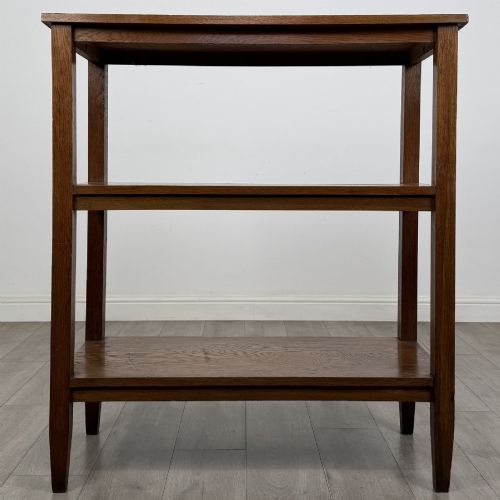
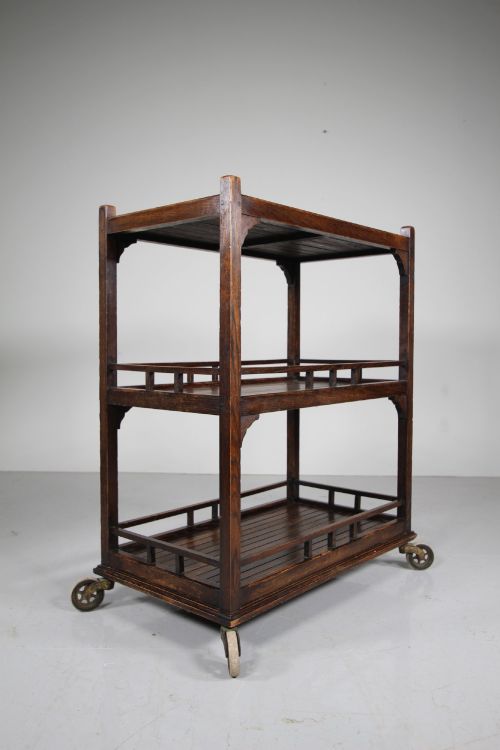
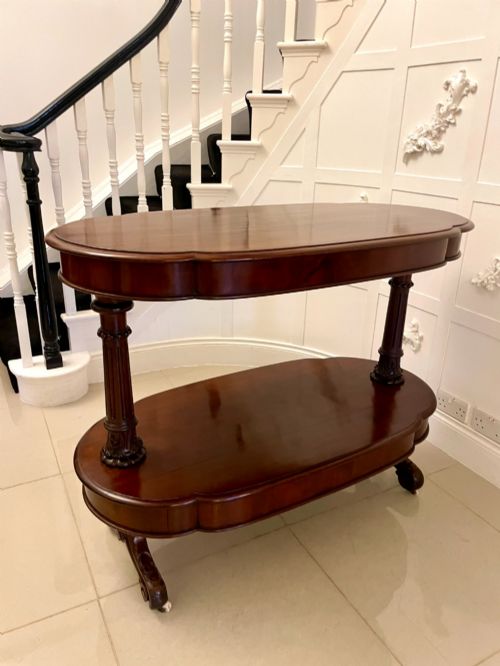
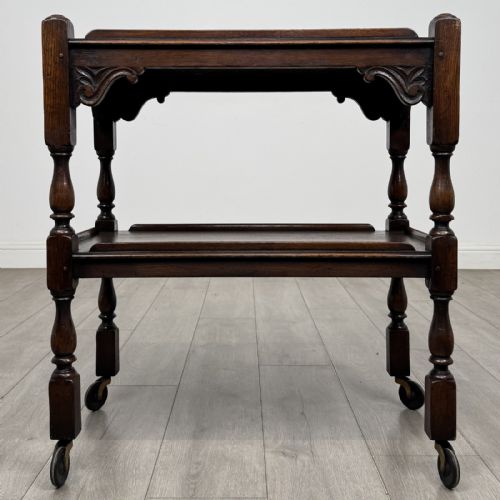
Antique Tiered Trolley
An antique tiered trolley is a mobile multi-level piece for serving and display, offering practical mobility and period character.
Antique Tiered Trolley
An antique tiered trolley encompasses mobile serving tables, tea trolleys, drinks carts, and multi-shelf etageres designed for moving refreshments or displaying objects. These items emerge from the nineteenth century onward, spanning Victorian, Edwardian, and Art Deco eras.
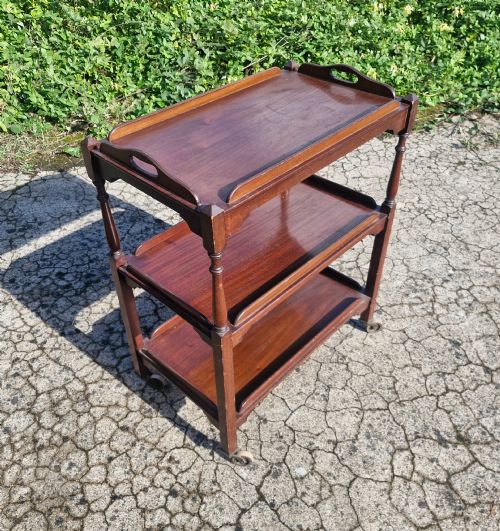
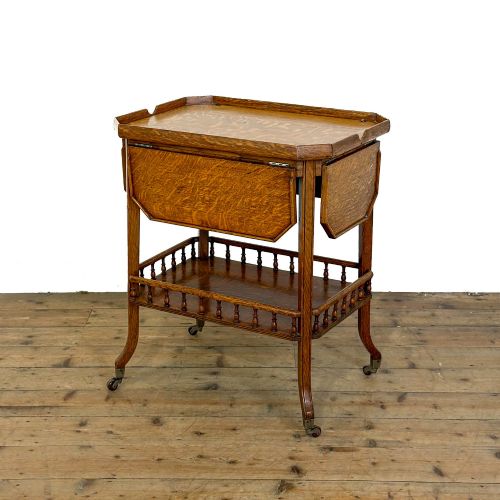
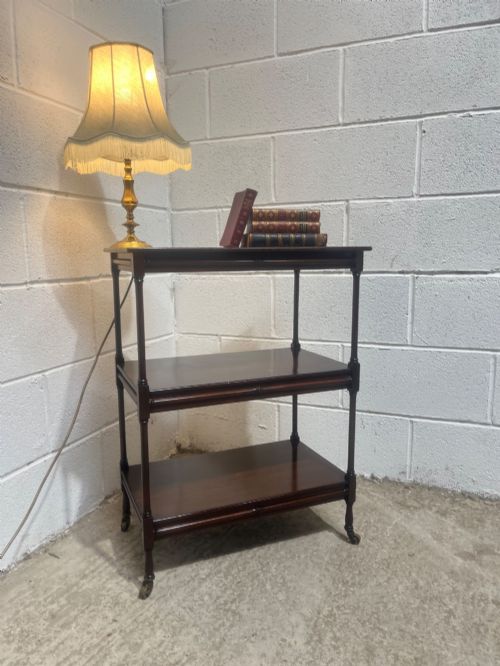
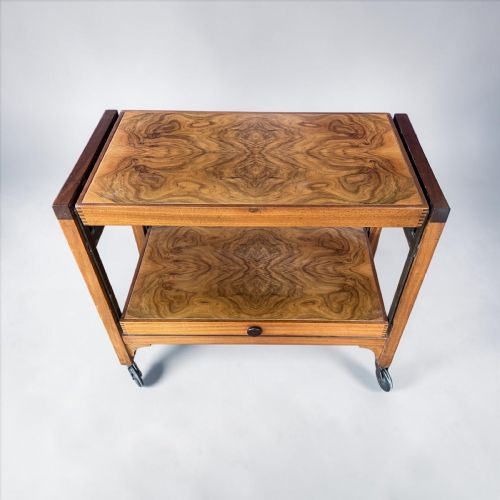
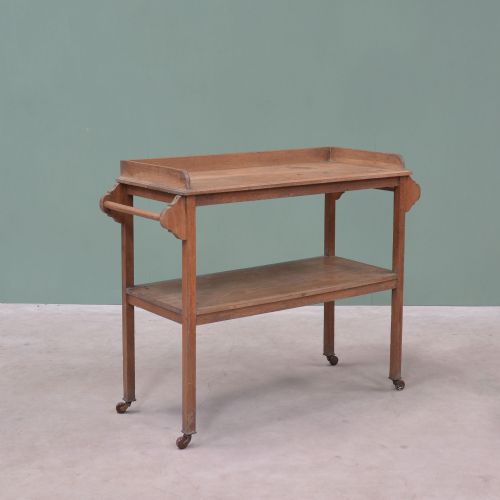
The version most commonly encountered on this page is the two-tier or three-tier wooden trolley, frequently constructed from mahogany or oak and mounted on castors for ease of movement. Such pieces often include practical additions like removable carrying trays, drop leaves, or adjustable tiers.
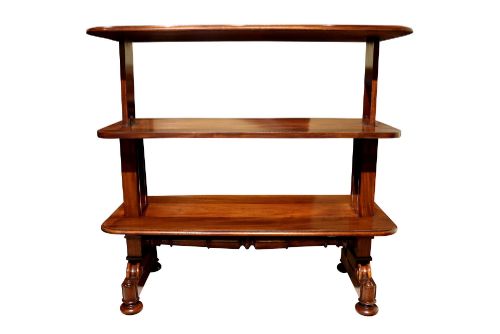
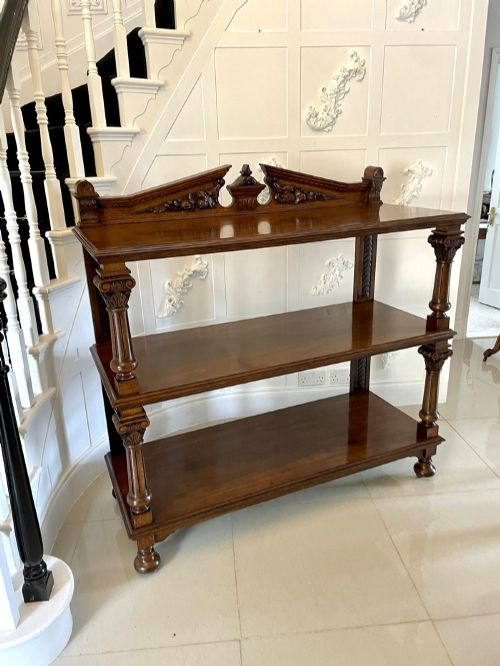
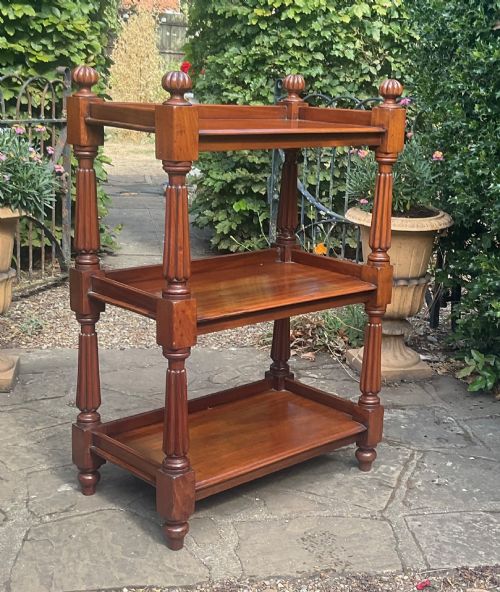
Originating as formal dining room buffets and dumb waiters in the nineteenth century, the form evolved into lighter afternoon tea and drinks trolleys by the early twentieth century. Makers utilised various woods and metals to suit domestic entertaining needs across different social contexts.
How they were made
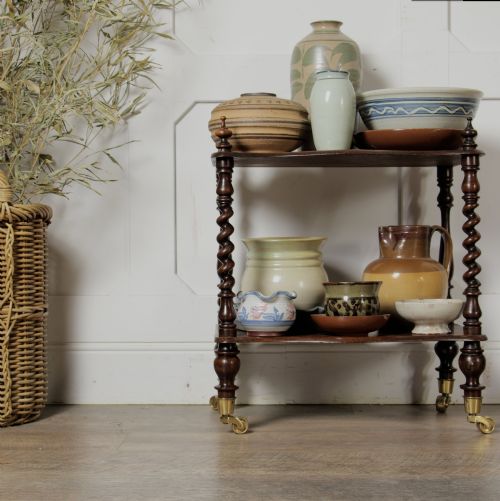
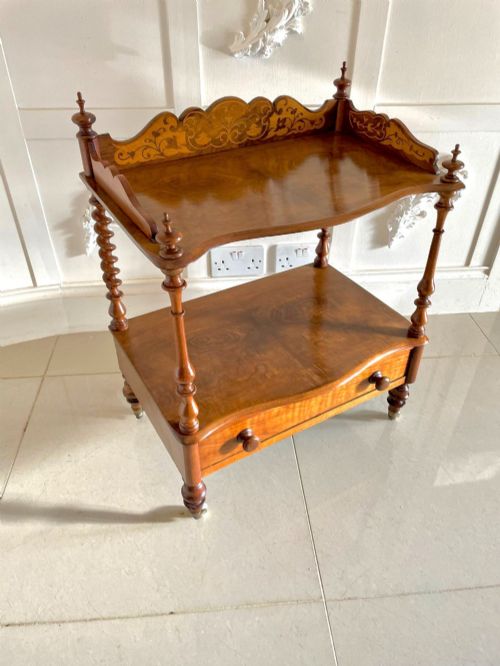
Makers constructed these pieces predominantly using timber frameworks of mahogany, oak, walnut, and rosewood, frequently incorporating turned supports, barley twist columns, or carved detailing. Joinery methods relied on traditional cabinet-making practices to ensure stability across multiple tiers.
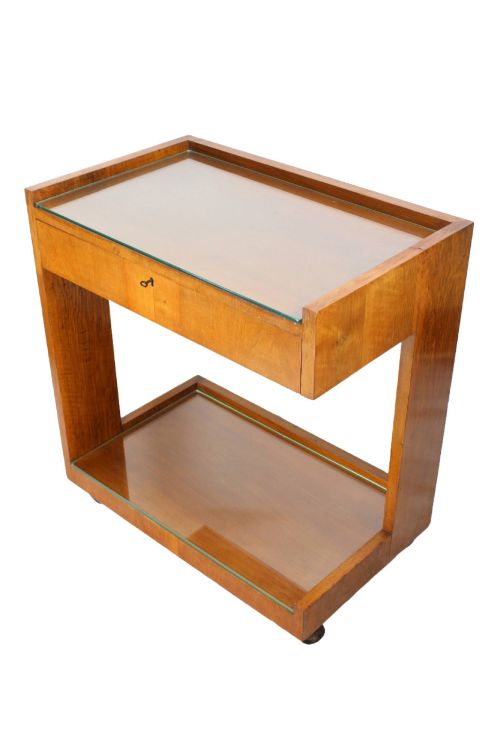
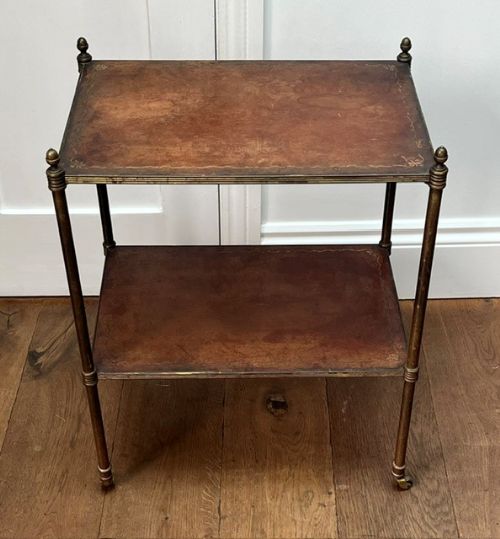
Metal components such as brass castors, iron frames, and lacquered brass fittings provided both structural support and mobility. Glass inserts, leather surfaces, and ebonised highlights appeared in more decorative iterations, particularly during the Art Deco period.
Antique Tiered Trolley Retail Price Guide 2026
Typical asking prices for tiered trolley among the pieces listed under this phrase on Sellingantiques today, from the lower quarter to the upper quarter. They describe what is for sale here now, not the wider market.
Several trolleys include removable carrying trays, proving that nineteenth-century hosts also valued breakfast in bed.
What varies in quality
The grade of timber and the precision of the cabinetwork distinguish standard utilitarian pieces from finer examples. Superior specimens exhibit carefully selected wood veneers, such as burr walnut or figured mahogany, matched with solid framing and robust joints.
The integration of functional hardware, including original brass castors, smooth-running mechanical lifts, and well-fitted removable trays, indicates higher standards of manufacture. Greater refinement is also visible in the crispness of carved ornamentation and the quality of applied finishes.
Heals of London·Maison Bagues
The Antique Tiered Trolley Glossary
- Dumb Waiter
- A tiered serving table or sideboard without doors, designed to hold dishes or drinks during meals. These pieces often feature revolving or fixed circular shelves supported on a central pillar or four-legged base.
- Etagere
- A set of open shelves for displaying small objects, ornaments, or books. This French form typically comprises multiple tiers supported by slender uprights.
- Castor
- A small wheel mounted on a swivel assembly attached to the legs of furniture to allow easy rolling. Original brass or iron castors are sought after by collectors.
- Metamorphic
- Furniture designed to change shape or function through folding, dropping leaves, or raising tiers. These pieces offer versatile utility in domestic spaces.
- Barley Twist
- A type of turning shaped like a helix, resembling a twisted rope. This decorative woodworking technique appears frequently on nineteenth-century supports and table legs.
Antique Tiered Trolley: Frequently Asked Questions
What is an antique tiered trolley used for?
These pieces served originally for transporting food, tea, and beverages between rooms or assisting at the dining table during formal meals.
Today, they function well as mobile drinks bars, side tables, or display shelving for plants and books in modern living spaces.
How do I identify a Victorian trolley?
Victorian examples typically feature dense timbers like mahogany or burr walnut, often displaying turned columns, carved decoration, or heavy brass castors.
They frequently take the form of multi-tiered dumb waiters or heavy serving buffets designed for nineteenth-century dining rooms.
Are Edwardian trolleys different from Victorian ones?
Edwardian trolleys tend to be lighter in construction, reflecting a shift toward afternoon tea service and informal entertaining in domestic settings.
Oak and mahogany remain common, sometimes accompanied by removable glass trays and simpler lines than earlier nineteenth-century furniture.