




Antique Tier Serving Stand
An antique tier serving stand provides graduated levels for hospitality, bringing practical dining surfaces and traditional form to the room.
Antique Tier Serving Stand
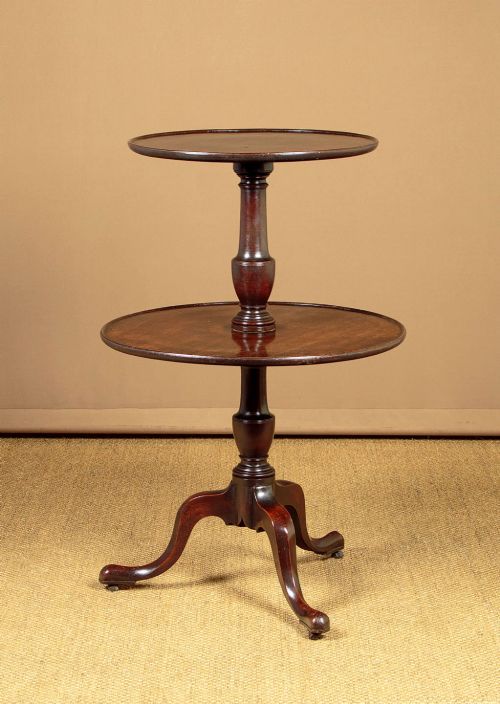
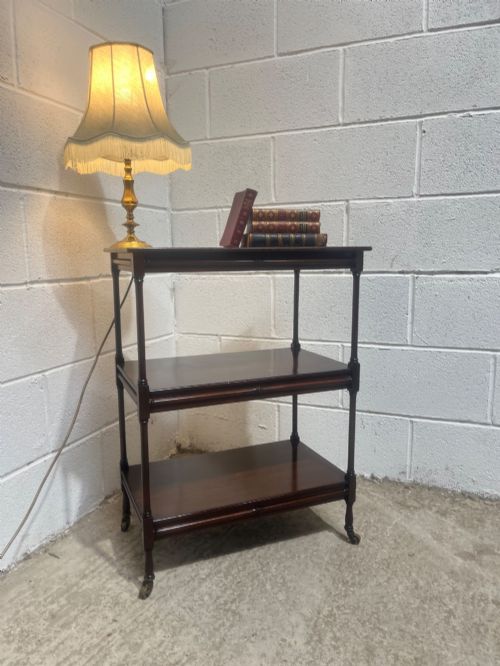
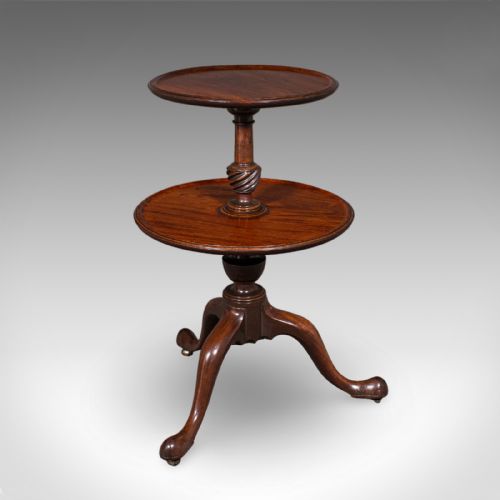
When you search for an antique tier serving stand, you encounter pieces designed to hold food, drink, or display items across multiple stacked levels. These multi-tiered items span several periods, from Georgian and Regency eras through to Victorian and Edwardian times, including forms such as dumb waiters, trolleys, etageres, and butler's buffets.
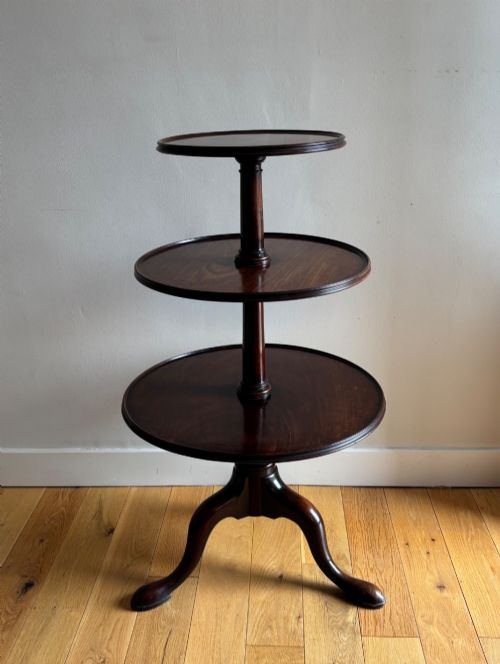
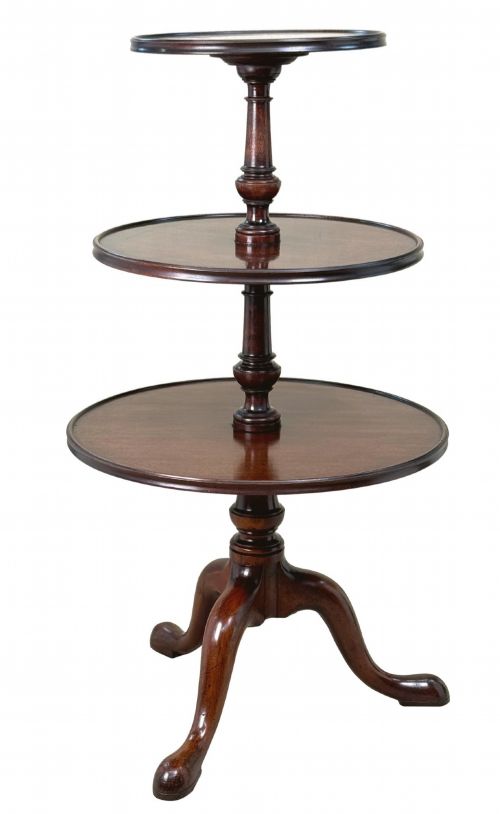
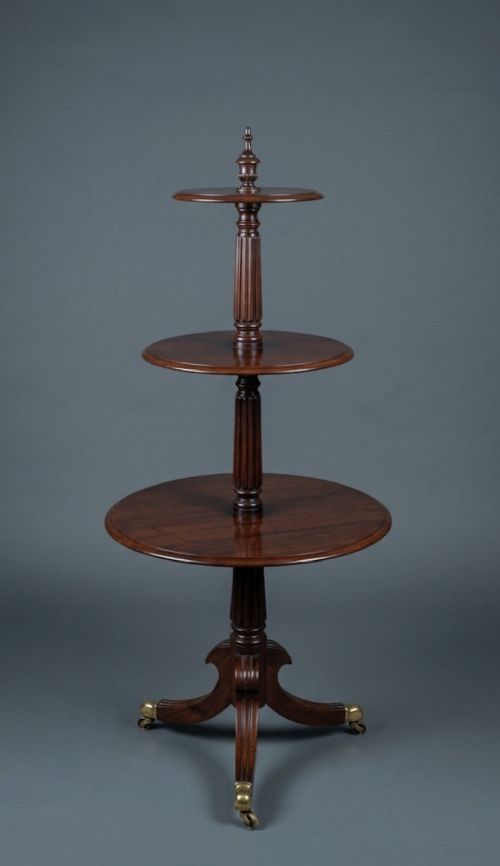
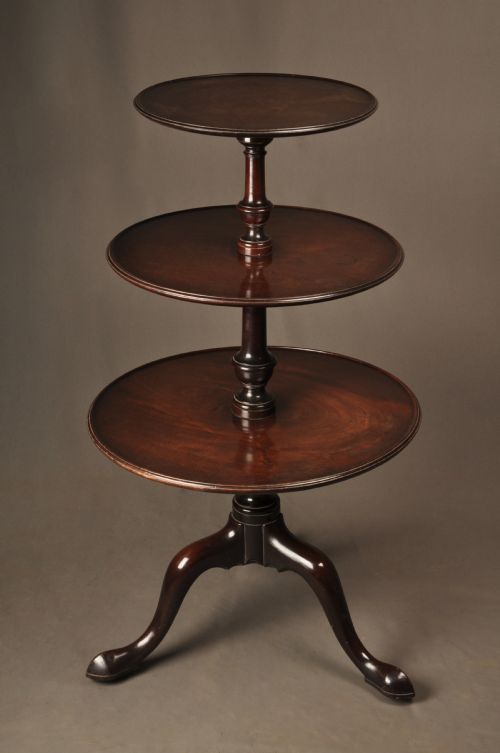
The version you are most likely to meet on this page is the multi-level mahogany table or dumb waiter featuring two or three graduated circular trays. These items originate from workshops across the 18th, 19th, and early 20th centuries, taking various structural configurations from fixed circular tiers to revolving designs and folding frames.
How they were made
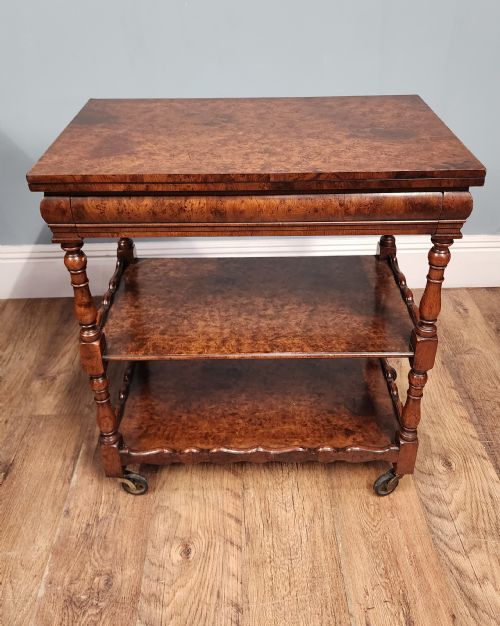
Cabinet makers constructed these serving stands primarily in solid mahogany, rosewood, walnut, and pollard oak, often incorporating brass castors and turning detailed central columns. Selected timbers received polished finishes to highlight natural grain patterns, while certain late examples utilise decorative veneers such as amboyna and burr walnut.
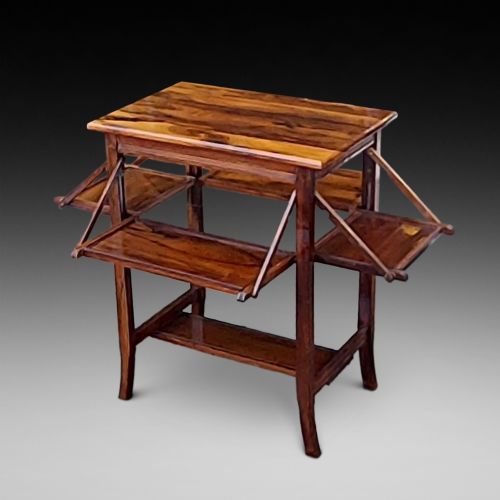
Joinery methods relied on sturdy central pillar supports fitted to tripod or four-legged bases, sometimes incorporating mechanical elements for revolving tiers, drop leaves, or fully adjustable heights. Specialised touches include raised galleries around tray edges, inlaid satinwood details, and carved woodwork seen in Burmese padauk pieces.
Listings feature woods spanning solid mahogany, rosewood, walnut, amboyna veneer, and pollard oak across periods from the 18th century to the 1920s.
What varies in quality
Quality rests in the precision of the turning on the central column and the stability of the joints where the tiers meet the shaft. Superior examples maintain firm, level platforms across every tier without noticeable wobble or sagging.
The choice of timber and veneer selection dictates the refinement of the piece, with dense, deeply figured mahogany and well-matched burr veneers indicating higher workshop standards. Original hardware, such as brass castors and pivoting mechanisms that operate smoothly, elevate the standing of the piece.
Gillows
The Antique Tier Serving Stand Glossary
- Dumb waiter
- A freestanding tiered piece of dining furniture designed to hold dishes and utensils without servant assistance. These stands typically feature graduated circular trays stacked upon a single central pillar.
- Etagere
- A set of open shelves or tiers used for displaying small objects or serving afternoon tea. Originating in France, these lightweight stands became popular in various refined woods during the 19th and early 20th centuries.
- Whatnot
- A piece of furniture consisting of a series of open shelves supported by small pillars, used for books or ornaments. The Victorians favoured these multi-tiered stands for general display in parlours and reception rooms.
- Gallery
- A raised wooden or brass rim fitted around the edge of a serving tray or table top. This perimeter prevents items from sliding off the tier when moved or used during meal service.
- Revolving
- A mechanism allowing the individual tiers of a serving stand to turn independently around the central shaft. This rotational feature enabled diners to access dishes easily from a seated position.
Antique Tier Serving Stand: Frequently Asked Questions
What is a dumb waiter?
A dumb waiter is a multi-tiered freestanding table used historically in dining rooms to hold extra food and tableware. They allowed diners to serve themselves without the presence of servants.
Over time, these pieces evolved into various formats including folding stands, tea trolleys, and revolving tray arrangements suited for modern living spaces.
How were tier serving stands used?
These stands served primarily during meals to hold supplementary dishes, wine bottles, and serving utensils close to the dining table. Their stacked levels maximised floor space while keeping food within easy reach.
In later domestic settings, smaller iterations functioned as afternoon tea tables, cake stands, or display surfaces for books and ornaments in drawing rooms.
Are these stands adjustable?
Certain examples feature mechanical adjustments that allow the trays to pivot, fold flat, or raise and lower along the central pillar. These functional attributes were engineered for flexible use and compact storage when not entertaining.
Not all stands possess these mechanisms, as many Georgian and Victorian versions feature fixed tiers permanently secured to the central turning.
How do I care for antique mahogany?
Maintenance requires keeping the wood away from direct heat sources and sudden humidity changes to prevent the timber from splitting or warping. Regular dusting with a soft, dry cloth preserves the polished finish.
Applying occasional appropriate wax feeds the grain and maintains the natural lustre of the wood without building up heavy residue.