




Antique Throw Rug
An antique throw rug introduces textile warmth into a room through Central Asian embroideries, Turkish village weaving, and Indian decorative panels.
Antique Throw Rug
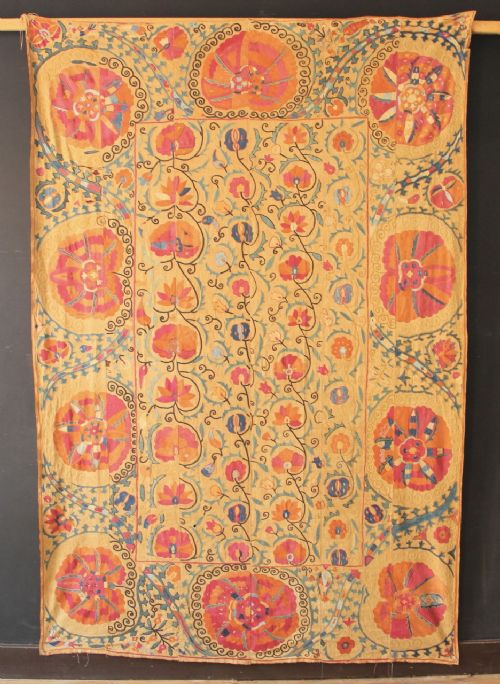
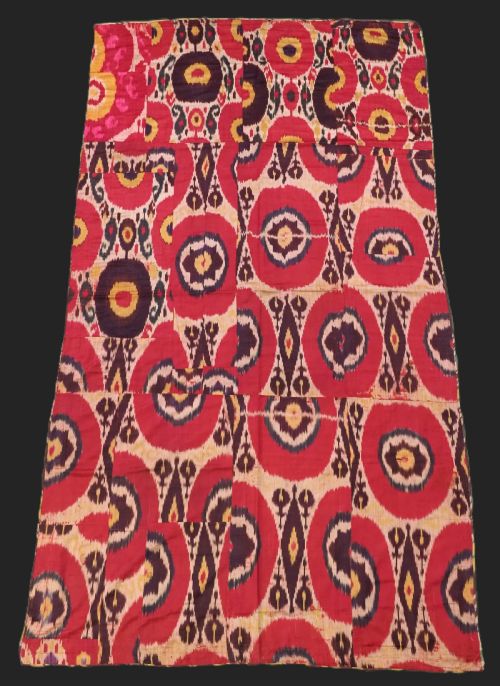
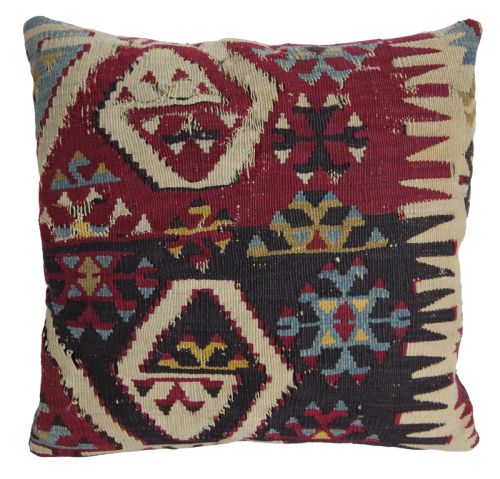
Buyers searching for an antique throw rug encounter a diverse range of historic textile pieces, including Central Asian suzanis, Turkish village rugs, and repurposed carpet cushions originating from the nineteenth and early twentieth centuries. While the search term suggests a simple floor or furniture cover, the inventory largely comprises decorative embroideries, bed covers, wedding shawls, and flat-woven kilims rather than standard domestic carpets.
The objects stem predominantly from workshops and nomadic groups in Uzbekistan, Anatolia, and India, reflecting traditional regional patterns such as Tashkent palaks, Lakai motifs, and Samarkand designs. These textiles served domestic, ceremonial, or architectural functions before finding new life as decorative accents in modern interiors.
Silk embroidery on cotton, wool, or adras foundations dominates the selection, accompanied by flat-woven tribal rug fragments shaped into cushions and wall panels. This material variety allows buyers to choose between the dense pictorial stitchery of Central Asian needlework and the geometric durability of Anatolian and Baluch weaving.
Materials and construction
The textiles rely on natural fibres, combining hand-spun wool, cotton, silk, and blended adras grounds that provide sturdy foundations for detailed needlework. Artisans applied vibrant natural dyes to colour the threads, resulting in deep reds, greens, and blacks that age with distinct patination.
Embroidery techniques such as silk-on-silk stitching and heavy chain stitches define the Central Asian suzanis and Indian palampores, while structural flat-weaving characterises the Turkish kilims and tribal bag faces. Artisans frequently mounted these historic embroideries onto contrasting fabric backings, transforming large bed covers and wall hangings into manageable decorative items.
Antique Throw Rug Retail Price Guide 2026
Typical asking prices for throw rug among the pieces listed under this phrase on Sellingantiques today, from the lower quarter to the upper quarter. They describe what is for sale here now, not the wider market.
The listings feature textiles spanning the nineteenth and early twentieth centuries, predominantly utilising wool, silk, and cotton materials.
Distinctions in standard
Quality rests upon the density and precision of the needlework, where fully embroidered grounds like Tashkent palaks demand far greater labour than sparse linear patterns. The integrity of the original fabric ground, whether cotton, wool, or silk, dictates how well the textile retains its structural form over time.
The vibrancy and stability of the natural dyes separate standard utility pieces from exceptional examples, as certain colour combinations maintain their initial depth while others experience shifting tones. Furthermore, the originality of the composition and the clarity of regional tribal motifs heavily influence the visual impact of each textile.
The Antique Throw Rug Glossary
- Suzani
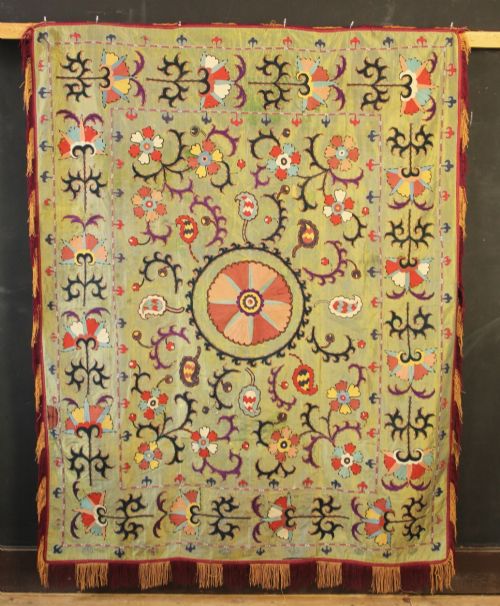
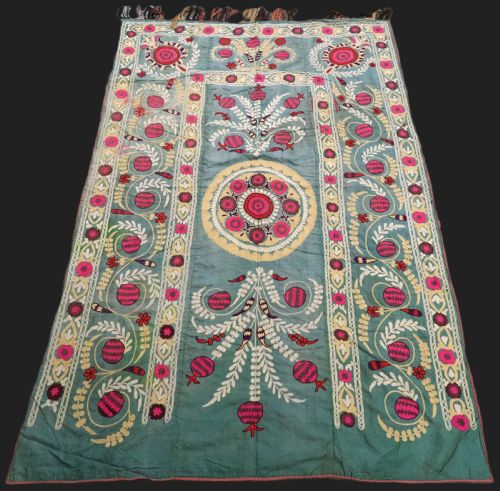
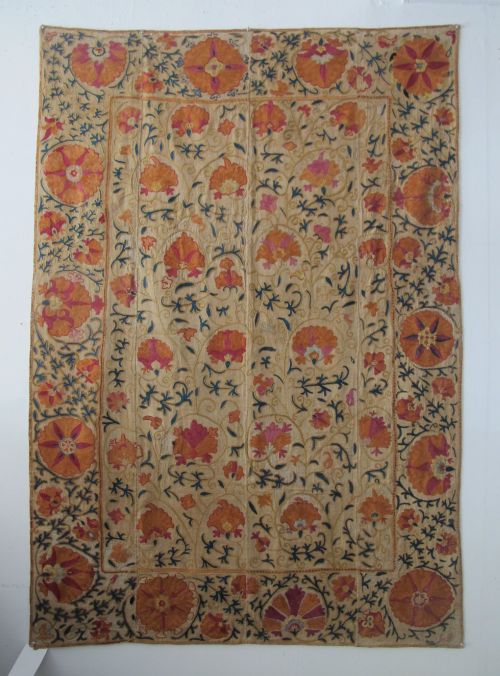
- An embroidered tribal hanging or cover from Central Asia, traditionally worked in silk thread on a cotton or linen foundation. These pieces often feature large floral and sunburst motifs.
- Kilim
- A flat-woven carpet or rug produced without a pile, created by tightly interlocking warp and weft threads. They originate across Anatolia, the Caucasus, and Central Asia.
- Adras
- A traditional Central Asian fabric woven with a silk warp and a cotton weft, frequently utilised as a ground cloth for embroidered panels. It offers a characteristic subtle sheen.
- Palampore
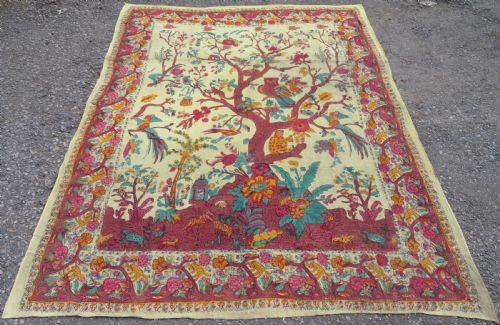
- A large, hand-painted and mordant-dyed cotton bed cover or wall hanging originating from India. They typically display intricate tree-of-life designs.
- Palak
- A specific type of Tashkent suzani characterised by a fully embroidered ground featuring large central medallion or star patterns. The term derives from the Persian word for cloud.
Antique Throw Rug: Frequently Asked Questions
How do I care for an antique textile?
Protect antique textiles from direct sunlight to prevent natural dye fading and fibre degradation. Vacuum gently through a mesh screen when cleaning is necessary.
Avoid placing these delicate items in areas of heavy foot traffic or damp environments. Professional textile conservation cleaning is recommended for valuable pieces.
How do I date a tribal textile?
Dating relies on identifying natural dye palettes, specific regional motifs, and the composition of the base fabric. Earlier nineteenth-century examples often display subtle tonal variations from natural dyeing processes.
Comparing stitch density and structural wear against documented regional workshops helps narrow the production era. Stylistic shifts between nomadic tribal groups provide further chronological markers.
What is the difference between a suzani and a kilim?
Suzanis are textiles created through needle embroidery applied to a pre-woven fabric ground, featuring pictorial and floral motifs. Kilims are woven flat on a loom with interlocking threads, yielding geometric patterns.
Both forms serve decorative purposes in interiors but employ entirely different textile construction methods. Suzanis offer soft textured needlework, whereas kilims provide structural woven durability.