



Antique Teak Stand
An antique teak stand brings dense tropical timber and intricate colonial carving into a room, serving as a sturdy table, folding book rest or display base.
Antique Teak Stand
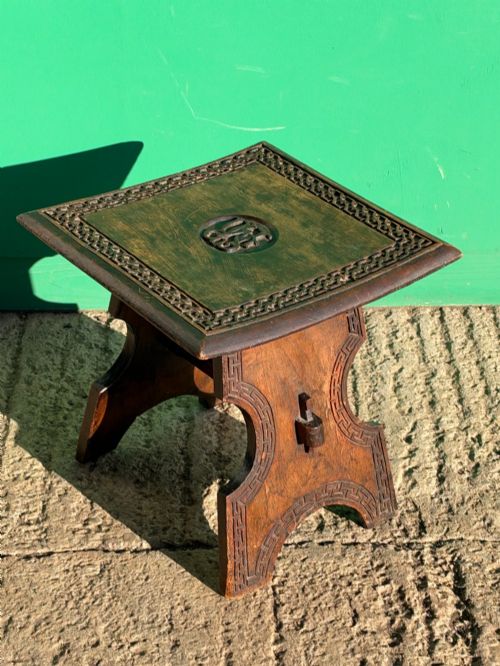
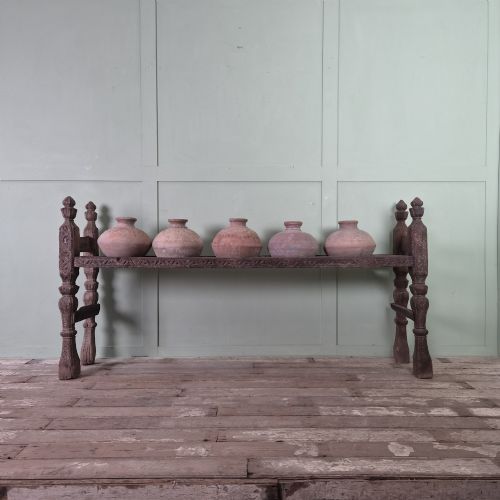
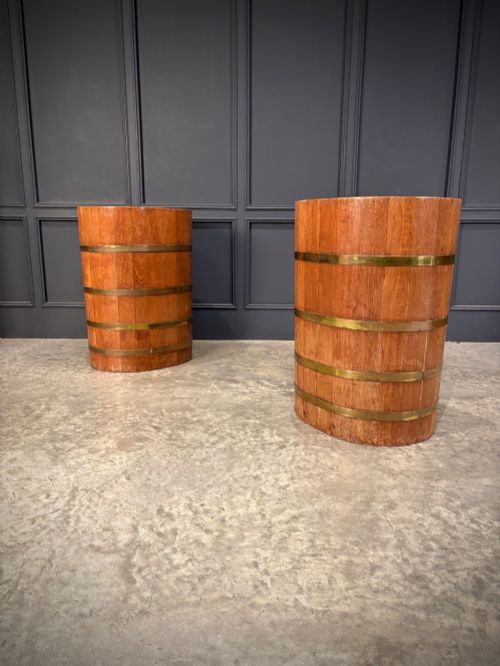
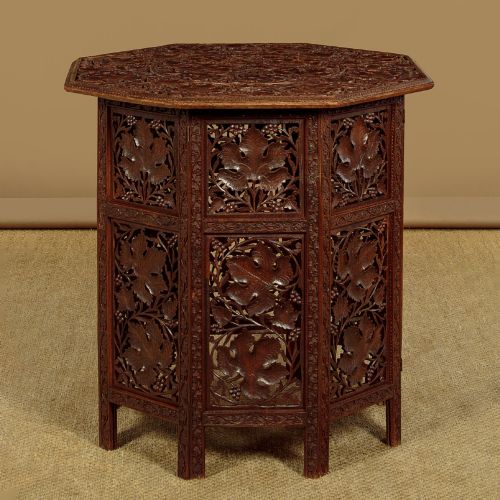
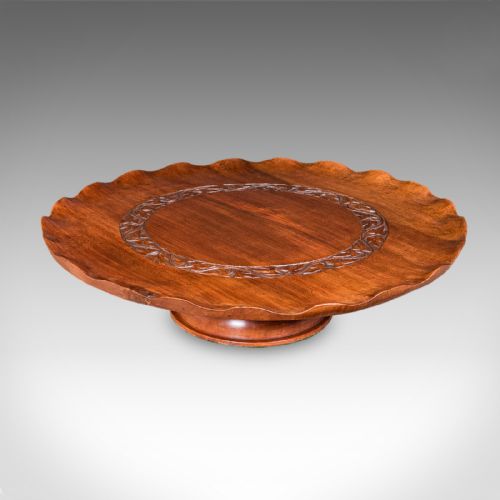
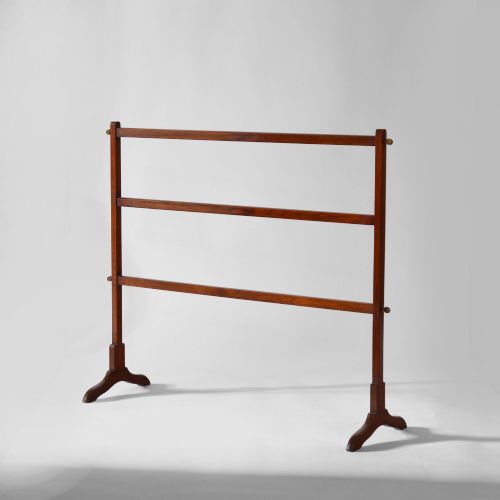
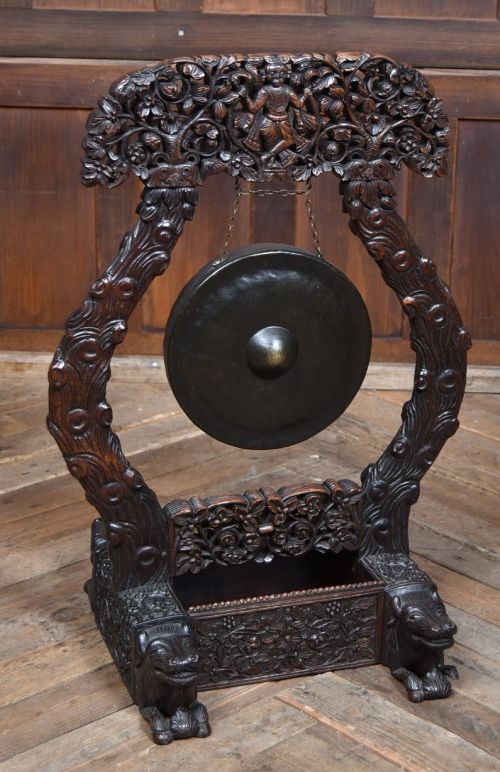
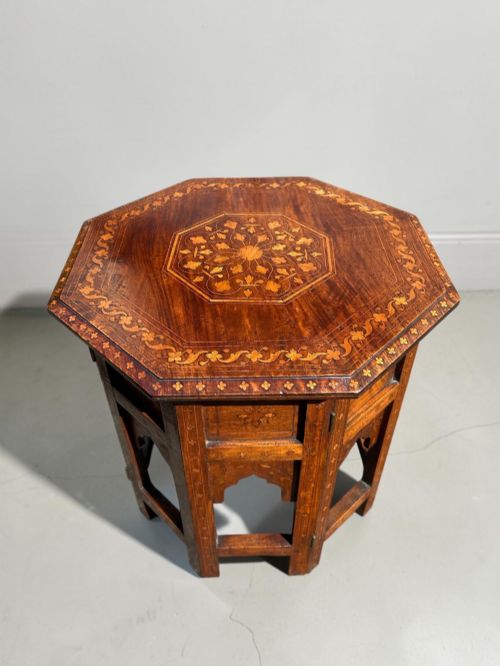
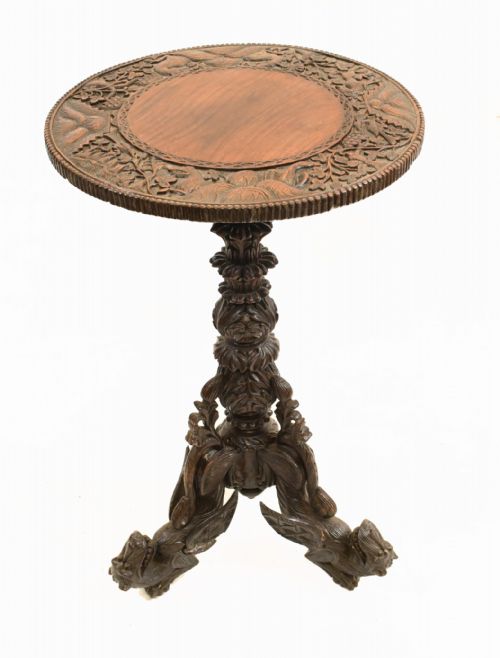
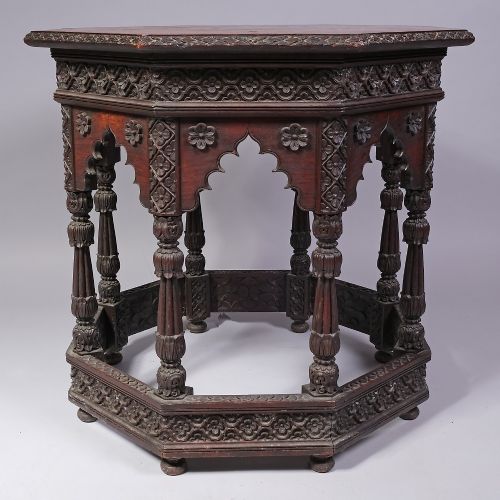
When you search for an antique teak stand, you encounter a diverse group of furniture items originating largely from the 19th century and the early decades of the 20th century. These pieces encompass folding occasional tables, octagonal Hoshiarpur tables, side tables, book stands, and serving trays mounted on separate supports. The most frequent versions on this page are carved tables from the Anglo-Indian and Burmese traditions, often featuring elaborate plant motifs or animal figures.
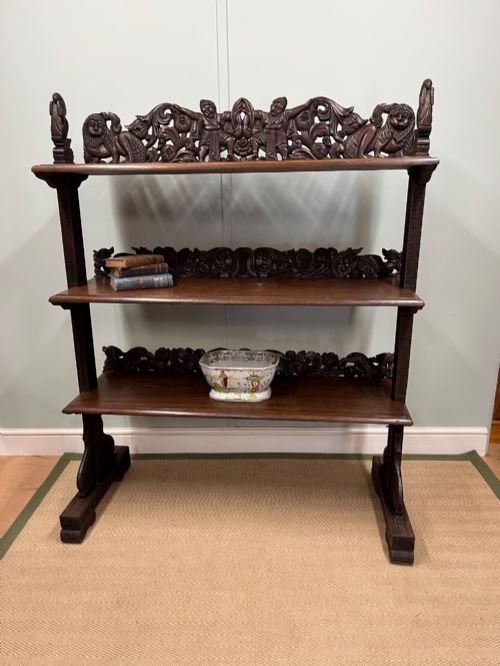
Beyond standard tables, the selection includes campaign furniture, plant stands, butler's trays, and specialised holders like scholar's reading stands and magazine racks. Many incorporate folding mechanisms designed for colonial travel or maritime use aboard ships. These items bridge decorative arts and practical domestic furnishings, utilising durable tropical hardwoods to withstand demanding climates.
How they were made
Makers constructed these stands primarily from dense teak and related Indian hardwoods, selected for their stability and resistance to humidity. Artisans applied deep chisel carving to create layered floral patterns, scrolling foliage, and figural supports such as elephants. This manual carving requires considerable skill to execute across hard timber without splitting the grain.
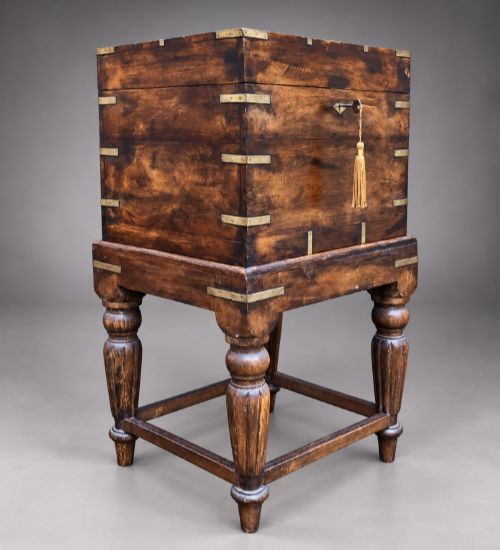
Many surfaces gain visual contrast through inlaid materials like brass wire and bone, set flush into the dark wood. Campaign pieces and folding tables utilise clever hinged joints and knock-down frames to permit rapid assembly and dismantling. Joinery relies on traditional pinning and mortise-and-tenon construction to maintain rigidity under heavy loads.
Antique Teak Stand Retail Price Guide 2026
Typical asking prices for teak stand among the pieces listed under this phrase on Sellingantiques today, from the lower quarter to the upper quarter. They describe what is for sale here now, not the wider market.
Listings span the 19th century through the 1930s, featuring teak, brass, bone, and rosewood across tables, bookcases, and trays.
What varies in quality
The standard of carving sets the primary distinction between ordinary items and exceptional examples. Superior pieces display crisp, undercut relief work where every leaf and animal contour is sharply defined by the artisan's chisel. Lesser examples rely on shallow surface incisions and repetitive, mechanical stamping that lacks depth.
Material selection and inlay execution further separate the grades. Fine items integrate continuous bone or brass wire work that remains firmly seated within the timber channels. Poorer versions show missing inlay segments, careless filler usage, and secondary woods masked by dark stains.
The Antique Teak Stand Glossary
- Anglo-Indian
- Furniture made in the Indian subcontinent during the British colonial period, combining European furniture forms with traditional local carving techniques.
- Hoshiarpur
- A style of woodwork originating from the Punjab region, characterised by dense geometric carving and extensive inlay work in brass and bone.
- Campaign furniture
- Portable pieces designed for military officers or travellers, featuring folding frames, recessed brass handles, and detachable legs.
- Whatnot
- An open set of multi-tiered shelves used for displaying ornaments, books, or small objects, appearing in several variations here.
- Cellarette
- A lockable container or chest designed to hold wine bottles, frequently elevated on a dedicated stand or frame.
Antique Teak Stand: Frequently Asked Questions
What is an antique teak stand used for?
These stands serve multiple domestic functions, from holding bedside lamps and serving tea to supporting reading material and displaying decorative objects.
Many designs incorporate folding frames originally intended for travel, making them adaptable for compact modern living spaces.
How do I identify Hoshiarpur work?
Hoshiarpur pieces are marked by intricate geometric patterns carved across the entire wooden surface, frequently enhanced with inlaid bone or brass.
This style relies on dense floral and star motifs rather than figural animal carvings.
Are these tables sturdy enough for daily use?
Teak is an exceptionally dense and oily hardwood, meaning these stands possess inherent structural strength despite delicate surface carving.
Properly maintained joints and stable tripod or four-leg bases allow them to support lamps, books, and everyday items safely.
What periods do these pieces date from?
The available selection spans from the late 19th century through the Victorian era and into the early 20th century, up to around 1930.
Stylistic shifts reflect changing British colonial tastes and manufacturing methods during this timeframe.