

Antique Teak Box
An antique teak box brings dense tropical timber and brass mounts into a room, serving as a sturdy storage chest or travel trunk.
Antique Teak Box
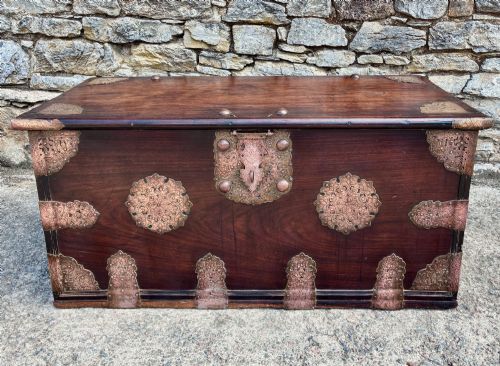
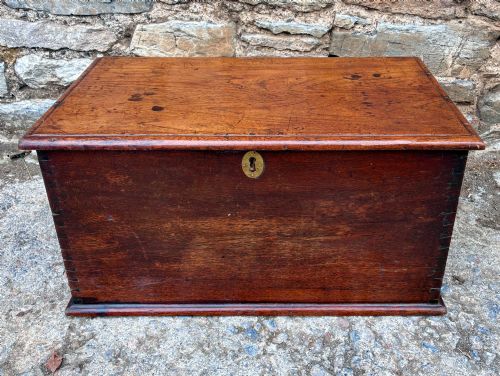
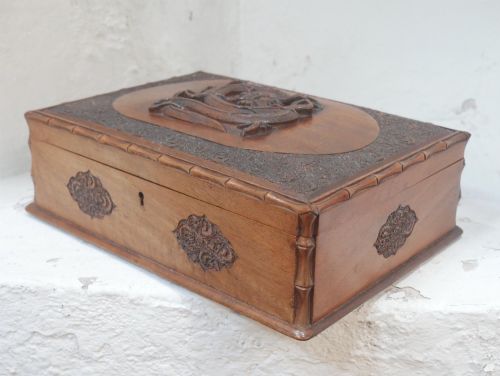
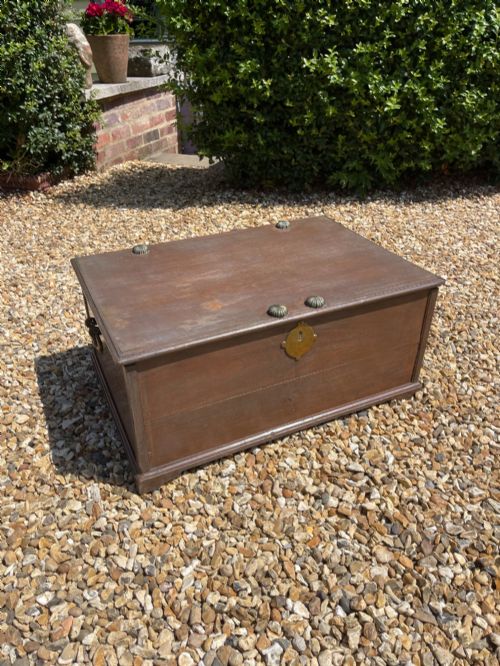
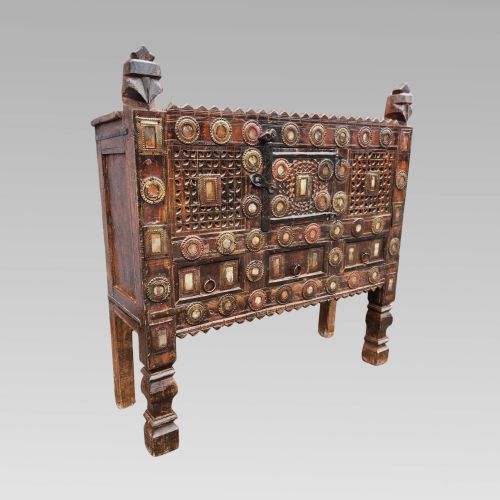
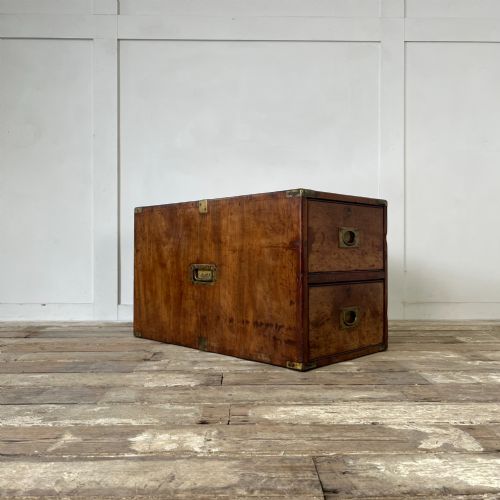
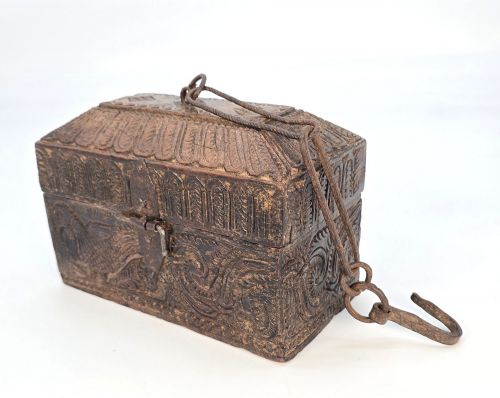
When you search for an antique teak box, you encounter heavy storage containers built for travel, trade, and domestic service across British colonial territories and beyond. These pieces range from small desktop correspondence caskets and spice boxes to massive dowry chests, blanket boxes, and travelling campaign trunks.
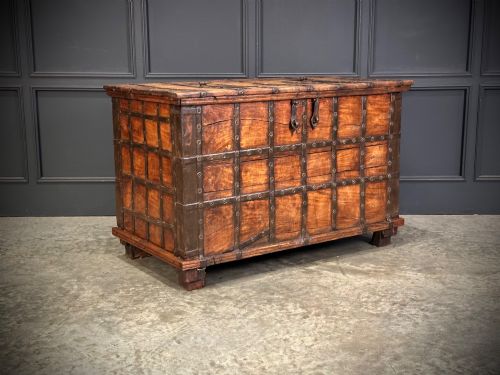
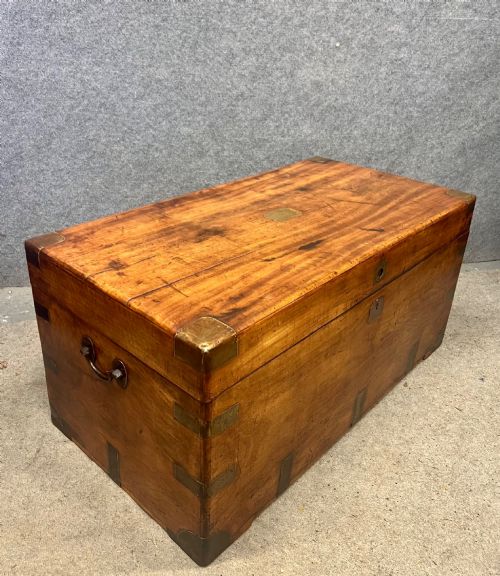
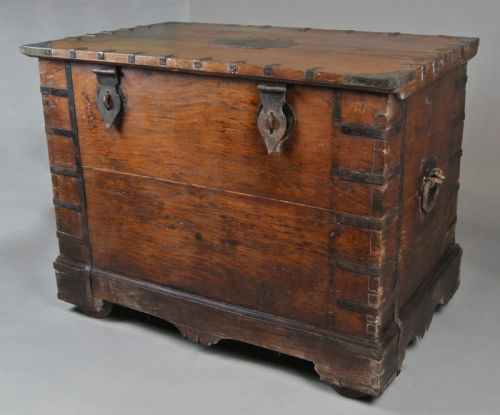
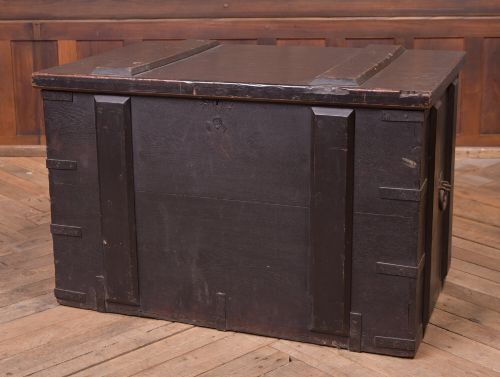
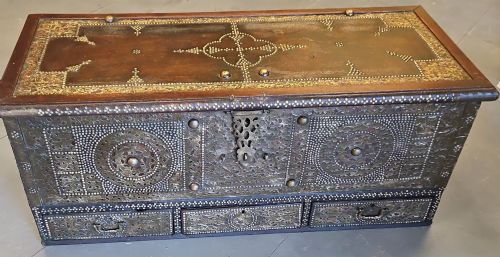
You are most likely to meet 19th-century and Victorian examples on this page, often showing Anglo-Indian, Dutch colonial, or Zanzibar styling. Many utilise heavy brass binding, carrying handles, and iron straps designed to withstand long journeys by sea and carriage.
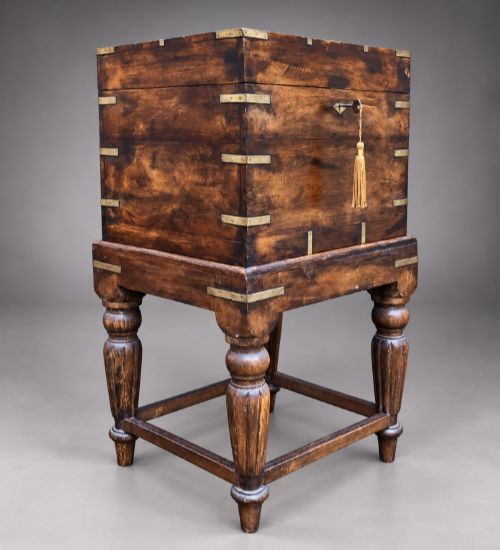
The forms encompass dowry chests, wine cellarettes on stands, and workman's tool trunks alongside simple solid storage coffers. Their origins span India, Burma, and East Africa, reflecting the global movement of materials and British military presence during the Victorian era and earlier periods.
How they were made
Cabinet makers constructed these boxes using dense teak and general hardwood timbers selected for resistance to humidity and wear. Boards were joined securely and reinforced to handle the stresses of long distance transit.
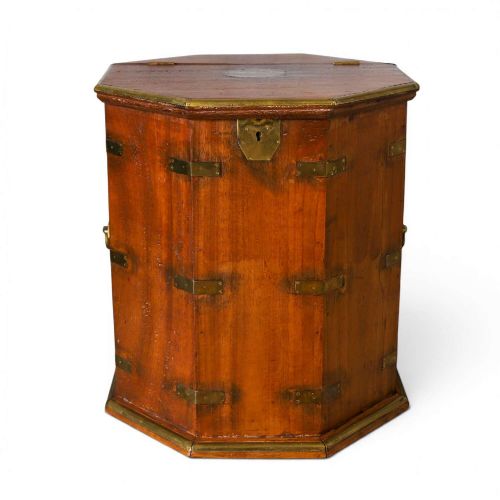
Metalwork played a structural and decorative role, with heavy brass mounts, corner brackets, straps, and iron binding fixed by numerous small pins. Artisans also applied intricate hand carving to dowry chests and incorporated ebony details or lacquer finishes on specific regional variants.
Antique Teak Box Retail Price Guide 2026
Typical asking prices for teak box among the pieces listed under this phrase on Sellingantiques today, from the lower quarter to the upper quarter. They describe what is for sale here now, not the wider market.
Materials documented across the inventory include teak, hardwood, brass, iron, wrought iron, glass, and ebony.
What varies in quality
The standard of an antique teak box depends heavily on the crispness of the brass work and the integration of its iron binding. Superior examples retain all original corner pieces, escutcheons, and flush carrying handles without later replacements.
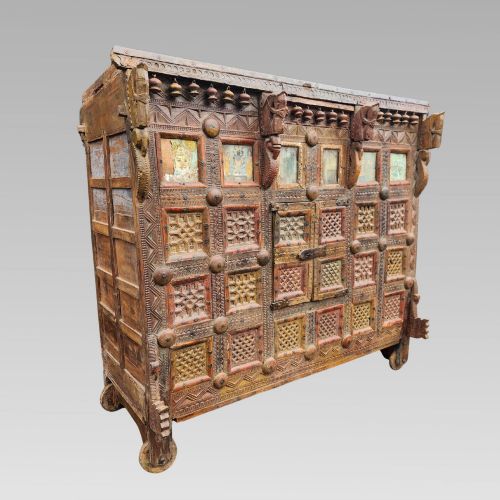
Carving depth and execution set individual regional pieces apart, particularly on Indian damchiya chests and spice boxes where hand chisel work defines the decorative panels. The integrity of the timber framing and the survival of original stands or feet also separate everyday utility trunks from finer decorative furniture.
The Antique Teak Box Glossary
- Campaign chest
- A modular piece of furniture made in sections with inset brass handles and corner brackets so officers could pack and transport it easily.
- Zanzibar chest
- A heavy wooden storage trunk characterised by elaborate brass studding, strapwork, and central compartment storage.
- Cellarette
- A fitted container or box designed to hold bottles of wine or spirits securely during travel or dining.
- Damchiya
- A traditional carved Indian dowry chest or storage cabinet featuring deep relief work and panelled doors.
- Escutcheon
- A protective brass plate surrounding a keyhole that prevents the surrounding wood from wearing down with use.
Antique Teak Box: Frequently Asked Questions
How were antique teak boxes used?
These boxes served primarily for secure transport and storage of valuable goods, documents, spices, and personal clothing during long journeys.
Officers, merchants, and travellers relied on them for durability, while households utilised larger coffers and dowry chests for linen and family possessions.
Where were these trunks made?
Makers constructed these pieces across various British colonial outposts, particularly in India, Burma, and coastal East Africa.
Trade routes and military campaigns influenced regional styles such as Anglo-Indian, Dutch colonial, and Zanzibar designs.
How do I date an antique teak box?
Dating relies on examining construction methods, metal fittings, brass mounting styles, and recorded period characteristics.
Earlier 18th-century examples often display simpler hand-cut joinery, while Victorian campaign pieces incorporate standardised modular hardware and flush fittings.
How do I clean teak furniture?
Maintain the wood surface by wiping it gently with a soft, dry cloth to remove dust without stripping natural oils.
Avoid harsh chemical cleaners or excessive water, applying a modest amount of neutral beeswax paste if the timber appears dry.