

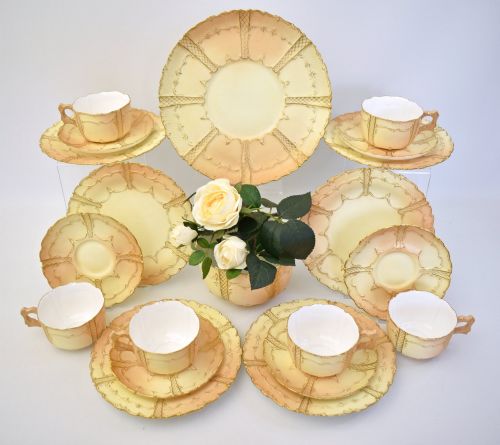
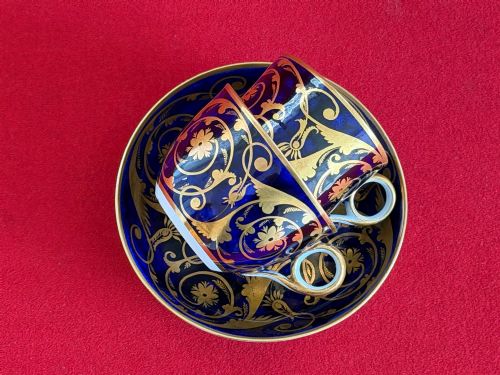
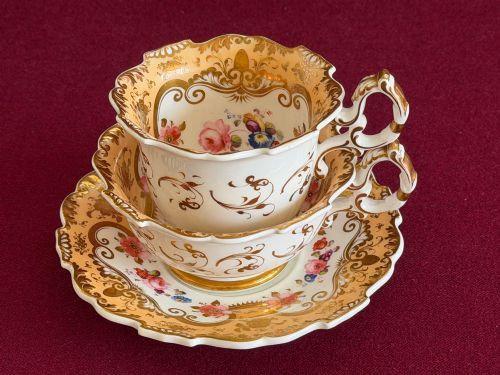
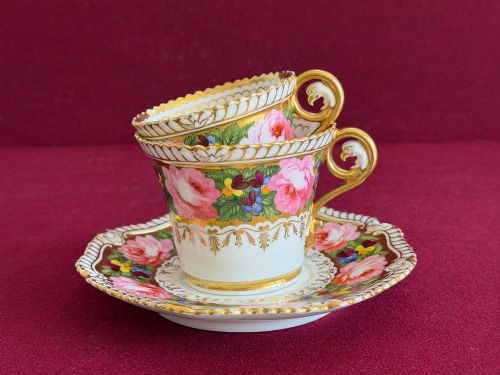



Antique Teacup Trio Set
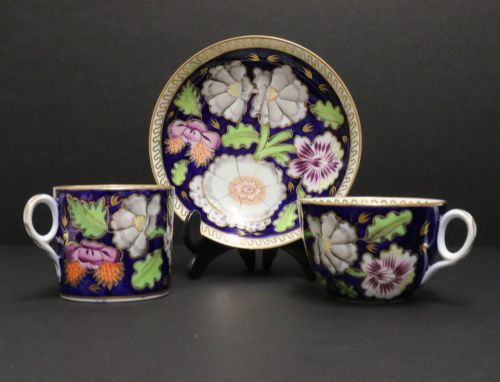
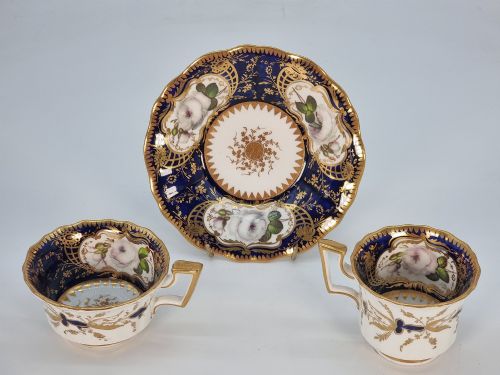
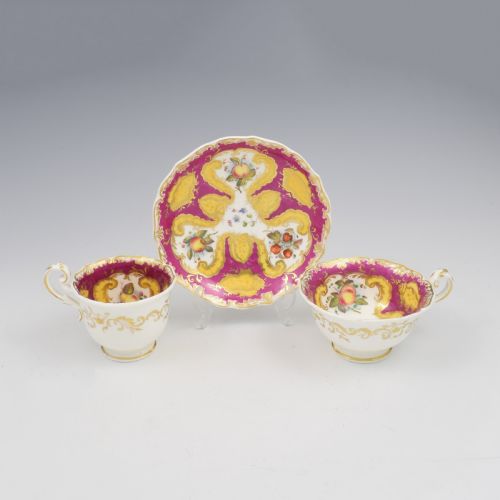
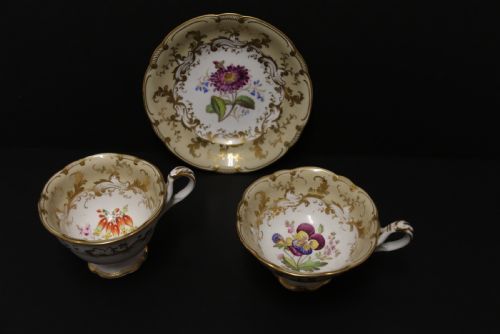
An antique teacup trio set brings together a teacup, a coffee cup, and a saucer, offering a glimpse into formal dining rooms of past centuries.
Antique Teacup Trio Set
An antique teacup trio set comprises a matching teacup, coffee cup and saucer, created for formal social gatherings in domestic interiors. These matched groupings emerge across the eighteenth, nineteenth and early twentieth centuries, spanning periods from the Georgian era through to Edwardian times.
The most common formats on this page include porcelain and bone china sets from the Regency and nineteenth-century periods. Makers produced these pieces for fashionable households, combining functional drinking vessels with saucer plates.
Forms range from cabinet trios intended for display to extensive tea and coffee services used daily. Collectors encounter styles as varied as Regency, Victorian, and Art Deco within these groupings.
How they were made
Potters shaped these vessels using porcelain and bone china, firing the clay bodies before applying enamel glazes and handpainted designs. Artisans then added gold leaf, gilding, and gold gilding to enrich the rims and handles.
Factories employed skilled painters to execute intricate floral and figural motifs directly onto the glazed surfaces. Subsequent firings bonded the metallic gold and enamel colours securely to the ceramic body.
Antique Teacup Trio Set Retail Price Guide 2026
Typical asking prices for teacup trio set among the pieces listed under this phrase on Sellingantiques today, from the lower quarter to the upper quarter. They describe what is for sale here now, not the wider market.
One cheerful nineteenth-century Minton set arrives bearing the charming pattern names 'Crazy Cow' and 'Bengal Tiger'.
What varies in quality
Quality rests upon the precision of the handpainted decoration and the crispness of the porcelain moulding. Superior sets display delicate brushwork and uniform gilding applied evenly across every piece in the grouping.
The prestige of the manufactory also determines standing, with works from established English potteries commanding greater attention. Finer examples maintain pristine enamel surfaces and intact gold leaf without rubbing or wear.
H & R Daniel·Chamberlain Worcester·Newhall·Coalport John Rose·Derby·Royal Worcester·Davenport·Minton·Spode·Wileman Foley Shelley·Gladstone potteries·Rockingham
The Antique Teacup Trio Set Glossary
- True trio
- A matching set comprising a teacup, a coffee cup, and a saucer. This grouping allows a drinker to switch between beverage types.
- Cabinet trio
- A decorative set intended primarily for display within a glass-fronted cabinet rather than everyday use. These pieces often feature elaborate handpainted scenes.
- Bone china
- A type of soft-paste porcelain incorporating bone ash for added strength and translucency. English potteries utilised this material extensively for fine tea wares.
- Enamel glaze
- A vitreous coating fused to ceramic surfaces to provide colour and protection. Artisans painted detailed motifs over or under this smooth layer.
- Gilding
- The application of gold leaf or powdered gold onto ceramic surfaces. This decoration highlights rims, handles, and painted panels.
Antique Teacup Trio Set: Frequently Asked Questions
What is a true trio set?
A true trio set consists of three specific items: a teacup, a matching coffee cup, and a saucer. This configuration became popular in the eighteenth and nineteenth centuries.
Drinkers used the smaller coffee cup for strong brews and the wider teacup for tea during formal gatherings.
How do I date an antique trio?
Dating relies on identifying the manufactory mark stamped or painted on the underside of the porcelain. Style indicators such as Regency shapes or Victorian gilding also narrow the decade of production.
Comparing pattern numbers with factory archives provides further confirmation of the manufacturing period.
Can I use these trios daily?
These antique porcelain and bone china pieces require careful handling due to their age and delicate handpainted decoration. Hand washing protects the fragile gold leaf and enamel glazes from damage.
Many collectors prefer to display cabinet trios or reserve them for occasional celebratory use.
Why include two cups in one set?
The combination reflects historical dining habits where guests enjoyed both tea and coffee during social calls. Having matching cups allowed hosts to serve different beverages in uniform style.
Over time, fashion shifted toward larger single cups, making these paired sets distinctive survivals.