



Antique Tea Set Box
These antique tea set box pieces offer fitted housing for precious tableware, bringing ordered elegance to any afternoon tea service.
Antique Tea Set Box
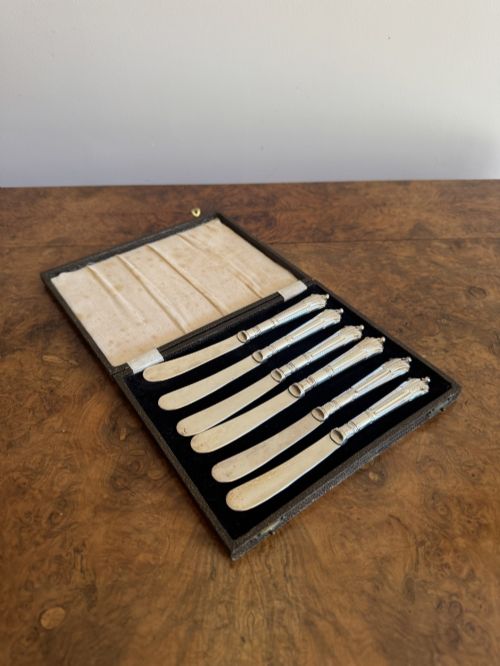
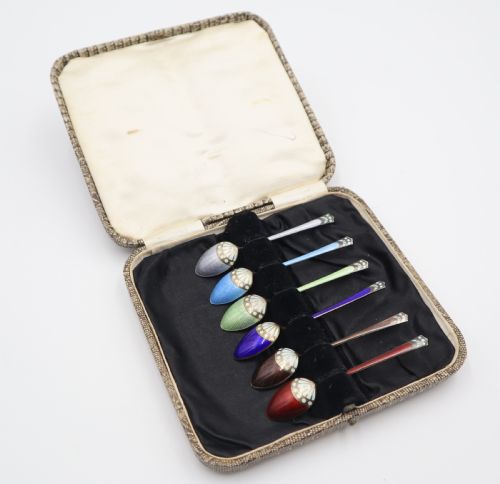
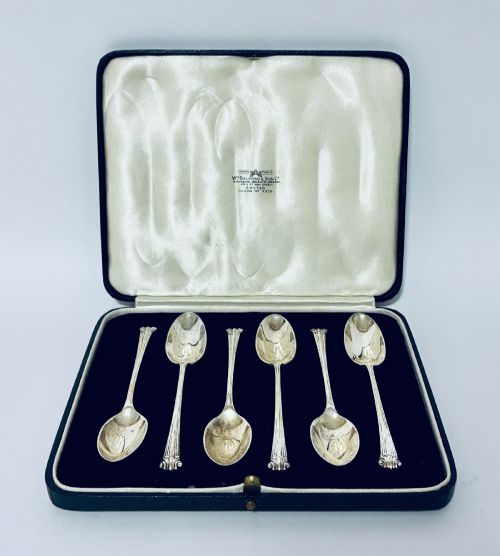
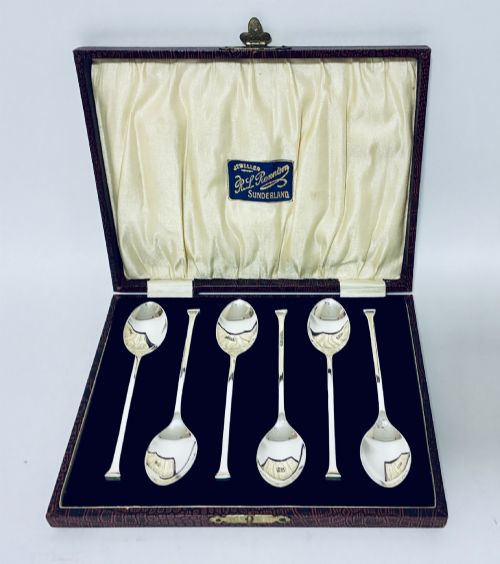
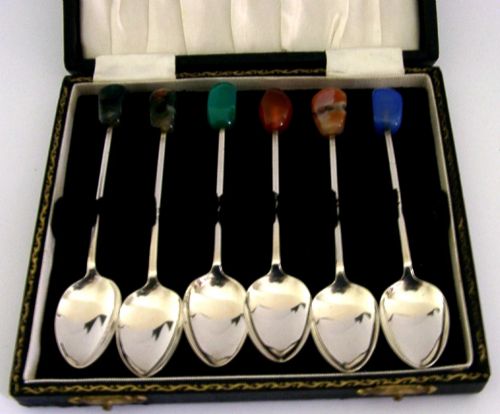
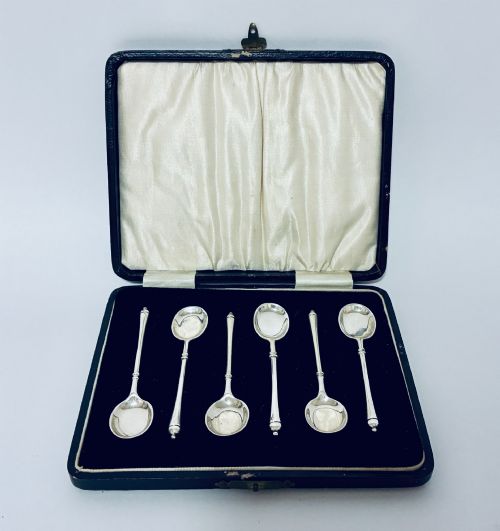
When you search for an antique tea set box, you encounter a varied selection of fitted wooden containers, cased cutlery sets, and complete tea services spanning the Georgian, Victorian, and Edwardian eras. These pieces range from simple mahogany tea caddies and elaborate teapoys to boxed silver teaspoons, cake forks, and fitted services designed to preserve domestic silver.
The most frequent items you meet on this page are cased silver spoon sets with sugar tongs, butter knives with mother of pearl or silver handles, and occasional specialist vessels like tortoiseshell spoon boxes. The forms shift from the clean geometry of Art Deco cases to the ornate craftsmanship of the Victorian period and the restrained elegance of Georgian cabinetry.
Understanding an antique tea set box requires looking beyond the outer casing to the fitted interior, which often holds matched sets of sterling silver or silver-gilt implements. These items reveal the changing social rituals of tea drinking across multiple centuries, showing how hosts displayed and stored their finest dining accessories.
Materials and construction
Makers constructed the outer enclosures using dense timbers like mahogany, alongside specialist materials such as tortoiseshell for luxury examples. Interiors feature fitted linings of silk, velvet, satin, and leatherette, tailored specifically to cradle each individual spoon, fork, or knife safely.
Metal components combine sterling silver, silver-gilt, steel, and German silver, often enhanced with coloured enamel work in later Art Deco pieces. Handles frequently utilise mother of pearl alongside solid silver, shaped and riveted by hand to withstand regular use.
Antique Tea Set Box Retail Price Guide 2026
Typical asking prices for tea set box among the pieces listed under this phrase on Sellingantiques today, from the lower quarter to the upper quarter. They describe what is for sale here now, not the wider market.
Early Victorian sugar tongs often squeezed sugar cubes with tiny claw hands.
Judging the quality
Quality rests heavily on the integrity of the original fitted interior and the condition of delicate linings like silk and velvet. A superior piece retains its matching set of implements, whereas lesser examples contain mixed or replacement spoons and cutlery.
The joinery of the wooden caddy or box, the precision of the silver hallmarks, and the crispness of any carving or enamel work determine the upper tier of the range. Finer boxes display robust hinges, working locks with original keys, and carefully selected grain patterns in the timber.
P A W Bateman·Robert Stebbings·Harry Atkin
The Antique Tea Set Box Glossary
- Teapoy
- A small stand or box on legs, traditionally used to store various kinds of tea before they were blended. These containers often feature internal compartments and delicate wood carving.
- Tea caddy
- A box or jar designed to store tea leaves safely away from light and air. Georgian examples frequently employ solid mahogany construction.
- Silver-gilt
- Silver that has been coated with a thin layer of gold on its surface. This technique provides the rich appearance of solid gold while utilising a silver base.
- Hallmark
- An official stamp applied to precious metals indicating the standard of purity, the assay office, and the date of manufacture. These marks help verify the exact age of silver spoons and tongs.
- Sterling silver
- An alloy containing a high proportion of silver combined with other metals to ensure durability. It represents the standard material for fine British tableware.
Antique Tea Set Box: Frequently Asked Questions
What is an antique tea set box?
An antique tea set box is a specialised container or fitted case designed to store and protect tea services, spoons, and associated dining implements. These enclosures preserve fragile silver and ceramics while keeping matching utensils together.
They appear in various forms, from wooden caddies and teapoys to silk-lined presentation cases housing sterling silver forks and sugar tongs.
How were these boxes used?
Households used these boxes to store expensive tea leaves, sugars, and delicate silver cutlery securely when not entertaining guests. Locking mechanisms protected valuable contents from theft or household staff.
During formal gatherings, the boxes were opened to display the family's finest silverware and accessorise the afternoon tea table.
How do I date an antique box?
Dating relies on examining the construction methods of the box, the style of the timber, and any accompanying hallmarks on the silver contents. Georgian pieces often show simpler internal layouts, whilst Victorian and Edwardian examples feature more elaborate fitted velvet or satin interiors.
Silver implements inside frequently bear assay office marks and date letters that pinpoint the exact year of manufacture.
How should I care for lined boxes?
Protect delicate interior linings like silk and velvet by keeping the box away from direct sunlight and high humidity. Gentle dusting with a soft brush helps maintain fabric integrity without causing tears.
Store silver implements in their designated slots to prevent the metal from rubbing against the fabric lining over time.