





Antique Tea Cutlery
These antique tea cutlery pieces bring refined silver service to the table, spanning Georgian bright-cut spoons to Art Deco enamelled sets.
Antique Tea Cutlery
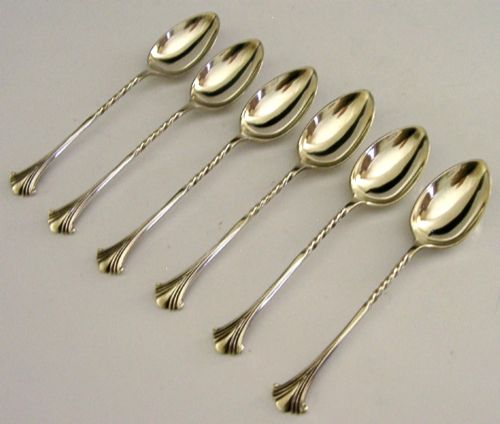
Antique tea cutlery encompasses teaspoons, coffee spoons, caddy spoons, sugar tongs, butter knives, fruit knives and small forks designed for taking tea and light collation. These implements emerge from periods including the Georgian era, Victorian reign and the Edwardian epoch, reaching into the 1920s and 1930s.
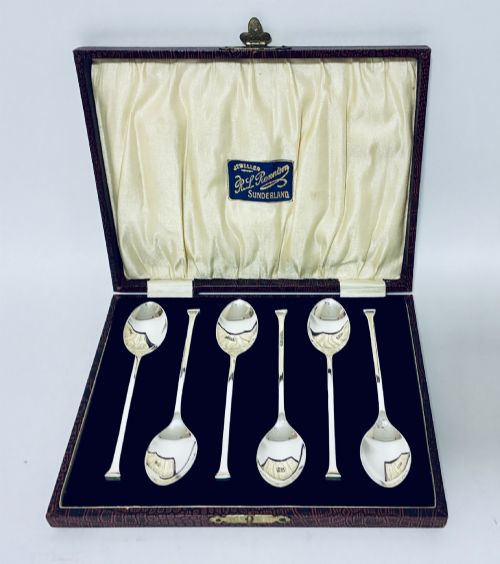
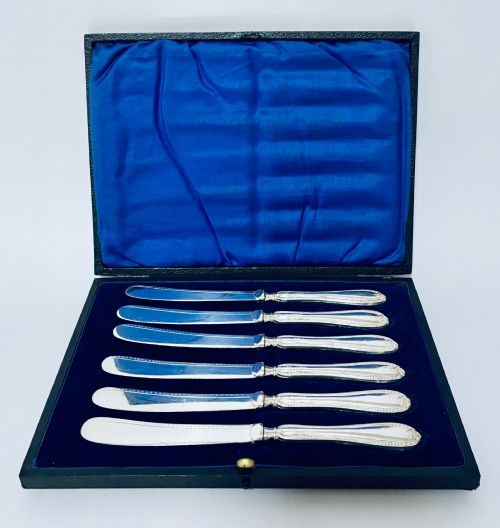
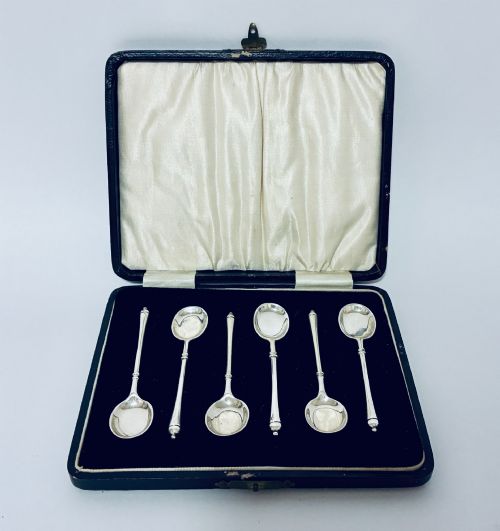
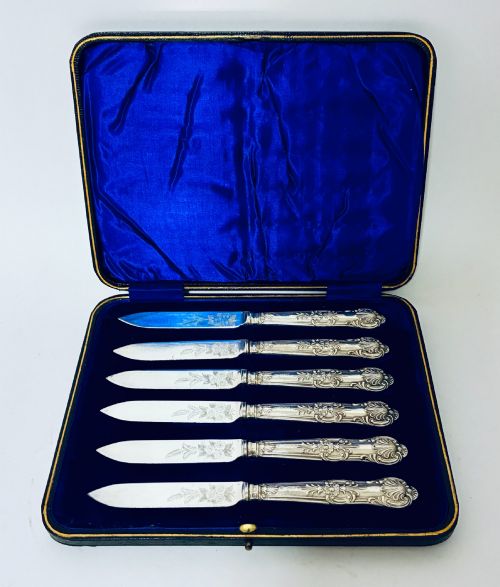
Sets frequently appear housed in fitted presentation cases lined with silk, satin or velvet, often secured within leatherette or wooden boxes. Buyers encounter single items alongside matched sets of six or more pieces, sometimes accompanied by matching sugar tongs or serving forks.
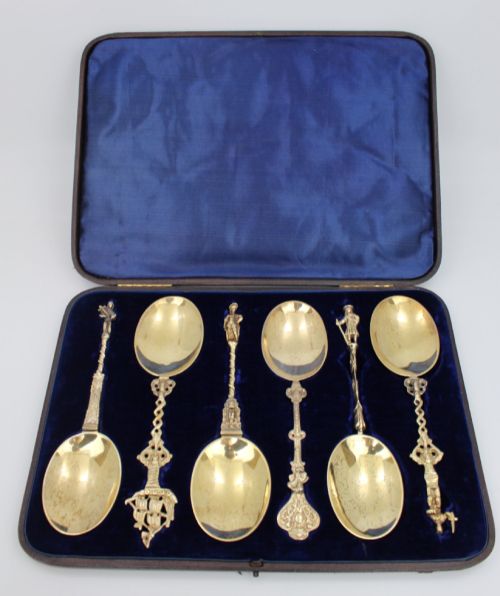
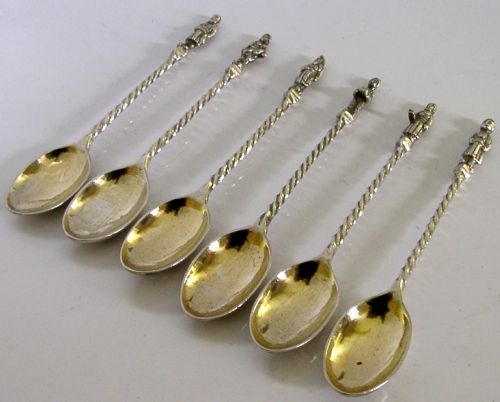
Origins stretch across English workshops in London, Birmingham, Sheffield and Chester alongside continental makers from Russia, Germany, Denmark, the Netherlands and the Ottoman Empire. Forms range from plain sterling silver bowls to intricate figural designs and enamelled surfaces.
Materials and construction
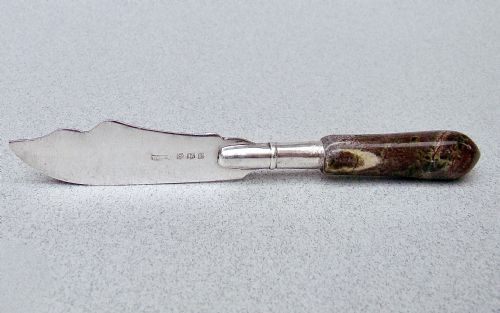
Silversmiths utilised sterling silver and various grades of solid silver, often applying hallmarks to denote assay offices and dates. Handles frequently incorporate mother-of-pearl, agate, steel or decorative enamel work such as cloisonne.
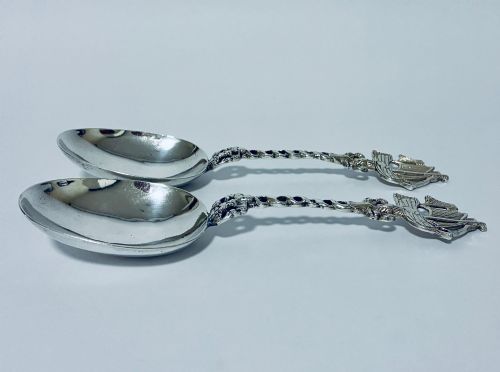
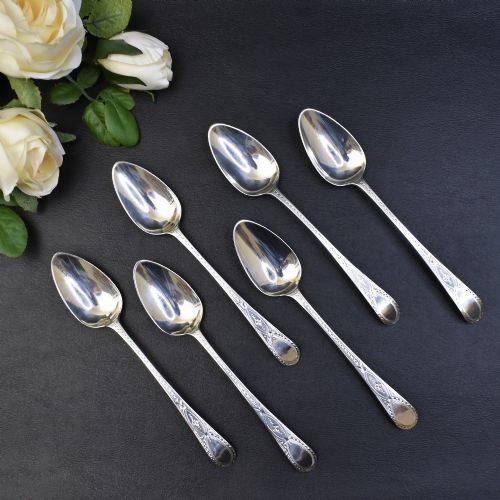
Techniques include bright-cut engraving on spoon bowls and stems, alongside cast figural elements and applied coloured enamels. Storage boxes utilise figured mahogany lined with soft textiles to protect the metalwork and fitted handles.
Antique Tea Cutlery Retail Price Guide 2026
Typical asking prices for tea cutlery among the pieces listed under this phrase on Sellingantiques today, from the lower quarter to the upper quarter. They describe what is for sale here now, not the wider market.
Some spoons feature tiny card suits engraved into the silver for evening card games.
Assessing quality
Quality rests upon the crispness of hallmarks, the clarity of hand-engraved bright-cut decoration and the integrity of enamel work. Pieces featuring maker marks from notable silversmiths command attention for their documented provenance.
The survival of original fitted cases lined with silk or velvet influences desirability. Matched sets displaying uniform wear and intact handles of mother-of-pearl or agate represent superior manufacture.
Thomas Tookey·P A W Bateman·George Unite·Georg Jensen·Evald Nielsen·Vale and St John·Vasily Agafonov
The Antique Tea Cutlery Glossary
- Hallmark
- Official stamps struck into precious metals to guarantee purity, origin and date of manufacture. These tiny marks identify the assay office and the silversmith.
- Caddy spoon
- A short-handled spoon specifically created for measuring tea leaves from a canister into the pot. They often feature shell-shaped bowls and decorative handles.
- Bright-cut
- An engraving technique utilising faceted cuts to create brilliant reflective patterns across the silver surface. This method was particularly popular during the Georgian period.
- Cloisonne
- An enamelling process where vitreous paste fills compartments formed by soldered metal wires on a silver base. The piece is then fired to produce a smooth, colourful design.
- Sugar tongs
- Small spring-action implements used for transferring sugar lumps into tea cups. They frequently accompany matched sets of teaspoons.
Antique Tea Cutlery: Frequently Asked Questions
What is included in tea cutlery?
Tea cutlery encompasses teaspoons, coffee spoons, small forks for cake or fruit, butter knives and sugar tongs. These smaller implements were tailored for afternoon tea and light dining.
Items often appear as matched sets of six or more, sometimes complete with a matching sugar tong or serving piece housed in a fitted box.
How do I store antique silver?
Silver benefits from dry storage in lined boxes or anti-tarnish rolls to prevent oxidation from atmospheric moisture. Keeping pieces away from direct heat sources protects delicate materials like mother-of-pearl or enamel.
Original fitted cases lined with velvet or silk provide ideal protection when the cutlery is not displayed or in use.
Can I use these for daily dining?
Many people enjoy using antique silver for daily tea service, provided the pieces receive gentle hand washing rather than dishwasher cleaning. Silver is robust enough for regular use when handled with care.
Items with delicate materials such as enamel or fragile mother-of-pearl handles require more careful treatment and occasional rather than daily service.
How do I identify Georgian silver?
Georgian silver bears hallmarks that include the maker mark, standard mark for sterling silver, a duty mark showing the reigning monarch's head, and a date letter. The presence of bright-cut engraving often points to this period.
London, Birmingham, Chester and Sheffield assay offices recorded precise assay dates that allow collectors to trace the exact year of production.