




Antique Tea Chest Lid
An antique tea chest lid is a salvaged fragment of a Georgian or Victorian caddy, offering a masterclass in period cabinet-making.
Antique Tea Chest Lid
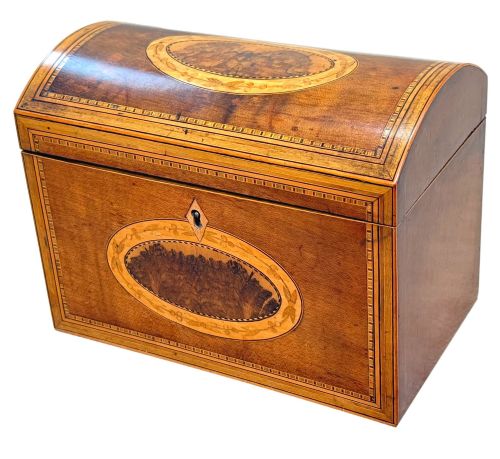
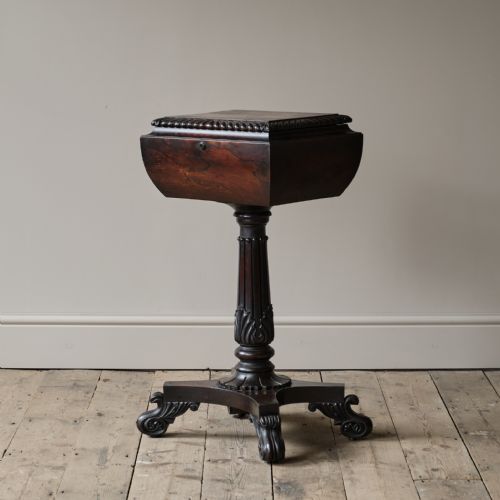
When you search for an antique tea chest lid, you are looking at the surviving top panel of a Georgian, Regency, or Victorian tea caddy, teapoy, or decorative box. These pieces emerge from periods when tea was a costly luxury, requiring secure, handsome containers to house the leaf.
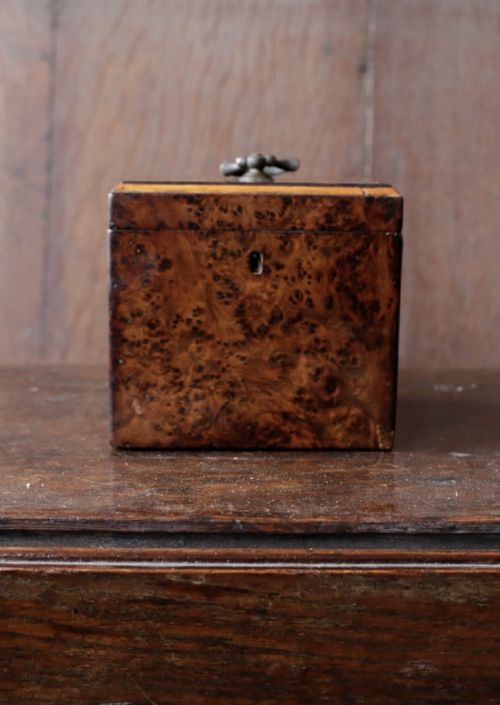
On this page, you are most likely to meet wooden panels shaped as domed, sarcophagus, or cube lids. They reflect forms spanning George III mahogany through to Victorian walnut and penwork.
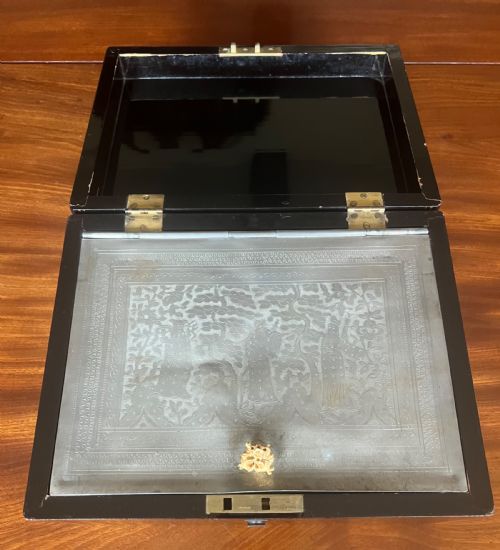
The evidence shows examples originating from English workshops alongside Chinese Export pieces. Each piece demonstrates the domestic carpentry and decorative arts of the eighteenth and nineteenth centuries.
Materials and construction methods
Cabinet-makers utilised dense hardwoods such as mahogany, rosewood, and walnut, frequently selecting figured veneers like burr walnut and burr yew for the primary surfaces. These timbers were chosen for their rich grain patterns and durability under frequent handling.
Decoration relied on contrasting details, incorporating brass fittings, bone escutcheons, and intricate penwork. Joinery involved precise framing to prevent the timber from warping over time.
Antique Tea Chest Lid Retail Price Guide 2026
Typical asking prices for tea chest lid among the pieces listed under this phrase on Sellingantiques today, from the lower quarter to the upper quarter. They describe what is for sale here now, not the wider market.
Object forms documented include cube caddies, sarcophagus boxes, and Chinese Export pieces.
Discerning the quality of the panels
The distinction between ordinary and superior examples lies in the selection of the timber veneer and the precision of the edge moulding. Superior panels display carefully matched wood grains that flow naturally across the surface.
The integration of decorative elements, such as fine bone inlay or crisp brass mounts, separates standard production boxes from masterwork pieces. Original surface patination also dictates the desirability of the surviving wood.
The Antique Tea Chest Lid Glossary
- Tea caddy
- A small box fitted for holding and locking away loose tea leaves. They became central fixtures in the Georgian drawing room.
- Sarcophagus
- A distinct burial-chest shape featuring a domed, sloping lid on a plinth base. Regency cabinet-makers adopted this architectural silhouette for luxury containers.
- Burr walnut
- A prized timber cut from the gnarled growths of the walnut tree, yielding highly turbulent and decorative grain patterns. It was favoured for high-status Victorian surfaces.
- Penwork
- A meticulous surface decoration technique using ink applied by pen to create fine monochrome motifs. It appeared on Regency fancy goods.
- Teapoy
- A heavy stand or table designed to support a tea caddy, often housing internal compartments for mixing leaves. They occupied prominent positions in wealthy homes.
Antique Tea Chest Lid: Frequently Asked Questions
What is an antique tea chest lid?
It is the upper wooden cover salvaged from a nineteenth or eighteenth-century tea caddy or storage box. These panels preserve the original timber grain and decorative techniques of the period.
Collectors often acquire them as study pieces of historical cabinet-making or repurpose them within interior displays.
How do I date an antique wooden lid?
Dating relies upon identifying the primary timber, the style of the edge moulding, and any associated hardware like brass or bone. Regency pieces often favour sarcophagus profiles, whilst Victorian examples frequently showcase burr walnut.
Comparing the construction methods to documented pieces from the same decade confirms the likely era.
Were these lids originally locked?
Many parent caddies featured small brass keyholes and internal locks to protect expensive tea leaves from domestic staff. The surviving lids often retain the brass escutcheon plates associated with these locking mechanisms.
Tea was heavily taxed and kept under strict control in the Georgian household.
How should I clean a wooden lid?
Maintenance requires gentle dusting with a dry, soft cloth to protect the historic polish and timber surface. Modern furniture polishes and moisture should be avoided to prevent damage to the old finish.
Preserving the natural patination maintains the character acquired over centuries.