




Antique Tea Caddy Escutcheon
An antique tea caddy escutcheon is the small protective plate surrounding the keyhole on these wooden tea receptacles.
Antique Tea Caddy Escutcheon
When you search for an antique tea caddy escutcheon, you are looking at the small metal or bone surround set into the wood around the keyhole of a tea caddy. These fittings protect the timber from wear when a key is inserted to lock valuable imported leaves away.
The pieces listed on this page appear on tea caddies dating from the eighteenth and nineteenth centuries, spanning the Georgian, Regency and Victorian periods. You will encounter escutcheons on caddies formed from mahogany, padouk, partridge wood, rosewood, coromandel, burr elm, walnut and tortoiseshell.
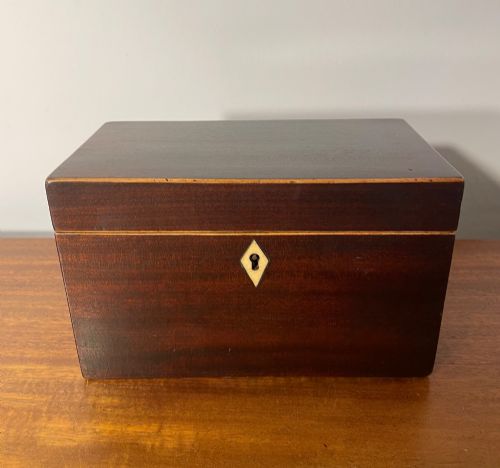
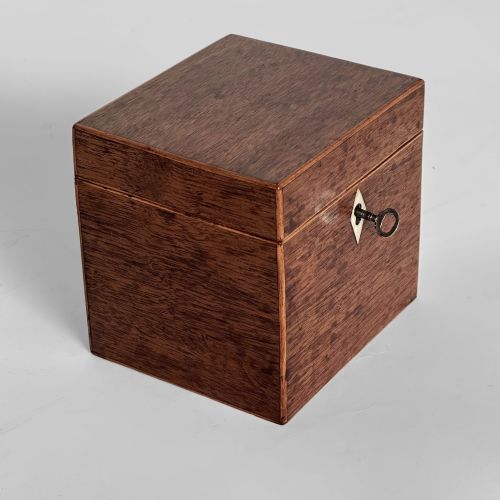
While most examples are integrated into tea caddies rather than offered separately, they define the focal point of the cabinet's front elevation. The surviving archive record specifically demonstrates the use of bone for this keyhole surround on inlaid mahogany containers.
Materials and construction
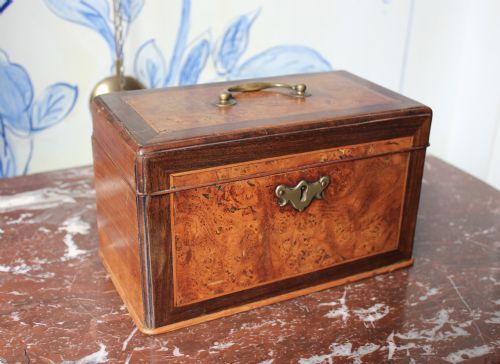
Makers fashioned these escutcheons from durable contrasting materials like polished bone, bright brass or reflective metal to stand out against rich dark hardwoods. The surrounding box body often featured mahogany, padouk, partridge wood or tortoiseshell, constructed with precise joints to hold the hardware securely.
Workmen carefully inlaid the metal or bone plate flush into the wooden surface of the tea caddy, securing it with tiny pins through pre-drilled holes. This flush fitting ensured the key could guide smoothly into the lock without catching on the surrounding grain.
Tea was once so valuable that locking the box was essential, turning the tiny escutcheon into a tiny shield of household security.
Gradations in quality
The standard of an antique tea caddy escutcheon relates directly to the precision of its fitting and the quality of its surrounding timber, such as figured flame mahogany, coromandel or tortoiseshell. Finer examples display meticulous hand-cut recesses where the plate sits level with the polished wood surface.
Superior hardware often utilises heavier gauge brass or genuine bone rather than plain substitute metals, matched with elaborate inlay work across the entire tea caddy body. The crispness of the surrounding wood grain and the integration of the keyplate separate standard utilitarian boxes from high-status containers.
The Antique Tea Caddy Escutcheon Glossary
- Escutcheon
- A protective flat plate surrounding a keyhole on a piece of furniture or a container. It prevents the key from scratching or denting the surrounding wood.
- Padouk
- A heavy, dense tropical timber with a reddish hue used by makers for cabinetwork. It appears in eighteenth-century examples.
- Partridge wood
- A decorative timber displaying a mottled grain pattern resembling partridge feathers, utilised for distinctive nineteenth-century tea caddies.
- Sarcophagus
- A box form featuring a sloping lid and often resting on bun feet, popular during the Regency period for larger tea containers.
Antique Tea Caddy Escutcheon: Frequently Asked Questions
What is a tea caddy escutcheon?
A tea caddy escutcheon is the decorative and protective plate fitted around the keyhole of an antique tea box. It prevents the key from damaging the wood surface when locking the lid.
These small fittings are typically made from brass, metal or bone, contrasting with woods like mahogany, rosewood and partridge wood.
How old are these tea caddies?
The tea caddies on this page date from the eighteenth and nineteenth centuries, encompassing Georgian, Regency and Victorian periods. Many examples originate around eighteen hundred or earlier.
Cabinetmakers of this era built these lidded containers to store expensive imported tea safely under lock and key.
What woods were used for these boxes?
Makers constructed tea caddies from a variety of dense and exotic timbers including mahogany, padouk, coromandel, burr elm, walnut and partridge wood. Some exceptional examples also utilise tortoiseshell.
These materials were chosen for their rich grain patterns and durability when polished.
How do I identify a Regency tea caddy?
Regency tea caddies often feature architectural forms such as the sarcophagus shape, alongside inlaid brass details and exotic veneers like rosewood or coromandel. They reflect the classical design influences of the early nineteenth century.
The hardware and escutcheon plates on these pieces are frequently integrated into geometric inlay schemes.