


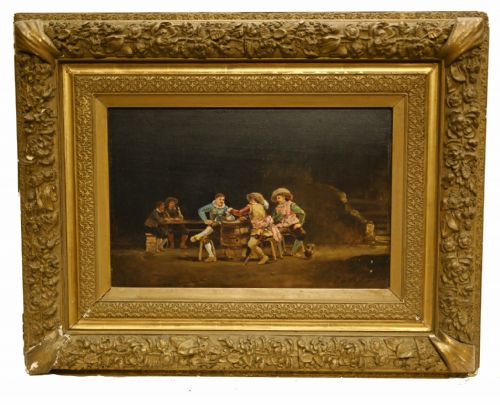


Antique Tavern Oil Painting
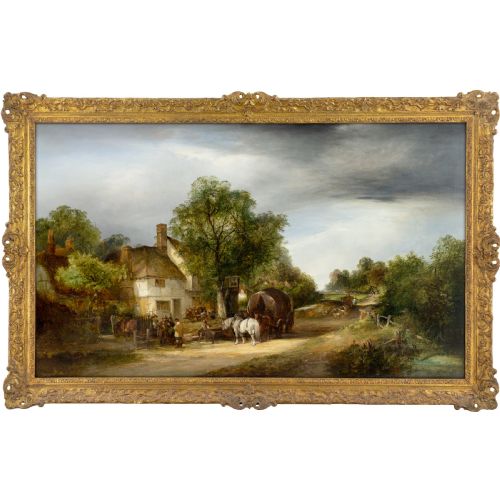
An antique tavern oil painting brings seventeenth-century Dutch revelry and nineteenth-century domestic drama directly into a room.
Antique Tavern Oil Painting
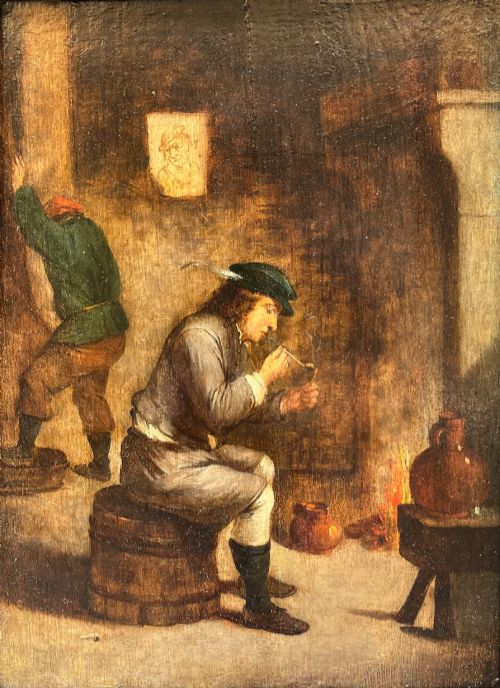
An antique tavern oil painting depicts scenes of drinking, card playing, smoking, and social gatherings in rustic or historic interiors. These works draw heavily on seventeenth-century Dutch and Flemish traditions, depicting peasants, topers, cavaliers, and musicians at rest or in celebration.
The versions most commonly found span the nineteenth century, ranging from direct copies and followers of masters like David Teniers to original Victorian genre works. Artists working in Britain, France, and the Netherlands continued to produce these narrative interiors throughout the eighteen-hundreds.
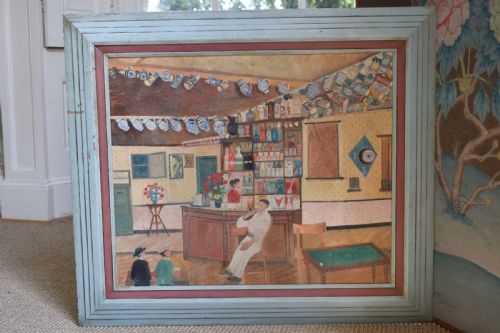
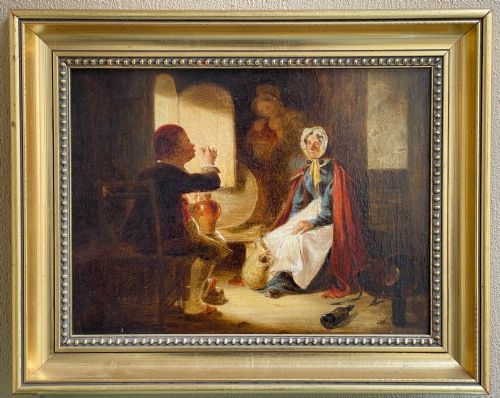
Compositions vary from intimate panel studies to larger framed canvases showing card players, trumpeters, and landladies. Whether attributed to Continental schools or English painters, the subject matter remains rooted in human character and social observation.
How They Were Made
Artists painted primarily with oil paint on stretched canvas, oak panels, copper, tin, and wood boards. Earlier works often utilised sturdy oak panels, while nineteenth-century pieces typically favoured canvas or prepared board.
Framing forms an integral part of these pieces, with many works housed in period giltwood, gold leaf, or leaf-cast frames. The application of chiaroscuro creates dramatic lighting effects within dim tavern rooms, highlighting faces and glassware against dark backgrounds.
Antique Tavern Oil Painting Retail Price Guide 2026
Typical asking prices for tavern oil painting among the pieces listed under this phrase on Sellingantiques today, from the lower quarter to the upper quarter. They describe what is for sale here now, not the wider market.
Several canvases capture startled boys tapping barrels and merry drinkers caught mid-song in dimly lit rooms.
What Varies in Quality
The skill of the brushwork and the expressiveness of the figures distinguish finer pieces from standard decorative works. Superior paintings capture gesture and facial expression with precise detail, whereas lesser studio copies rely on formulaic repetition.
The integrity of the original support, whether canvas or timber panel, and the preservation of the paint surface dictate the visual impact. The quality of the accompanying period frame, particularly original giltwood or gold leaf mouldings, also influences the overall character of the piece.
David Teniers·Johann Hamza·John Arthur Lomax·Gilbert Scott Wright·Francesco Bergamini·John Holland Snr
The Antique Tavern Oil Painting Glossary
- Chiaroscuro
- The use of strong contrasts between light and dark to give subjects a three-dimensional volume. This technique defines seventeenth-century tavern interiors and later nineteenth-century interpretations alike.
- Genre painting
- The pictorial representation of scenes from everyday life, including ordinary people drinking, smoking, or playing cards. Such works form the core of tavern subject matter.
- Oak panel
- A rigid wooden support commonly used by Dutch and Flemish masters before the widespread adoption of canvas. Panels provide a smooth ground for minute details.
- Giltwood
- Wood carved and coated with gold leaf or metallic paint to create a decorative frame. These frames frequently accompany nineteenth-century gallery pieces.
- Toper
- A heavy drinker or drunkard, which serves as a frequent central figure in Dutch school tavern scenes. Topers are often depicted smoking on barrels or holding jugs.
Antique Tavern Oil Painting: Frequently Asked Questions
What is an antique tavern oil painting?
These works are oil paintings depicting social scenes in inns, alehouses, and rustic interiors, usually featuring figures drinking, smoking, or playing cards. They draw on seventeenth-century Dutch and Flemish traditions.
Artists across Europe continued producing these narrative character studies well into the nineteenth century, often following the styles of earlier masters.
How were tavern paintings used?
Historically, these paintings served as domestic decoration for collectors and home interiors, reflecting an appreciation for rustic Dutch realism and narrative art. Wealthy merchants and later Victorian collectors prized them for their humour and storytelling.
Today, they function as focal points in studies, living rooms, and traditional interiors, adding warmth and historical character to a wall.
How do I tell periods apart?
Seventeenth-century originals and early works often utilise wooden panels such as oak, displaying darker, richer glazes and tighter brushwork. Nineteenth-century interpretations usually appear on canvas with brighter palettes and looser realist techniques.
Examining the materials, stretcher frames, and the style of the giltwood frame helps distinguish a period piece from a later copy.
How do I live with these paintings?
These works suit traditional, period, or eclectic interiors, pairing well with dark wood furniture, leather, and tactile fabrics. Their moody lighting and rich tones anchor a room's colour scheme.
Keep them away from direct sunlight and extreme temperature fluctuations to protect the oil paint and canvas over time.