



Antique Tall Stem Glass
An antique tall stem glass brings height and elegance to a table, offering a slender profile that collectors prize for drinking and display.
Antique Tall Stem Glass
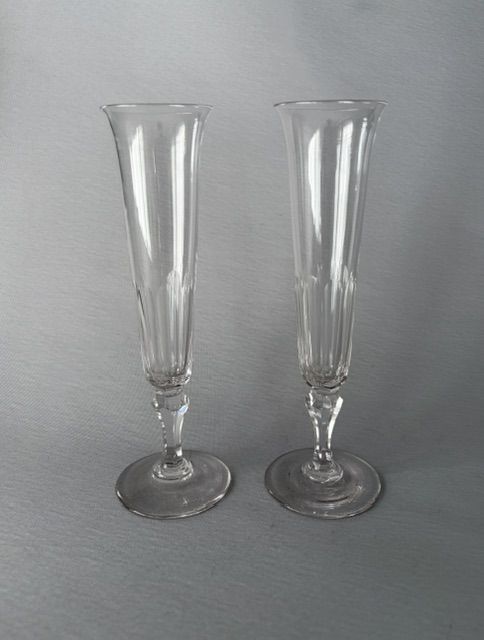
An antique tall stem glass spans several centuries of design, ranging from eighteenth-century English drinking vessels to twentieth-century continental pieces. Buyers searching for an antique tall stem glass encounter forms such as wine glasses, champagne flutes, ale glasses, and hock glasses.
The selection includes Georgian examples with air twist stems alongside Victorian green glasses, Edwardian turquoise goblets, and Bohemian roemers. Alongside drinking vessels, the category occasionally extends to floor lamps, wall lights, and vases incorporating tall stems.
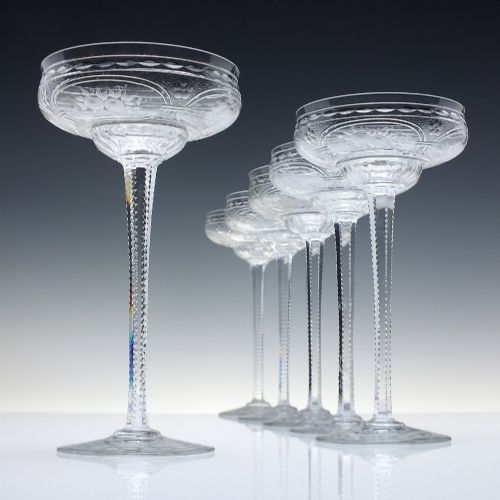
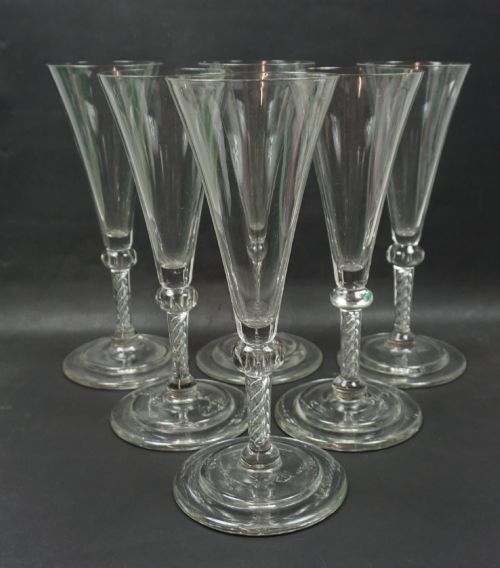
Georgian drinking vessels represent a significant portion of the early forms, featuring drawn trumpet bowls, folded feet, and air tears or mixed twists. Later twentieth-century continental production brings crystal hock glasses with enamel decoration and Jugendstil drinking glass.
Materials and construction
Makers utilised clear glass, crystal, lead glass, and flint glass to achieve clarity and weight in the stem and bowl. Coloured variants appear in green, pale green, cranberry, and turquoise blue.
Decoration involved intricate techniques including enamel work, gold leaf application, and hand engraving upon the surface of the glass. Stems were formed with air twists or mixed twists, while bases occasionally incorporated folded feet for stability.
Antique Tall Stem Glass Retail Price Guide 2026
Typical asking prices for tall stem glass among the pieces listed under this phrase on Sellingantiques today, from the lower quarter to the upper quarter. They describe what is for sale here now, not the wider market.
Materials recorded across the inventory include clear glass, lead glass, flint glass, crystal, brass, enamel, and gold leaf.
Factors of quality
The refinement of the twist within the stem and the proportion between the bowl, stem, and foot dictate the visual balance of the piece. Clarity of the crystal or glass and the crispness of any engraving or enamel decoration distinguish finer examples from standard production.
Theresienthal·Otto Prutscher·Meyr’s Neffe
The Antique Tall Stem Glass Glossary
- Air twist
- A decorative spiral of elongated air bubbles trapped inside the stem of a drinking glass. This technique was achieved by drawing air from heated glass before twisting.
- Roemer
- A traditional Germanic drinking glass featuring a wide bowl on a large, ribbed stem and a conical foot. They often appear in green glass.
- Hock glass
- A tall-stemmed wine glass traditionally used for German white wines. They frequently feature coloured bowls and elaborate enamel decoration.
- Flint glass
- A heavy, brilliant variety of glass containing lead oxide, known for its high refractive index. It was widely used for eighteenth-century drinking vessels.
- Folded foot
- A base edge doubled over and pressed back against the underside of the foot for added strength. This feature appears on Georgian stemware.
Antique Tall Stem Glass: Frequently Asked Questions
Were these glasses used for everyday dining?
Most eighteenth-century and nineteenth-century stemware was produced for formal dining, toasts, and social gatherings rather than daily domestic use. Wealthy households utilised specialised vessels like champagne flutes and ale glasses for specific beverages.
Over time, many of these items transitioned from functional dining implements to decorative display pieces. Collectors today continue to use robust examples carefully or preserve them within cabinet displays.
How can I tell an air twist stem apart?
An air twist is formed by trapping air inside the molten glass and manipulating the material into a helical pattern as the stem is drawn out. Examining the stem under a light reveals fine, continuous threads of air running through the transparent glass.
This technique differs from solid stems or moulded patterns by showing subtle irregularities inherent to hand craftsmanship. It represents a hallmark of mid-eighteenth-century English glassmaking.
What is a Bohemian roemer used for?
A Bohemian roemer is a traditional drinking vessel designed primarily for consuming white wine during social meals. The large ribbed stem provided a secure grip for hands during festive gatherings.
Their distinctive green glass and generous proportions made them a staple of central European tables. Today they remain recognisable collector pieces appreciated for their regional heritage.