

Antique Table Trinket Box
The antique table trinket box is a compact container for vanity items and keepsakes, prized for intricate metalwork and dense decorative detailing.
Antique Table Trinket Box
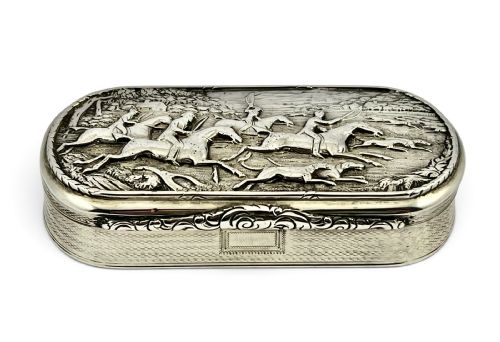
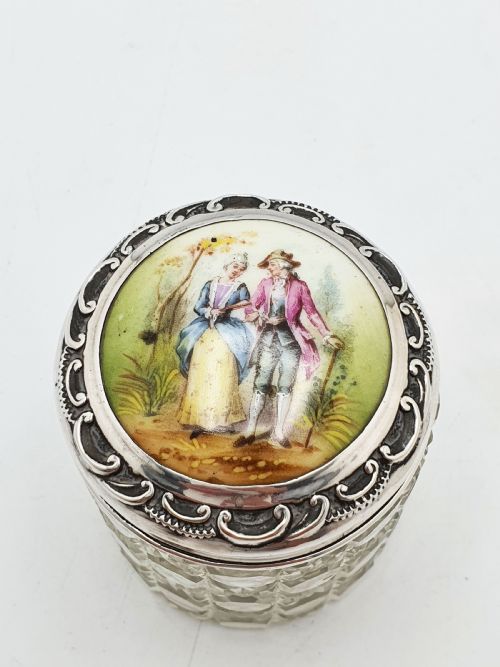
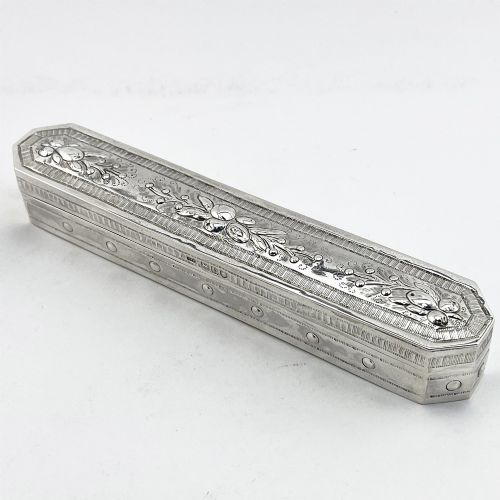
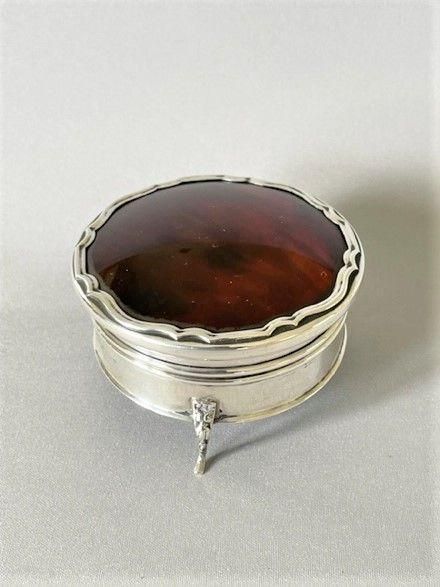
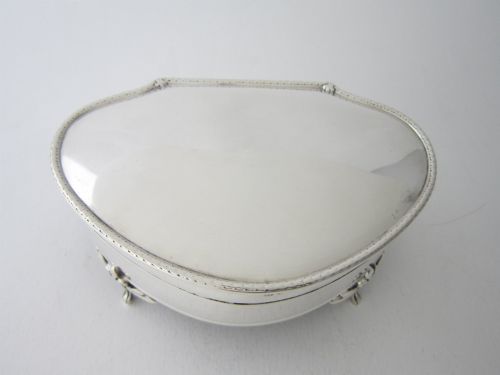
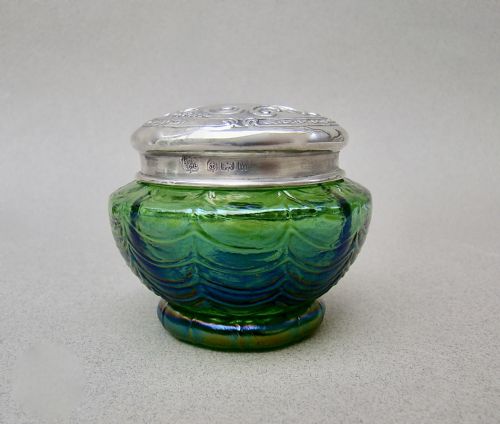
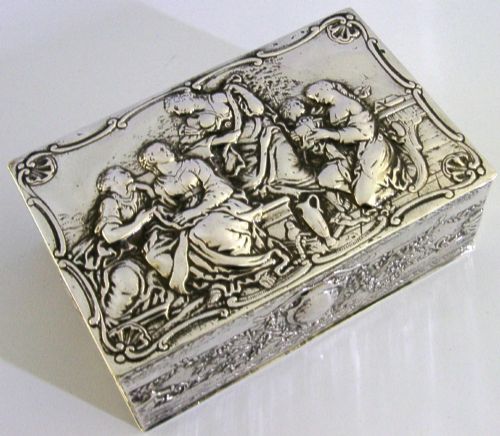
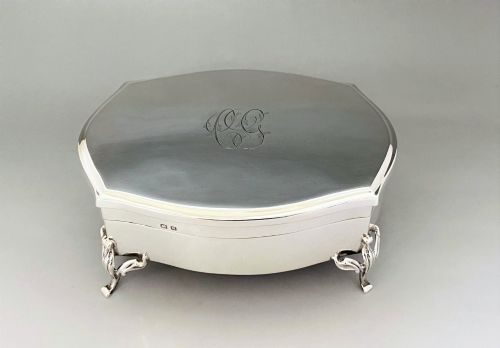
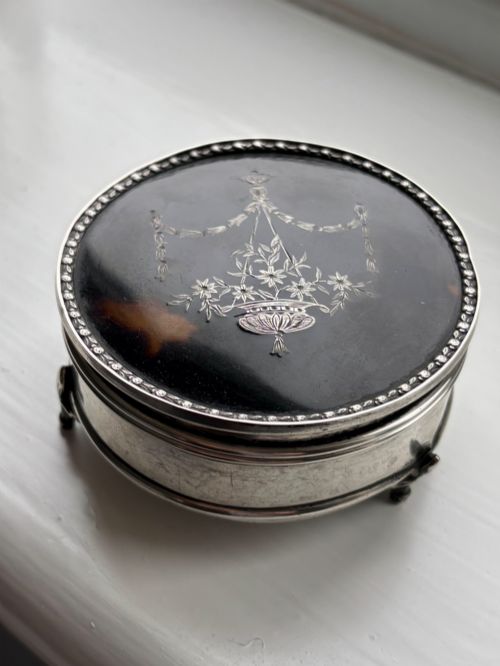
The antique table trinket box spans varied forms designed to sit upon dressing tables, desks and sideboards to hold small valuables, rings and snuff. The pieces seen here encompass solid silver receptacles, glass jars with silver lids, and wooden caskets originating from British, continental European and wider workshops.
Victorian and Edwardian examples in sterling silver predominate on this page, alongside earlier Georgian specimens and later Art Deco designs. Makers across Birmingham, London and continental centres produced lidded containers ranging from simple ring boxes to heavy cast pieces featuring figural scenes and repoussé decoration.
Materials and Techniques
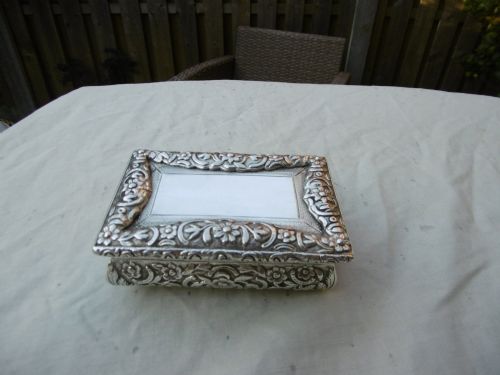
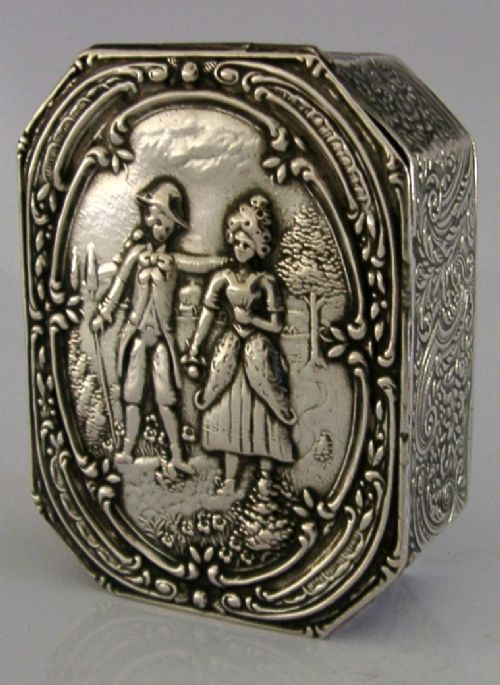
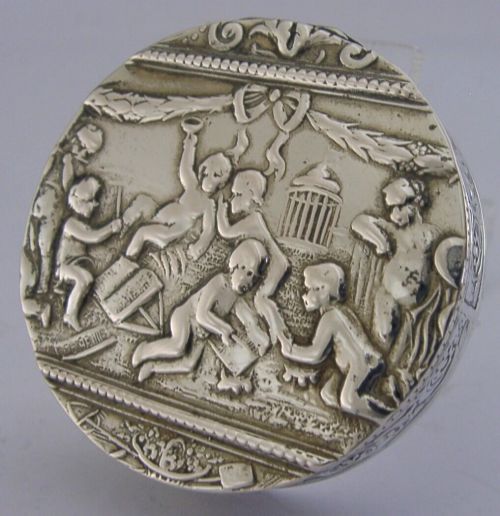
Metals form the core of these objects, utilising sterling silver, solid silver and brass shaped through casting, piercing and engraved chasing. Silversmiths employed detailed repoussé work to create relief scenes on lids and bodies, often incorporating gilt interiors known as silver gilt.
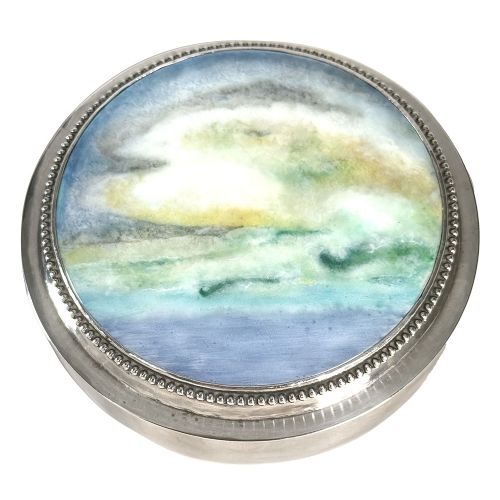
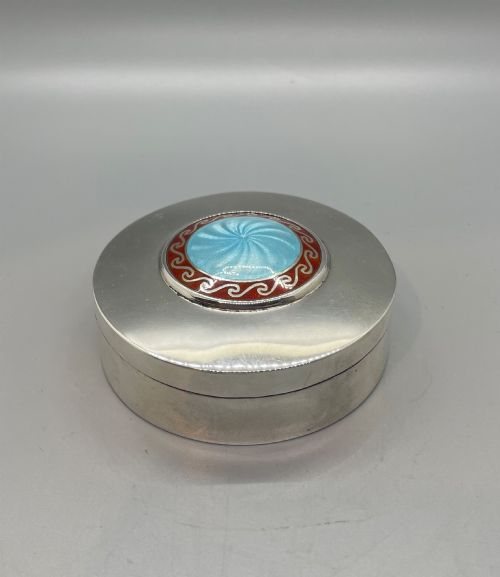
Glass and crystal feature widely, combining with metal mounts in cut glass, frosted glass and satin glass dressing table jars. Enamel work, including guilloché patterns, adds colour to silver lids, while organic elements like tortoiseshell, burr wood and gilt lacquer appear in select pieces.
Listings demonstrate a strong prevalence of Victorian and Edwardian sterling silver, alongside continental European silver and glass combinations.
Evaluating Craftsmanship
The calibre of an antique table trinket box rests upon the crispness of its chasing and the weight of the metal utilised. Superior specimens display sharp, deep relief work in cast figural scenes rather than thin pressed metal, with snug-fitting hinged lids that align properly when closed.
Makers' marks and hallmarks contribute significantly to desirability, indicating established silversmiths or noted retailers. The integration of materials, such as heavy cut crystal bases fitted with precisely mounted silver collars, distinguishes finer pieces from ordinary production.
A. J. Pepper & Co·Henry Clifford Davis·Ollivant & Botsford·Mappin & Webb·Paul Storr·Thomas Shaw·Edward Smith·Joseph Willmore·Goldsmiths & Silversmiths·A. Bromet & Co
The Antique Table Trinket Box Glossary
- Repoussé
- A metalworking technique where a design is hammered into relief from the reverse side. This method creates the raised floral and figural scenes found on many silver boxes.
- Guilloché
- An ornamental engraving technique producing intricate geometric patterns beneath a translucent enamel layer. It appears frequently on the lids of Edwardian and Art Deco dressing table jars.
- Silver Gilt
- Silver that has been coated with a thin layer of gold on its interior surface. This process protected the metal from tarnishing when housing cosmetics or snuff.
- Castle Top
- A pictorial style of box lid featuring an engraved or cast landmark building. These scenes are usually framed by dense floral chasing.
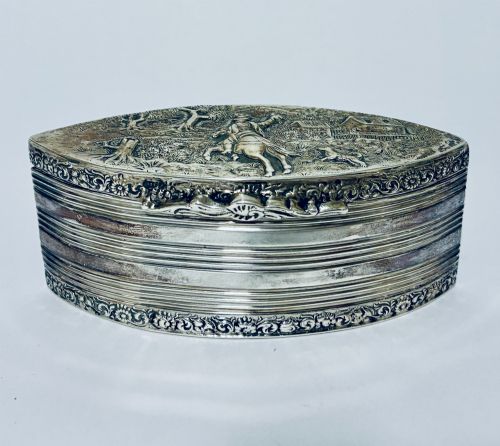
- Navette
- A pointed boat-shaped outline characteristic of Georgian silver and brass snuff boxes. The symmetrical curved ends reflect neoclassical design influences.
Antique Table Trinket Box: Frequently Asked Questions
What were antique table trinket boxes used for?
These receptacles served to hold daily accessories, including rings, pins, cosmetics and small personal documents on dressing tables and desks. Gentlemen and ladies utilised them for snuff, calling cards and jewellery.
Over time, their purpose evolved from functional storage into decorative display pieces for wealthy parlours and bedrooms, reflecting personal status and taste.
How do I date a silver trinket box?
British silver boxes carry hallmarks stamped directly into the metal, revealing the assay office city, the specific year letter and the maker's mark. Comparing these stamps against standard registers provides an exact year of manufacture.
Stylistic cues such as heavy chased floral borders or geometric Art Deco enamel work further help narrow down the production era when hallmarks are rubbed or absent.
Are glass and silver boxes fragile?
The glass and crystal components require careful handling to prevent chipping along the cut rims and corners. The hinged silver mounts and delicate clasps also benefit from gentle treatment during opening and closing.
Most pieces have survived a century or more of daily domestic use, proving robust enough for careful modern display and gentle handling.
What is Hanau silver?
Hanau silver refers to decorative items produced in the German town of Hanau during the late nineteenth and early twentieth centuries. Many workshops there specialised in creating revivalist pieces styled after older seventeenth and eighteenth-century designs.
These boxes often feature intricate cast scenes of pastoral life, figures and architectural motifs, emulating earlier European craftsmanship.