
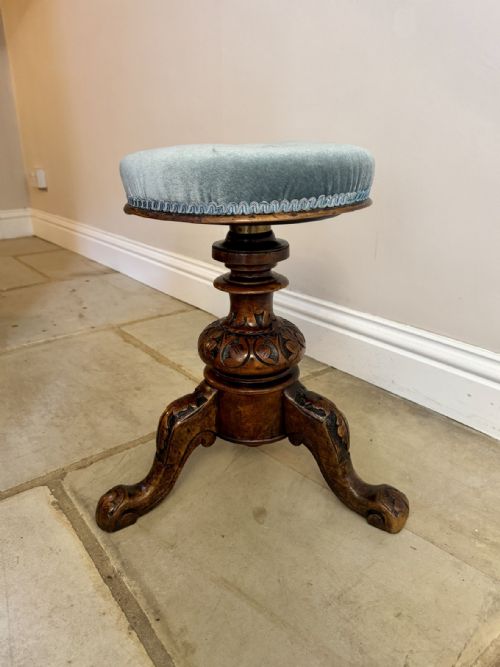


Antique Swivel Vanity Stool
An antique swivel vanity stool offers a clever height-adjustable seat for a dressing table, combining practical mechanics with period charm.
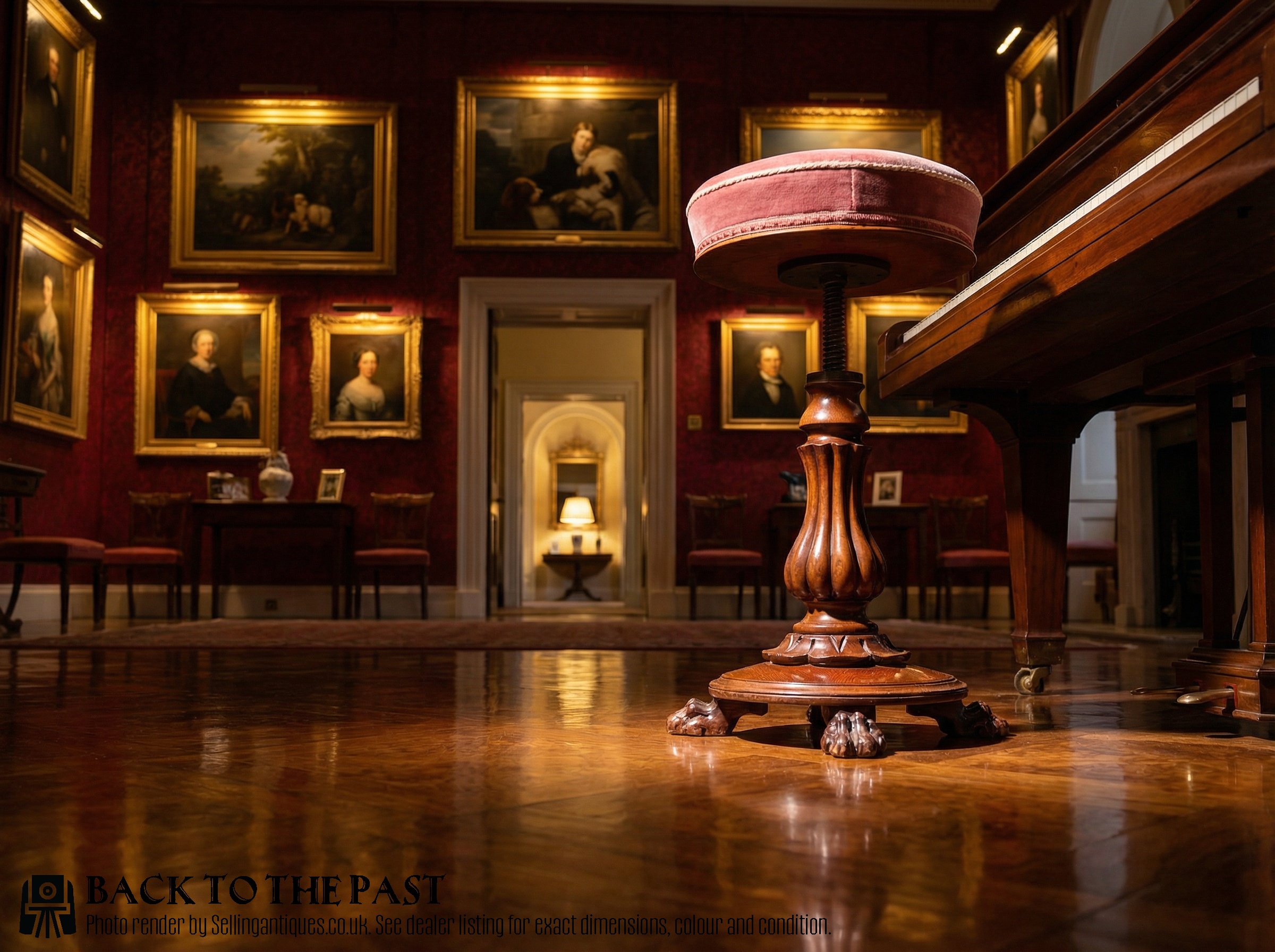
Antique Swivel Vanity Stool
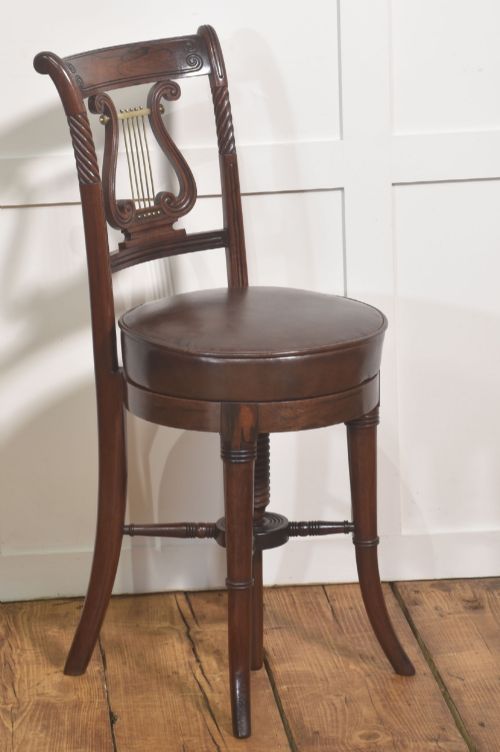
An antique swivel vanity stool serves as a compact seating option intended for a bedroom dressing table or a music room, featuring a mechanism that rotates and adjusts in height. When you search for an antique swivel vanity stool, you encounter pieces designed to rise and fall via a central screw mechanism, allowing the user to find a comfortable height.
The selections on this page span the 19th century, drawing from periods such as the Regency, William IV, and Victorian eras. These versatile items double as piano stools, sharing the same adjustable screw top and revolving action required for musicians and dressing routines alike.
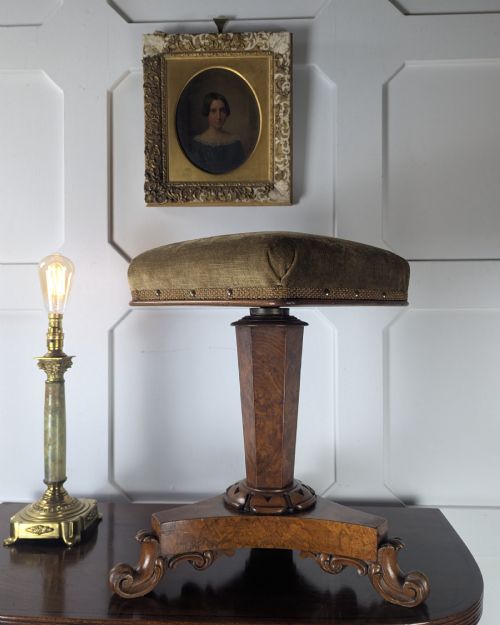
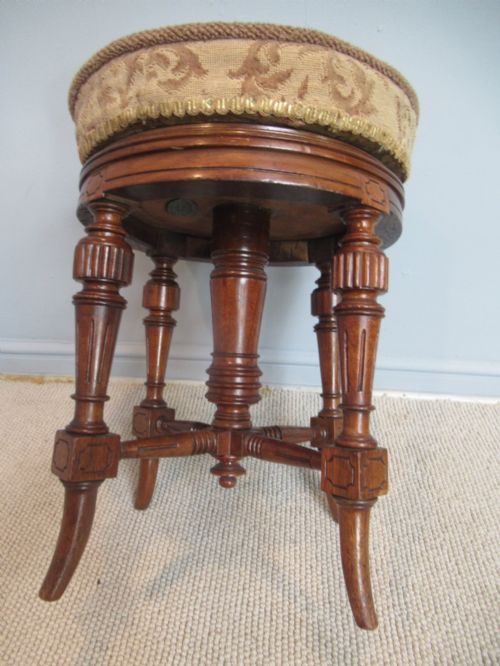
Forms range from simple tripod wooden bases to ornate carved pedestal designs upholstered in period textiles like velvet, leather, and original fabric. They suit modern dressing rooms just as well as traditional interiors, providing a functional antique with a small footprint.
Materials and construction
Cabinet makers built these seats using dense timbers such as walnut, mahogany, and rosewood, often selecting figured veneers to create rich surface patterns. Some examples utilise simulated rosewood or gilt paint over a carved wooden core to achieve a more decorative finish.
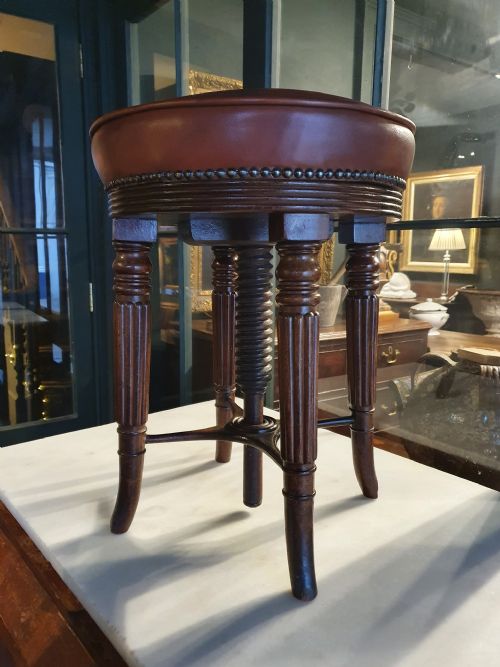
The adjustable action relies on sturdy brass screw mechanisms concealed beneath the seat or integrated into a central column. Upholstery materials include leather, velvet, and various traditional textiles fixed over padded wooden frames.
Many of these seats spent their youth spinning furiously under impatient pianists before retiring to a quiet corner as a vanity stool.
Distinguishing quality in period seating
The refinement of the carving on the wooden legs and the stability of the central revolving mechanism determine the grade of the piece. Better examples show crisp hand-carved details, such as the foliate work on Grotto Revival frames or robust tripod bases that remain steady at any height.
The integrity of the internal screw thread dictates the day-to-day usability of the stool. Pieces retaining their original fabric, leather, or velvet upholstery paired with well-engineered brass fittings hold greater interest for collectors.
James Shoolbred·Gillows
The Antique Swivel Vanity Stool Glossary
- Revolving stool
- A seat designed to turn in a complete circle on a central pivot. This motion allows the user to turn easily while seated at a vanity or instrument.
- Rise and fall
- A mechanism that alters the height of the seat when rotated. Turning the top screw raises or lowers the platform to the desired level.
- Tripod base
- A three-legged support structure commonly found on nineteenth-century music and dressing seats. It provides balanced contact on uneven floors.
- Grotto revival
- A nineteenth-century Victorian design style incorporating natural shell and coral motifs carved into wood. It brings an ornamental aesthetic to seating.
Antique Swivel Vanity Stool: Frequently Asked Questions
How do you adjust the height?
You rotate the padded seat clockwise or counter-clockwise to raise or lower the platform along the central threaded screw.
This simple screw mechanism allows smooth height changes without needing levers or pins.
Were these used for pianos or vanities?
These versatile pieces served both purposes throughout the nineteenth century, as the rotating adjustable top suited sitting at a dressing table or a keyboard.
Many listings describe the exact same form as both a piano stool and a dressing table chair.
Are the upholstery materials original?
Some pieces retain their period leather, velvet, or woven fabric, while others have been recovered during their lifetime to preserve usability.
Check the individual listing details to see if the textile covering dates to the original period of manufacture.
How do I identify a Victorian example?
Victorian pieces often display dark walnut or mahogany timbers paired with heavy turned columns or carved tripod legs.
They frequently incorporate robust brass rise-and-fall screw mechanisms beneath the revolving top.