


Antique Suzani
An antique suzani brings vibrant Central Asian needlework into a room, offering richly embroidered textile panels made for dowries and domestic life.
Antique Suzani
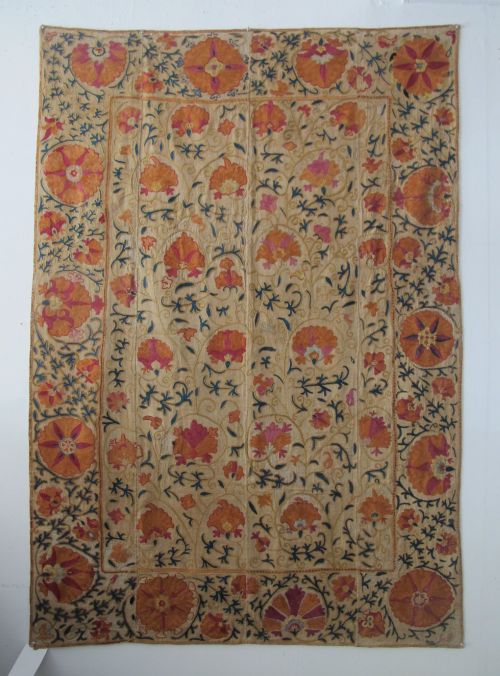
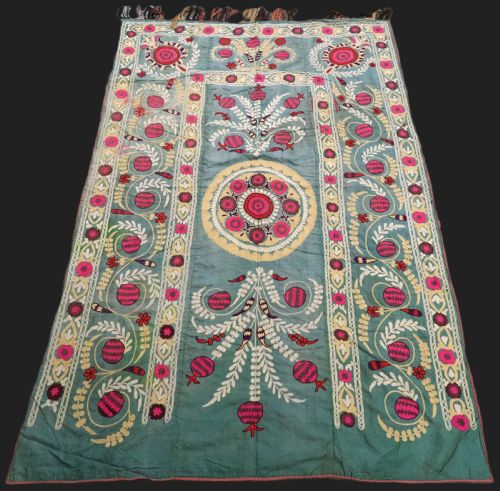
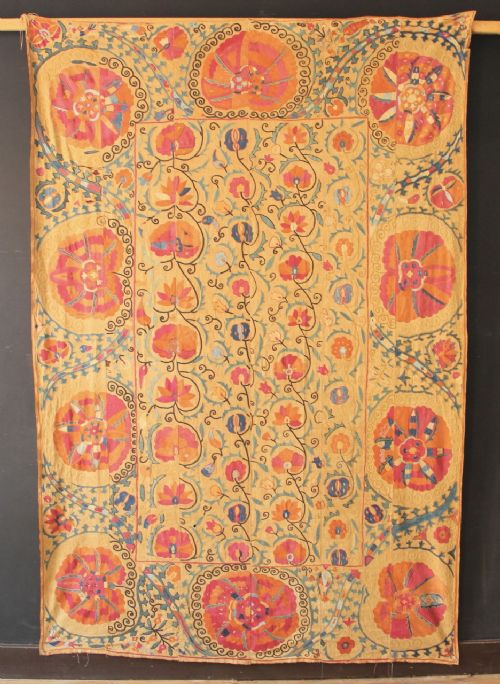
An antique suzani is a decorative embroidered textile originating from Central Asia, primarily associated with Uzbekistan and surrounding regions. These pieces span the nineteenth and early twentieth centuries, reflecting traditional nomadic and settled cultures.
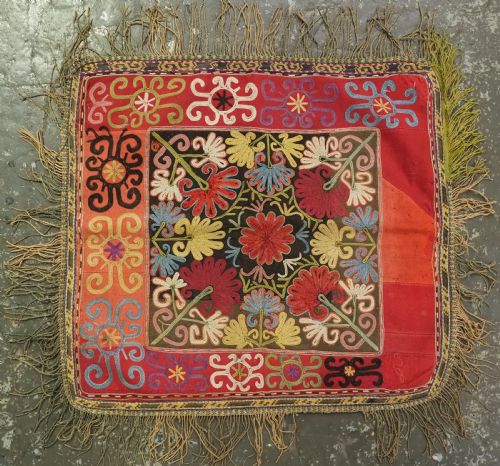
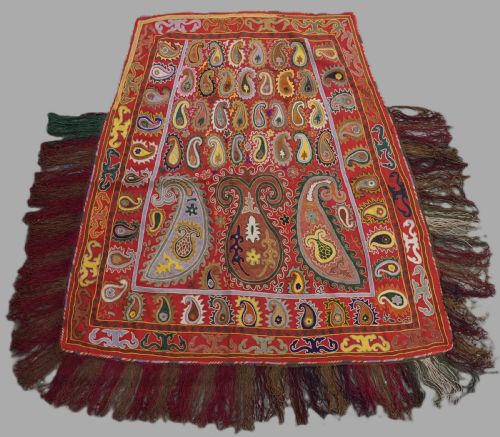
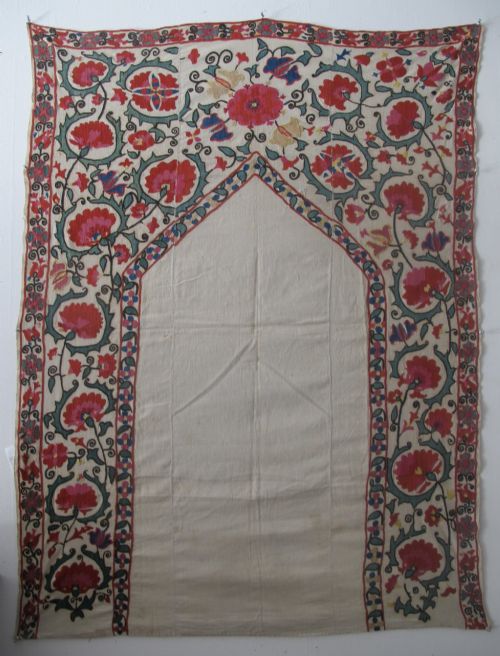
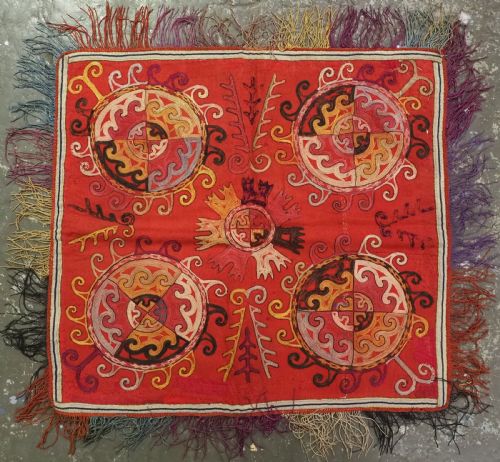
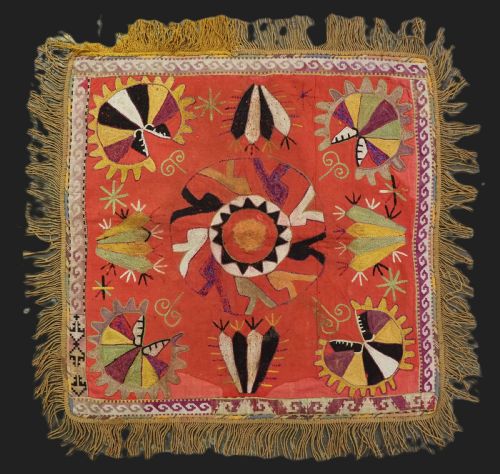
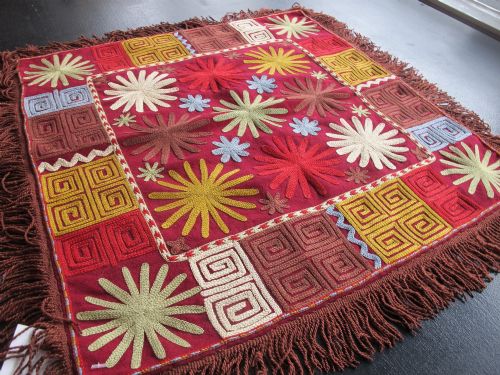
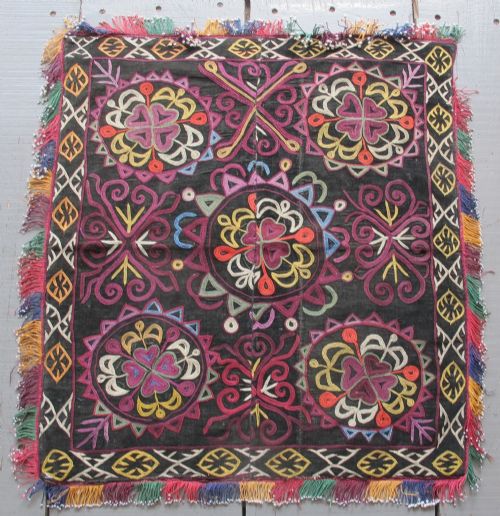
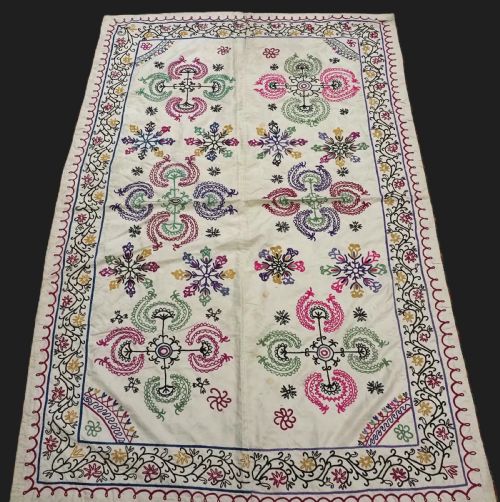
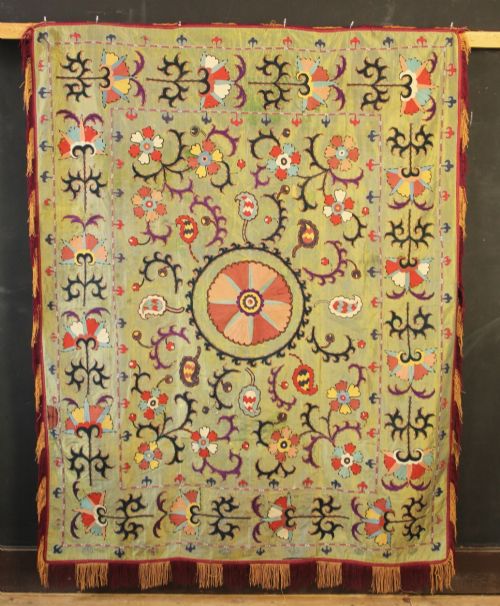
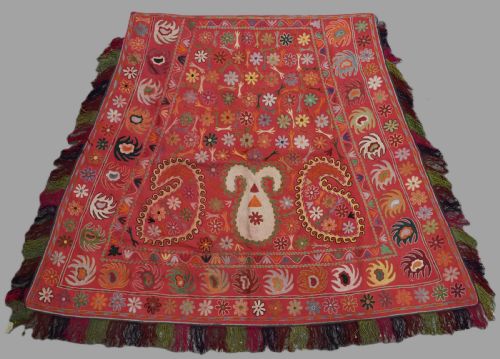
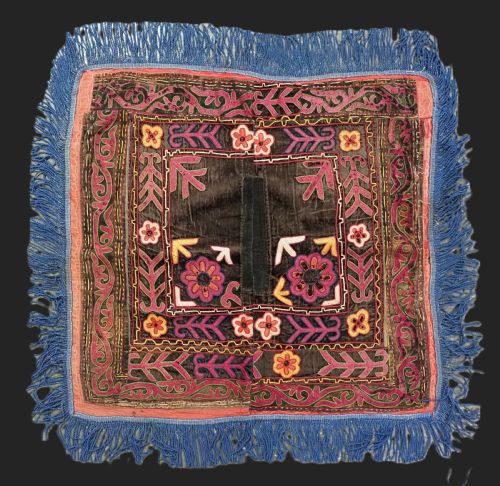
Buyers encounter various forms on this page, including large wall hangings, smaller dowry items known as ilgich, bed covers, and ceremonial horse covers. Many examples display regional characteristics from centres such as Bukhara and Shakrisabz.
The aesthetic centres on elaborate needlework, featuring botanical motifs, architectural patterns, and geometric medallion variants. These textiles served functional roles in domestic settings before becoming sought-after decorative wall art.
Materials and construction
Maker communities constructed these textiles using a base ground of cotton, wool, adras silk-cotton mix, or velvet. Artisans then applied dense silk thread embroidery, sometimes incorporating glass beads or wool fringe for texture and contrast.
Stitching techniques varied by tribe and region, with many works executed in tambour stitch or surface laid-and-couching. Craftsmen frequently worked on narrow vertical strips of fabric that were later joined together to form larger panels.
Nomadic embroiderers occasionally added tiny glass beads to ward off the evil eye.
Factors determining quality
Quality rests upon the fineness of the needlework and the complexity of the design composition. Denser stitching and precise execution distinguish superior examples from simpler utilitarian pieces.
The harmony of natural dye palettes and the integrity of the base fabric also dictate worth. Well-preserved grounds and intact borders indicate careful historical use.
The Antique Suzani Glossary
- Suzani
- An embroidered Central Asian textile panel, derived from the Persian word for needle. These pieces were traditionally worked by brides as part of their dowry.
- Ilgich
- A smaller dowry embroidery or hanging associated with the Lakai tribe. They often feature distinct geometric motifs and compact dimensions.
- Adras
- A traditional Central Asian fabric woven with a silk warp and a cotton weft. It served as a common foundation ground for embroidery.
- Nim suzani
- A half-size suzani panel, smaller than the standard full wall hanging or bed cover. These pieces fit domestic spaces where full dimensions prove too large.
- Ru-i-jo
- A traditional Central Asian bed cover suzani. These large textiles were designed to cover bedding during the daytime.
Antique Suzani: Frequently Asked Questions
How do I hang an antique suzani?
Mounting requires a method that distributes weight evenly across the top edge. Professionals often use a fabric sleeve stitched to the reverse, through which a slim baton is inserted.
Direct pinning or nailing damages the historic fibres and should be avoided entirely. Alternatively, framing behind conservation-grade glass protects delicate silk threads from dust and environmental wear.
Where were antique suzanis made?
Production centred in historical urban and tribal areas of Central Asia, notably Uzbekistan. Towns like Bukhara and Shakrisabz developed distinct regional design schools.
Nomadic groups such as the Lakai contributed unique tribal variations with bold geometric forms. Each region utilised specific colour combinations and botanical motifs unique to local traditions.
Can I use a suzani as a bed cover?
Historical usage included functional sleeping covers and day covers known as ru-i-jo. Modern domestic settings allow similar placement provided foot traffic and heavy wear are minimised.
Fragile silk embroidery benefits from gentle treatment away from direct body friction. Using these textiles primarily as decorative layers preserves their structural integrity.
How do I clean an antique suzani?
Routine maintenance involves gentle surface dust removal using low suction through a mesh screen. Water cleaning risks dye migration and shrinkage in historic silk and cotton grounds.
Professional textile conservators should handle any significant staining or restoration work. Household cleaning agents cause irreversible damage to natural dyes and aged fibres.