


Antique Sugar Basket Handle
These antique sugar basket handle items are the survivors of Georgian, Victorian, and Edwardian tableware, sought after for their refined metalwork and glass liners.
Antique Sugar Basket Handle
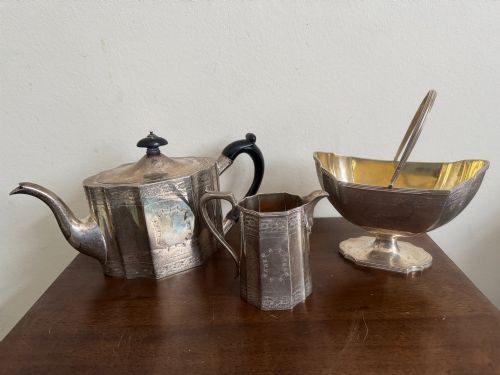
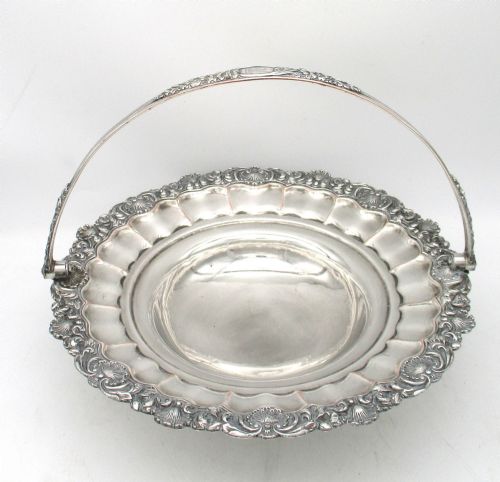
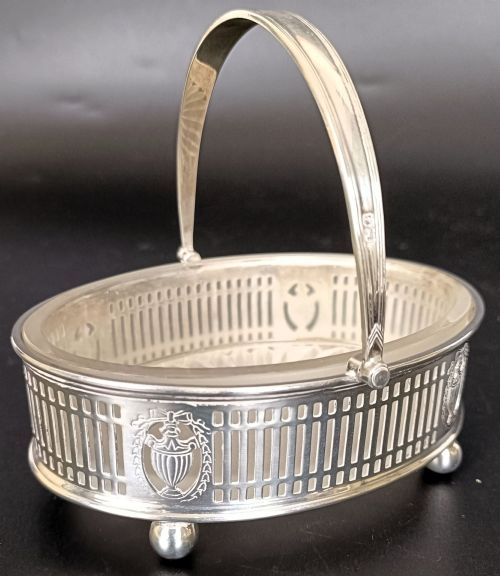
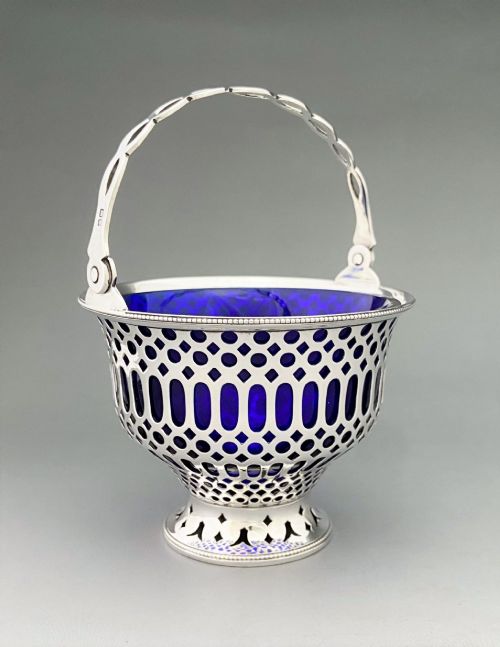
When you search for an antique sugar basket handle, you are looking at hardware designed to lift small tabletop vessels used for holding lump sugar, cream, or sweetmeats during formal dining. The pieces available span the 18th Century, Georgian, Victorian, and Edwardian periods, appearing alongside related forms such as cream pails, sweet bowls, and fruit baskets.
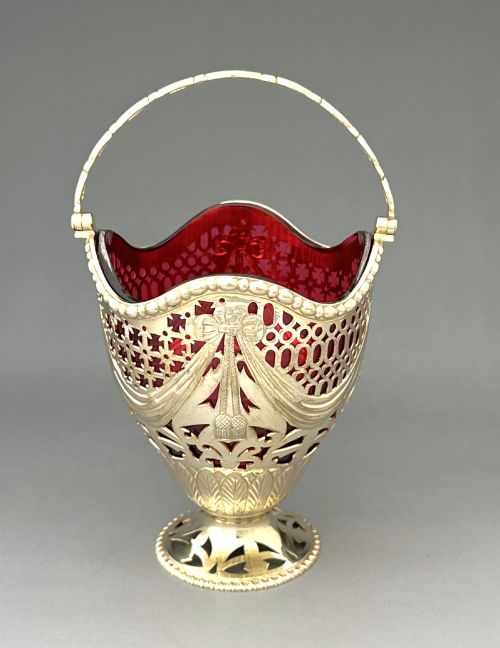
Originating primarily from English, Scottish, and Irish workshops, these items reflect changing dining fashions from the neoclassical symmetry of the George III era to the flowing, organic lines of Art Nouveau designs around 1900.
How They Were Made
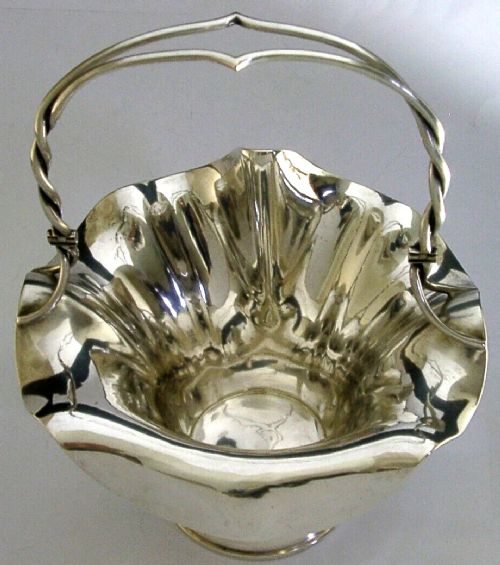
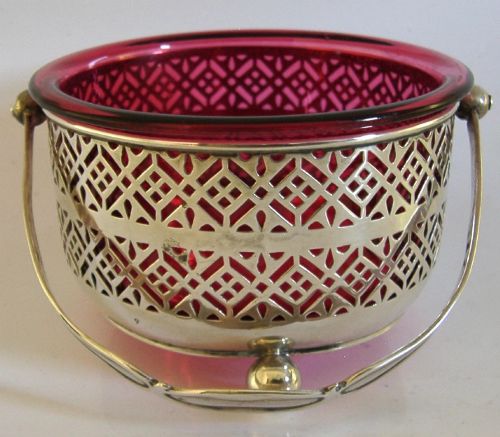
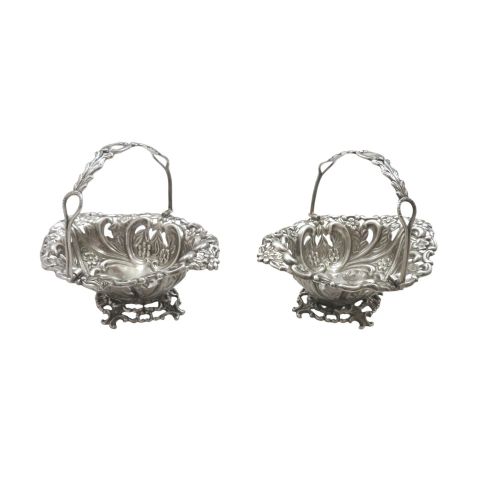
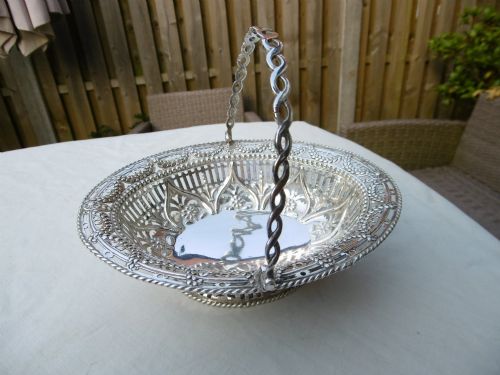
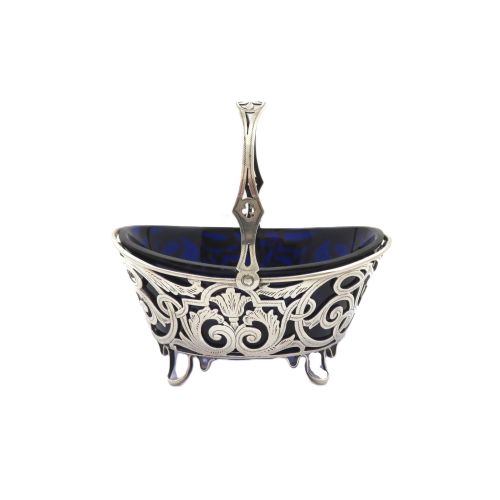
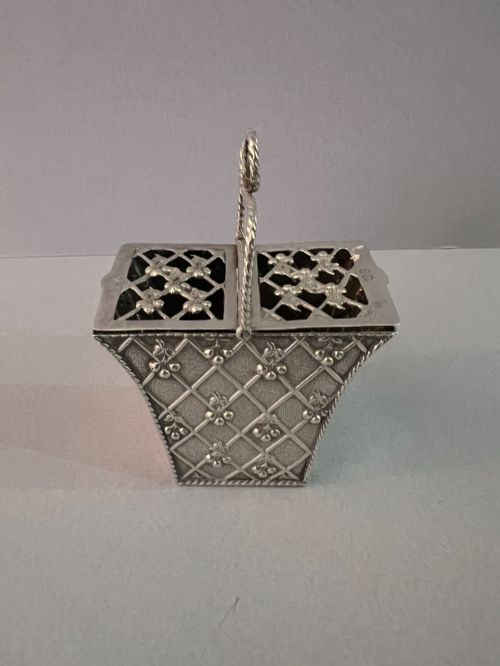
Makers utilised sterling silver, silver plate, Old Sheffield plate, and copper, frequently combining metal frames with blown glass liners in cranberry or ruby shades. Handles were often cast with floral motifs or fabricated from solid wirework, then hinged to the main body to swing freely.
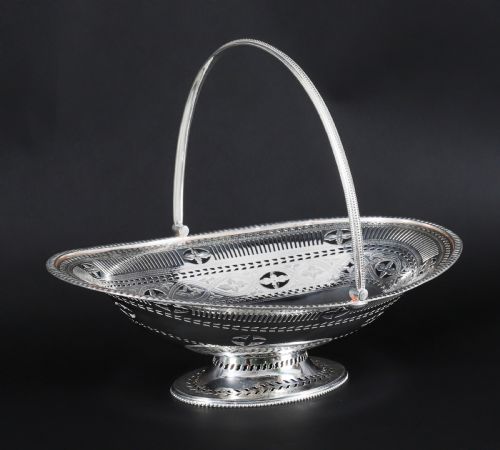
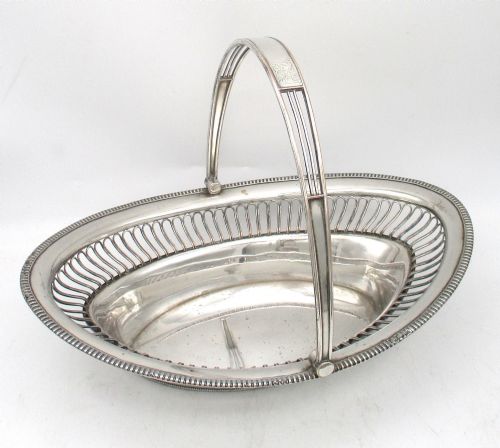
Piercing, fretwork, and intricate wirework dominated the production techniques, allowing craftsmen to remove heavy metal while maintaining structural integrity for the basket and its handle. Gilding was also applied to create silver gilt surfaces, enhancing the reflective quality of the tableware.
Materials span sterling silver, silver plate, Old Sheffield plate, copper, silver gilt, and cranberry glass across multiple centuries.
What Varies in Quality
Quality rests in the crispness of the piercing, the weight of the metal, and the harmony between the basket and its movable handle. Pieces exhibiting cast floral handles or complex fretwork demonstrate a higher standard of silversmithing than simpler wirework iterations.
The presence of an original, undamaged glass liner in cranberry or ruby glass elevates a piece considerably. Furthermore, clear hallmarks and crisp maker marks distinguish superior workshops from anonymous production.
Aldridge & Green·Henry Chawner·Rait·Samuel Herbert·William Bond·Hammond, Creake And Co·James Dixon And Sons Ltd·Edward H Stockwell·W M F
The Antique Sugar Basket Handle Glossary
- Swing handle
- A movable arched metal grip attached to opposite sides of a basket by pins or hinges. It allows the handle to drop flat against the rim when not in use.
- Piercing
- A technique where metal is punctured and cut away to form decorative geometric or floral patterns. It lightens the weight of the basket while creating an openwork design.
- Old Sheffield plate
- A composite material made by fusing a thin sheet of silver to a thicker copper base. It was produced before the invention of electroplating.
- Silver gilt
- Sterling silver that has been coated with a thin layer of gold on its surface. This technique produces a rich, warm yellow-silver finish.
- Wirework
- A method of construction using drawn metal wires soldered together into open cages or latticework patterns. It was particularly popular for lighter sweetmeat and sugar baskets.
Antique Sugar Basket Handle: Frequently Asked Questions
What was an antique sugar basket used for?
These vessels held lump sugar or sweetmeats on the dining or tea table during the Georgian and Victorian eras. Guests would use sugar tongs to select portions from the open or pierced container.
The movable handle allowed servants or diners to lift the basket easily during formal service. Over time, many lost their original glass liners or were repurposed for general display.
How do I identify a Georgian sugar basket?
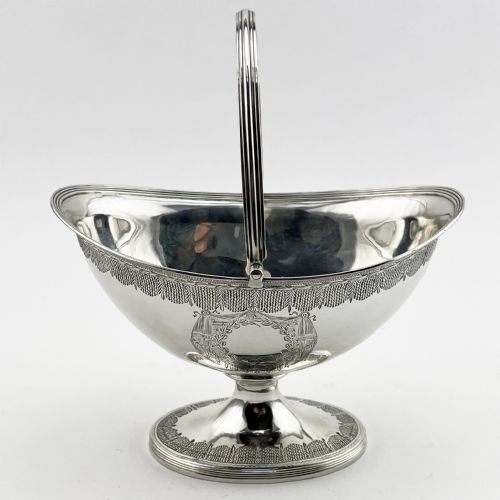
Georgian examples often feature neoclassical styling, bright-cut engraving, or delicate pierced wirework dating from the mid to late 18th century. Look for crisp makers' marks and sparse, elegant proportions characteristic of the period.
Heavier cast handles and floral motifs began to dominate later in the Victorian era, helping to separate 1700s pieces from 19th-century revivals.
Are glass liners original to the baskets?
Many surviving baskets retain their original cranberry, ruby, or clear glass liners, which were mouth-blown to fit the exact contours of the metal frame. Finding a matching liner greatly enhances the integrity of the piece.
Replacements are common due to the fragile nature of glass over centuries of use. Examining the fit inside the wirework or pierced walls helps determine period authenticity.