

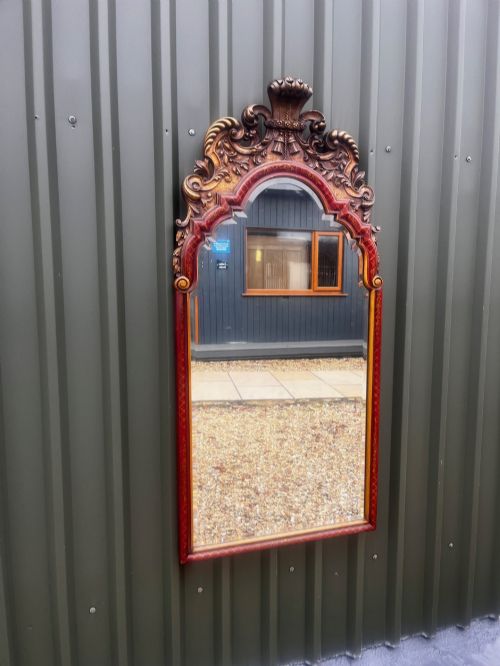
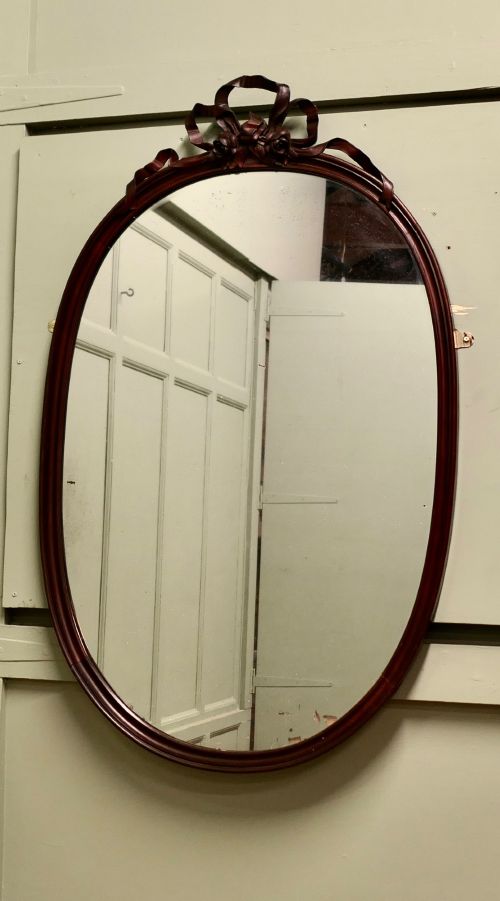
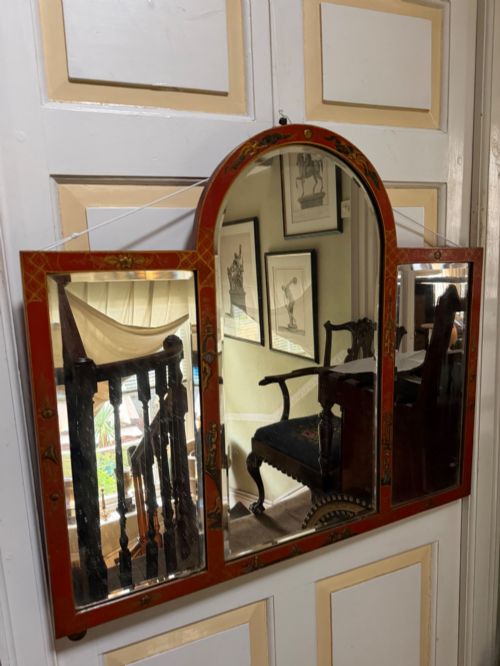
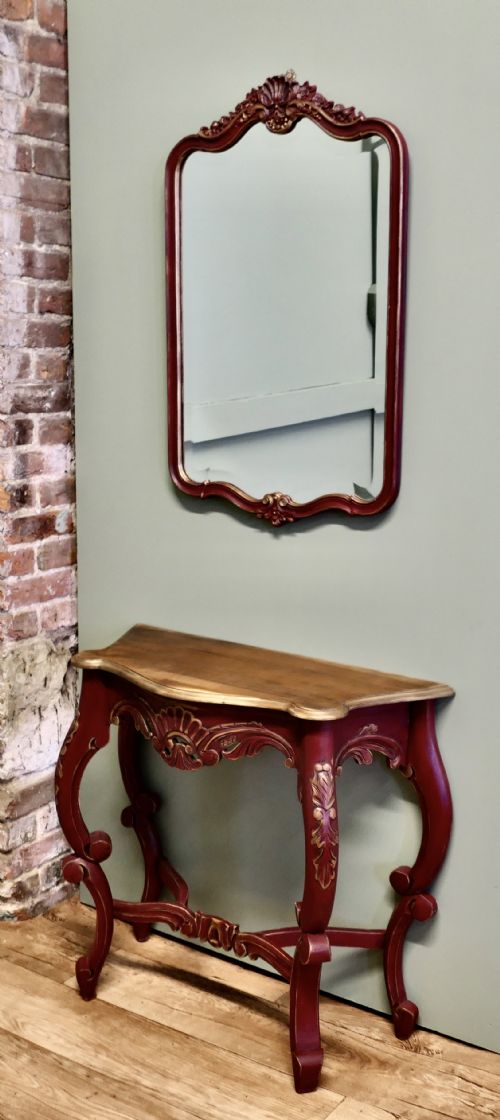




Antique Style Red Mirror
An antique style red mirror brings striking scarlet lacquer and gilt decoration into a room, offering both traditional craftsmanship and dramatic colour.
Antique Style Red Mirror
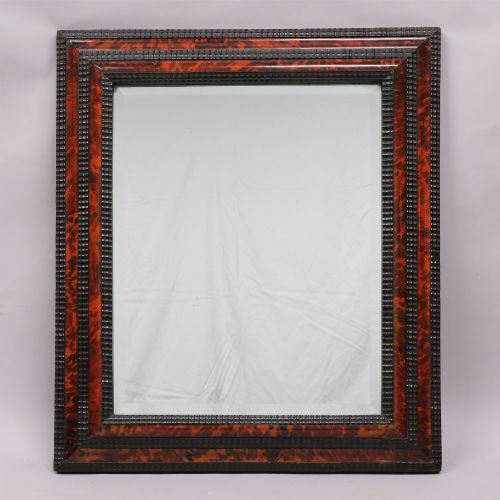
An antique style red mirror draws upon historical Chinoiserie and Georgian designs, bringing bold red and gilt surfaces into domestic interiors. These decorative objects span various forms, including wall hanging mirrors, overmantel mirrors, and tall pier mirrors.
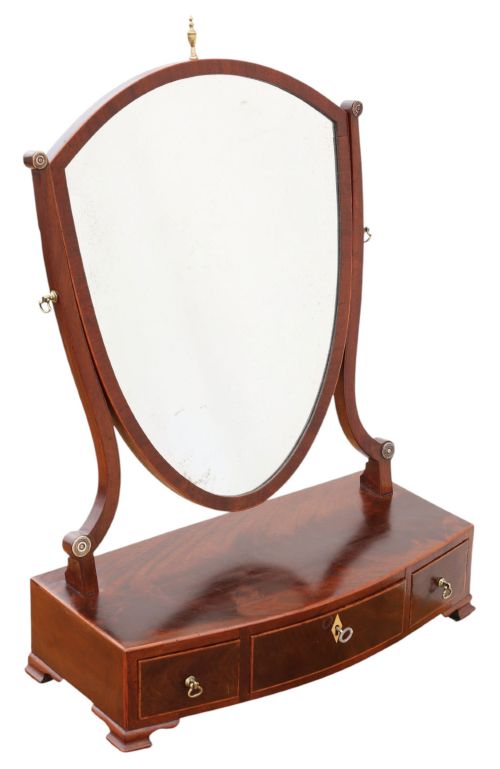
The pieces available display diverse influences such as George I style, Louis XV Revival, and Edwardian interpretations of earlier aesthetics. Buyers frequently encounter rectangular wall mirrors, triptych overmantel pieces, and swing dressing table mirrors.
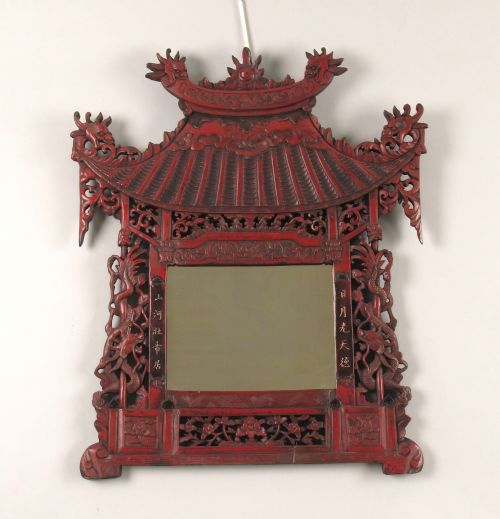
Origins stretch from eighteenth-century originals to later revivals from the nineteenth and early twentieth centuries. Each item employs traditional framing shapes, from oval silhouettes to architectural pagoda crests.
Materials and construction
Makers constructed these frames using timber foundations such as mahogany, pine, and specialist wood substrates designed to accept layered decorative finishes. Carved elements and applied mouldings add depth and structural relief beneath the surface treatments.
The distinct red surfaces rely on traditional lacquer, japanning, or scarlet paint applications often enhanced with gold leaf and giltwood highlights. Artisans built up these finishes through successive coats to achieve a rich, reflective sheen.
Mirrored glass plates, including triple plate triptych configurations and bevelled edges, complete the construction. Brass hardware and swing pivots appear on dressing table mirrors and cheval formats.
Antique Style Red Mirror Retail Price Guide 2026
Typical asking prices for style red mirror among the pieces listed under this phrase on Sellingantiques today, from the lower quarter to the upper quarter. They describe what is for sale here now, not the wider market.
Listings feature red lacquer and giltwood surfaces spanning from the eighteenth century through to early twentieth-century revival pieces.
Assessing quality and finish
The depth and execution of the red lacquer or japanning separate superior examples from simpler decorative items. Finer pieces exhibit meticulous hand-painted Chinoiserie detailing, whereas basic versions rely on flat painted colour without layered nuance.
Carved wooden details and giltwood enrichment demonstrate the artisan's skill, particularly where gilding meets the red ground layer. Crisp moulding profiles and well-proportioned framing indicate higher workshop standards.
The Antique Style Red Mirror Glossary
- Chinoiserie
- European decorative style reflecting Chinese artistic influences, characterised by painted scenes, figures, and architectural motifs on lacquered grounds. It gained immense popularity during the Georgian period and later revivals.
- Japanning
- European imitation of East Asian lacquerwork, created using layers of varnish and heat-cured resin finished with painted motifs. This technique defines many red and gilt antique mirrors.
- Giltwood
- Timber carved and coated with a thin layer of gold leaf or metallic powder. It provides reflective contrast against red lacquer frames.
- Pier Mirror
- A tall mirror designed to hang on the narrow wall space between windows. These pieces often coordinate with console tables placed below them.
- Triptych
- A mirror divided into three separate glass panels, commonly found in overmantel formats. The outer panels often angle inward to widen the reflected view.
Antique Style Red Mirror: Frequently Asked Questions
Where should I hang a red lacquer mirror?
These mirrors suit spaces needing a strong focal point, such as above a fireplace mantel or in a hallway above a console table. Their vibrant red finish works well against neutral walls.
Ensure the hanging wall can support the weight of wooden frames, particularly larger overmantel and pier mirror formats.
How do I care for antique lacquer?
Maintain the surface by dusting gently with a soft, dry cloth without applying modern chemical polishes or abrasive cleaners. Moisture can damage traditional finishes.
Keep the mirror away from direct sunlight and damp environments to preserve the integrity of the lacquer and gilt details.
What is japanning?
Japanning is a European technique developed to replicate Asian lacquerwork using resin varnishes and painted decoration. It is characteristic of Georgian and revival red mirrors.
Craftsman built up multiple layers to create a durable, glossy surface that was often decorated with raised motifs.
Are these mirrors eighteenth century or later?
The selection includes genuine eighteenth-century pieces alongside nineteenth-century examples and Edwardian or early twentieth-century revivals. Each period employs distinct stylistic markers and framing proportions.
Reviewing the wood type, backing boards, and glass characteristics helps determine the exact period of manufacture.