



Decorative Lacquer Mirror
A decorative lacquer mirror brings rich hand-finished colour and intricate motifs into a room, catching the light across periods from the nineteenth century to the early twentieth.
Decorative Lacquer Mirror
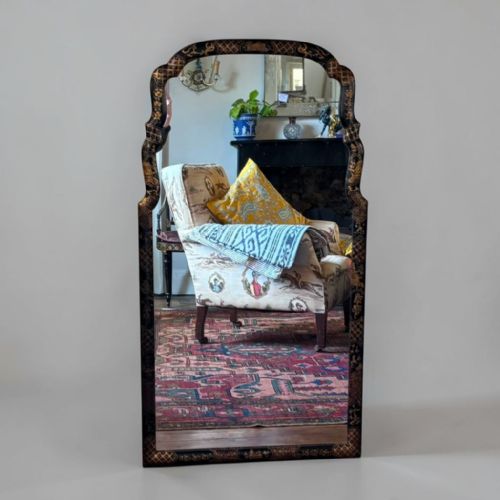
A decorative lacquer mirror combines timber frames with applied lacquer finishes, often taking the form of wall mirrors or console tables with integrated glass. These pieces are sought after for their striking visual depth, deep red and dark grounds, and narrative motifs derived from Asian design traditions.
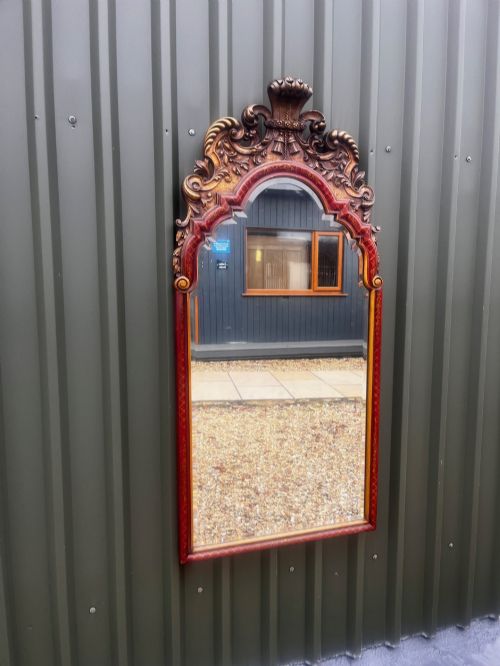
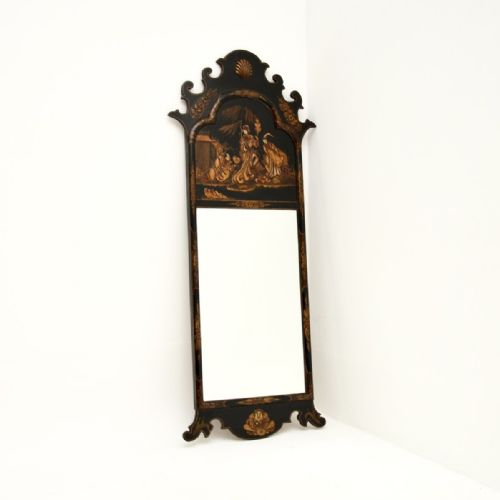
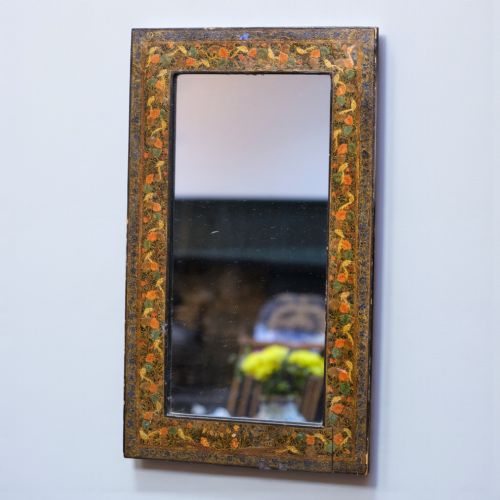
Buyers will most frequently encounter works executed in the Chinoiserie taste alongside Kashmiri or Anglo-Indian examples. Dating spans from the nineteenth century through the 1920s, with several items interpreting earlier George I styles in carved and gilt wood.
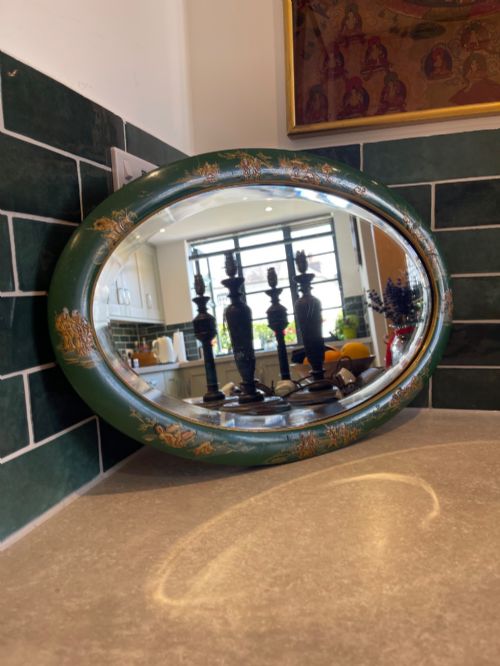
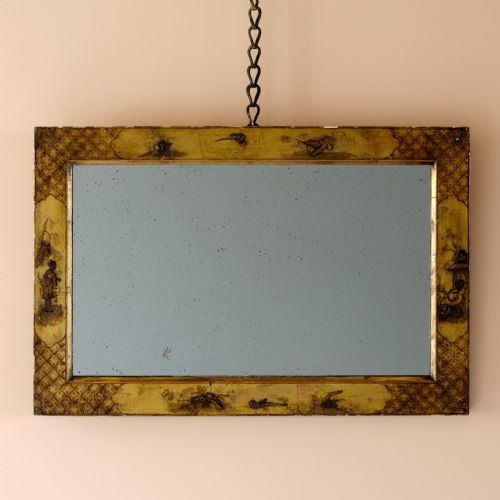
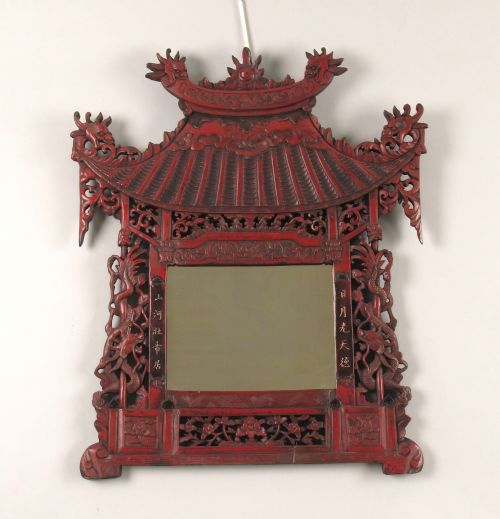
The primary forms include large-scale wall mirrors, smaller oval and rectangular plates, and pagoda-topped designs. Each piece reflects distinct regional interpretations of lacquerwork, utilising timber and gold leaf to frame the central glass.
How they were made
Craftsmen built the underlying structures from timber, applying layers of lacquer to create smooth, durable surfaces capable of holding intricate painted details. Giltwood and gold leaf were frequently worked into the frames to highlight carved mouldings and provide contrast against dark or red lacquer grounds.
Techniques relied on traditional woodworking and finishing methods suited to producing Chinoiserie and Kashmiri decorative arts. Artisans built up relief decoration using gesso before applying the final layers of paint, lacquer, and metallic leaf.
Listings feature periods from the nineteenth century through the 1920s, employing wood, glass, lacquer, and gold leaf.
What varies in quality
Quality rests in the depth of the lacquer finish and the crispness of the giltwood carving around the glass. Superior examples display finely rendered figures and landscapes that retain their original tonal variation across the frame.
Proportion and scale distinguish finer works from simpler commercial pieces, particularly in large-scale wall mirrors and pagoda designs. The integration of the wooden frame with the original glass plate indicates the standard of assembly.
The Decorative Lacquer Mirror Glossary
- Lacquer
- A durable finish applied to wood in multiple layers, producing a smooth surface that can be polished or painted. It protects the timber while providing a glossy background for decorative motifs.
- Giltwood
- Timber carved and coated with gold leaf or metallic powder to resemble solid gold. This technique highlights decorative mouldings on frames.
- Kashmiri
- Pertaining to decorative arts from Kashmir, known for intricate painted wooden surfaces and distinct floral or landscape patterns. These pieces often show specific regional craftsmanship.
- Pagoda
- A tiered tower form with multiple eaves, frequently adopted in the pediments of Chinoiserie mirrors and furniture. It provides an architectural silhouette to the top of the frame.
Decorative Lacquer Mirror: Frequently Asked Questions
How do I hang a heavy lacquer mirror?
Wall mirrors require secure fixings anchored directly into masonry or wall studs to support the weight of the timber and glass frame.
Professional mirror hangers use heavy-duty brackets suited to the specific scale of the piece to ensure stability.
Where should I place a Chinoiserie mirror?
These mirrors work well above console tables, mantelpieces, or in entrance halls where they can reflect light and anchor the room's decorative scheme.
Positioning them away from direct, strong sunlight helps preserve the integrity of the lacquer and gilt surfaces over time.
How do I clean a lacquered frame?
Dust the timber gently with a soft, dry cloth to remove surface particles without disturbing the painted or gilt details.
Avoid liquid cleaners, chemical polishes, or abrasive cloths that can damage the delicate lacquer finish.
What is the difference between George I style and original pieces?
George I style pieces are later interpretations, often dating from around 1900, that replicate the bold architectural forms and gilt decoration of the early eighteenth century.
Original works from the Georgian period carry distinct construction methods and material age that set them apart from later revivals.