


Antique Style Oak Throne
An antique style oak throne brings centuries of heavy carving and commanding presence into a modern room.

Antique Style Oak Throne
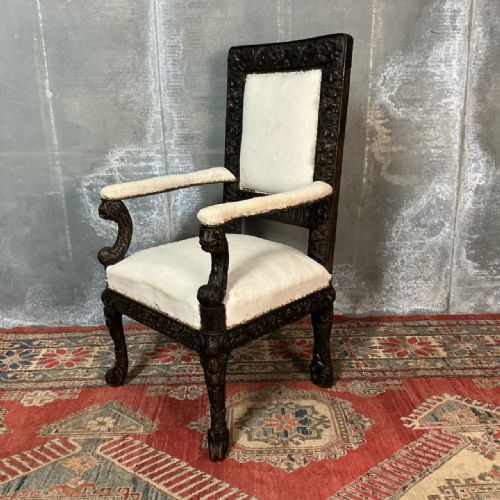
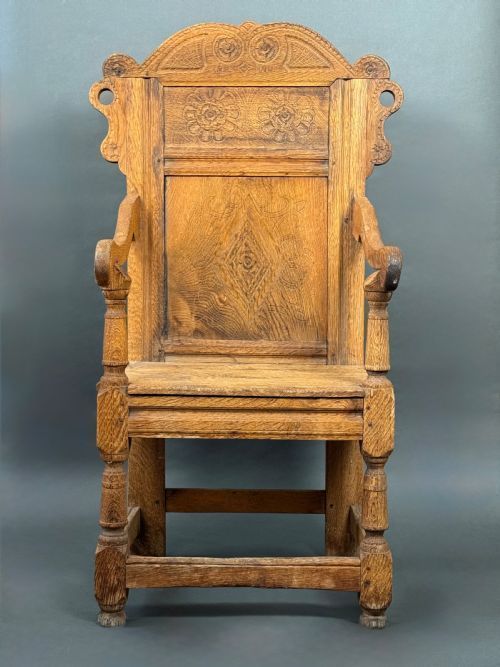
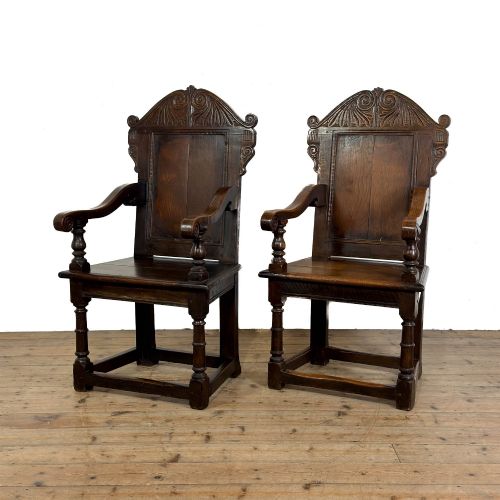
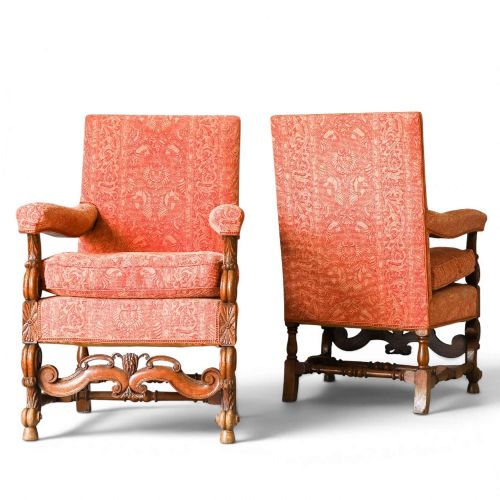
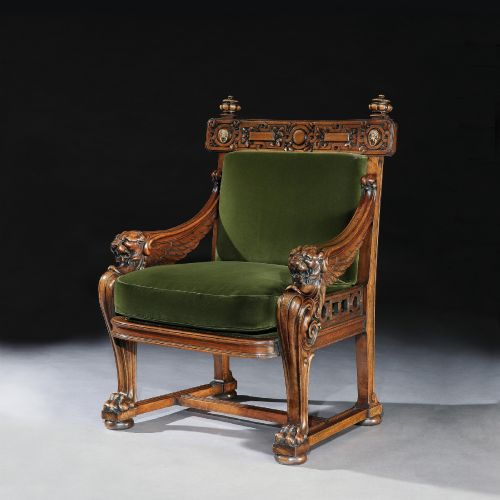
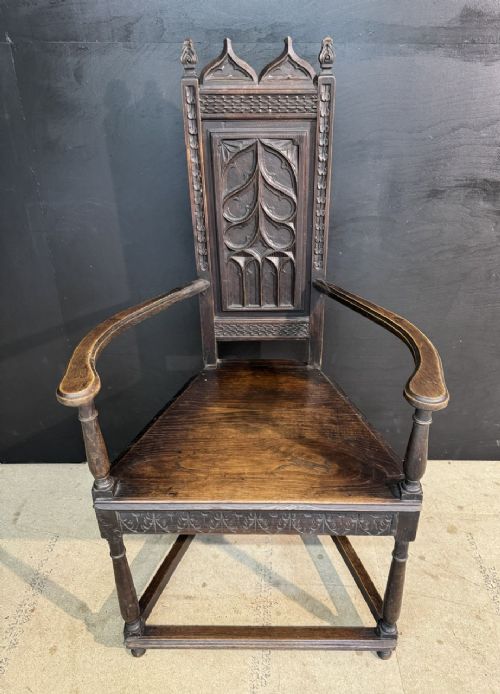
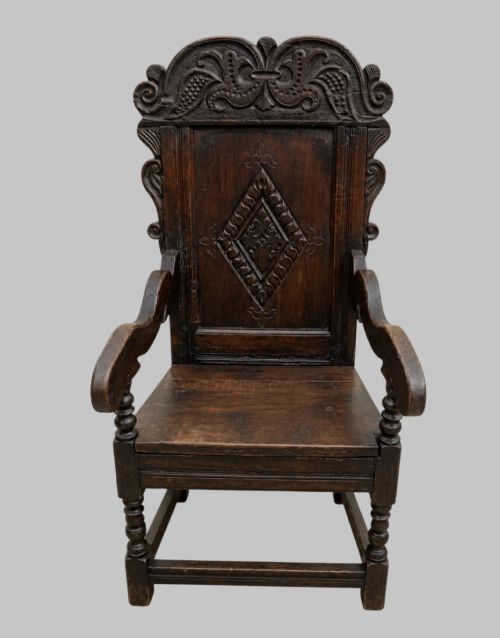
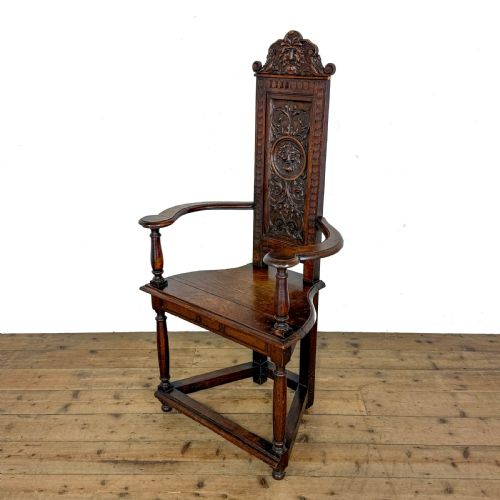
An antique style oak throne typically manifests as a heavy panelled wainscot armchair, a high-backed hall chair, or an ecclesiastical seat designed for presence rather than casual lounging. These pieces draw heavily on historical revivals, with makers looking back to seventeenth-century Jacobean and Carolean forms, alongside Gothic and Renaissance influences.
Materials and Technique
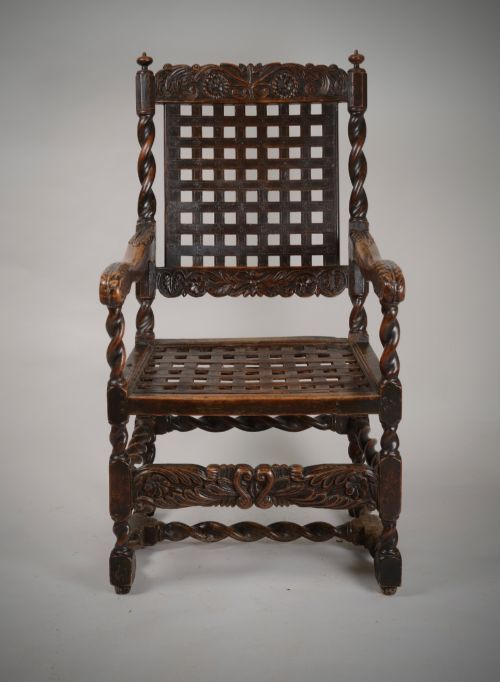
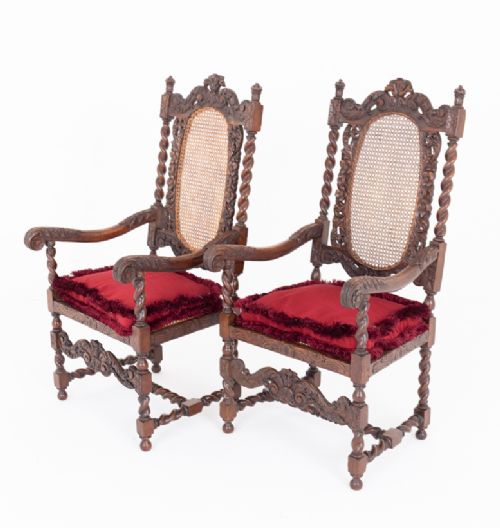
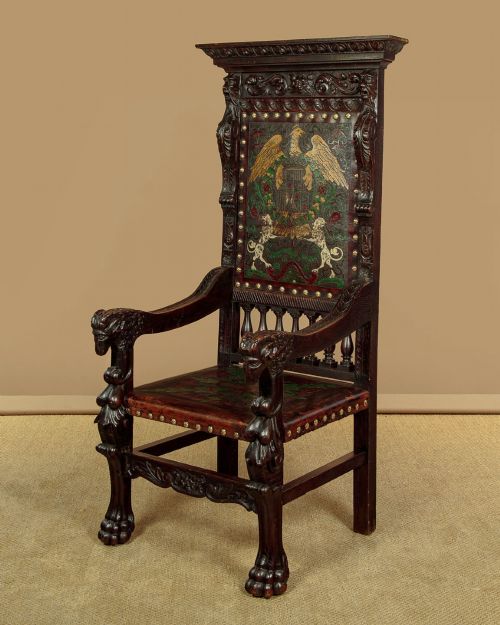
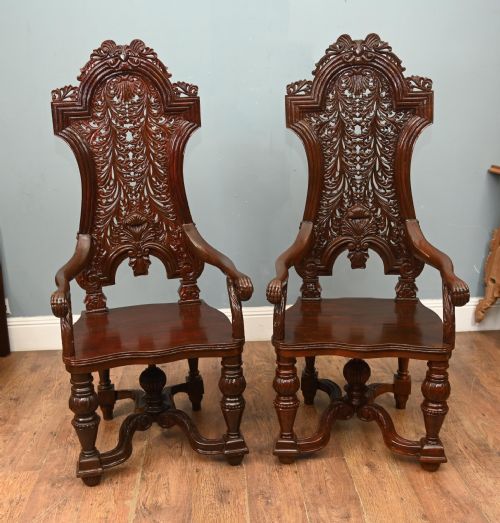
Solid oak forms the structural core of these seats, often accented with turned components like barley twists and joined using traditional pegged mortise and tenon construction. Carvers worked directly into the dense timber to produce deep relief panels, strapwork, and figural motifs.
Upholstery elements bring contrasting textures to the heavy wooden frames, utilising materials such as supple leather, stamped or painted hide, velvet, hessian, and cane inserts. Brass studs frequently secure these coverings to the wooden framework, adding metallic detail to the dark timber.
Listings feature oak chairs incorporating velvet, cane, brass, and leather across diverse revival movements like the Jacobean, Gothic, and Renaissance styles.
Craftsmanship and Proportion
The depth and crispness of the hand carving separate standard production from superior examples, as does the selection of figured timber with attractive grain patterns. Superior pieces maintain balanced proportions and architectural integrity, even when handling complex figural motifs or deep relief panels.
The integrity of the original joints and the condition of integrated elements such as cane panels or leather upholstery heavily influence the overall character. Alterations made during later periods or extensive timber replacement distinguish heavily worked pieces from those retaining their initial structure.
Thomas Hope
The Antique Style Oak Throne Glossary
- Wainscot chair
- A heavy wooden armchair of sixteenth or seventeenth-century origin, featuring panelled backs and solid wooden seats. These forms remained popular templates for later nineteenth-century revival pieces.
- Barley twist
- A type of furniture turning resembling a twisted rope, frequently seen on the legs and stretchers of seventeenth-century and revival oak seating. This technique required precise lathe work to maintain uniform curves.
- Glastonbury chair
- An early form of folding ecclesiastical armchair constructed with intersecting X-shaped frames and sloping arms. Nineteenth-century makers frequently revived this medieval architectural style in oak.
- Monopodia
- A furniture support consisting of a single carved animal leg, often ending in a paw or claw. This classical motif appears on revival armchairs drawing on Regency design sources.
Antique Style Oak Throne: Frequently Asked Questions
What is an antique style oak throne?
These pieces are heavy wooden armchairs and hall seats built in historical revival styles, heavily referencing seventeenth-century wainscot forms, Gothic architecture, and Renaissance decoration.
They serve as focal points in domestic interiors, combining robust oak construction with imposing backs, carved arms, and occasional leather or fabric upholstery.
How do I distinguish a seventeenth-century chair from a nineteenth-century revival piece?
Distinguishing the periods requires examining the tooling marks on the timber, the construction of the joinery, and the natural wear patterns accumulated over centuries of use.
Nineteenth-century revival pieces often display machine assistance, cleaner internal joints, and revival motifs specific to Victorian interpretation rather than authentic seventeenth-century methods.
Where were these chairs used historically?
Such imposing seats typically occupied the head of a long table in a great hall, a study, or a formal entranceway to project authority and status.
Ecclesiastical variants were also placed in churches or domestic chapels, reflecting the Gothic and Renaissance tastes popular during both the original periods and later revivals.
How should I care for oak and leather furniture?
Maintaining these materials involves keeping them away from direct heat sources and sudden humidity shifts that can cause solid oak to split and leather to dry.
Regular dusting and occasional treatment with appropriate conservation waxes or leather conditioners will help preserve the finish without damaging the antique surface.