


Antique Style Leather Stool
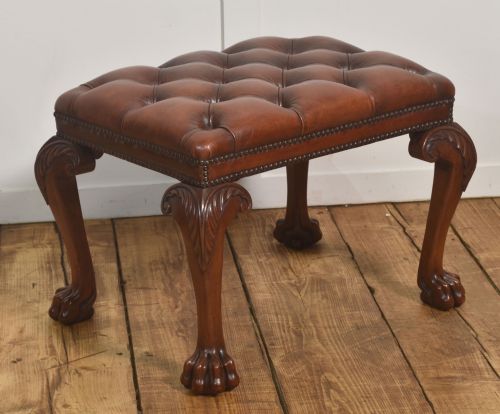
An antique style leather stool combines period frames in mahogany, walnut, or oak with supple buttoned or plain hide upholstery for enduring seating.
Antique Style Leather Stool
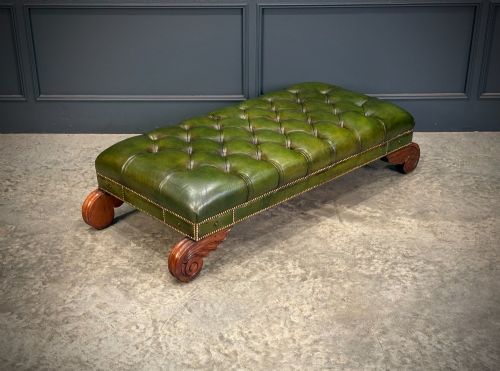
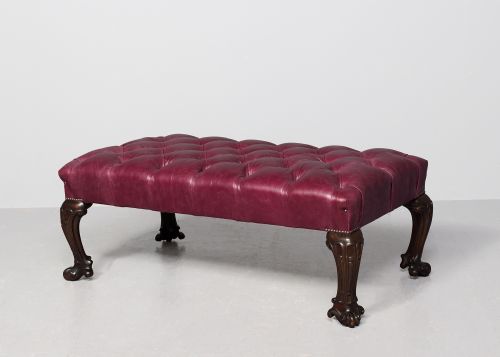
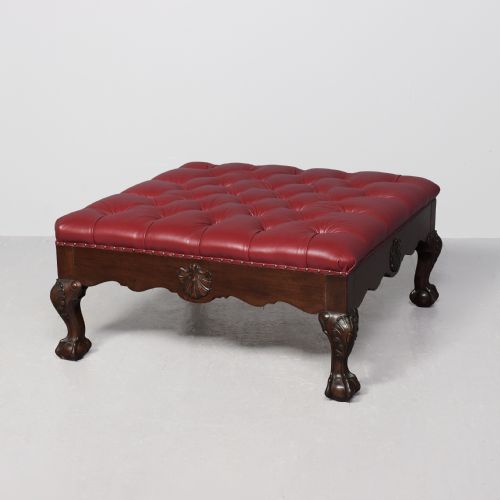
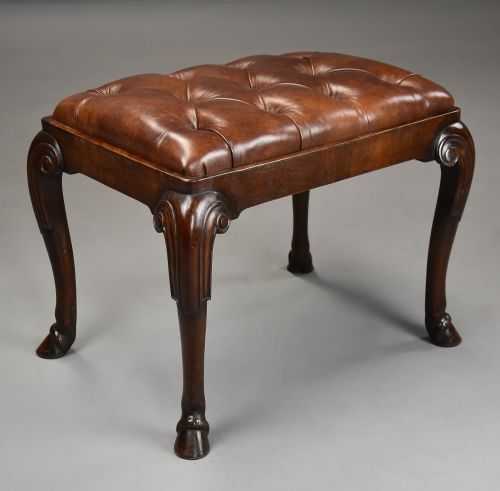
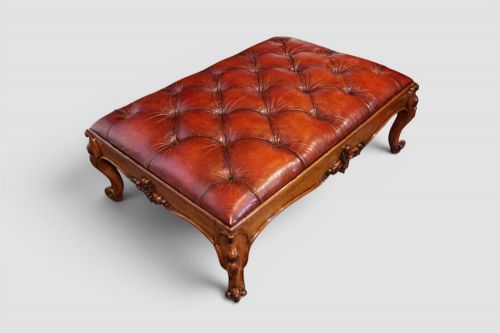
When searching for an antique style leather stool, buyers encounter low hall seats, footstools, ottomans, and long benches spanning the nineteenth century through to the Edwardian period and the early twentieth century. These pieces serve practical purposes as foot rests, coffee tables, or fireside seating while bringing historical character into a room through Revival styles.
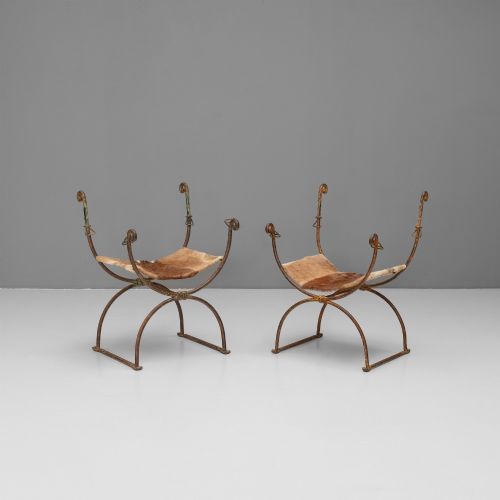
The most common variants on this page include buttoned leather footstools and centre stools framed in mahogany or walnut, alongside specialist forms such as metamorphic gout stools and X-framed designs. Makers drew inspiration from Regency, Victorian, Chippendale, Queen Anne, and Carolean aesthetics to produce sturdy wooden frames upholstered in hide or cowhide.
Originating primarily from English workshops and country houses, these stools reflect the domestic furniture requirements of past centuries. Whether constructed as simple footstools or large upholstered benches with fluted legs, they integrate timber frames with durable leather surfaces.
How they were made
Craftsmen built the structural frames of these stools using solid timbers such as mahogany, walnut, oak, and occasionally painted wood or wrought iron. Joinery techniques varied from cabriole legs and X-frames to fluted supports and serpentine bases, depending on the prevailing style of the period.
Upholstery involved stretching leather, burgundy hide, or cowhide over internal padding, frequently secured with deep buttoning and brass detailing. Hand-dyed finishes and careful stitching ensured the hide remained taut and resilient across frequently used surfaces.
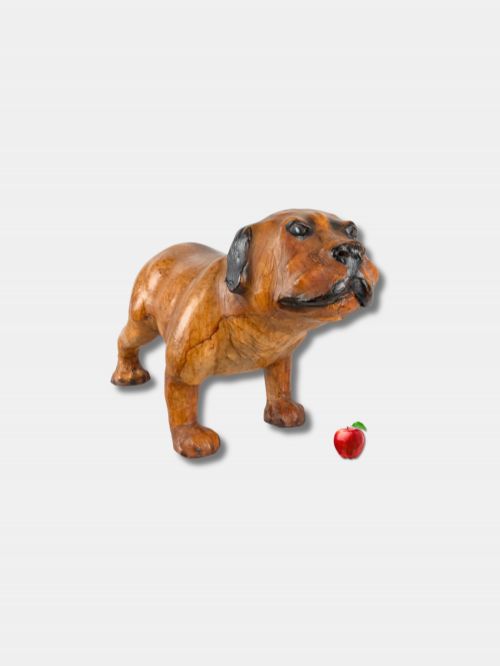
Among the formal seating sits an early twentieth-century leather dog footstool produced by Omersa for Liberty.
What varies in quality
Quality in these pieces is dictated by the selection of timbers and the handling of the hide, where dense mahogany or walnut frames paired with hand-dyed English leather demonstrate superior craftsmanship. The articulation of period details, such as carved cabriole legs or precise buttoning, separates standard production from exceptional examples.
Proportion and scale also define the hierarchy of these items, with larger country house centre stools and metamorphic designs requiring more intricate joinery and mechanical ingenuity than basic footrests.
Omersa For Liberty·Richard Hicks Bridgens
The Antique Style Leather Stool Glossary
- Buttoned leather
- Upholstery technique where leather is pulled deep into the padding and secured with pleats, creating a tufted surface. This method adds both structural tension and visual texture to the seat.
- Cabriole leg
- Furniture leg featuring a double curve, typically bowing outward at the knee and tapering inward at the foot. It is frequently seen on walnut and mahogany pieces inspired by earlier furniture eras.
- X-framed stool
- Seating design supported by intersecting diagonal legs forming an X shape beneath the seat. This structural form provides stability and draws on Renaissance and Regency aesthetic traditions.
- Metamorphic
- Furniture engineered to transform from one form into another, such as a gout stool converting into an incline or an armchair shifting into library steps. These pieces combine seating with functional mechanical adjustments.
- Ottoman
- Upholstered seat or footstool typically lacking arms or a back, designed for domestic lounging. Versions often feature long rectangular proportions and leather upholstery.
Antique Style Leather Stool: Frequently Asked Questions
What is a metamorphic leather stool?
A metamorphic leather stool is an adjustable piece of furniture designed to shift functions, such as converting from a footrest into a stepped library ladder or an inclined gout stool.
These clever adaptations reflect domestic ingenuity from the nineteenth century, offering dual utility in compact living spaces.
How do I care for antique leather?
Antique leather requires gentle cleaning and occasional conditioning to maintain the supple texture of the hide and prevent drying or cracking over time.
Keeping the leather away from direct heat sources and strong sunlight preserves both the natural material and any hand-dyed coloration.
Where were these stools used?
These stools were traditionally placed in libraries, drawing rooms, and country house bedrooms as versatile seating or footrests by firesides.
Longer benches and centre stools often stood in hallways or served as coffee table alternatives in period interiors.
How do I identify the period?
Period identification relies on examining the timber species, leg profiles, upholstery methods, and stylistic revival traits present in the construction.
For instance, cabriole legs often point to Queen Anne Revival influences, while fluted legs and dense mahogany suggest Regency or Victorian origins.