
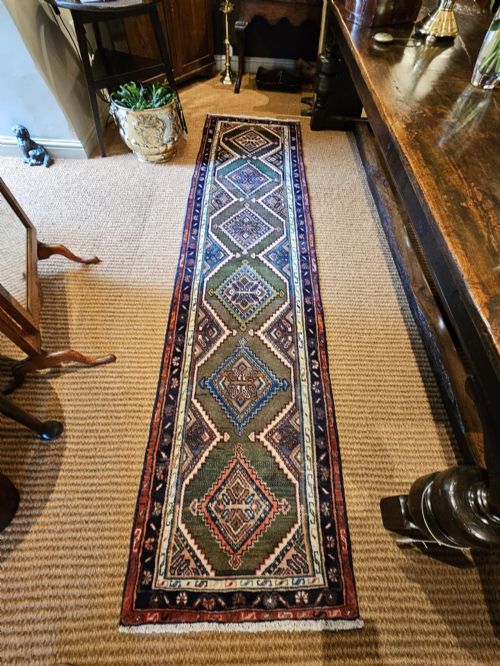

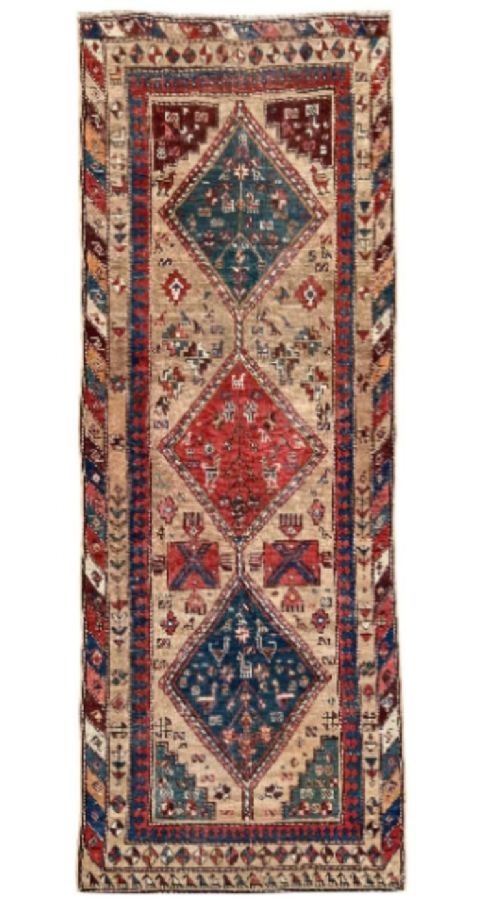
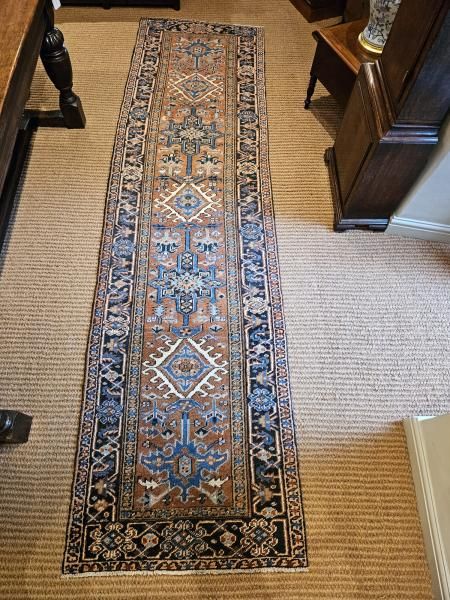
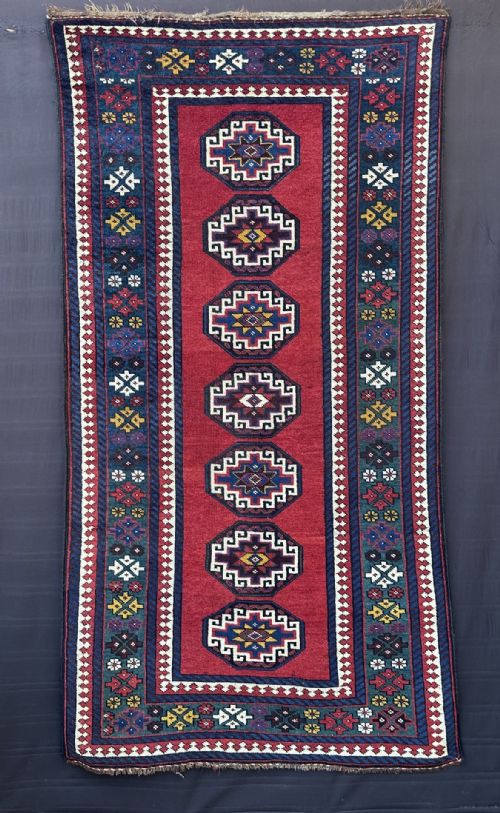


Antique Style Hallway Rug
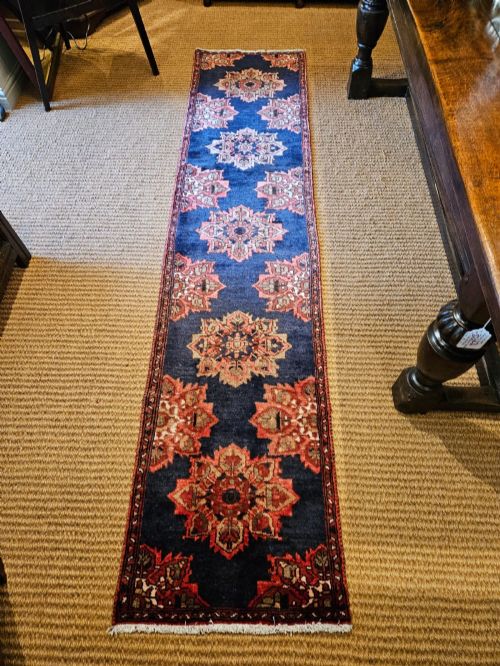
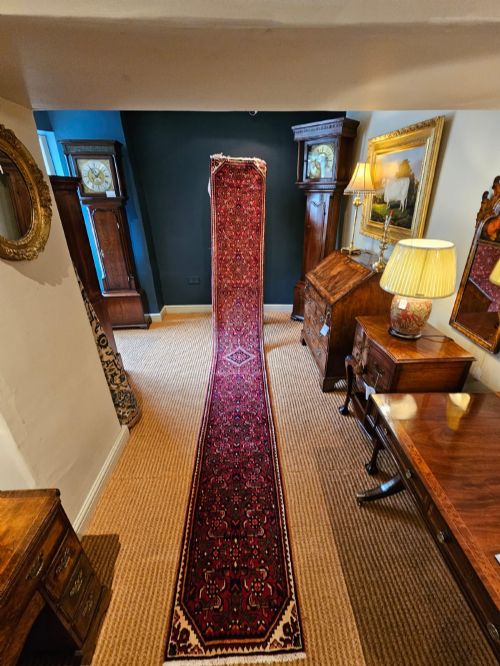
An antique style hallway rug brings character and length to a narrow space through traditional Persian, Caucasian, and Anatolian designs.
Antique Style Hallway Rug
An antique style hallway rug is typically encountered as a long, narrow runner designed to fit corridors and narrow spaces. These pieces span production from the nineteenth century through to the early decades of the twentieth century, bringing considerable length and traditional patterns to interior floors.
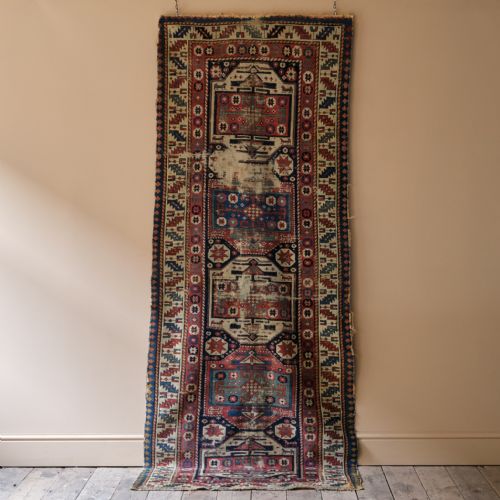
The selection encompasses regional village and tribal weaving traditions, featuring Persian Heriz, Sarab, Karaja, and Gorevan pieces alongside Caucasian and Anatolian examples. Long formats dominate the offerings, suited specifically to high-traffic hallways and narrow domestic passageways.
Makers utilised diverse regional motifs, ranging from geometric boteh patterns and French-inspired rose designs to bold central medallions. Each piece reflects the specific weaving heritage of its origin, whether produced in a Persian workshop or by Afghan and Caucasian tribal weavers.
How they were made
Weavers constructed these rugs predominantly using pure wool piles knotted onto cotton or wool foundations, occasionally incorporating camel hair for natural tone variations. The hand-knotted technique requires meticulous individual knotting by hand to secure the pile.
Natural dye stuffs and traditional methods produced the foundational palette observed across these nineteenth and early twentieth-century textiles. The structural integrity relies upon tight hand-knotting over sturdy warp and weft threads, creating a dense floor covering.
Listings feature wool, cotton, and camel hair materials spanning the nineteenth century and the 1900 to 1930 decades.
What varies in quality
Pile density and the fineness of the hand-knotting separate standard regional pieces from superior village productions. A tighter knot count allows for sharper pattern definition and greater durability under foot.
The choice of wool and the clarity of the dye palette influence the visual depth of the runner. Superior examples display harmonious colour ageing and balanced proportions along their extended lengths.
The Antique Style Hallway Rug Glossary
- Runner
- A long, narrow carpet format specifically proportioned for hallways, corridors, and stairs. These pieces measure significantly longer than they are wide.
- Boteh
- A traditional teardrop or almond-shaped motif with a curved upper end, frequently seen in Persian and Caucasian textile designs.
- Warp
- The vertical foundation threads stretched lengthwise on the loom before the knots are tied. The fringe of the rug is typically a continuation of these threads.
- Weft
- The horizontal threads passed across the warp threads between rows of knots to hold the structure firm. They contribute to the rigidity and stability of the rug.
Antique Style Hallway Rug: Frequently Asked Questions
Where do these hallway rugs originate?
These pieces originate from various weaving centres including Persia, the Caucasus, and Anatolia. Traditional regions such as Heriz, Sarab, and Karaja produced many of the distinct runners seen in this selection.
Production dates span from the nineteenth century into the 1930s, encompassing both village workshops and tribal communities across these areas.
What materials make up these rugs?
The pile is constructed primarily from pure wool, which provides resilience for heavy foot traffic. Cotton foundations frequently support the structure, while camel hair appears in specific regional pieces.
Natural materials and traditional hand-knotting techniques define the construction of these historical floor coverings.
How do I measure for a hallway runner?
Measure the length and width of your hallway floor while allowing clear space around the edges of the rug. Long formats require careful attention to doorway clearances and floor levels.
Take multiple width measurements along the corridor to account for any structural irregularities in older properties.
How do I care for an antique wool runner?
Regular gentle vacuuming without a rotating brush roll helps remove grit from the wool pile. Professional cleaning suited for antique textiles preserves the integrity of the natural fibres and dyes.
Using a suitable underlay prevents slipping and reduces friction between the rug and the floorboards.