

Antique Style Half Moon Table
An antique style half moon table brings graceful curve and practical surface to a hallway or drawing room.
Antique Style Half Moon Table
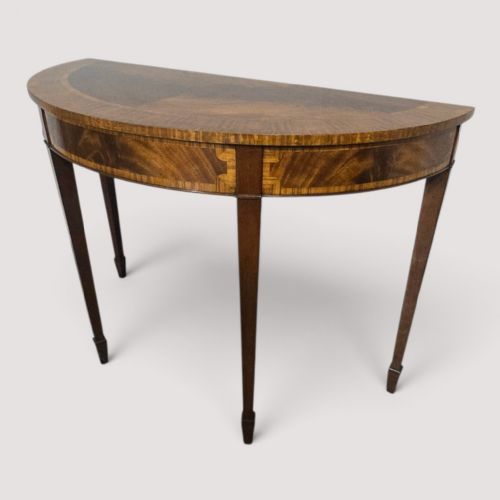
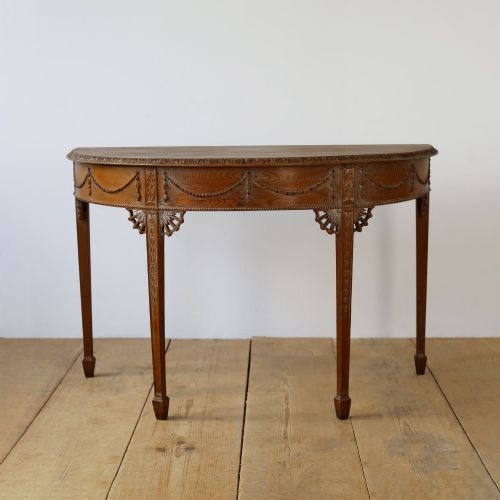
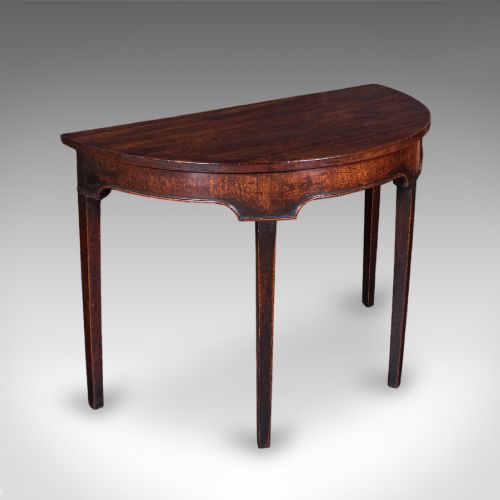
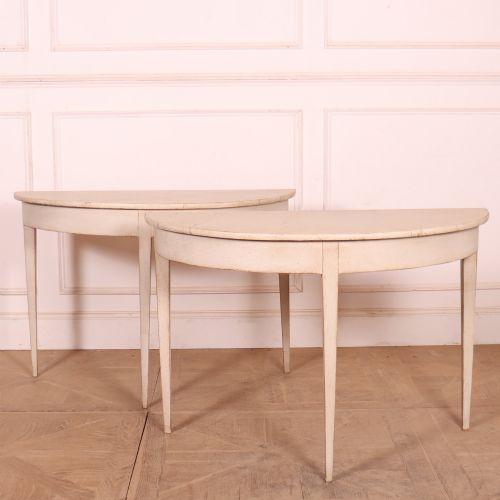
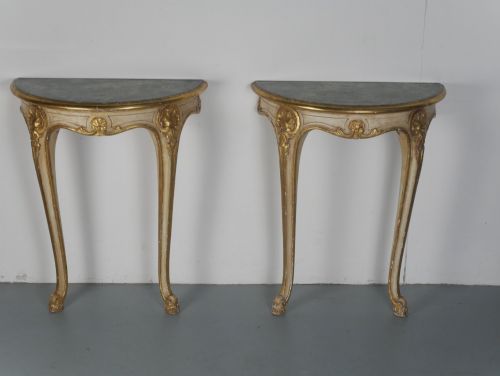
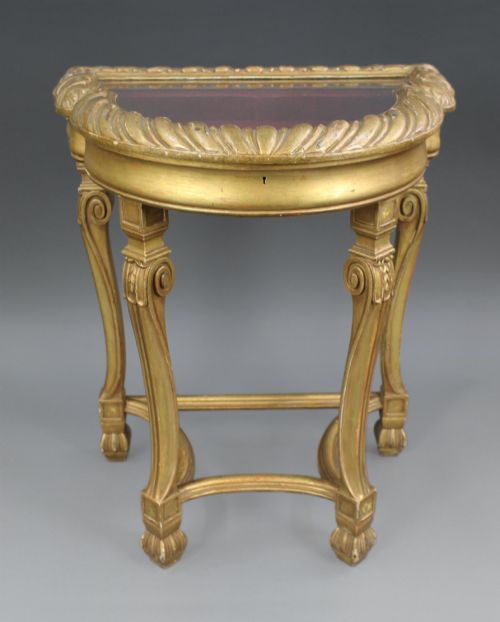
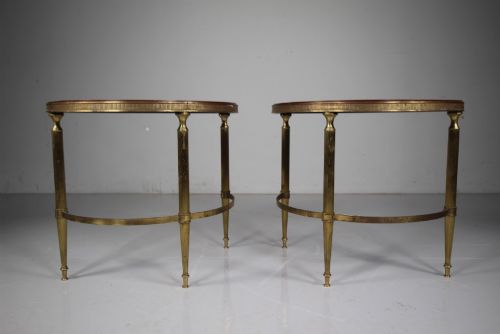
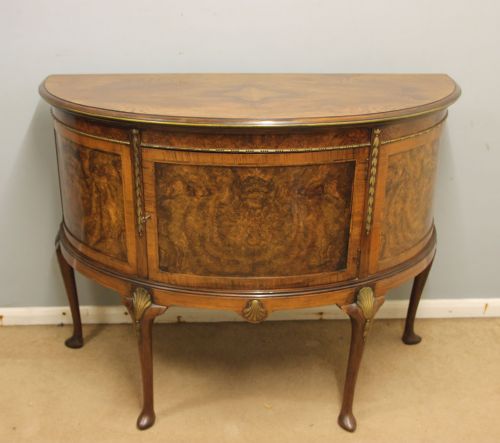
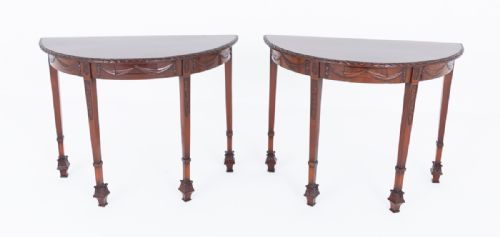
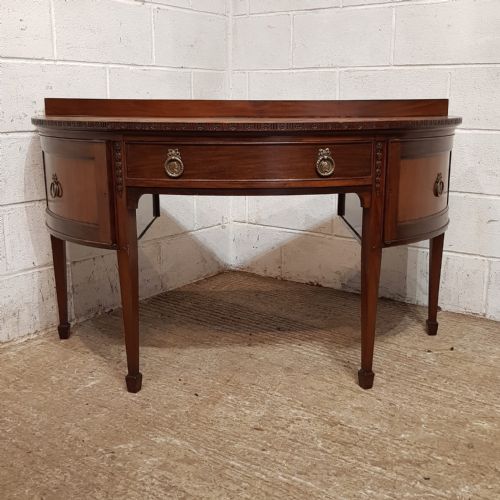
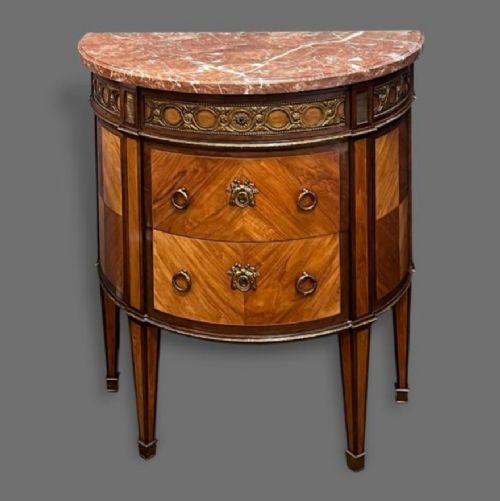
An antique style half moon table, known traditionally as a demi-lune table, sits flat against a wall while offering a semicircular surface for display. The pieces on this page span the eighteenth century through the nineteen-thirties, taking the form of console tables, card tables, side cabinets, and desks.
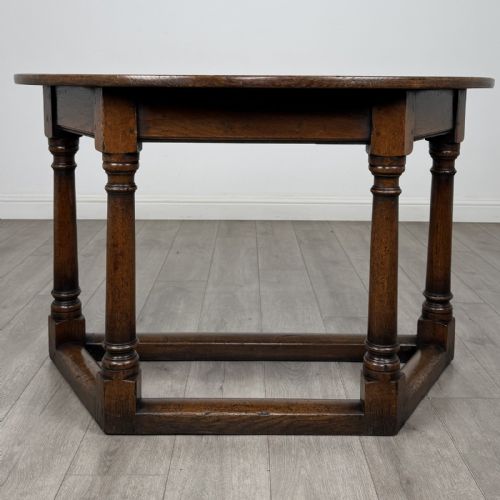
Mahogany and walnut form the core of the selection, accompanied by satinwood, burr walnut, and oak. Revival movements dominate the styles, showing the influence of the Georgian period, Sheraton, Chippendale, and Queen Anne alongside French and Swedish designs.
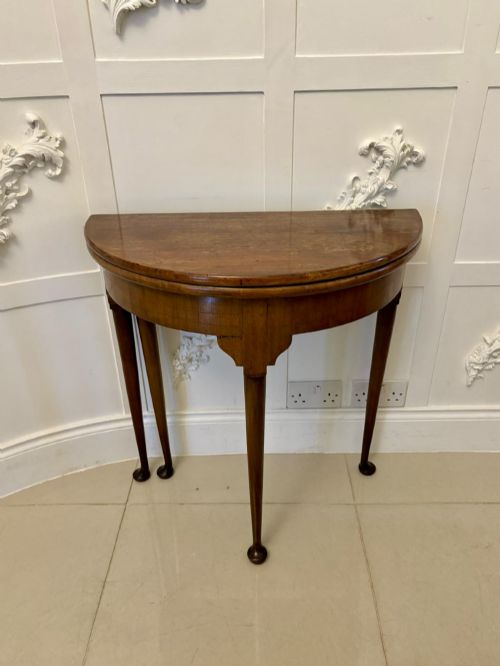
Console and card tables appear most frequently in the listings. Folding card tables provide dual utility, opening to reveal baize-lined playing surfaces supported by swinging back legs.
How these tables were constructed
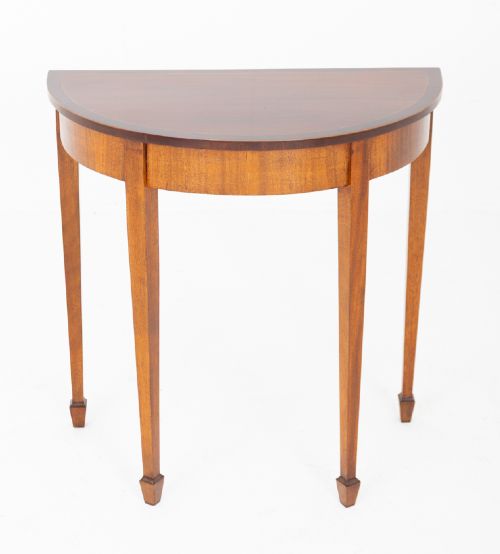
Cabinetmakers built these semicircular frames using solid timbers and carefully cut veneers of mahogany, walnut, and satinwood. Crossbanding and stringing in contrasting woods defined the curved edges of the tops, while brass hinges and swing-out legs accommodated folding surfaces.
Painted and inlaid decoration feature prominently across the pieces, incorporating floral motifs, classical urns, and marquetry panels. Marble tops, including rouge and white varieties, sit inset within wooden frames on several console tables and cabinets.
Antique Style Half Moon Table Retail Price Guide 2026
Typical asking prices for style half moon table among the pieces listed under this phrase on Sellingantiques today, from the lower quarter to the upper quarter. They describe what is for sale here now, not the wider market.
The listings feature pieces spanning the eighteenth century through the nineteen-thirties, with nineteenth-century mahogany and Edwardian satinwood most common.
What distinguishes finer examples
The quality of an antique style half moon table rests on the selection of timber and the precision of the marquetry and inlay. Dense grain figures in burr walnut and carefully matched mahogany veneers elevate a piece above plain construction.
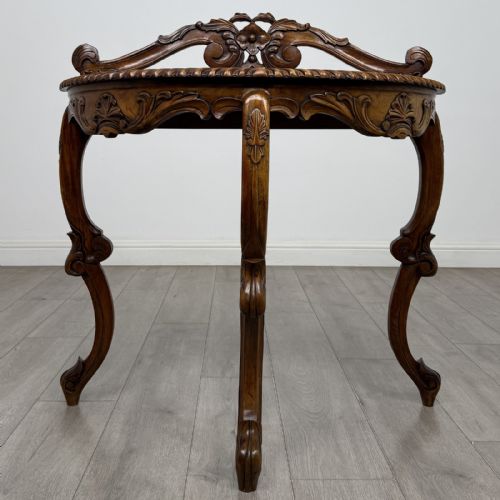
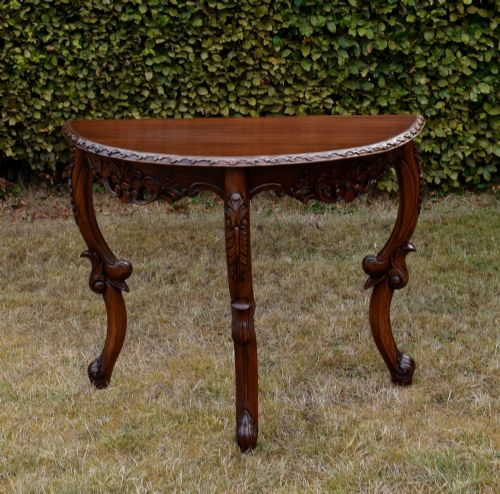
Richer examples display finely carved detail along the apron and legs, such as acanthus leaves or fluting executed by skilled hands. The structural integrity of the pivoting mechanism on card tables and the tight fit of drawer joints separate workshop standards.
Pietro Ferrario·Gillows
The Antique Style Half Moon Table Glossary
- Demi-lune
- A French term meaning half-moon, used to describe tables with a semicircular top and flat rear edge. These pieces fit snugly against walls in narrow spaces.
- Console table
- A table supported by brackets or legs against a wall. Many examples in this selection feature decorative front legs while relying on the wall for balance.
- Marquetry
- The art of applying pieces of veneer to a structure to form decorative patterns. Craftsmen utilised various exotic woods to create pictorial scenes or geometric designs.
- Stringing
- Thin inlaid lines of contrasting wood used to outline the edges of table tops and drawers. This technique highlights the curved geometry of half moon furniture.
- Crossbanding
- A strip of veneer run perpendicular to the grain of the main surface. It frames the perimeter of table tops to provide a crisp visual border.
Antique Style Half Moon Table: Frequently Asked Questions
Where should I place a half moon table?
These tables suit hallways, entryways, and reception rooms because their flat back allows them to stand flush against a wall without blocking floor space.
Console and side variants hold lamps, mirrors, and decorative objects, whilst folding card versions can open up in living spaces when guests arrive.
How do I use a antique card table?
Card tables feature a hinged top that folds open to double the surface area for games or writing. A swinging leg or concertina frame pulls out from the rear to support the opened leaf.
Many retain their original green baize or felt lining inside, though some have been restored for modern display use.
What is the difference between a console and a side table?
Console tables traditionally require fixing or secure placement against a wall, sometimes featuring only two front legs with wall brackets. Side tables possess four independent legs and stand freely.
Both forms appear frequently in the demi-lune shape across Georgian and twentieth-century revivals.
How do I identify a Georgian style piece?
Georgian and revival pieces often display rich mahogany grain, subtle stringing, and tapered legs with spade feet. Look for restrained classical proportions and fine brass hardware.
Later nineteenth and twentieth-century revivals borrow these exact motifs while employing the manufacturing techniques of their own era.